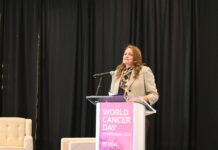
Even with a formal cancer registry on island, the true picture of the illness in the Cayman community still remains largely unknown, but emerging trends from available statistics indicate more women under the age of 40 are getting diagnosed with breast cancer.
“14% of the breast cancer cases that we have were diagnosed are in people under age 40 and if we look at Cleveland Clinic and Breastcancer.org websites, they will tell us that anywhere between 5% to 7% of women are diagnosed under age 40. So the fact that 14% of our registrants were diagnosed under age 40 is a little surprising,” cancer registrar Amanda Nicholson said in a recent interview with the Cayman Compass.
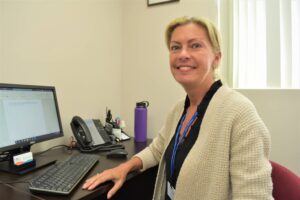
However, both Nicholson and Dr. Lundie Richards, consultant medical haematologist-oncologist at the Health Services Authority, say that, without mandatory registration, it will be hard to quantify that and other trends, and even more difficult to determine the actual cancer numbers in Cayman.
“There is no legislation or regulation which provides for obligatory reporting into the cancer registry. I know that Amanda and company [for years]… have been trying to put draft documents to make recommendations because that’s the only way, if there’s mandatory reporting of these conditions. In other places, there are mandatory reporting conditions,” Richards said.
Nicholson said there are currently 220 cases of breast cancer registered in Cayman.
Reporting key to identifying trends
Richards said the issue is that patients who come to the HSA are advised to report their diagnosis to the registrar, but there are others who seek treatment, either privately or overseas, and therefore are not captured by the registry.
Breast cancer diagnosis by age
14% under 40
37% 40-49
22% 50-59
18% 60-69
9% 70 and over
In addition, he said, there may be some patients who opt out of pursuing medical checks because they do not want to hear the ‘C word’ – cancer.
Richards added that there is a “small handful” of patients who are told by their physician that they may have cancer, but decide to ignore that “presumptive notice” in the hopes the issue will go away. “[N]ot all who are diagnosed… ever get to us here at HSA or even go to see a specialist in the particular area,” he said.
At the registry, Nicholson said they have seen about the same number of breast cancer cases as they usually do. At present there are around 250 cases of breast cancer registered.
The most common breast cancer in Cayman, she said, is infiltrating ductal carcinoma, “which isn’t surprising because it’s the most commonly diagnosed worldwide”.
Presently, breast cancer is the most common cancer found in the registry, she said, representing about 36% of all reported cases.
“It is important to note that 67% of registrants are female,” she added. “This may account for the large number of cases of breast cancer.”
There are close to 600 people registered with the cancer registry.
Nicholson said it is difficult to pinpoint why Cayman’s under-40 diagnoses are higher than those at Cleveland Clinic and Breastcancer.org.
“It could be that we are seeing people diagnosed at an earlier age. It could be that women within the community choose to go and get screened earlier, which would be a good thing. It’s hard to say really what the cause of that might be, but it’s definitely worth taking note of,” she said.
The recommended age for breast cancer screening is 40, but Nicholson said, “it’s important for any woman who notices a change in her body or who has a family history of breast cancer to make sure that they start their screenings early”.
Breast cancer remains leading cancer
For his part, Richards said, at his unit in the Cayman Islands Hospital, he has not noted any increase or decrease in new cancer cases.

“There’s a steady flow of patients. I’ve not seen any particular condition that begins to go out of what I’ve been looking at over the past few years. For example, approximately half the patients that come to this unit on a monthly or annual basis actually come because of breast cancer, [but that] doesn’t mean that we’re having more and more breast cancer being diagnosed,” he said.
“The others, in terms of general frequency, include colon cancer, multiple myeloma and, of course, especially in men, you have a competition between prostate and lung cancer,” he added.
Richards said he can expect one to “maybe three” new cases a month.
However, he said, there have been months where no cases came to the unit; the caveat to that, he added, was that did not necessarily mean no new cases were diagnosed as they could have been detected either privately or overseas.
The great thing about the Cayman Islands is that “we can’t complain about not having access… Access to diagnostics, as well as access to general treatment and almost any treatment that the patient requires they can get it here,” he said, adding he has not seen an adverse impact on local cancer care due to COVID-19.
“Cayman is close… either above or just below, in terms of healthcare [compared] to Cuba. There’s no other place in the region that has that kind of access, both to clinicians and to the types of therapeutic agents that they need, and certainly better than a lot of places in the US,” he said.
Almost half of consultations locally are for breast cancer, colorectal cancer, and multiple myeloma, which is a haematological malignancy.
Both Nicholson and Richards reiterated the need for registering cancers here, which not only helps determine trends but also inform policy.
“When we have a foundation of information and we can understand what kinds of cancer are most common, how many people are getting cancer, whether there are certain geographical regions that are seeing higher incidents, it makes it much easier for medical professionals and researchers to do more in terms of cancer prevention and management,” Nicholson said.
Registration on the cancer registry is free and confidential, and Nicholson can be reached at 244-2560 or [email protected].
Related Videos