

Cayman Islands residents saw average price increases of 7.6% in the final quarter of last year compared to the same period in 2020. It followed 6.4% higher average prices in the third quarter of 2021.
Cayman’s inflation rate for the entire year was 3.3%, the Economics and Statistics Office reported.
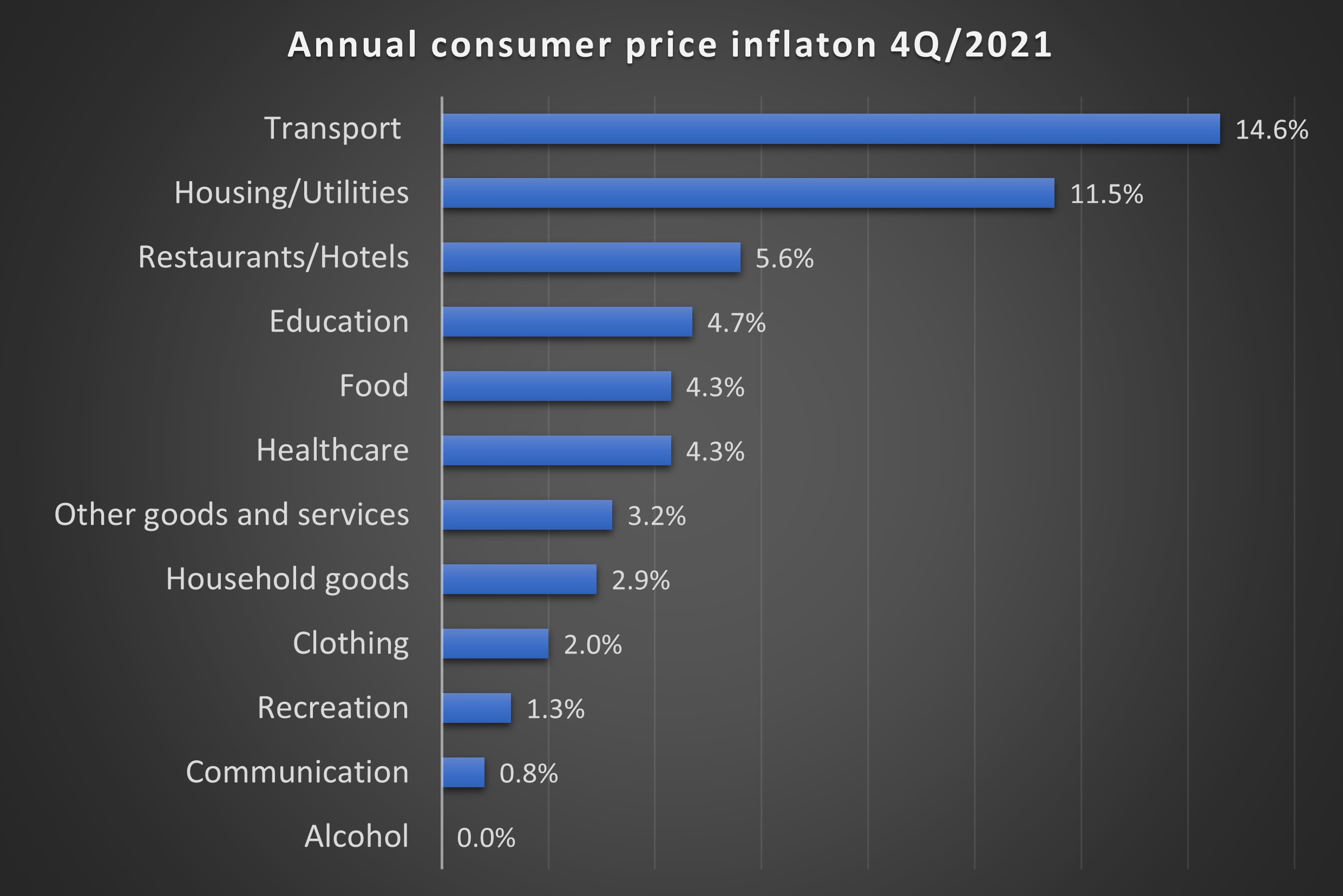
Prices increased in ten of the 12 categories used to calculate Cayman’s consumer price index, with transport, housing and utilities as the biggest price drivers during the fourth quarter.
The global rise in energy costs hit Cayman with a 27.6% increase in the cost of fuel. Air travel was 12.3% more expensive, while the cost of motor vehicles rose by 11.8%.
Housing-related costs jumped 10.7% for imputed rentals of owner-occupiers and 5.1% for rentals during the three-month period.
The average cost of electricity and water supply went up by 26.5% and 13.1%, respectively.
 Cayman’s annual inflation rate of 3.3% was skewed by a first quarter of deflation, as prices dropped on average by 1%, and a second quarter of flat prices (0.2%).
Since then, a post-pandemic surge in consumer demand has been contrasted by various supply issues and bottlenecks that have caused prices to rise.
Cayman’s high inflation has most likely continued in the first quarter of this year, as price increases have taken hold globally. Moreover, the war in Ukraine and related sanctions targeting Russia are adding fuel to already rising energy prices.
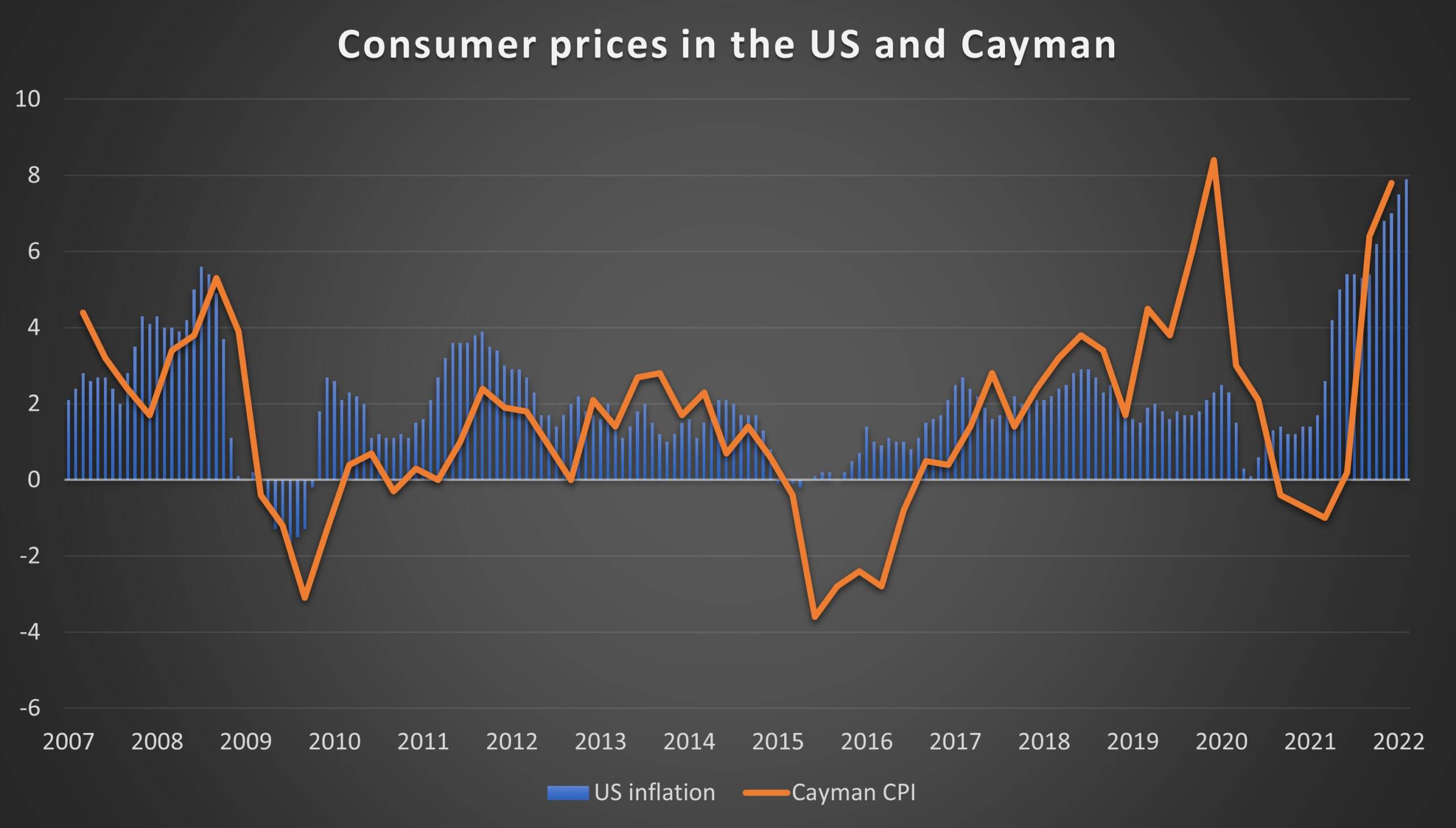
The United States, Cayman’s most important source market for goods, reported consumer price increases of 7.5% in January and 7.9% in February of this year.
Cayman’s CPI tends to track US inflation numbers over time, although some aspects, like housing costs are subject to local price dynamics.
 Global inflation expectations have shifted considerably since last year. Ratings agency Fitch now expects US CPI inflation to peak at 9% and average 7% for the year as a whole.
In the UK, the Bank of England believes inflation will reach 8% in the spring but could go even higher later in the year.
Related Videos












I assume all civil servants will still get their COLA adjustments so they will not feel the pain, only the taxpayer who doesn’t, yet pays for it.