

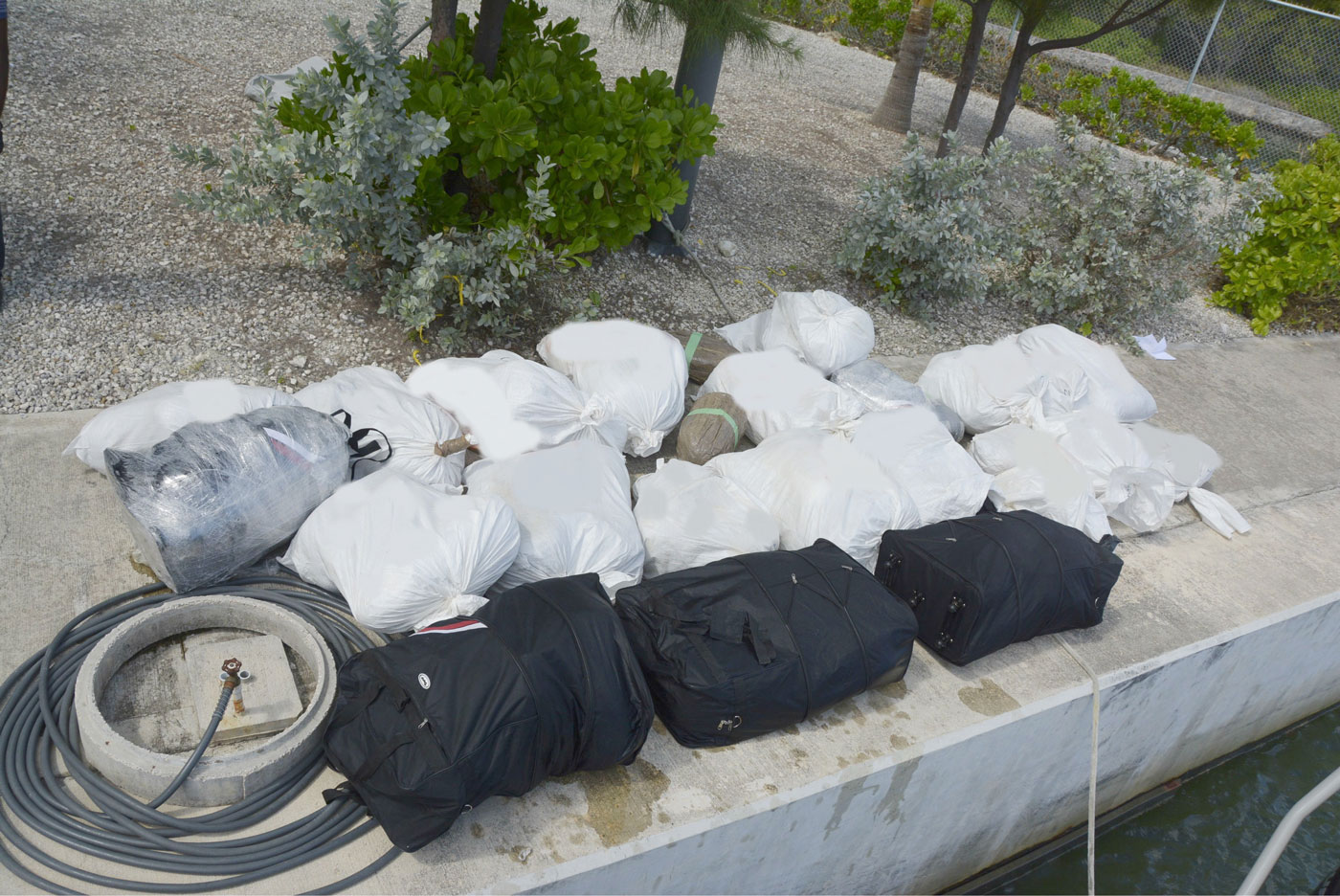
For the better part of the past decade, police across the Caribbean have suspected an inter-island drug and gun-running ring purchased used firearms in the regional and US black markets and shipped them from country to country.
However, senior Royal Cayman Islands Police Service officials say new evidence suggests this might not be the case.
Speaking with the Cayman Compass after the annual police crime statistics press conference, on Wednesday 30 March, Detective Superintendent Peter Lansdown said investigations show that while guns and drugs often enter Cayman from neighbouring islands, such as Jamaica, it is rare that they are shipped back out.
“Gun-running throughout the Caribbean hasn’t been proven by our forensic hub,” said Lansdown, who heads RCIPS Criminal Investigations, among other roles.
In April 2017, Cayman became the ballistics hub for UK Overseas Territories in the region when the RCIPS’s forensic unit opened a ballistics lab. Since then, it has processed numerous cases and Lansdown said the evidence gathered is helping to shift the notions of a region criminal syndicate.
“Certainly, guns arriving on the island are staying on the island and we have recently had indications that weapons have been in use here for an extended three-, four-year period,” Lansdown said. “But we have had no indication that they have been used in other Caribbean jurisdictions.”
Lansdown said most weapons that arrive in Cayman originate in the US, are shipped to Jamaica, and then are eventually loaded on drug canoes destined for Cayman.
“The vast majority of weapons that we have recovered are used, some significantly old and rusty but still usable,” said Lansdown. However, he added, “I remember one last year was still in its box”, and noted that the weapons used in the gang killings in 2021 are models that had been recently manufactured.
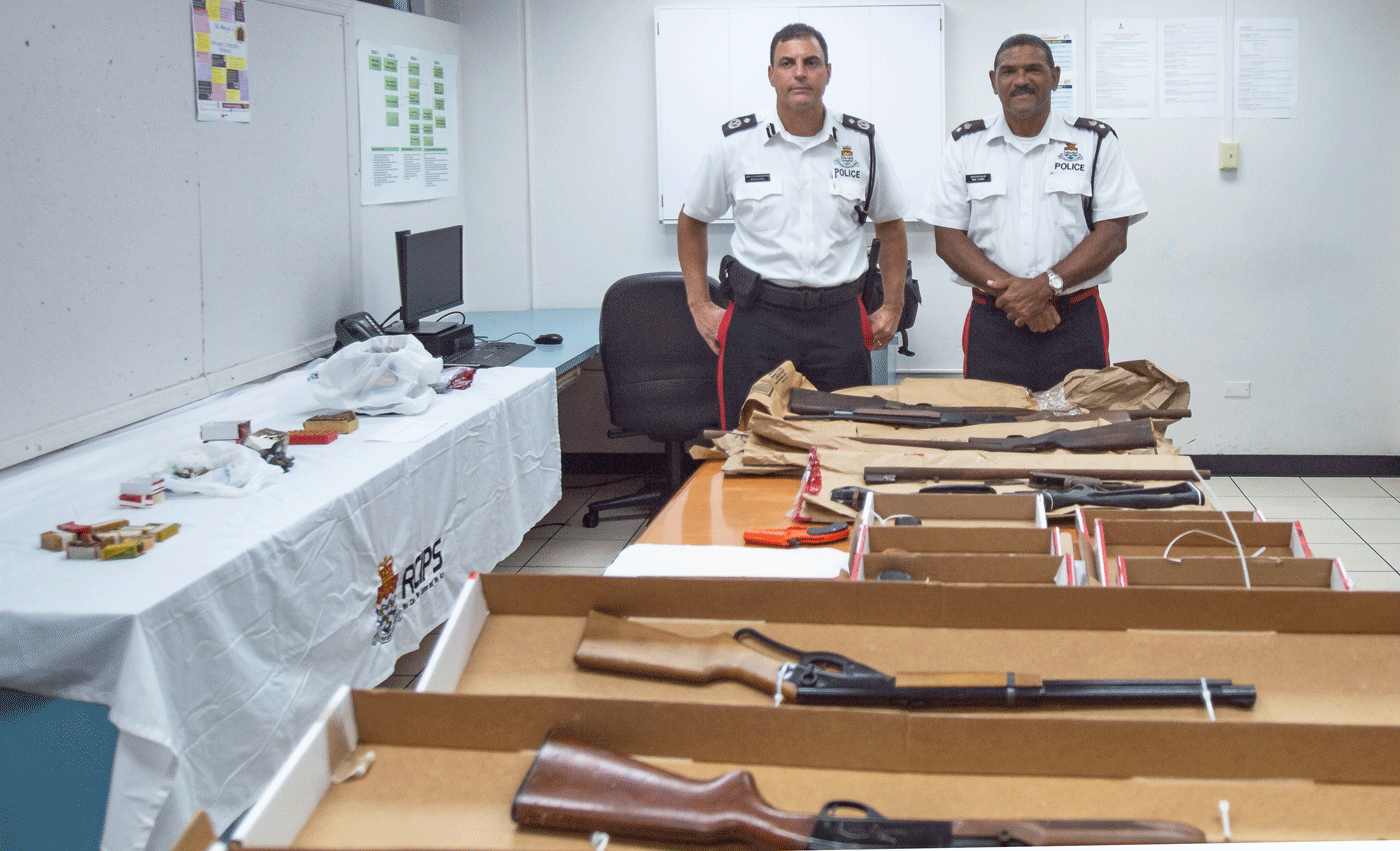
In 2021, police recovered six illegal firearms, the same as in 2020. Officers also seized 3,507 pounds of ganja and 5.5 pounds of cocaine – which had an estimated street value of $3.5 million and $500,000, respectively.
Police may never recover all illegal guns
Detective Inspector Wade Chase leads the RCIPS’ Crime Action Taskforce. He and his team have seized three illegal firearms since the start of the year and are actively pursuing the guns that have yet to be recovered.
“Well, it’s difficult to say that we can recover all the firearms. However, I can say that we have a robust and proactive approach in going after firearm offenders and, where information is provided, we act on it as quickly as possible,” said Chase.
In several instances when a suspect has been arrested for a gun-related crime and officers are unable to recover the firearm used, the suspect has been charged with possession of an imitation firearm. Chase said this is a common practice by police to demonstrate that there is compelling evidence that the defendant was in possession of a firearm.
He told the Compass that while it is unlikely that every unlicensed firearm will be recovered from the community, the amount that is seized will depend on the attitude of the residents who are aware of the illegally-armed individuals.
Freezing assets
Police believe that instead of a network that recycles guns by moving them from one Caribbean island to another, islands like Jamaica serve as a hub for the collection and eventual sale and distribution of the weapons and drugs. So, in order to stop the supply, officers are hitting drug dealers where it hurts most – their wallets.
“Whenever we have a drug importation or firearms importation and there is a financial aspect to it, there will be a parallel financial investigation to it, looking for the money routes and assets,” Lansdown said. “Where that person is making a benefit out of crime we will seize and freeze those assets.”
Related Videos











A possible tool would be a Civil Forfeiture law (as in the USA) / Unexplained Wealth law (as in the UK).
Simply the police have the right to seize the assets of someone who is displaying expensive jewelry or splashing money around but is unemployed or whose legitimate income doesn’t equal the money they are spending. They then need to prove the source of the money.
Safeguards would be needed of course.