

Organised criminal gangs represent the biggest current threat to Cayman’s marine life, conservation officers believe.
Sophisticated poachers, working in teams, are wiping out conch beds and threatening lobster populations.
And rogue local restaurants – willing to buy black market seafood – are playing a major role in a growing problem.
Department of Environment chief conservation officer Mark Orr warned that the actions of organised groups with deliberate criminal intent risked damaging the long-term sustainability of key species.
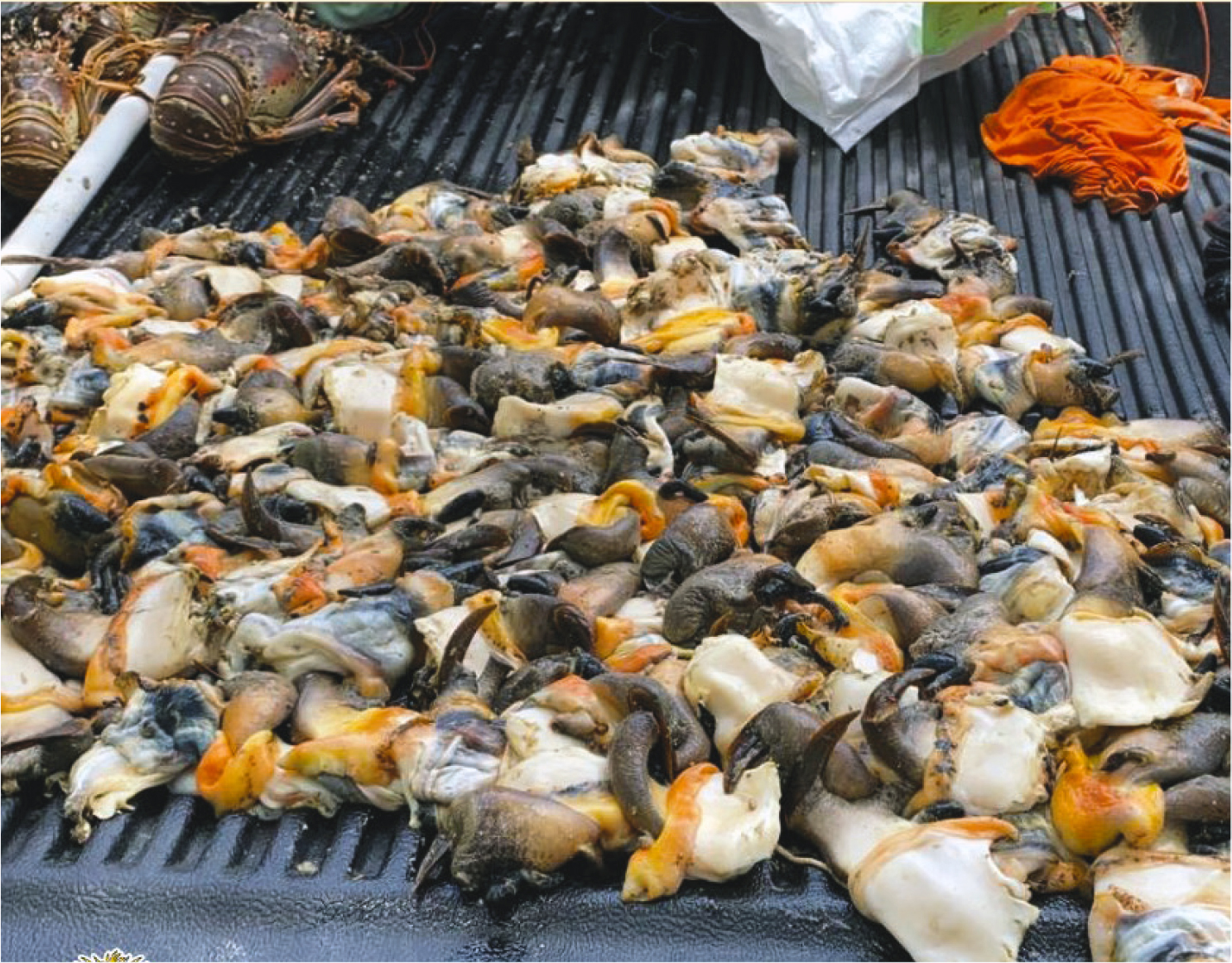
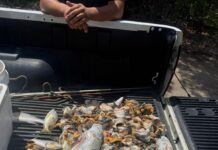
Occasionally, the DoE catches poachers in the act and pictures of trucks loaded with hundreds of conch and lobster are splashed on social media and in the newspaper.
While those victories are meaningful, Orr sees the flip side. The images demonstrate the scale of the damage being done.
He said it was “obvious” that his small team could not catch everyone and he worries about the impact of the ‘ones that get away’.
Orr said the problem had got worse in the aftermath of COVID-19 and he acknowledged a relatively small number of poachers were motivated by hunger or poverty. But he insisted they are the minority.
“The persons that are out there deliberately taking large numbers (of conch and lobster) are definitely the main threat,” he said.
DoE teams under surveillance
Orr believes ‘land teams’ are trailing his officers and communicating with poaching boats to help them evade detection.
The veteran officer, who has been on the job for 23 years, said the sophistication of poaching gangs has escalated in recent years. He said the majority of poachers used to be solo operators, often drug-users trying to support a habit.
“These days, we have a lot more teams of persons actually doing it as a profession. They are hurting the island even more because when they wipe out an area of 100 or 150 conch, they are taking out an entire breeding bed.”
Clearing conch on that scale means there is virtually no chance for the populations to regenerate, he said.
The DoE has a team of eight to 10 conservation officers tasked with policing Cayman’s marine parks and terrestrial zones. But their jobs have been made far more complex by the increase in organised criminal activity on the waters.
“We have groups that will follow our officers around with a vehicle. If they see I’m watching one of the boats out there, they’ll give them a call, and the boat drops everything,” he said.
“Before they get close enough for us to get a good look at what it is, they come to shore with a smile on their face.”
Warning to Cayman’s rogue restaurants
He said new staff were expected soon and increasing partnerships with the Coast Guard and the police are anticipated to help. Orr added that the majority of boat users and anglers were law-abiding and were a huge help to his officers in reporting criminality.
“It’s a hard job and a big job for a handful of people. The public is a big help. We need eyes and ears everywhere to see this happening.”
He acknowledged more ‘intelligence led’ operations and a larger, more sophisticated team, utilising technology including surveillance drones, may be called for in future. He cautioned that restaurateurs who buy from poachers are also breaking the law.
“As long as people keep buying them in large numbers, we’re never gonna turn it around.”
Restaurants are not allowed to buy more than three lobster or five conch on any given day during season – December to February for lobster and November to May for conch. Outside of those months, both species are off limits.
“Our shelf area is very small. We can’t support commercial fishing here, we just can’t,” he said.
“If we allowed all the restaurants on island to sustain their menu with conch and lobster here, it would only be a few years and we wouldn’t have anything left.”
Related Videos








When I first moved here over 40 years ago we would go on North Sound snorkeling and Stingray City trips with Captain Marvin.
As part of the trip we would go conch hunting. Every person on the boat bought in at least 6 over about 15 minutes. Most were thrown back.
Try that today and you’ll be lucky to find one or two. Uncontrolled poaching with a slap on the wrist for those caught will ensure the total destruction of our sealife.
5 years in prison and confiscation of boats and motor vehicles would work.
How many restaurant owners have been prosecuted?. Govt must have an idea which ones are the likely culprits – why not carry out snap inspections? How about the police helicopters making random checks on the prime poaching areas as we seem to have far too few enforcement officers to cover them?. Another suggestion – why not utilise our army of iguana hunters to assist in looking out for the poachers and reward them for anyone caught poaching as a result of their reports.
Great idea
PACT, please allocate more funding for marine law enforcement ASAP as a matter of great urgency. Our diminutive reef shelf resources were already in grave peril due to decades of over-fishing and poaching, then the lionfish invasion, but this new attack could end any gains we’ve made in conch and lobster populations. Our most desirable reef fish species also need new regulations to stop their impending local extinctions as well. I recommend at least: A free or low cost fishing license for Caymanians only; a catch limit per diem on reef fish (to end over-fishing, especially of spawning aggregations); a paid hook and release only license for non Caymanians (to keep local fishing guides in business); total protection in Grand Cayman for grouper, parrotfish (squab) and cubera snapper; greatly enhanced enforcement of the laws. A list of good paying Government jobs could be offered (take it or leave it) to the handful of Caymanian fishermen who still make a meagre living by selling the few precious fish that remain on our reefs. To be clear, none of these recommendations affect pelagic fishing in any way… this is all about preserving and optimizing our reef resources for a potentially much greater future sustainable use as a daily food source, emergency strategic food reserve and as a highly valuable tourism attraction.
Drones. And lots of ’em.
Land based teams can follow the DOE boats all they want but they can’t cover the drones.
Any restaurant caught serving illegal fish should be shut for 30 days the first time 60 days the 2nd time and a year the 3 rd time That should solve the problem