

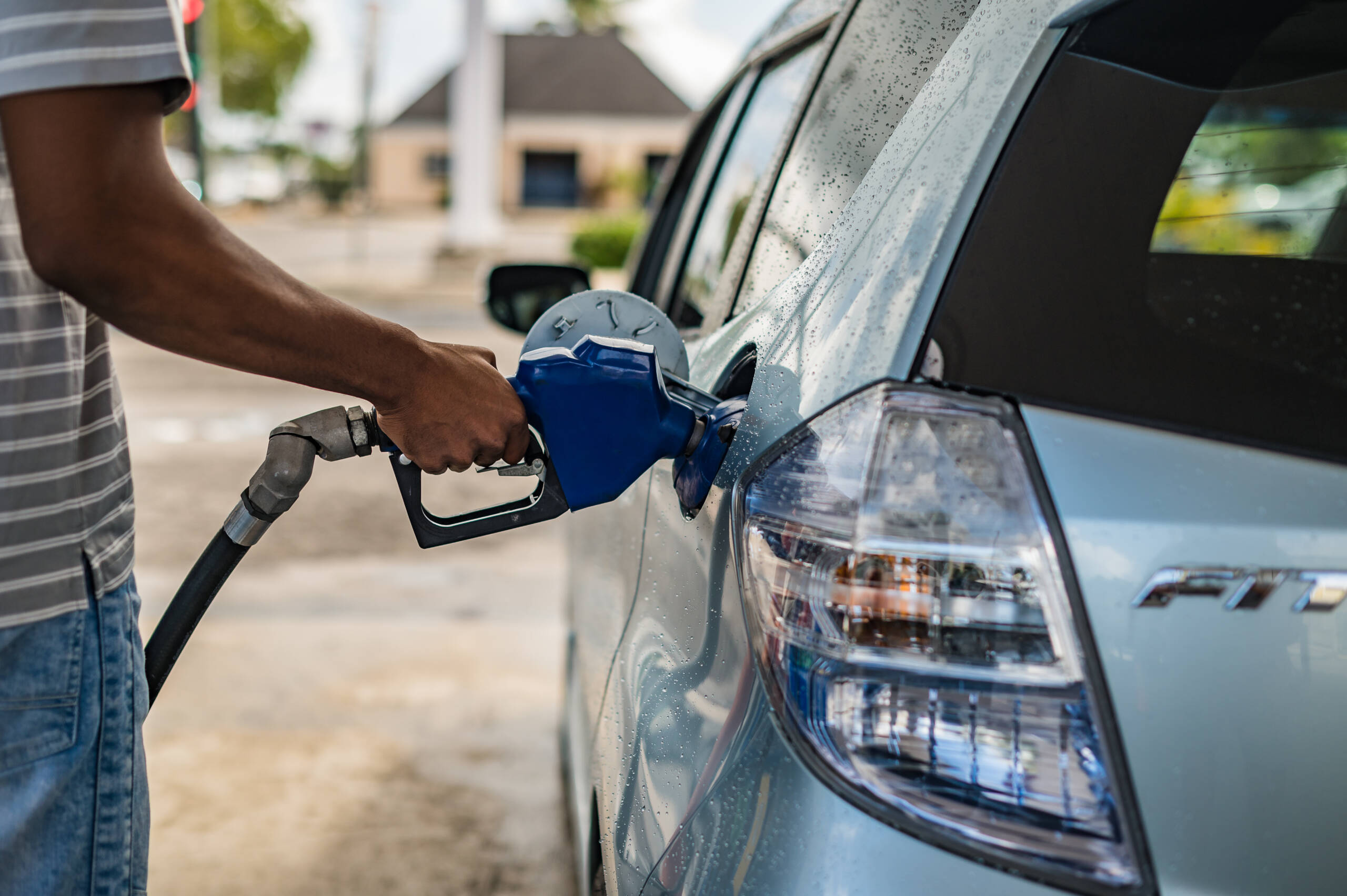

As fuel prices at the pump in Cayman start to exceed CI$7 per gallon, Premier Wayne Panton has warned that prices will rise further and noticeably impact the financial situation of residents.
In a message to the RF Economic Outlook conference on Wednesday, Premier Wayne Panton said “increases in the cost of living and climate change are the two greatest impacts on our lives and businesses right now”.
He said recent economic reports suggested that the Ukraine war and associated impacts on fuel might lead to the single largest economic shock in nearly 50 years.
“Fuel prices are expected to continue to go up. And for the average household, the impact on the family budget will be substantial. A substantial increase in electricity costs at exactly the hottest time of the year.”
This week analysts have warned that the cost of oil may spike even higher over the summer months.
Goldman Sachs raised its price projections for West Texas Intermediate and Brent crude oil. Goldman analysts said the price of Brent crude oil would need to average US$135 per barrel in the second half of the year for inventories to normalise in 2023.
The investment bank expects Brent crude to average $140 per barrel between July and September. It warned that consumers might see retail prices equivalent to $160 per barrel because of higher refinery margins and the strength of the US dollar.
West Texas Intermediate, the US crude oil often used for gasoline sold in Cayman, is projected to average $137 in the third quarter of the year and $125 in the fourth.
On Wednesday, WTI traded at around $120.
The head of the commodity trader Trafigura warned that oil prices could reach a “parabolic” state with record highs later this year.
CEO Jeremy Weir told the FT Global Boardroom conference that oil markets were in a critical state after sanctions on Russia’s oil exports had exacerbated already limited supplies, the Financial Times reported.
Last week, Jamie Dimon, JPMorgan’s chief executive, said prices could go as high as $150 or $175 a barrel later this year.
The all-time high for Brent crude was $147 in July 2008 during the financial crisis.
Inflationary pressure
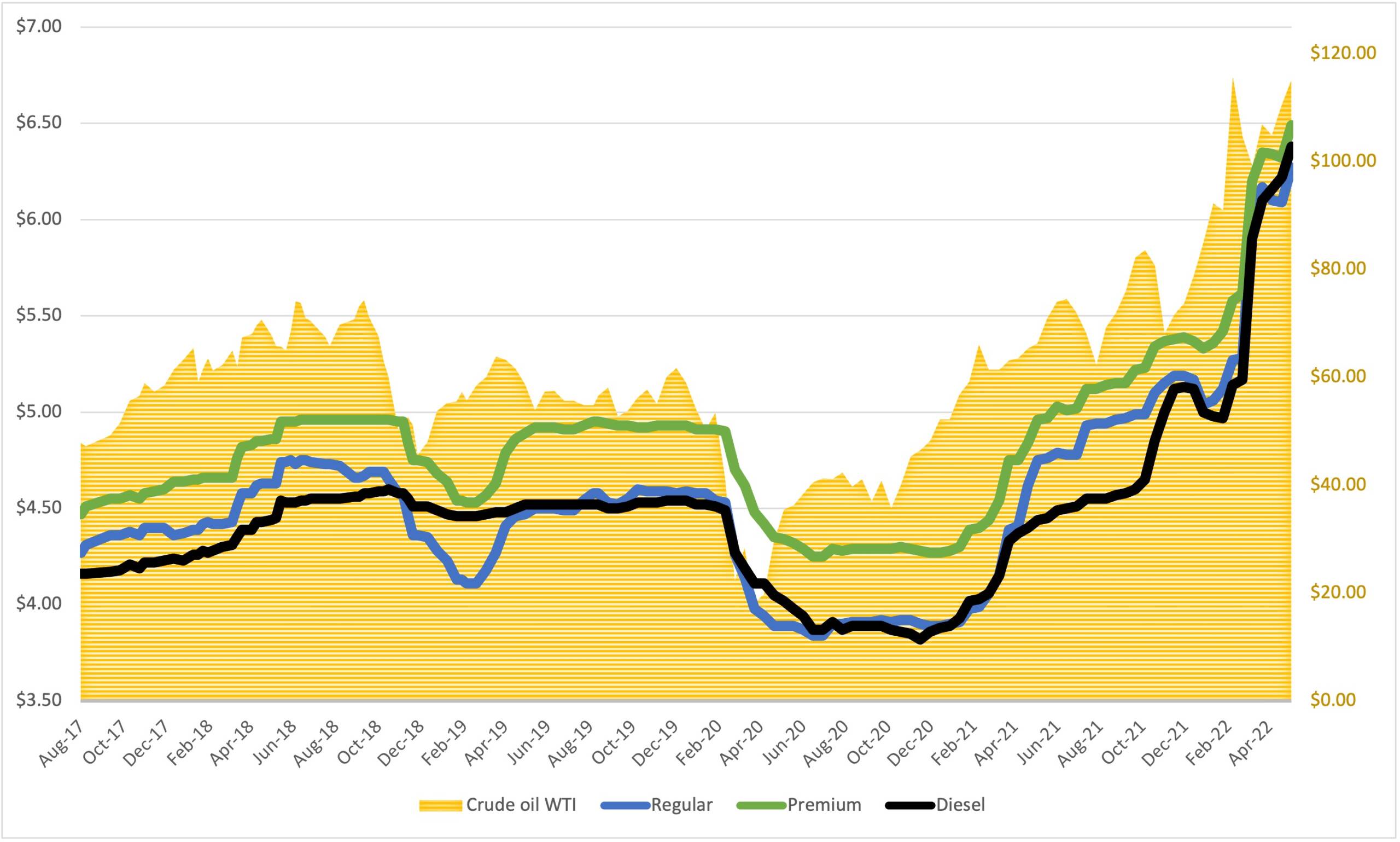 The higher energy prices will add further inflationary pressure on other goods sold on island through higher transport costs. Fuel prices at local petrol stations have responded quickly to the higher oil price.
After the per gallon price breached the CI$6 per gallon mark only five weeks ago, regular and premium fuel is now selling at more than $7 a gallon at several Esso stations on Grand Cayman, according to the fuel regulator OfReg’s website.
Noting his government’s recently announced policy to accelerate Cayman’s adoption of green energy by investing in renewable energy infrastructure, Premier Panton suggested that transitioning to renewable sources would reduce Cayman’s reliance on fossil fuels at a time when fossil fuel prices are at record highs and expected to rise further.
“We believe this policy and the ensuing actions would be good for the environment, and good for the economy, and great for all of our residents, including keeping energy prices down for families, businesses and institutions,” he said.
Economic growth projections lowered
Persistently higher energy prices and Russia’s war in Ukraine have prompted both the World Bank and the OECD to lower their global economic growth forecasts for this year and 2023.
The World Bank slashed its global growth projection for 2022 to 2.9% from 4.1% expected in January before Russia’s invasion of Ukraine.
The bank noted that, later this year, the world economy could suffer from stagflation – high inflation accompanied by low growth.
The bank’s June Global Economic Prospects report said war in Ukraine and surging commodity prices exacerbated the damage done by the COVID-19 pandemic, resulting in “a protracted period of feeble growth and elevated inflation”.
“The war in Ukraine, lockdowns in China, supply-chain disruptions, and the risk of stagflation are hammering growth. For many countries, recession will be hard to avoid,” World Bank President David Malpass said.
In the same vein, the OECD this week said Russia’s invasion of Ukraine immediately slowed the recovery from the COVID-19 pandemic and set the global economy on a course of lower growth and rising inflation.
The OECD’s latest Economic Outlook projects global growth to decelerate sharply to around 3% this year and 2.8% in 2023, well below the recovery projected in the previous Economic Outlook last December.
Related Videos













This hardly comes as a surprise, but expecting for Fuel prices to go up to 140 per barrel would be fueling already raging inflation on island.
Fuel costs have a double impact here as most of electricity production relies on Diesel .
Maybe it is high time for CIG to consider utility scale batteries for the CORE program so that CORE participants would provide at least some relief as to the cost per kw/h and would be incitivized to extend their installations past the present 10KW limit by not being charged fuel costs might be worth exploring?
My guess would be that it won’t take too long to see the impact across all industries present on island. Wether it is Diesel used in construction or for that matter any other type of fossil fuel .
We are very much on the verge of demand destruction due to the rising costs of either doing business in Cayman or bringing the business onto the island and the local red tape is NOT helping (Ofreg anyone?) .
Panton’s attempt to catch back the cumulated tardiness is laudable, but it won’t be solved instantly, most of projects relying on solar take much too long to put together and get up and running at this stage !
This is definitely an uphill battle to reach 70 percent of power generation by renewable energy before 2037 but I for one do not see much of an alternative unless most of the island would be ready to accept a drastic reduction in its everyday living standards .