

Premier Wayne Panton found himself in the hot seat at a Savannah-Newlands community constituency meeting on Wednesday night, as landowners in the area took issue with how land acquisitions were being handled to make way for the new East-West Arterial extension.
One landowner, who raised the issue at the meeting held at the Savannah United Church, threatened to take the matter to court to get fair compensation for his family’s heritage land.
“I’m moving this case forward to protect future people from this kind of injustice,” he said.
At the meeting, National Roads Authority director Edward Howard said, within the next month, the government agency is set to engage a consultant to commence the Environmental Impact Assessment for the contentious extension.
Once engaged, Howard, speaking at the Wednesday night meeting, said the EIA process is probably going to take anywhere between 12 to 16 months.
“It’s going to involve public consultation. It is going to involve a lot of input from the environmental groups and different stuff like that. That process is a statutory requirement that has to happen first. So, in terms of giving you a timeline, nothing… not a shovel, nothing can happen until that environmental impact is done,” he told attendees.
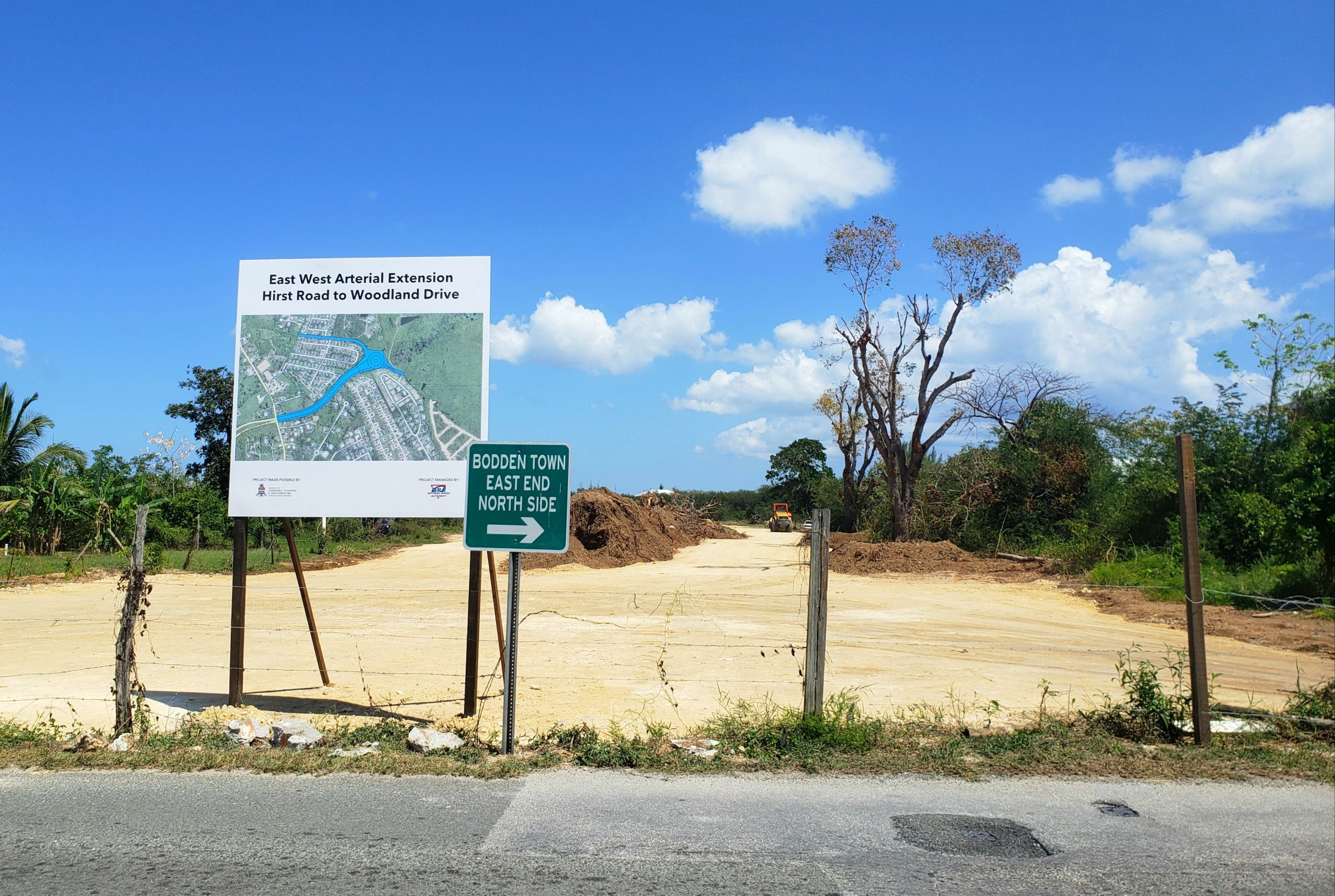
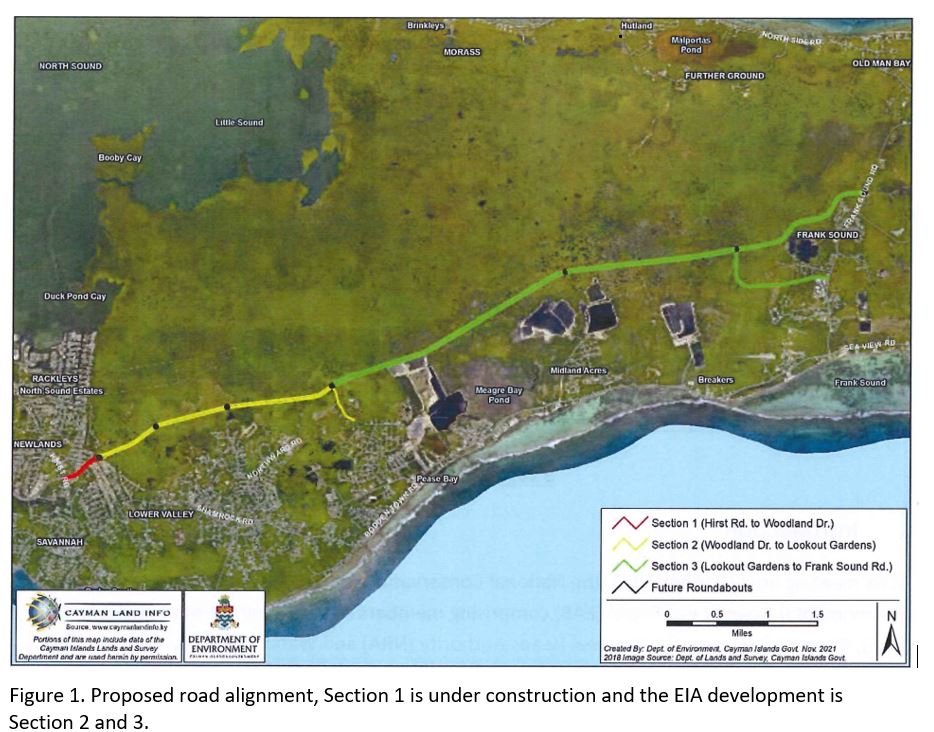
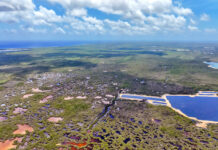
The road is a five-phase project, 20 years in the making. Phases four and five which run, respectively, from Hirst Road to Woodland Drive, and from Woodland Drive to Frank Sound, are yet to be completed.
The land has been cleared for phase four; however, the environmental impact assessment will need to be completed, before work can commence.
Landowners wrangle over gov’t acquisition plans
While the news was somewhat welcomed, impacted landowners aired their concerns about the claims process.
Panton, who acknowledged there were some areas of dispute, assured that the process will be done equitably and within a timely period.
“The Constitution says that, when you acquire land by compulsory acquisition, it has to be paid for within a reasonable period of time. My view is a reasonable period of time is not three years, it’s not five years, it’s not 13 years in some cases of I’ve been involved with. It’s a reasonable period of time, which is much shorter. So I can tell you that that’s the view of the government,” he said as he attempted to pacify concerned landowners.
Government, he said, does not get involved in mechanics of the acquisitions nor negotiate the numbers.
This, he said, is done by the civil service.
“We need to encourage an approach which reflects property market values and reflects the rights of individuals. Like I said, we need to make sure that people are paid for land that is acquired and I don’t believe in it being dragged on for years and years and years. That’s what has happened too often in the past,” he said.
Pressed on how the process works, Panton said, while he was not familiar with all the mechanics, compensation of market value for acquisition of lands is the norm.
“The objective is to try to compensate the individual at a value which reflects market value. Now what happens very often is a lot of people can’t agree what market value is,” he said, adding that it’s typically defined as the amount a willing buyer would pay for it, and what a willing seller would sell it to that willing buyer for.
“Oftentimes there’s dispute around that… We can just encourage that the proper processes [are] followed appropriately within the context of the reality that people should be compensated, where the land is being acquired compulsorily,” Panton said.
However, a landowner at the meeting challenged the premier on this, saying the process through Lands and Survey is not being done on a “consistent, fair and equitable basis”.
“There has to be equity across the board. There’s no room for discussion,” he said.
He argued that Caymanians with family lands are being disenfranchised by the process and that landowners are finding themselves running into additional expense to get their fair dues.
The landowner said the problem is not only building roads, it is too many cars on the island and soon the land will run out.
This, he said, needs government attention which Panton agreed with as well.
Howard, in his address at the meeting, also assured that the Minister of Lands is aware of the land claim situation and is working with Lands and Survey on resolving the valuation concerns.
He also shared that additional housing developments are in the pipeline for the area and the new road network will assist in providing access.
Residents questioned if additional infrastructure, like more schools and playgrounds are being considered.
Panton said those issues are on government’s radar. He stated that Savannah Primary School will be expanded to include a new school block and there are plans are in train to upgrade community parks.
Howard also shared that work is underway to address flooding issues in the community, explaining flood sensors will be installed to assess excess water runoffs to alleviate the problem.
Also on hand for the meeting were representatives of the RCIPS and Hazard Management Cayman Islands.
Residents called for police action to address errant drivers and a greater police presence in the area.
Related Videos











First start by dealing with the two biggest bottlenecks
ALT and Hurleys roundabouts.
An overpass/flyover would greatly reduce the traffic delays to/from the east.