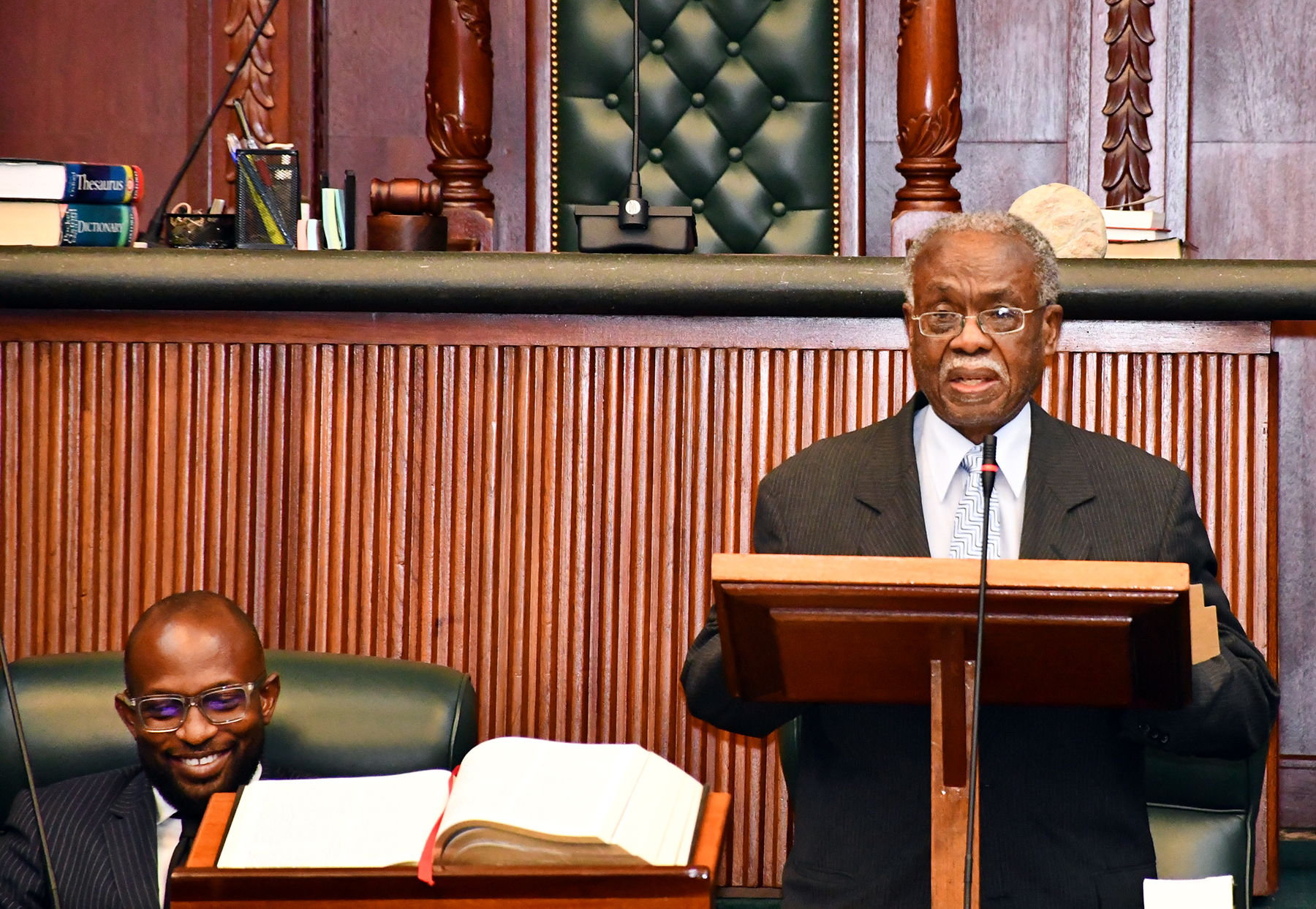
Regional legal luminary Dr. Lloyd Barnett has urged lawmakers to continue to uphold the doctrine and spirit of the separation of powers to ensure Cayman’s democracy remains intact.
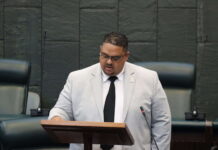
Barnett, a guest lecturer at Thursday evening’s celebrations marking the 50th anniversary of the opening of the House of Parliament building, reminded lawmakers of their responsibility.
“As we celebrate the 50th anniversary of this edifice in which one of the organs of Cayman democracy resides its members, past, present and future must reinforce their commitment to the preservation and enhancement of the spirit rather than letter of the doctrine of the separation of powers and ensure the preservation of democracy and the rule of law,” he said.
Safety of democracy resides with all
The preservation of democracy does not rest on the shoulders of one entity, Barnett contended.
He stressed the importance of legislators and the electorate in keeping the arms of governance in check and the structure of separation to maintain a healthy democracy.
“It is a responsibility of the judiciary and the political leaders, as well as the electorate, to ensure that the basic architectural structure is not compromised by ensuring that the foundation of electoral integrity, free speech and individual liberty are sustained, and that the mechanisms of accountability and transparency, which underpin them, are constantly reinforce and enhanced,” Barnett said in his presentation in the Parliament chamber Thursday evening.
Barnett, who is a respected legal mind in Jamaica and throughout the Caribbean, reflected on the various law challenges in the courts testing the mechanisms of the separation of powers.
Having looked at 50 cases from 10 different countries, including from the Cayman Islands, challenging the issue, Barnett said the volume of cases is “an indication to you how important this topic is”.
He pointed to judicial decisions that upheld the necessity to maintain those mechanisms of separation to protect the rights and freedoms of citizens and hold officials to account.
In his discourse, the senior litigator did remark that the formal structure and separation of powers does not by itself reflect the reality of controlling power in a democracy.
“It is in the basic political alignment and influence of political morality that the checks and balances essentially reside. Whether it is the president in the presidential system, or prime minister in the parliamentary system, it’s a leader’s control of the party organization philosophy and objectives is inordinate democracy become susceptible to failure and dictatorship becomes a substantial threat,” he argued.
For his part, Barnett contended that a basic culture of democracy is essential to the maintenance of the principle of each of the organs of government.
Each of which, he said, respects the importance of the other, whether separated or interconnected.
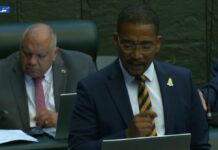
Deputy Premier Chris Saunders, in introducing Barnett’s lecture, lauded the senior litigator’s contributions and legacy of speaking up against the exploitation of people and natural resources.
“He’s not afraid to challenge the government of the day anywhere,” Saunders said, regardless of his personal friendships and political stance.
In his representation on the local context of the separation of powers, attorney Richard Barton outlined the Cayman system of governance and the historical evolution of the executive arms.
He said Cayman has come a long way democratically since 1959, when the first written constitution took effect. “Successive generations have continued to build upon the fundamental belief in this concept of governance,” he said.
Notable constitutional changes over the decades, he said, range from the replacement of the governor as president of the former Assembly, by the Speaker in 1972.
“The change from ExCo to Cabinet in 2003, the introduction of a premier and leader of opposition in 2009, and of course the creation of Parliament in 2020. The net effect of this evolution is that today the Cayman Islands can proudly boast a system of governance, in which the concept of the separation of powers is steeply entrenched. It will be left for generations that follow to safeguard against the consolidation of power and to ensure that necessary checks and balances remain,” Barton said.
House Speaker McKeeva Bush, in his opening remarks on the 50th anniversary, noted the stride taken here giving the parliament autonomy over its own affairs, a separation long due.
He urged lawmakers and the public to follow the lectures series marking the anniversary, which offers a multiplicity of functions “inclusive of the generating of ideas and intellectual debates and lectures, which will assist us in informed decision making processes in the country at least that’s what I hope”.
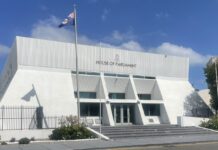
The Parliament of the Cayman Islands commemorated 50 years since the official opening of the first permanent home for the legislature, with speeches and festivities on the steps of the George Town building.
Opened on 31 July 1972 by then Governor Kenneth R. Crook, the Parliament building was designed by Rutkowski Bradford & Partners and built by McAlpine (Cayman) Ltd and Arch Construction.
Related Videos