Seafarer’s daughter, Department of Environment assistant field officer and, now, deep sea submersible diver, Sabrina Douglas has become the first Caymanian to explore the depths of the Cayman Trench in a submarine.
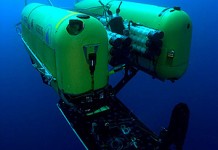
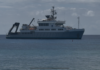
Douglas has spent the last few weeks on board the US Navy’s research vessel Atlantis, which is operated by Woods Hole Oceanographic Institution, with a team that is using the Alvin deep-sea submersible to explore the Cayman Trench and the Puerto Rico Trench.
On 10 Aug., she joined two others – the pilot and one other observer – on board Alvin to dive just over three miles down to the Mid-Cayman Rise, in the Cayman Trench, also known as the Cayman Trough.

“The descent didn’t even feel like the sub was descending at 47 m/min (154 feet a minute) or corkscrewing as it descended,” Douglas told the Compass in an email from Tampa after disembarking from the research ship late last week. “If you didn’t think about how deep you were descending into the deep ocean, you wouldn’t even know.”
She added, “There are four small windows on Alvin and unless you looked outside and saw all the small bioluminescence flying upward, it felt like you were just sitting in a sub on dry land which was getting colder by the minute.”
It took the submarine almost three hours to descend, she said, after which pilot Bob Waters carried out his checks, buoyancy controls, and tested the equipment.
“We stayed down for almost four hours with a max depth of 4,993 metres (16,381 feet),” she said.
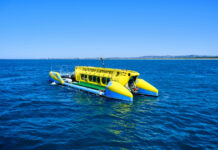
Before diving on Alvin, she said, the only other submarine she’d been on was the Atlantis tourist submarine, which used to take passengers down 100 feet, off the George Town coast.
Putting Alvin through its paces
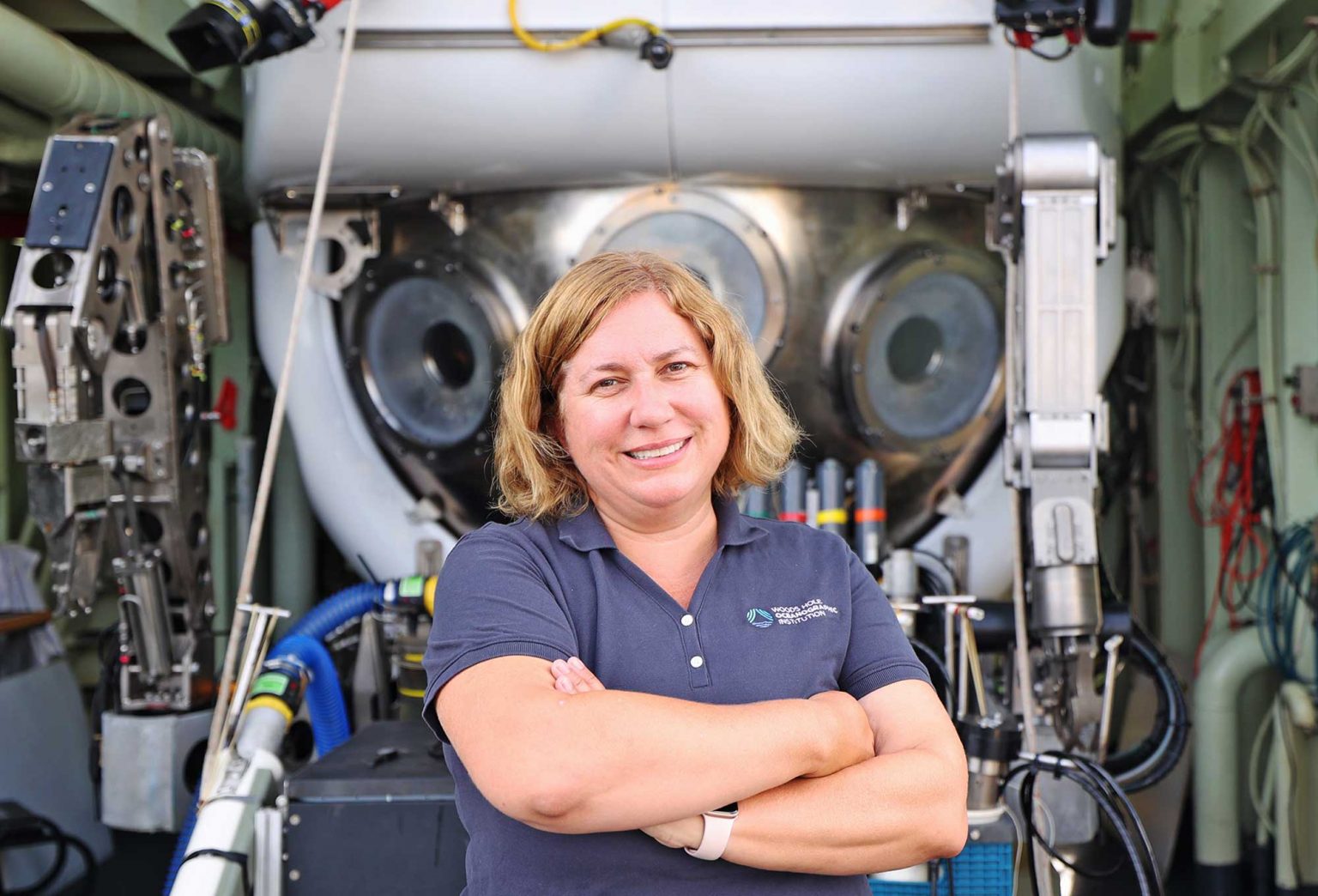
Douglas was part of the team on expeditions to put Alvin through various verification checks, following the sub’s recent certification to dive more than 20,000 feet, after an 18-month overhaul and upgrade.
Anna Michel, the National Deep Submergence Facility chief scientist, explained that since Alvin was certified to dive to 6,500 metres (21,325 feet) during sea trials, the sub has been at sea for the ‘Alvin Science Verification Expedition’, or SVE.
Michel told the Cayman Compass via email, “SVE was designed to ensure the sub is ready to return to science operations. We’ve been putting the sub through its paces; for example, we’ve been confirming all of the sampling gear works at these new abyssal depths and testing the new imaging system.
“At the same time, we’ve brought early career scientists out to sea so they can learn about how they could use Alvin in their research.”
Douglas was among those early career scientists chosen to take part. As a specialist in Geographic Information Systems, she helped the team prepare the bathymetric maps used for navigation in the deep dives.
“We always want to engage local scientists in our expeditions,” Michel said.
Exploring the world’s deepest hydrothermal vents
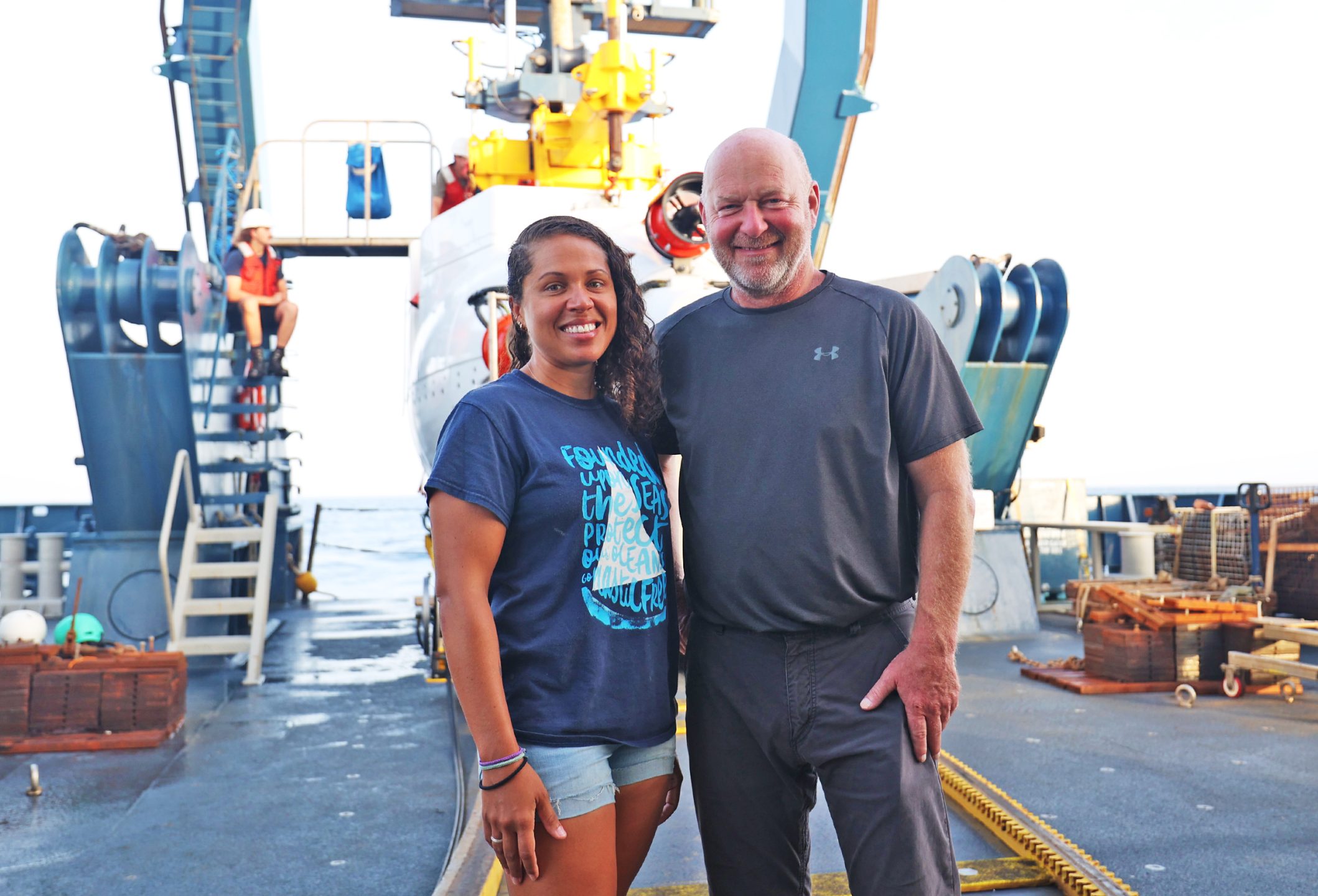
Douglas, along with deep sea biologist Tim Shank and pilot Waters, visited the Beebe Woods site, on the Mid-Cayman Rise, a ridge in the Cayman Trench. The site contains the deepest hydrothermal vents in the world.
“Once we got to the sea floor, we came across lots of sea anemones and squat lobsters,” Douglas said. “Then we started to come across what seemed like white rocks but as we got closer I realized that those white areas were areas filled with shrimp, Rimicaris hybisae, which are only found in Cayman waters.”
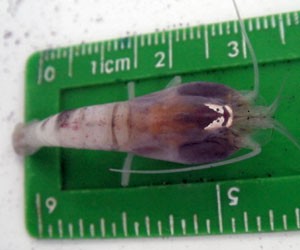
These ‘eyeless’ shrimp were discovered in 2010 during an expedition to the ‘black smokers’ – thermal vents that emit super-heated murky mineral-rich water – in the Cayman Trench with the unmanned deep diving vehicle HyBIS. The shrimp were named after the HyBIS.
Douglas continued, “Then we came up to the hydrothermal vent that was about 17m (55.7 feet) tall and saw the inactive stacks and a couple active beehives with black smoke billowing out. The sea life in the deep ocean is few and far between and much different than the sea life in shallower waters and they have adapted to higher pressures, no light, and scarce food sources.”
During its dives down the Cayman Trench and the Puerto Rican Trench, navigation, imaging, data, and operations at the new depth range were carried out in Alvin, which also collected a variety of samples, including rocks, sediment, water, and biological specimens.
Michel said, “The Mid-Cayman Rise was an incredible place to visit. We hope to come back again with Alvin so we can discover more about the geology, biology, and chemistry of this unique deep sea environment.”
Seafarer’s daughter

Douglas is the daughter of John Douglas, one of Cayman’s well-known mariners, and a long-time member of the Cayman Islands Seafarers Association.
“He was so excited for me to be able to get this opportunity,” his daughter said.
She added, “I am sure, as most parents would be, he was a little nervous of the depths but he always supported me in dreams and the path I was on and this was no different.”
‘Life changing’
Douglas described her experience on the expedition as “life changing”.
“Everyone on R/V Atlantis from crew to the ALVIN group has been so amazing and professional,” she said. “I personally can’t thank them enough for all they have done and all the questions they answered, they have taught me so much.”
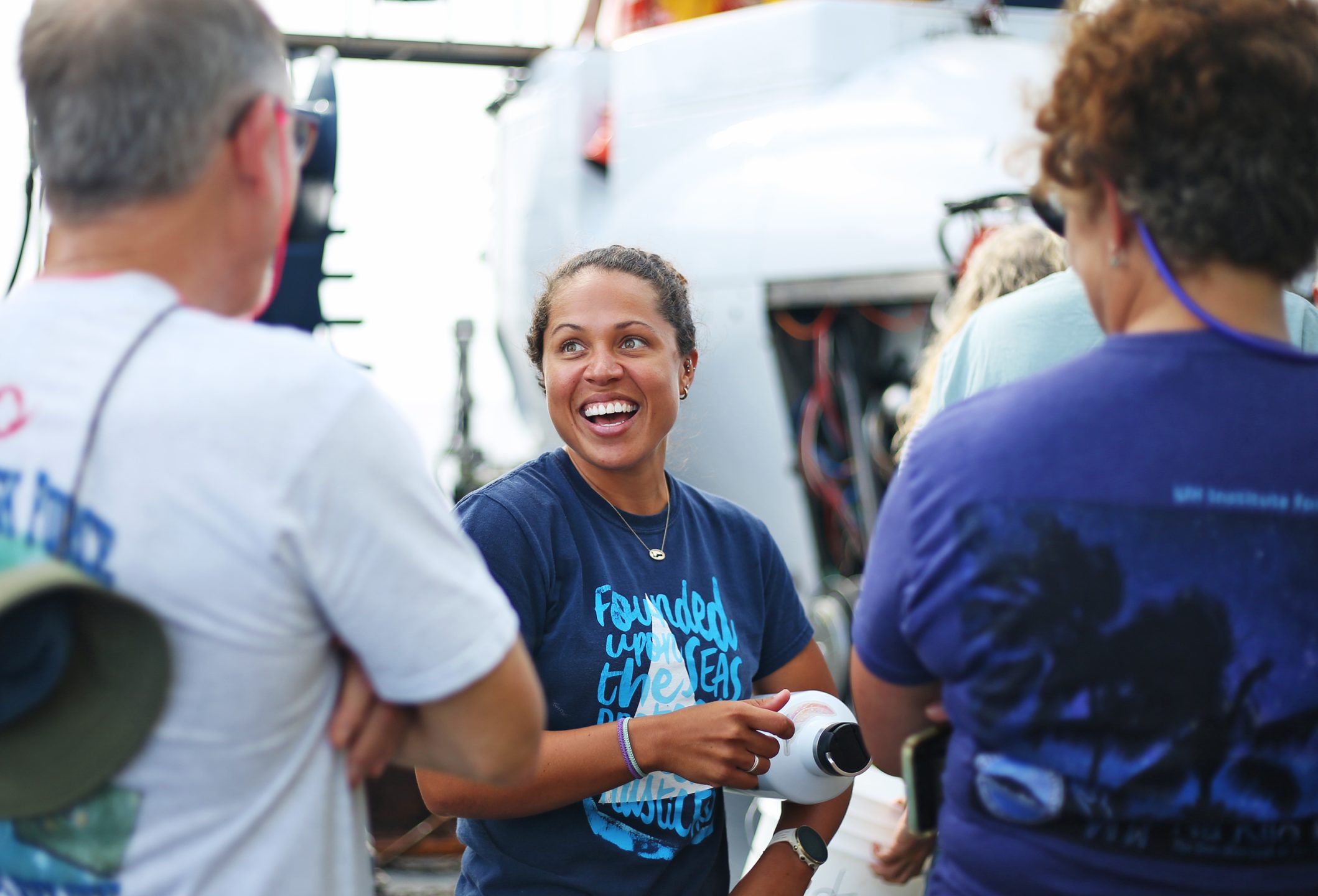
She added, “”R/V Atlantis carries out many operations other than HOV [Human-Occupied Vehicle] ALVIN and I would highly recommend any researcher to use this vessel. Many scientists wouldn’t be able to complete their proposed research without them.”
The team left San Juan, Puerto Rico, 2 Aug., where Douglas had joined them, and pulled into Tampa on 18 Aug.
Return trip for Alvin
This wasn’t the first time Alvin has explored the Cayman Trench.
The sub, which has been operating since 1964, first ventured down the trench as part of a series of geology dives in 1976 and ’77, after Alvin was certified for 4,000 metres (13,124 feet).
Alvin is named after oceanographer Allyn Vine, who was the driving force behind the creation of the manned vessel in the 1960s. In its 58-year history, it has carried out more than 5,000 dives worldwide.
Related Videos