


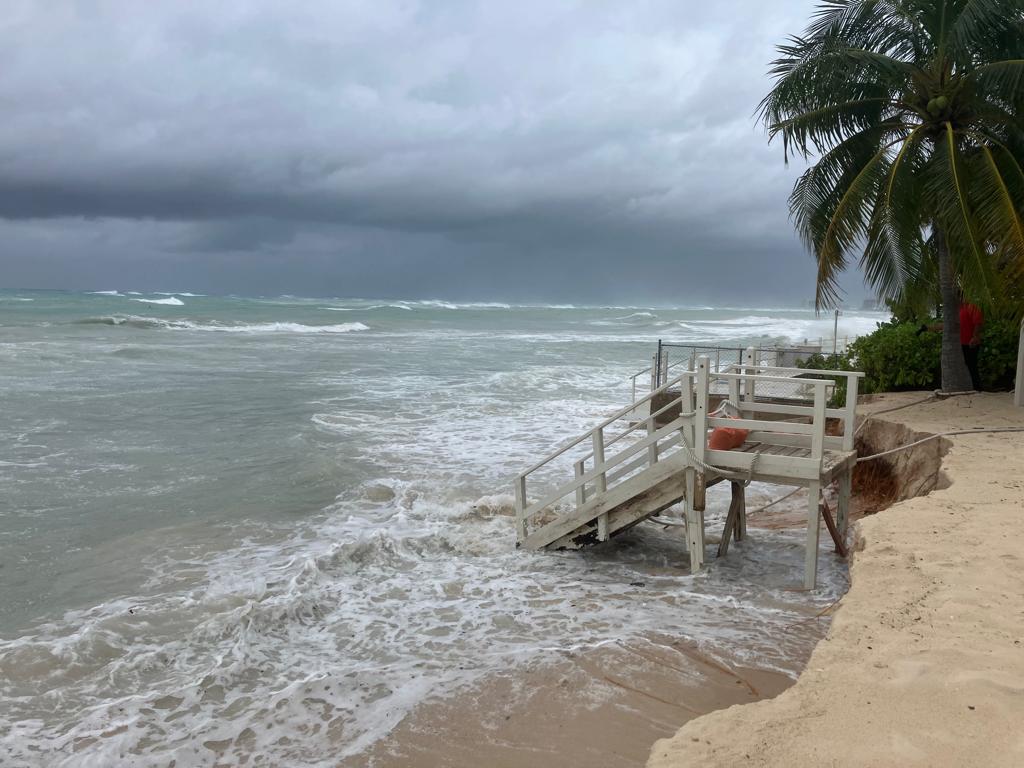
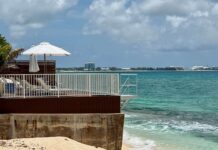
Hurricane Ian, which sideswiped the Cayman Islands Monday, has brought large sea surges that have hammered Seven Mile Beach, a long swathe of which had already been severely eroded.
Hermes Cuello, general manager of the Marriott Resort, says he is deeply concerned about the impact the storm has had on the beach in front of his hotel and the properties that stretch from Plantation Village to past Coral Beach.
That strip has been facing problems with erosion for some time. But prior to the passage of Hurricane Ian, pockets of sand had been restored in places by seasonal wave activity. Those gains were swept away Monday afternoon.
“Because the storm came from the south, we lost the whole beach. We are hoping there will later be winds and waves from the north that will bring some of it back, but it’s too early to tell,” Cuello told the Compass a couple of hours after the all-clear was issued Monday, as the Category 1 hurricane passed the islands, heading in a northerly direction.
Earlier this month, Cuello and property owners and managers along the southern end of Seven Mile Beach held a meeting at the Marriott Beach Resort to discuss the impact of the continuously eroding beach.
‘Four Mile Beach’?
“Cayman Islands is known for Seven Mile Beach, which we know originally was five and a half miles long, not seven, which now has turned into four because we’ve lost a mile and a half of beach,” he told fellow property managers and owners.
Storms, rising sea levels, developments built too close to the sea and natural erosion have all led to more and more sand disappearing from the beach in recent years.
Cuello said tourists are now aware of the problem, and taking it into consideration when booking places to stay.
Condo owners along the beach said at the 13 Sept. meeting that visitors now often ask for photos of the beach before confirming their bookings.
The general public, Cuello said, unless they regularly walk that section of beach or visited properties along it, were also unaware of the erosion, so he and others have been trying to raise awareness among the local community and the government of the issue.
The government last year said it would allocate $21 million to restore the beach over two years. This included a $1 million budget for a business case and feasibility study to be undertaken in 2022, and $20 million for the project, if approved, to be carried out.
Cuello says he has repeatedly sought an update on the progress of the plans, which may involve a sand-renourishment initiative, from the Ministry of Sustainability and Climate Resiliency, but has not received a reply. He said he invited the ministry’s chief officer Jennifer Ahearn, who is a member of a task force set up to address the erosion issue, to the 13 Sept. meeting, but also did not get a response.
The Cayman Compass also contacted the ministry to request an update on the business case and feasibility study but did not get a response.
Cuello said he was frustrated by the lack of updates from government, especially as Cayman heads into its busiest tourism season since 2019. “It’s been radio silence,” he said.
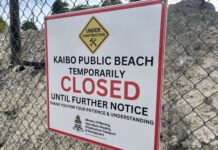
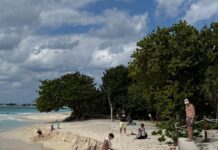
Guests transported to Public Beach
He said the hotel has been ferrying guests to Public Beach so they can enjoy a beach experience.
Seven Mile Beach has seen serious erosion previously. In 2005, Hurricane Wilma led to the loss of a long stretch of beach, and the government replenished it with 6,000 cubic feet of sand, Cuello said.
“They dumped it in front of this property and helped renourishment of this area, and it lasted all the way to 2018,” he told meeting attendees.
”We believe that something similar needs to be done, on a larger scale,” he added, but acknowledged that this was a medium-term solution because ”it will happen time and time again. Ocean levels are rising year on year…. It’s not something that we can solve by putting sand there. It will last a few years.”
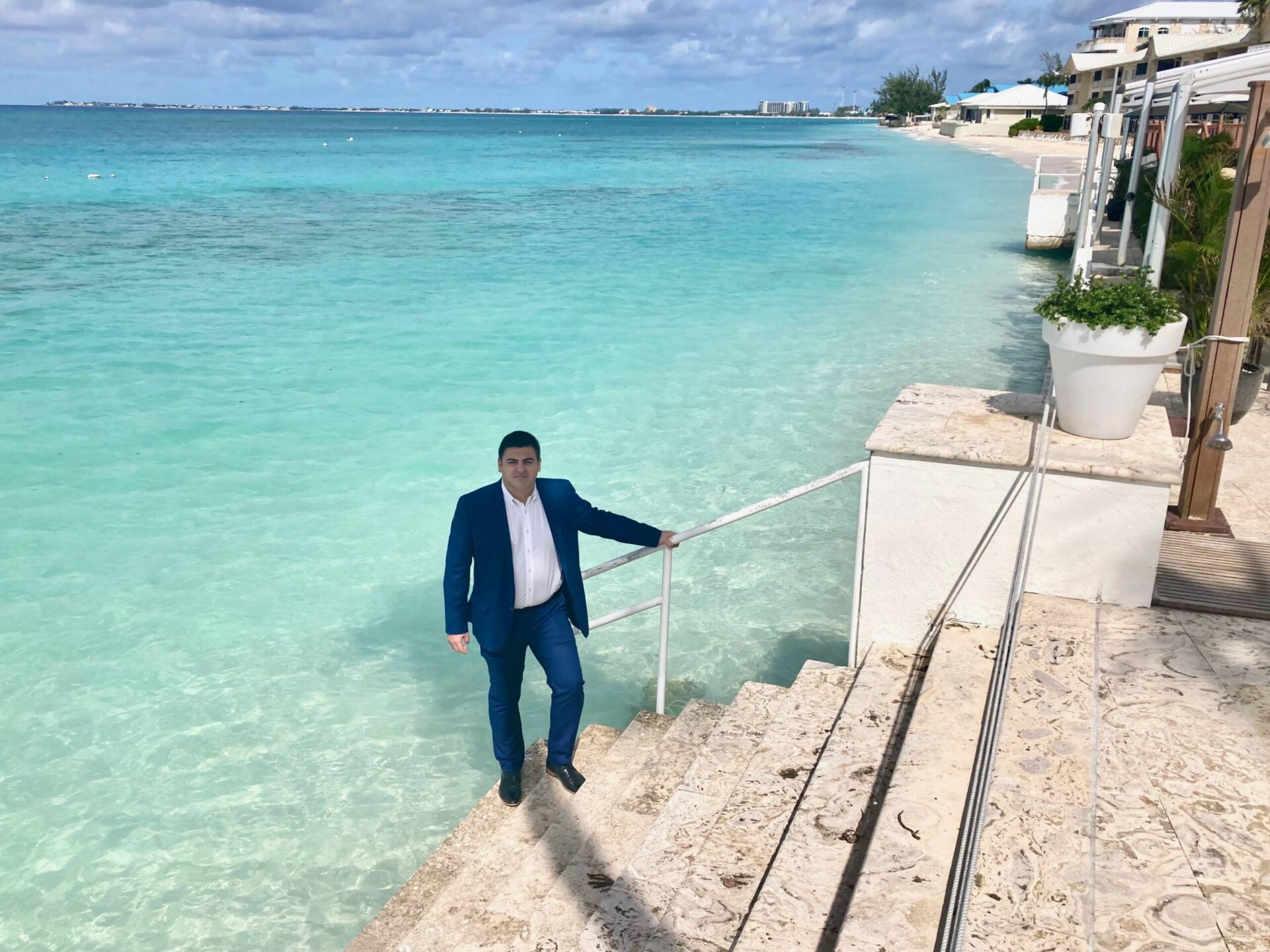
The Marriott is considering a $30 million renovation, he said, but if there is no beach in front of the hotel, which has the word ‘beach’ in its name, this may not go ahead, leading, Cuello said, to less business and fewer guests, and therefore potential job losses among staff and a drop in revenue for vendors that supply the hotel.
Condo owners and managers at the meeting agreed that they are facing similar challenges, and have to take the state of the beach into account when making decisions on whether to invest in renovations of their properties.
Fewer guests at such properties also mean less accommodation tax revenue for the government, the meeting attendees noted.
Yet another concern, Cuello said, was the possible structural damage being done to properties that are being inundated with waves as the beach disappears.
”My fear is we cannot have another year pass and we didn’t do anything about the erosion. We’ve had enough time to study, to discuss, to really plan, and we cannot just wait for another year and see all the customers and tourists go to another destination because we didn’t do anything about it,” he said.
Related Videos








Right on. WHEN IS THE GOVERNMENT GOING TO DO SOMETHING
“The general public, Cuello said, …, were also unaware of the erosion, ” – Let me correct that misunderstanding. The general public knew this erosion was going to happen when these buildings like Marriott were being built but the developers also knew that building down on the beach made them more profit and it would be Johnny-Come-Lately property owners and managers left holding the bag and unaware of the erosion they were buying into. I believe the realtors call it ‘buyer beware’.
Good luck.
Here is a solution, don’t waste money on sand and renovating the Marriott.
Redevelop it. Get permission to build the Marriott up to 12 stories if and only if they tear it completely down and rebuild where the carpark is. They could have parking under the hotel or buy the Islander property across the road and incorporate that into the property with parking and amenities similar to the setup at the Ritz. You could then have an amazing pool area and living beach that would come and go over time with enough buffer to survive multiple storms.
At the same time you need to tear out the seawalls and push back multiple condo developments such as Plantation Village, Tamarind Bay and Regal Beach. You need to sacrifice the front units there or redevelop the whole thing. Not sure what you do with the monstrous single family home with the gold leaf from Asia Minor, but it so ugly maybe it doesn’t deserve a beach.
I know this impractically impossible given the number of parties involved and the capital cost, but otherwise you end of with the southern end of SMB disappearing…
Whatever is decided please don’t waste millions of dollars in public money to throw sand in the sea for the benefit of a few private owners and the Marriott!
It is high time to stop talking about this problem, and take bold and courageous action. Engage the existing owners along the 7 Mile Beach and agree on a partnership for a real solution! START with immediately instituting a development Setback from the High Water Mark of at least 125 Feet. Immediately amend the Development and Planning legislation….NOW. We cannot have our cake and eat it too. I am tired of writing and talking about this, which I have done from the year 2000 General Elections.
I am not an engineer but a wall like in front of Sunset Cove from Plantation to Dart’s house 50-100 feet out in the ocean filled with sand would do the trick. I have seen pictures from years ago of the beach going that far out so it would be just returning nature to what it was