


For the first time since the pandemic halted the tourism industry, visitors are back on Seven Mile Beach. In the tumultuous 20-month interval since the border closure, there have been many significant changes to the beach.
Some are man-made, some are natural, others are a consequence of the pandemic. Many of the changes may be temporary, others appear to be permanent.
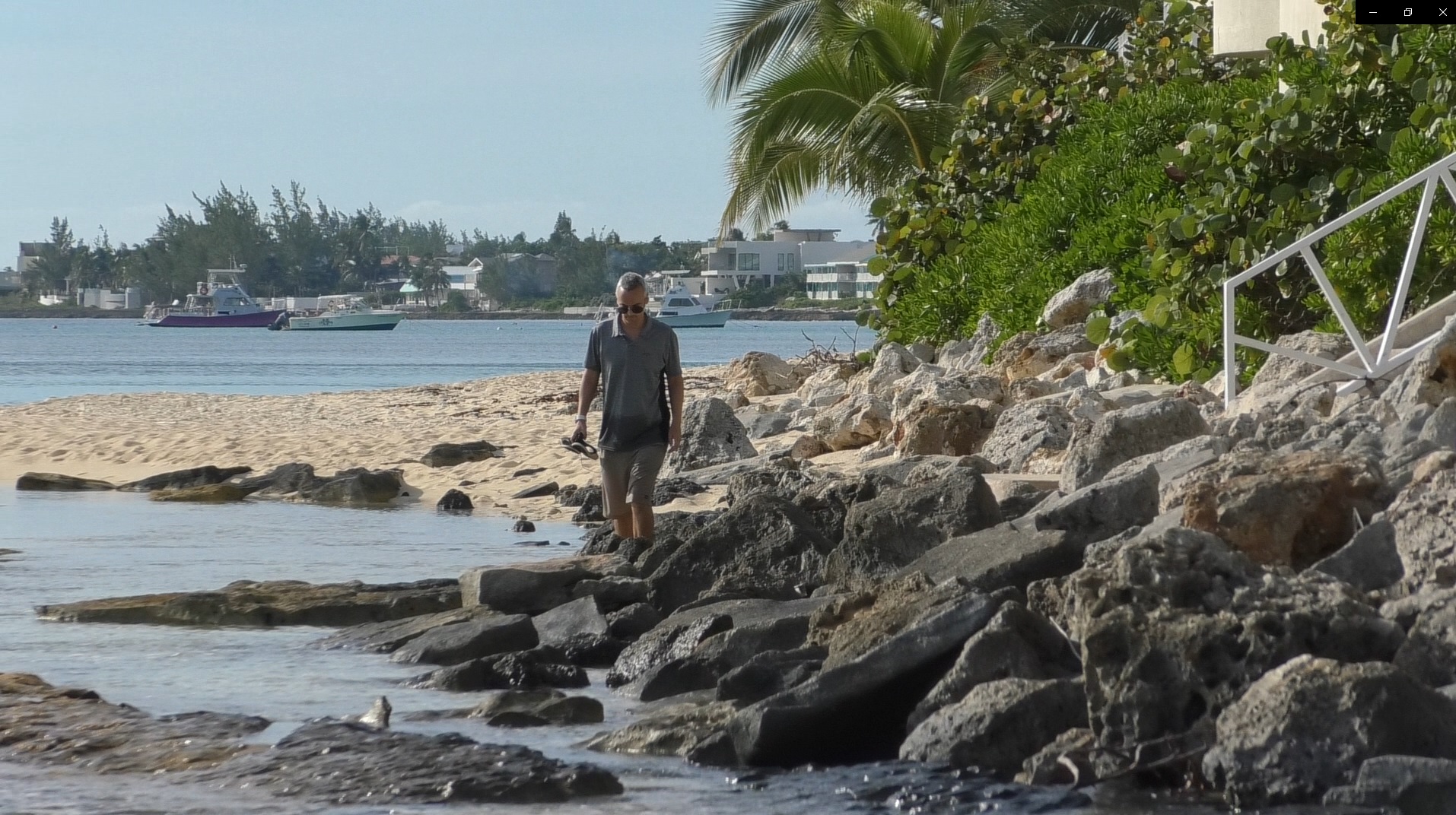
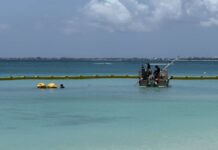
By walking, wading and paddle boarding, from West Bay to George Town, the Cayman Compass sought to document the shifting sands of Seven Mile.
End-to-end
At the rugged northern end of Seven Mile Beach, egrets fish in the tide pools as we tiptoe tentatively across the slick surface of exposed rock.
Further south, some of the first visitors to return to Grand Cayman enjoy the relative serenity of Seven Mile Public Beach, still free of the hordes of cruise passengers.
Beach huts built for vendors to rent snorkels and deckchairs lie vacant, waiting for the tourists and the trade to return.
The sound of construction work rings out in the quiet of the afternoon.
Hotel Indigo – the Dart group’s latest development – is going up close to the Kimpton.
The Watermark condos are nearing completion, a stone’s throw away. The work has yet to begin at Lacovia, but real-estate banners surrounding one of Cayman’s oldest condo complexes indicate the change that is coming to a wide swathe of beachfront.
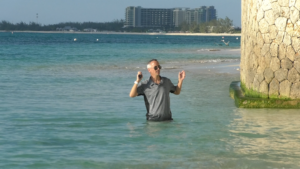
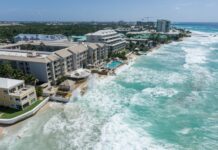
We wade waist-deep past the Coral Beach club to reach the old Royal Palms property. Erosion has stripped away the sand, and water laps against the damaged sea wall. A chalkboard still advertises cocktails at an empty bar that is falling into disrepair.
Along the southern end of the beach, residents have gathered to watch the sunset. Some congregate on strips of sand, others can sit on the seawalls at the perimeter of the property and dip their toes in the water.
At the Marriott, our walk comes to an abrupt halt. It is impossible to go any further.
A paddle board ride gives us a glimpse of the extent of the erosion further south.
Pockets of beach continue all the way past George Town Villas to the southern tip of Seven Mile, where the towering new Sea Crest condo complex is one of three major new developments to have emerged in the past few years.
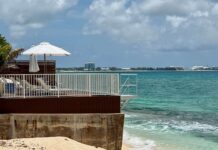
But the dominant feature of this stretch is water lapping against walls where the beach used to be.
Disappearing beach
Our journey spotlighted a handful of notable changes to Cayman’s primary tourist attraction, but the continued erosion of the beach was the most significant.
It is an open secret that Seven Mile Beach has never been seven miles long.
If you measure the length of the bay from Sunset House to the tip of North West Point you might get close. But the beach itself, by most estimates, clocks in at closer to five miles.
In terms of a continuous walk – stretching the definition to include a few detours into the ocean – we could make it from West Bay Public Beach to the Marriott – a distance of four miles.
While there are pockets of beach further south, we needed a paddle board to reach them.
Erosion in this area is nothing new. But according to the Department of Environment, the amount of beach affected and the length of the impact is the worst on record.
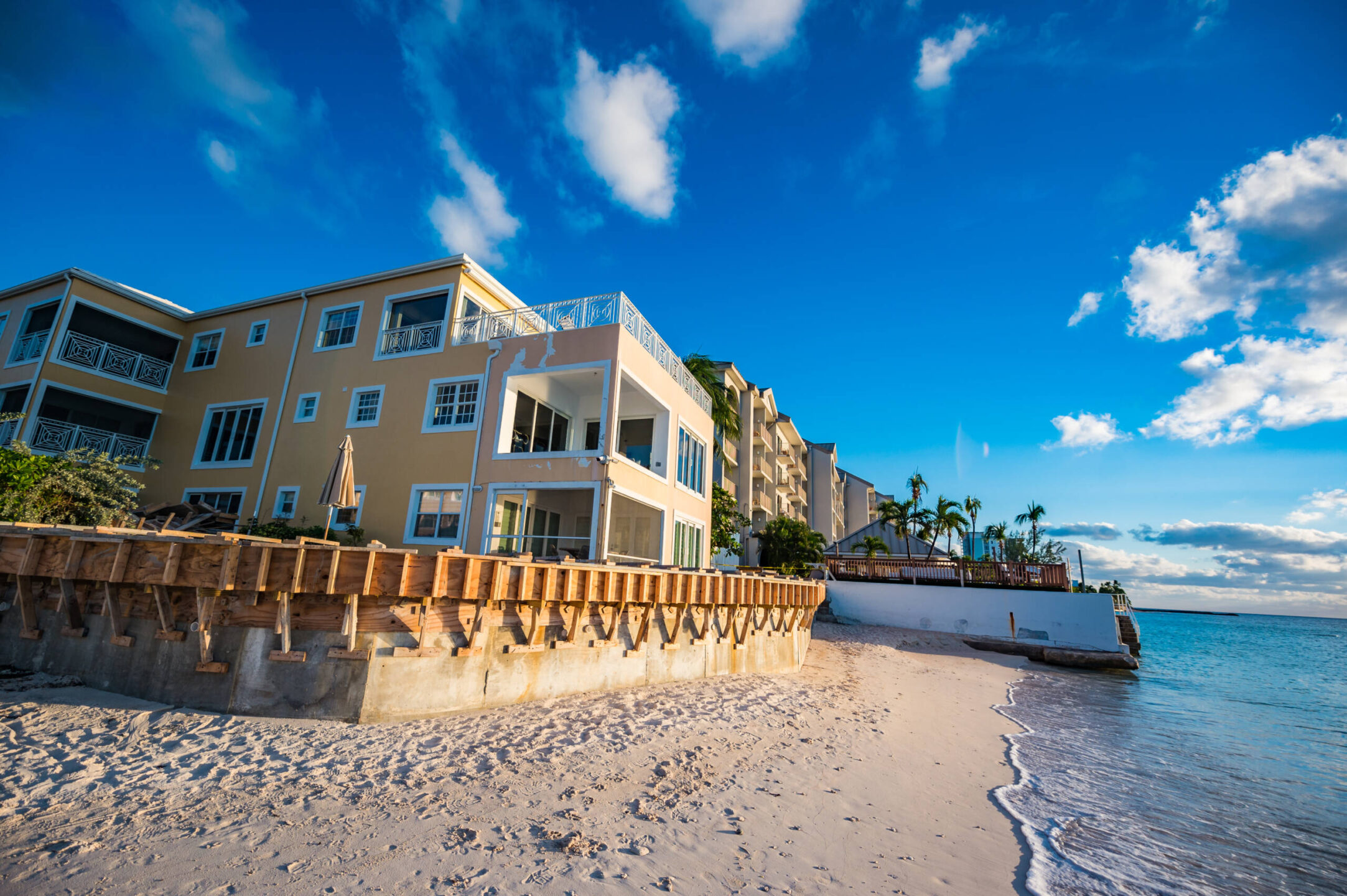
The presence of buildings and seawalls – many of them constructed decades ago – on the active beach has exacerbated the problem and government is now considering a $21 million “re-nourishment” project.
The DoE does not oppose the concept, considering it a viable medium-term solution to beach loss in the area.
But director Gina Ebanks-Petrie points out that the loss of sandy beach is more of a tourism and recreational issue than an environmental one.
Beaches ebb and flow with storms and currents, gaining sand in some areas, and losing it in others.
In fact, there is evidence that the Marriott’s loss has benefited some of the condos further north, where yoga classes now take place on the beach close to the West Bay Cemetery.
The department maintains that the best long-term policy would be to ensure new construction and renovation takes place inland of the vegetation line and to allow nature to shape the beach beyond that mark.
Disappearing beach bars
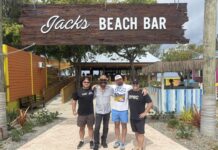
The sand is not the only thing that has disappeared in parts of Seven Mile. The business impact of COVID may not have been as bad as many expected, but the loss of Calico Jack’s and Royal Palms – two of the most popular venues for a casual afternoon drink at the water’s edge – will be noticeable changes for some visitors.
Both venues were shut down shortly after the borders closed and remain surrounded by construction fencing with no sign of imminent revival.
The Dart group owns both sites and is expected to announce plans for new facilities that dovetail with its other projects in the area.
Coral Beach, also owned by Dart, has reopened on weekends, although there is currently no beach in the area.
Coccoloba at the Kimpton and Tillies, at the former Beach Suites property – both also linked to Dart – are among the remaining beach-side eateries.
Handel Whittaker, the owner of Calico Jack’s, believes the institution will be sorely missed.
“I think most of what is there now is a little more upscale and I know people are perturbed about that because everybody loved the laid-back atmosphere of Calicos. You could sit in a swimsuit and have a beer and watch the world go by.”
Whittaker hopes to bring another venue back to the beach. But he is in no rush.
“It is something we are talking about,” he said, “I would definitely like to do something else on Seven Mile but it probably won’t be for another year or so until it is viable.”
He believes a more casual beach venue could be essential for tourists, particularly if cruise ships come back to Cayman.
Whittaker has been around long enough to remember the early days of Caymanian tourism. He was manager of the Galleon Beach Hotel in the early ’80s and recalls tourists and locals bumping elbows on the dance floor to the sounds of Memory of Justice band.
There was a special atmosphere back then, he says, with locals, residents and tourists coming together to enjoy the good times.
Amid the growth of the island, he believes those times have past, but he remains optimistic about the future and hopeful that Cayman is still a welcoming place for tourism.
“I really hope that Cayman friendliness hasn’t changed,” he said. “Tourism is part of who we are.”
New construction
There is no escaping the march of ‘progress’, however, as we walk along the beach. Despite a smattering of new homes and condos, the northern end of the beach has been less impacted. The tree line is still intact in places and older Caymanian cottages rub shoulders with newer mansions and condo developments.
The building intensifies as we pass the Kimpton Seafire Resort. Work is well under way for Hotel Indigo and on either side of West Bay Road, where a pedestrian footbridge will link the two elements of the Watermark condo complex.
The Westin Resort has recently completed a renovation of its pool area and deck. Behind the construction fencing that surrounds The Ritz-Carlton, work continues on a multi-million-dollar upgrade of the luxury hotel ahead of a December reopening.
Further south, a wide stretch of beachfront is about to be transformed, with the Lacovia complex set to be replaced by three 10-storey buildings.
Beyond that, where the seemingly endless stretch of sand gives way to smaller pocket beaches, the Comfort Suites has been transformed into a Hampton Inn and work has begun on a new Hyatt hotel close to the Wharf restaurant.
The first four floors of a smaller Hilton hotel, close to Kirk Market, are already up and the Seacrest condos make a new 10-storey landmark at this end of the beach.
Beach huts but no vendors
One of the pre-COVID controversies at Seven Mile Public Beach was the conflict between beach vendors renting chairs and selling food to tourists and officials keen to restrict unregulated trade.
With the visitors only starting to trickle in, there was no sign of any vendors at the beach this week.
One addition, though, is the row of narrow wooden huts erected close to the volleyball and football courts as a home for those entrepreneurs to ply their trade.
The huts, part of a new ‘vendor village’ at the site, have been in place since late 2019, and are designed to be used as ‘point of sale’ kiosks. There is also space in the parking area for food vendors.
The coronavirus and border lockdown struck before the new system – designed as a solution to concerns about unlicensed and unregulated commercial activity on the beach – could be put to the test.
Daphne Ebanks, who rented deckchairs, towels and snorkel gear at the beach, was one of the first to be given an operator’s licence under the compromise agreement that will allow vendors to trade at the beach.
She said she had been surviving through COVID on the government stipend and by catching fish from her boat. But she is keen to get back to business.
“I will be getting back out there. I am not going to worry about corona,” she said.
“I just want to get out there and give good service.”
She is less convinced about the new beach huts, however, which she believes are too small and too far from the main part of the beach.
“I think they should give us the go ahead to do what we are doing in peace. We are not worried about making a lot of money, but we hope we can go back and make a little.”
Other vendors were less keen. Seymour Silburn, owner of Seymour’s Jerk Chicken, said he would be waiting a while before bringing his mobile food stand back to tourist locations.
“I am not sure we will be going back down there because of this COVID business. We are people who are getting up in age. When the time comes we will see what happens but it is a frightening situation.”
The Public Lands Commission, part of the Ministry of District Administration and Lands, has responsibility for the vendor village. We reached out to acting Chief Officer Wilbur Welcome for an update on the project but received no reply by press time.
Absent cruisers
The success of beach rental operations may depend on cruise tourism.
But while some businesses may wish for the masses to return, locals and stayover tourists appeared to be enjoying the comparative serenity of a cruise-free beach this week.
We encountered no more than 50 people across the length of the beach on Monday – comparable with a single busload of tourists on a regular pre-COVID day.
Joggers, swimmers, paddleboarders and dog walkers took advantage of the open space.
At the Kimpton Seafire Resort, Ian Ratcliffe and his family, were among the first tourists to return.
Ratcliffe, whose father was a former police commissioner in Cayman more than three decades ago, is a regular visitor.
He said the peacefulness of the beach-front reminded him of past times.
No doubt, as Cayman begins to open up, some of the business activity will come back and the bustle will return to parts of the beach. But as the island returns to normal, there are many who hope steps will be taken to ensure the charm of Seven Mile is preserved amid the progress.
Related Videos









We purchased a timeshare from the Foster’s back in 2003 and have been coming to visit ever since. We absolutely love Grand Cayman and it’s people. We love to go to 7 Mile beach, originally with our daughter and now her family, the next generation with 2 little grandsons. Our last visit was in Jan. 2020 just before the pandemic was announced. Little did we know what was to come.
We are excited to come back as soon as we can make arrangements for travel. We love visiting your beautiful island.
Thank you for all of the excellent articles you share!
Oh please!! Royal Palms, Calico Jacks and other local venues are closing thanks to Dart. This is the Dart groups vision of the ‘new’ Cayman = there is no room for the charm and culture that used to attract people to the Islands. Divers are no longer wanted either. Hopefully it all backfires and TCIs reap the benefits!!
I think TCIs are already reaping the benefits… that is not my hope but I fear it may be the reality.