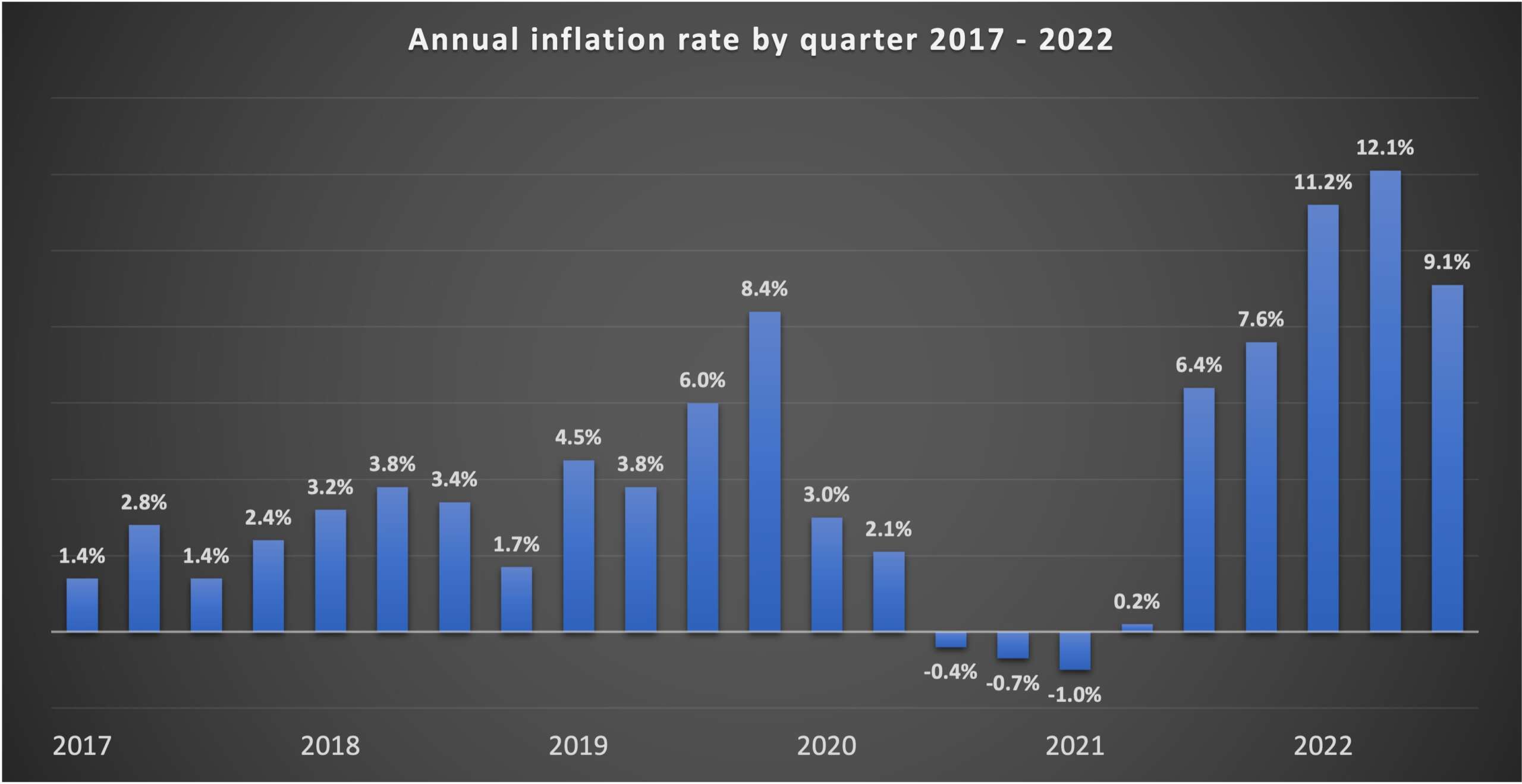
 The Cayman Islands consumer price index (CPI) increased by 9.2% in the third quarter of 2022, compared to a year earlier.
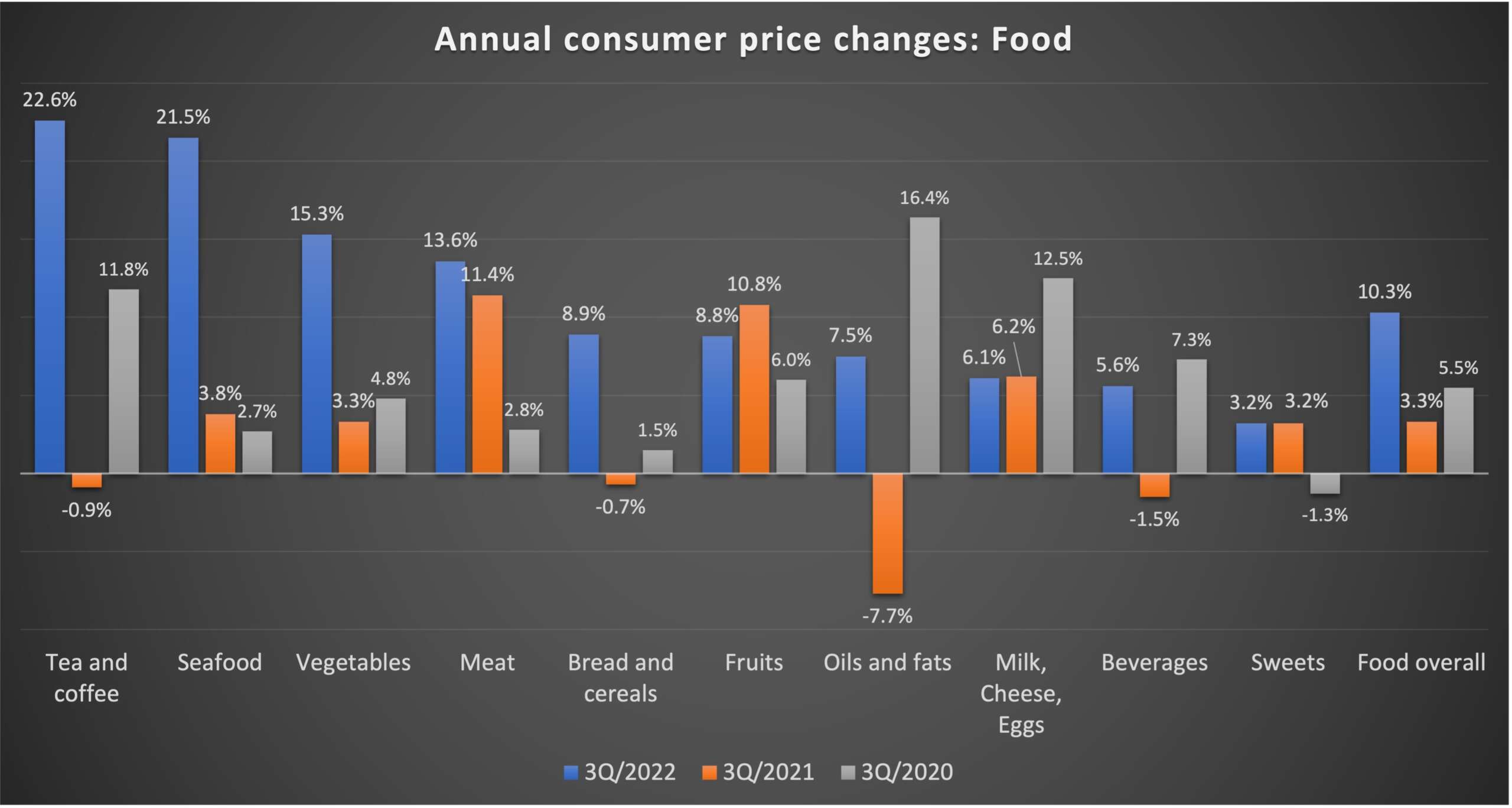
The rising cost of housing and utilities, up 14.2%, transport (10.5%), food (10.3%) and clothing (10.2%) all contributed to the high rate of inflation.
However, Cayman’s consumer prices came down from a record high of 12.1% in the second quarter of last year.
Overall prices increased by 2.9% between the second and third quarter. During the third quarter, utilities and food prices, in particular, continued to grow rapidly.
During the third quarter, tea and coffee prices jumped 22.6%, the cost of fish and seafood went up 21.5%, meat was 13.6% more expensive and the prices of vegetables were higher by 15.3%, compared to the same period in 2021.
Among utilities, the cost of water supply and electricity was 53.4% and 41.9% higher, respectively, than a year earlier. The cost of fuel was up by 35.4%.
Furniture and furnishings were overall 21.7% more expensive.
US inflation drops to lowest level in more than a year
More recent data from the US suggests that price increases will slow down somewhat.
On Thursday, the US Bureau of Labor statistics reported that annual US inflation fell to 6.5% in December, the lowest level since October 2021, as energy prices eased.
Although US consumer prices remain comparatively high, it was the sixth consecutive month of the pace of inflation slowing, down from 7.1% in November.
The month-on-month price decline of 0.1% was driven mainly by a fall in gas prices.
Core inflation, which excludes volatile energy and food prices, increased by 0.3% from November or 5.7% over 12 months.
Analysts, who have taken the latest figures as a further sign that inflation has peaked and is falling, now believe the US Federal Reserve is more likely to further slow the pace of its interest rate adjustments.
Most are expecting only a quarter point rise of the federal funds rate at the next meeting of the Fed’s Federal Open Markets Committee in February.
Last year, the Fed hiked rates seven times by a total of 4.25 percentage points, including a 0.5% rate increase in December, to fight quickly rising prices.
This has significantly raised borrowing costs in the Cayman Islands, where financial products, such as consumer and corporate loans, as well as mortgages, are priced at a margin above the base rate derived from US interest rates.
Additional interest rate hikes are expected as US inflation is still some way off the 2% range targeted by the Fed.
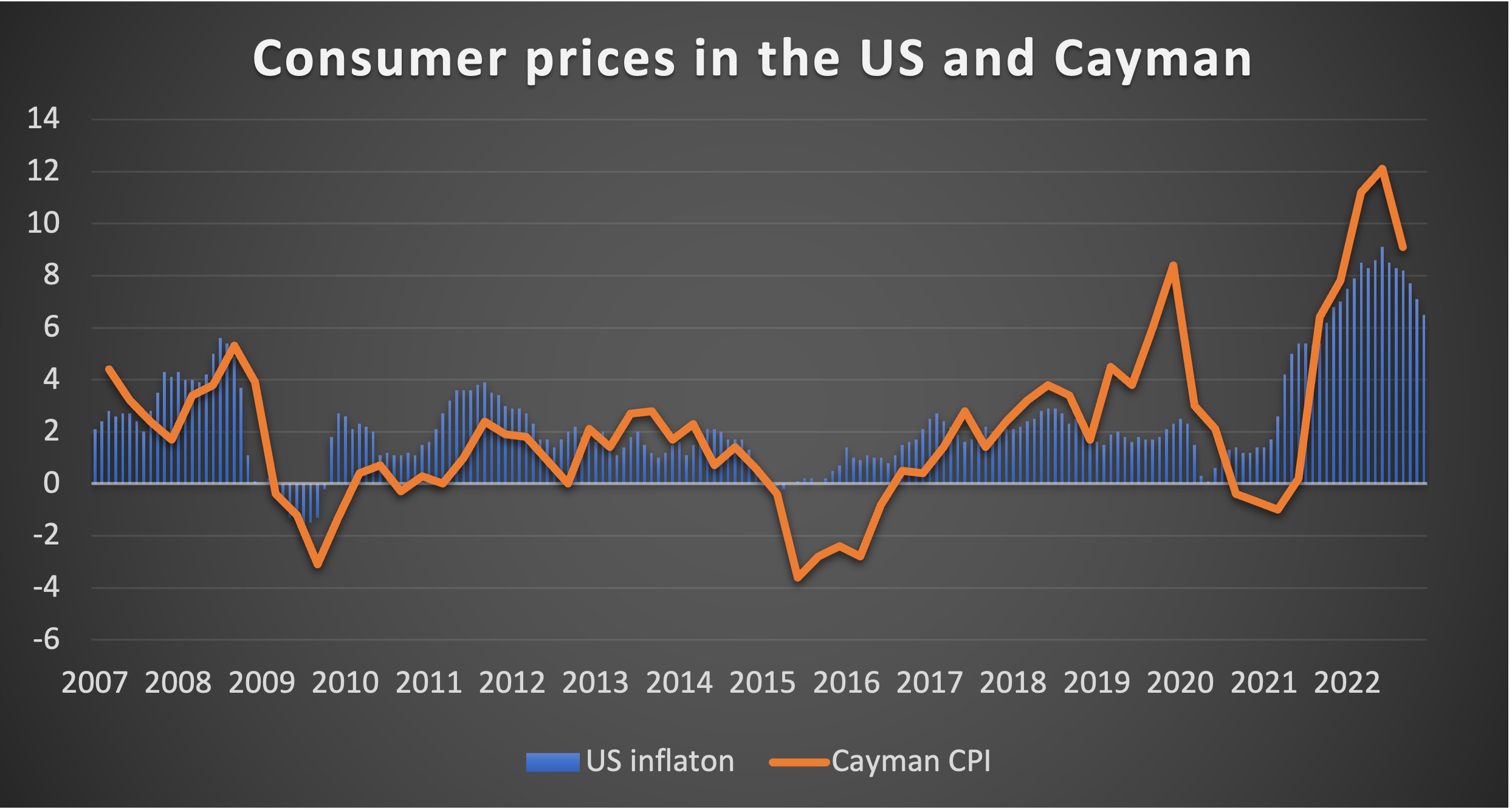
Local consumer prices are also closely correlated with prices in the US, from where most goods are imported.
High prices in local supermarkets are unlikely to fall. Even though certain food items like bananas or oranges dropped in price in the US in December, overall US food prices increased 0.3% compared to November and 10.4% year on year.
Related Videos