 Of the hundreds of Cuban refugees who petitioned the Cayman government for political asylum in recent years, Amaury Rodriguez is one of a handful granted that coveted protection.
But as he and several other Cubans who’ve been granted asylum now know, the asylum they fought so long and hard for has effectively made them prisoners in a free land.
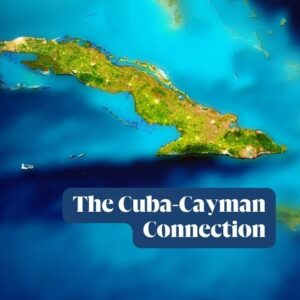
In this third chapter of The Cuba-Cayman Connection, the Compass delves into the complicated, and ambiguous, process of applying for asylum, as well as the shocking fate that awaits the successful applicants and grim future of those who are denied.
Between April and December last year, 353 Cuban nationals arrived in Cayman’s shores, dozens at a time, prompting fears that, if left unchecked, the numbers could reach that of 1994 levels, when 1,183 arrived.
The sudden uptick in 2022 was triggered by fears that US President Joe Biden’s policy requiring refugees to be granted permission before they travel to the US, would leave asylum seekers stranded on the US-Mexico border if they didn’t make it into the country before the policy’s enactment.
The unintended consequences resulted in a historic mass Cuban migration, with well over 200,000 people fleeing the country – a handful of whom arrived in Cayman.
Handling the crisis
Of the 353 who arrived in Cayman in 2022, 350 applied for asylum, prompting the government to amend legislation to address what Border Control Minister Chris Saunders called a “crisis”.
Under the amended legislation, the Customs and Border Control director can determine if there is a “reasonable likelihood” that an asylum seeker, if repatriated, would face persecution based on their race, religion, nationality, membership of a particular social group or political opinion.
The director is also empowered to refuse an application from an asylum seeker if they feel it is without substance, after which the application is certified as “clearly unfounded”.
That person would then be repatriated without an option to appeal the decision to the Refugee Protection Appeals Tribunal.
Saunders said this provision was being put in place to prevent people using the appeals process to remain in Cayman for a longer time.
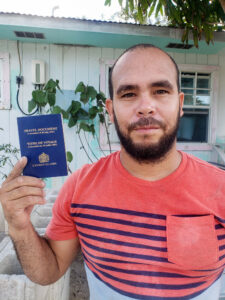
The change to a swifter process came too late for Rodriguez, who endured a three-year battle before multiple tribunals and courts before he was granted asylum in Cayman.
“When I left [Cuba], I didn’t know where I was going. I just needed to get to somewhere that I could be free,” said Rodriguez, who landed near Morritt’s in East End in July 2017.
He says he was initially placed into the Immigration Detention Centre at Fairbanks, and six months later his first asylum application was denied.
“They did not understand that they were not only deciding yes or no about a person but that they were defining what was going to happen next with that person, his freedom, his life,” said Rodriguez.
Eventually, his asylum claim was accepted, and he was released into the community with a new lease on life, or at least so he thought.
Fears of being sent home
But not everyone who applies for asylum is successful, as was the case of Thomas Perez Marin, a fisherman who fled Cuba for fear of what he said was unjust persecution and corruption.
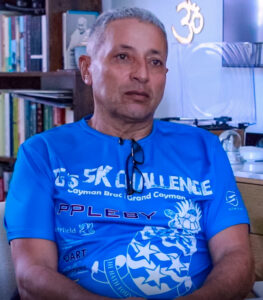
“Before I left Cuba, I told my wife, I hear they are offering asylum in Cayman, let us go, let us leave this place and make a new life in a free land,” Marin told the Compass.
After enduring an inter-island journey aboard his makeshift fishing vessel, which almost capsized during a passing storm, Marin arrived in Cayman on Christmas Eve 2021.
When Compass staff spoke with him, he said he was afraid to be repatriated to Cuba, because the penalty for illegal emigration is a jail sentence of from three to five years.
“But my sentence would be worse because it was I who took the six other men out of the country illegally on my boat, so I would face charges of human trafficking in addition to illegal emigration,” he said.
One week after interviewing Marin, Cayman Compass learned that his asylum application was declined, and he was repatriated to Cuba.
The official process
In response to Compass queries regarding the asylum process, a CBC spokesperson provided limited insight into the memorandum of understanding between the Cayman and Cuban governments, which was signed in 2015 and due to be revised in December last year.
“We are unable to share exact details of diplomatic talks held in December between CIG and Cuba but can state that Cuba agreed to receiving their citizens back in a timely manner and CIG continues to process and repatriate those that arrive illegally in a timely manner,” said the spokesperson, who added that they were unable to provide any details about the matrix that determines if a person qualifies for asylum due to its “sensitive nature”.
As to why CBC officials do not allow Cuban refugees who do not wish to remain in Cayman the chance to continue their journey, the spokesperson said their hands were tied by international conventions.
“Most arrive in vessels that are not seaworthy and are unable to continue on or state that they don’t want continue on,” said the spokesperson. “When landed and interviewed, they ask for asylum which we are then bound to process in accordance with the International Convention on the Treatment of Refugees.
“Their application for asylum is processed until a decision is made. In the 2015 MOU… it was agreed upon by the governments of the Cayman Islands and Cuba which defined timescales within which undocumented Cuban migrants would be repatriated to Cuba from the Cayman Islands.”
Those timescales were not released.
‘A prisoner in a free land’
After being granted his asylum status, Rodriguez was issued a Cayman Islands Political Refugee passport. However, he soon learned that while the document granted him freedom to remain in Cayman, it made paradise his prison.
“We left a large prison island that is Cuba for Cubans and it seems that we came to the backyard of that island, because we fell on a small island that also makes us prisoners with regulations and bad laws,” said Rodriguez, as he showed his blue passport with handwritten identifying details.
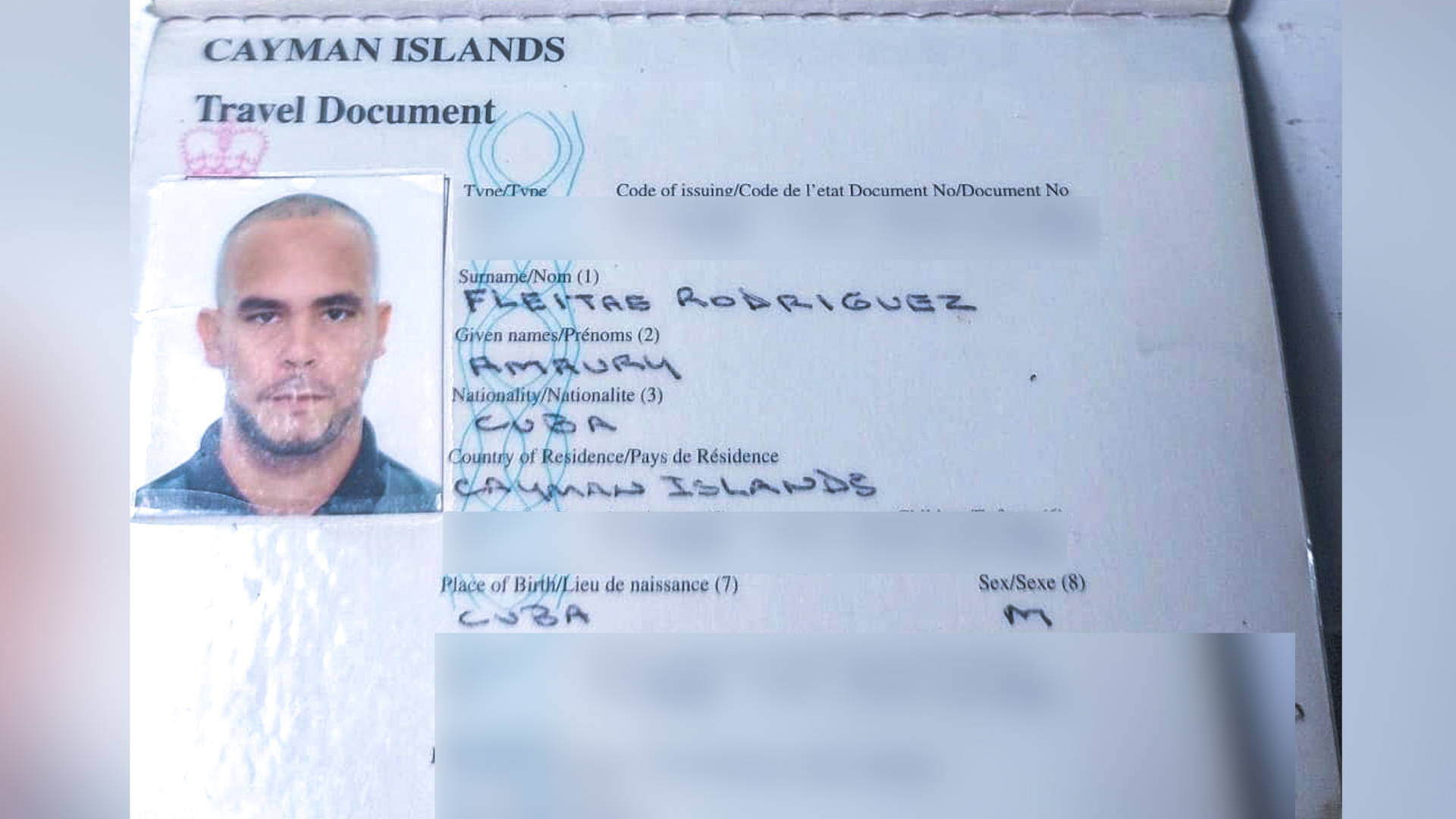
While the document says it is valid for travel to any other country except Cuba, Rodriguez says his attempts to travel revealed no other country willing to accept that passport.
“I travelled through Jamaica to El Salvador and the immigration officials in El Salvador did not admit me for travelling on this document,” he said. “I was sent back to Jamaica who also did not admit me, and sent me back to Cayman.”
It would appear that the travel restrictions are partially deliberate because of instances where Cuban applicants who, after having been granted asylum on the grounds of fear of persecution in their home country, then frequently return for visits to Cuba or to carry out business there on a regular basis.
Putting the travel restrictions aside, those who are successful find themselves searching for jobs in an already competitive market, in an expensive place – many having come from impoverished circumstances. Genuine political asylum seekers must accept these circumstances as part of their new lives.
While the new legislation for granting or refusing asylum now more closely mirrors the UK model, the social and economic concerns about the implication of the assistance provided by Cayman to Cuban refugees remains a contentious topic.
We explore this in the fourth chapter of The Cuban-Cayman Connection – ‘When the shoe was on the other foot’.
Related Videos