

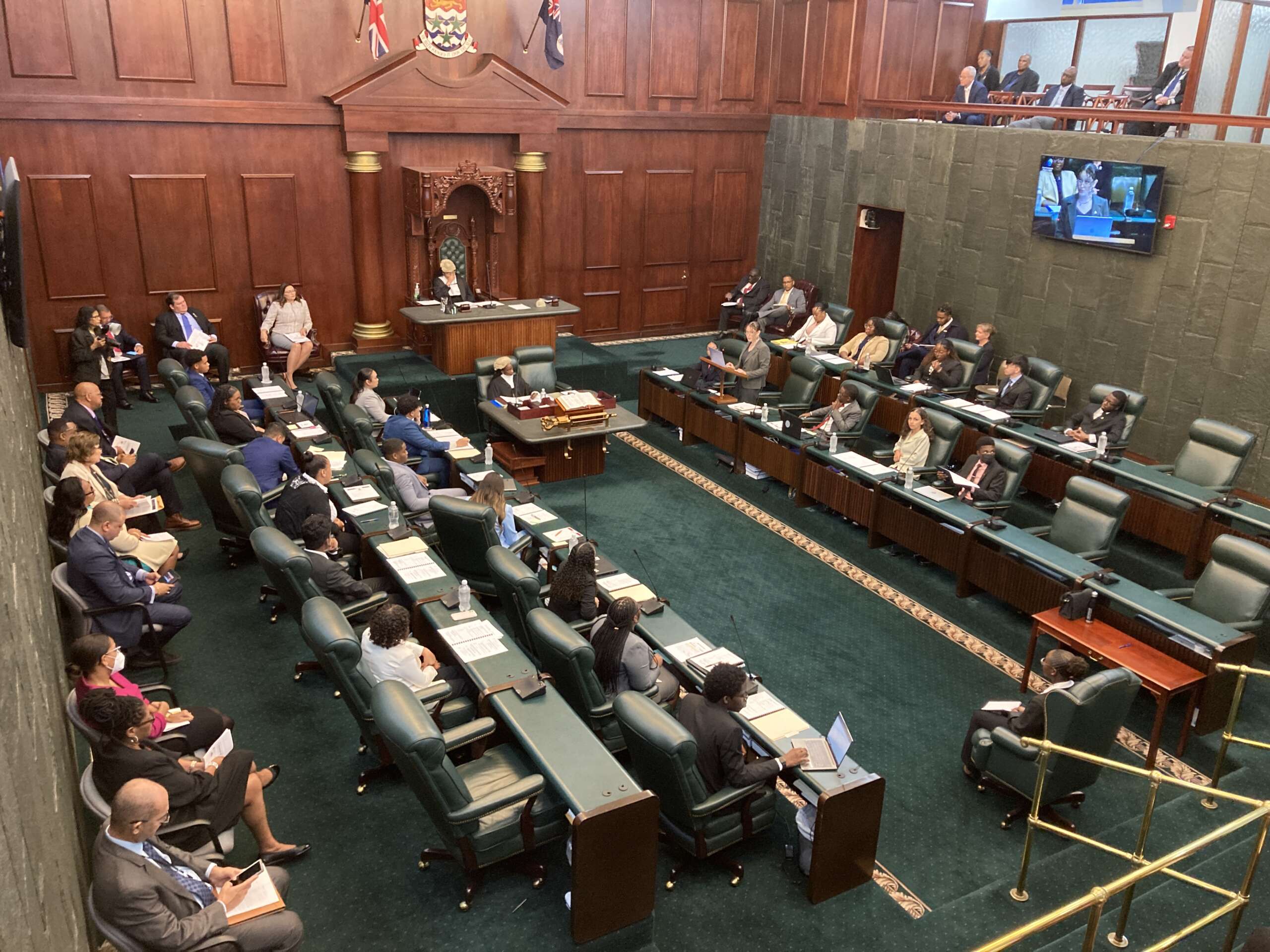
In a closely fought debate in Parliament, Cayman Islands’ future leaders dismissed progressive income tax as a way to overcome inequality and wealth disparity.
Opposition members who argued for the motion suggested it would provide economic stability to the islands and help to create a “more just and equitable society for all”.
But young parliamentarians representing the government said it would simply penalise those who work hard, and dubbed the idea both “ludicrous” and “very unlikely to succeed”.
More equitable and profitable
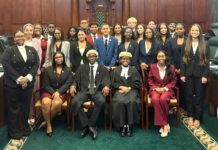
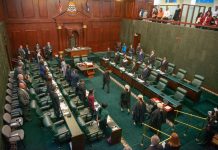
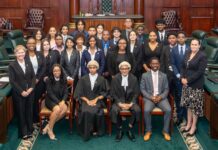
The Youth Parliament – made up of 26 young people, aged 14 to 20 – sat for its 16th annual meeting in George Town, Grand Cayman, on Monday, 13 March.
Following opening remarks, the session began with the Opposition’s presentation of a private member’s motion on a progressive style of income tax.
The motion proposed that the tax could lead to improved access to education, housing, healthcare, safety nets and security for Caymanians.
Deputy leader of the Opposition Abbey Walton said it could boost economic stability and allow the government to deal with future crises such as that of the COVID-19 pandemic.
She added that progressive income tax – which would see higher earners pay more – is more equitable and profitable than the current system of consumption tax.
Member of Parliament for West Bay Central, Lorlie Bryan, told the House the cost of living in the Cayman Islands was 44.3% higher than the United States and is expected to increase.
She said it is “unacceptable” to allow the situation to continue and income tax would provide a solution by redistributing wealth from the rich to the poor.
Bodden Town West MP Christopher Sanchez said, if implemented, most of the Cayman population would not be aware of the proposed tax being deducted.
However, it would allow the government to gain funds for grants and subsidies with the condition that businesses must lower prices – boosting middle class disposable income.
Also speaking for the motion, George Town South MP Abygale Elliott gave examples of ways the progressive system of income tax could work.
“We can all work together to increase the equity in Cayman,” she said. “Even the blind can see this is the way for our country to go.”
Leader of the Opposition Jhenelle Colquhoon said the current quality of life in the Cayman Islands is “regressive”, but a progressive tax, while difficult at first, would provide relief.
A ‘chuckle-some’ notion
Arguing against the motion, Minister of Financial Services and Commerce Chloe Reid gave an impassioned address in which she said an income tax would not solve wealth disparity.
She said, if implemented, the “ludicrous system” will not allow low income earners to be better off and will create a greater social and economic divide.
“It’s looking to me now that it would do more harm than good,” she added.
Minister of Education Chad Powell Jr. called the proposal “outrageous and chuckle-some” and said the Opposition grossly underestimated what the government does for its citizens.
He told the House that when requesting public feedback, the response he received was “overwhelmingly against”, and reminded the government to be “the voice of the people”.
“Our lack of tax here on island is a source of pride for Caymanians… and a reason that foreigners move here,” Powell said.
‘Unjust’
Mia Groves, Bodden Town East MP, suggested that to tax the rich more than those with lower incomes would be “unjust”.
“This would cause the motivation to work less and create lower economic output,” she said.
Cayman Brac East MP Pranav Anu told the House that the Cayman Islands has a lower rate of poverty than nations that have already implemented income tax.
“We as a government take pride in not stealing the wealth of our citizens – something the Opposition seems to want to change.”
Minister of Health, Wellness and Home Affairs Keira Bodden said the “preposterous” motion would not lower the price of goods and instead add economic stress to the public.
Deputy Premier Alexander Harris concluded the debate by saying the motion could scupper decades of economic prosperity from foreign investors taking advantage of the lack of taxation.
“The Opposition needs to realise that we are not in a Robin Hood fairy tale,” he said. “Their proposed solution of taking from the rich and giving to the poor will not fix wealth disparity or the class divide.”
Following a short reply from the deputy opposition leader, government members rejected the motion by 11 votes to nine, with one abstention.
The Youth Parliament also debated implementing a new public transport system.
Check back for a report on the results of that vote.
The entire parliamentary session can be viewed on the Cayman Islands government YouTube channel.
Related Videos









It is the lack of direct taxation that has enabled the Cayman Islands to have one of the highest standards of living in the world.
Introduce direct taxation and billions of dollars would exit.
It’s always attractive to want to take other people’s money to spend on those who haven’t earned it. But the result would be catastrophic here.
I think the idea is if you taxed high incomes you would lower the import tax from 22% to say 15% which would benefit everyone and help the poor
The figure of a 44% higher cost of living can be explained by the fact that this number is close to the combined Federal, State, and Local taxation of income, for example in the US. Other countries have more or less % taxation. But if you go to the store and an item is 44% more than it would be in for example the US, you are using a CI dollar that has not been reduced by you first having to pay the tax on earning it, so in the end it represents a consumption net equivalency. Except that with a progressive tax system, those who have incomes at the lower end would pay a smaller % than those at the high end. The principle is that the social infrastructure has provided an opportunity to those who have taken greater advantage of it to prosper more, and so it is reasonable for that segment to contribute more to its maintenance. Every sovereign entity can make its own tax rules and there will be endless controversy, but progressive taxation recognizes that a flat consumption tax system is more burdensome on the lower income group. Cayman culture seems to feel the condition of a lack of income tax, progressive or not, has historical and cultural roots, so probably the most accurate remark in the piece is: “Our lack of tax here on island is a source of pride for Caymanians”. However, if you think that it is “… and a reason that foreigners move here”, those foreigners seem to find immediately that their exchange currency does not go as far as it did back home, and that is precisely the 44% point. Quite an interesting article. Nice to see youth participating.