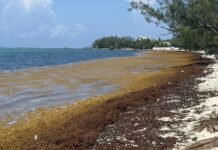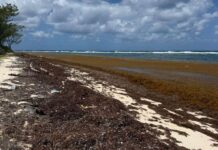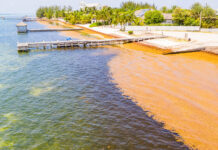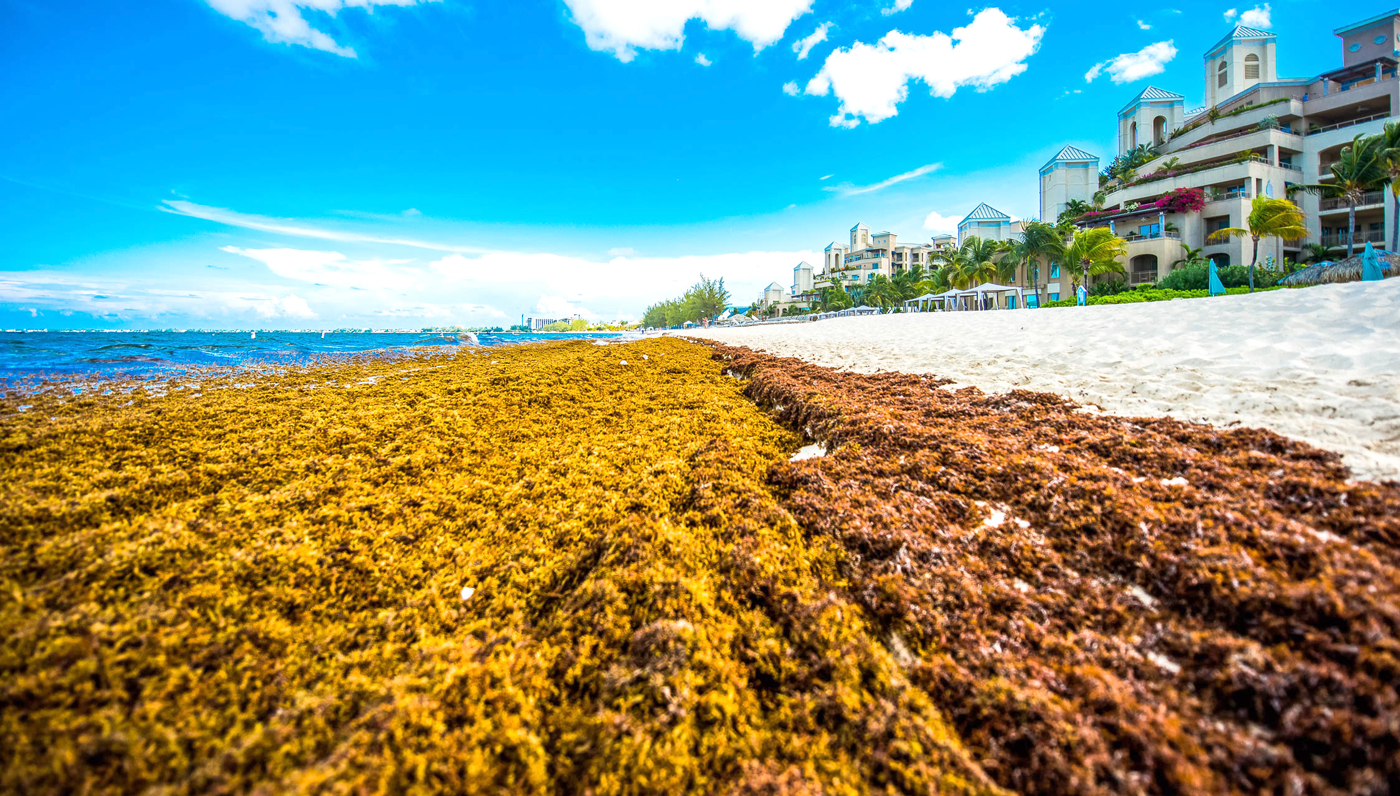
Government agencies say they are continuing to work on a national response to this year’s expected influx of sargassum.
A task force, established in 2018 to tackle the blankets of sargassum affecting local beaches and boat ramps, is currently working to produce “a holistic framework to quickly coordinate a national response in the event of Sargassum stranding incidents”, according to a Ministry of Sustainability and Climate Resiliency press release.
The ministry is working on the response with the Department of Environment, the Cayman Islands National Weather Service, Hazard Management Cayman Islands and other agencies.
It noted that the DoE and National Weather Service have access to regional sargassum forecasting and tracking systems, including NOAA’s predictive sargassum model. It also acknowledged that it remains difficult to predict local stranding events before they occur, as a combination of interrelated factors, including prevailing winds and complicated nearshore currents, contribute to whether floating sargassum lands on local shores.
No ‘one size fits all’
The ministry’s chief officer, Jennifer Ahearn, said in the release, “The Cayman Islands is one of many countries increasingly impacted by large Sargassum blooms over the past decade. These influxes of Sargassum are driven by external factors such as climate change and increases in nutrients from terrestrial deforestation and represent an emerging, long-term issue that governments, scientists and private sector organisations across the Caribbean region are all working to address.
“At this time, there is no ‘one size fits all’ solution to Sargassum. Each largescale beaching event is different and responses – whether led by the public or private sector – will need to take these unique circumstances into account to ensure our interventions do not cause unintentional, negative impacts on local habitats and species.”
Clean-up methods
Various methods of removing the seaweed from local coastlines have been used over the years, including making sargassum clean-ups part of the annual National Community Enhancement (NiCE) projects in which unemployed Caymanians are given seasonal work.
Workers have used rakes or small excavators on the beaches to remove the rotting sargassum.
Another effort, carried out last year, involved using a pump system to remove sargassum in the North Sound that was inundating the coastline around Garvin Park in West Bay. In that operation, workers removed more than 2,880 square feet of sargassum and took it to the George Town landfill, before the seaweed degraded to a point where pumping it out was no longer feasible.
Government says using the pump-system method again will depend on the unique circumstances of the incident, and the potential impacts on the natural environment, communities and Cayman’s tourism product.
“The Government continues to actively monitor the Sargassum blooms and is prepared to act upon stranding incidents as we have in the past, whether through clean-ups of public beaches and boat ramps led by the Public Works Department or using new techniques like we did in response to the North Sound stranding event last year,” Ahearn said.
“The national response framework will serve to formalise existing roles and responsibilities, and clarify thresholds for mobilising certain agencies,” she added.
The DoE has developed informational materials and a seaweed removal enquiry form to help landowners determine when action is needed to address influxes of sargassum and when it is best to let nature take its course.
The release noted that special precautions should be taken in removing sargassum during turtle nesting season.
Risks to marine environment and people
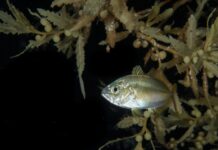
It also pointed out that, in larger quantities, sargassum blankets can reduce water oxygen levels and light penetration and can negatively affect marine life, and cause a nuisance to residents and visitors.
Although the stranded seaweed can be smelly, Chief Medical Officer Dr. Nick Gent says it does not represent a significant risk to human health.
“When Sargassum mats become stranded on the shoreline they will decompose,” he said in the release. “Like all decomposing biomass, it will produce gasses, such as hydrogen sulfide, which can have an unpleasant smell, even producing feelings of nausea. However, being outdoors, such gasses usually disperse rapidly and do not cause injury or illness.”
However, he noted that, in unusual circumstances, where these gasses may not disperse quickly, low residual concentrations of hydrogen sulfide may cause irritation to the eyes, nose, and throat, and direct contact with skin may cause rashes, adding people working to clear such seaweed are recommended to wear appropriate workwear and wash their hands after contact.
Related Videos