

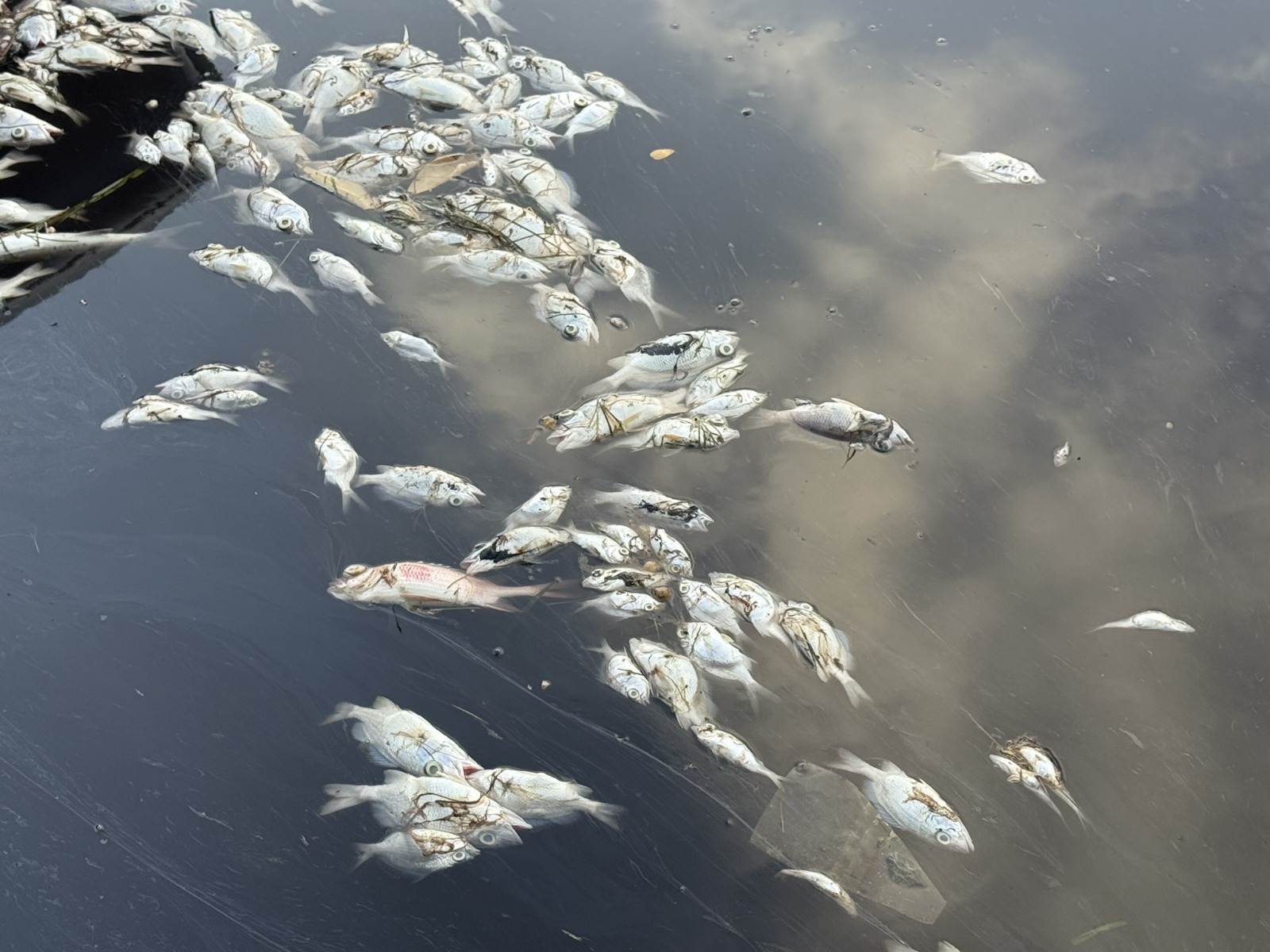
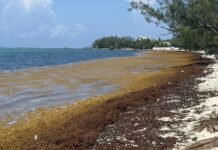
The sargassum washing ashore across Cayman is not just creating a smelly and unsightly nuisance, it’s also killing fish as it rots along shorelines and in canals.
At The Shores in West Bay, for example, hundreds of dead fish were found floating on the water’s surface in the canal last week.
John Bothwell of the Department of Environment explained that the influx of sargassum and the very calm weather at the end of last week “resulted in fish dying in locations where the sargassum got trapped and died, sank and began to decompose, thereby creating low oxygen levels in the water column, especially during the nights, and resulting in fish kills”.
He added, “With the very calm weather, there was less flushing and natural aeration of the water column at the ends of canals and similar areas.”
Residents took matters into their own hands – and boats – at the weekend, to try to deal with the problem.
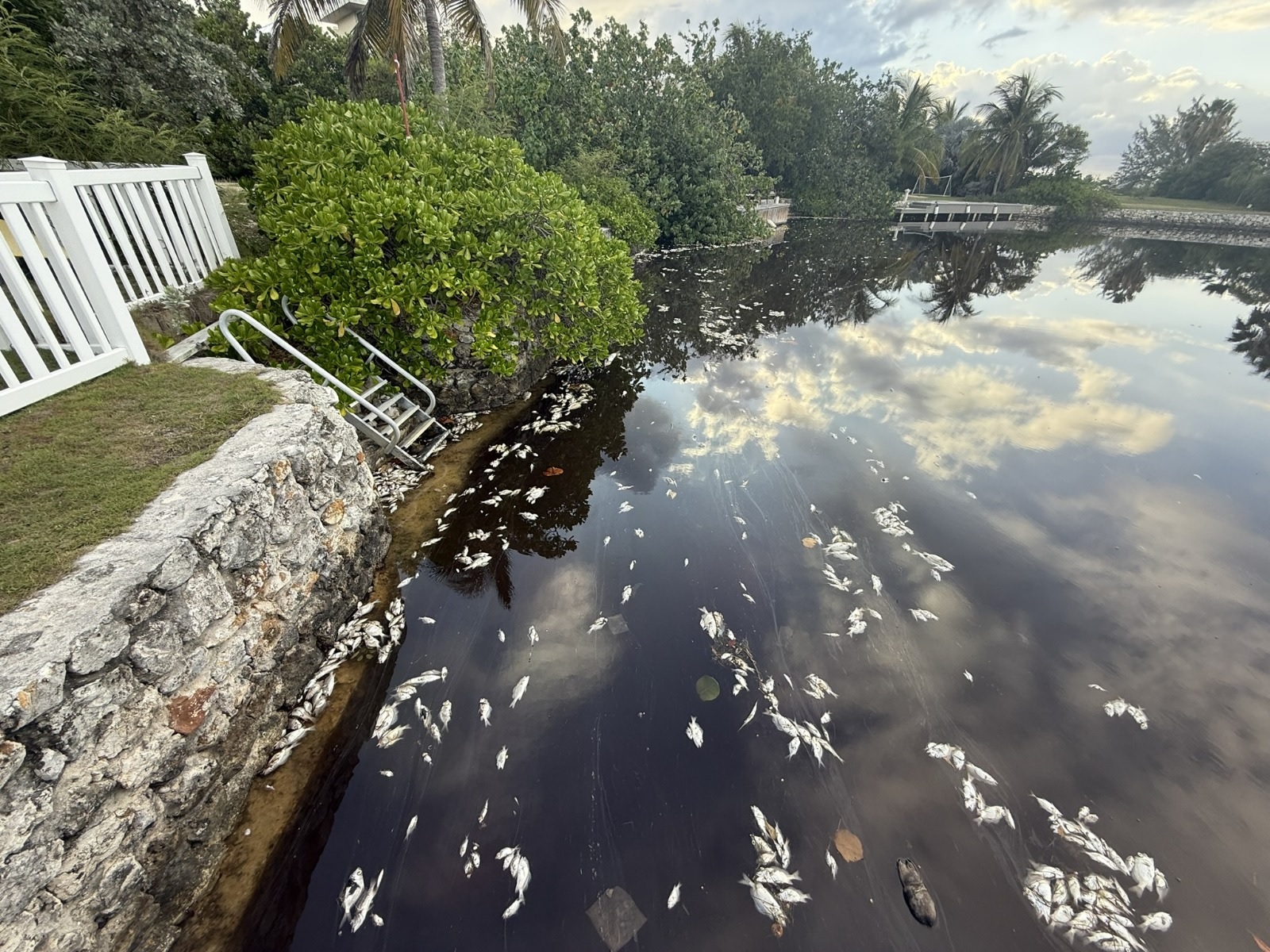
Troy Burke, a resident of The Shores where the reek of the rotting fish permeated the neighbourhood, scooped up and buried hundreds of dead fish.
He said while there have been other occasions when dead fish has been found in the canal, there’s been “nothing like this”.
He estimates there were several hundred dead fish, as well as lobsters and crabs, in the water.
While the fish and other marine creatures died from a lack of oxygen in the water, as the sargassum rotted, Burke said the fumes from the decomposing seaweed is also in the air, as evidenced by his silver bracelet changing colour and getting tarnished. “I wasn’t in the water,” he said, “just near it.”
Burke says he used his boat to propel the fish around the canal into spots where he was able to scoop them up.
Sargassum has been inundating the coastlines of the Cayman Islands for the past several weeks, something which has become an annual event in the past decade or so. Scientists have reported that 2025 is likely going to be a record year for the brown algae, with the University of South Florida’s Optical Oceanography Laboratory reporting nearly 38 million tons of the seaweed floating in the Atlantic this summer.
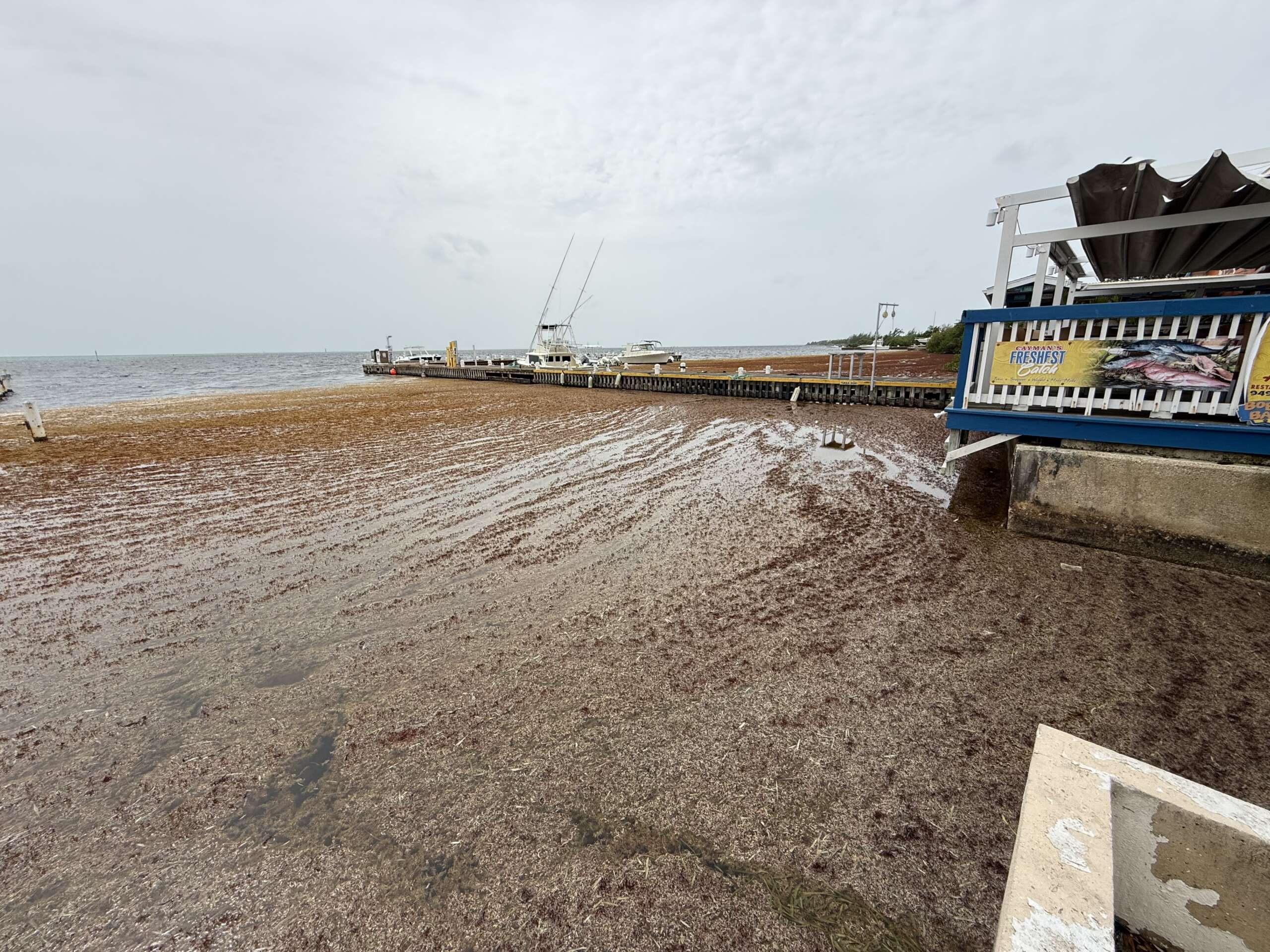
In its latest update, the University of South Florida reported that June appears to be the turning point for the tropical Atlantic, “after which the total sargassum amount will decline, although the absolute amount will continue to be [higher] than most of previous years”.
A draft national plan to deal with the annual influx of the seaweed is being reviewed as a “priority”, Minister for Sustainability Katherine Ebanks-Wilks told lawmakers in Parliament last month. She said at the time that the plan would be submitted to Cabinet in the coming weeks.
The DoE’s Bothwell told the Compass that it was “important that canal developments and private property owners put approved measures in place to either prevent large influxes of sargassum from entering canal systems and embayments or to remove the sargassum before it has the opportunity to sink and begin decomposing”.
He added, “The government is re-empanelling the National Sargassum Committee and we expect that events of this type will be one of the items high on their list to consider if there are recommended actions that both the government and the public should be prepared to take if large sargassum influxes occur more regularly during the summer months or if a more significant incident were to occur in the future.”
While sargassum has been washing ashore at a number of beaches and shorelines in Cayman, the popular Seven Mile Beach currently remains unaffected.
Related Videos










Sargassum has been a historical problem, impacting water recreation everywhere on Cayman, which then impacts tourists, and those dealing with it personally. I remember it well going back many years. So… here’s the $64,000 question, besides, raking and plowing, what has engineers, scientists, researchers done to conquer this horrific problem. from my vantage point, nothing.