

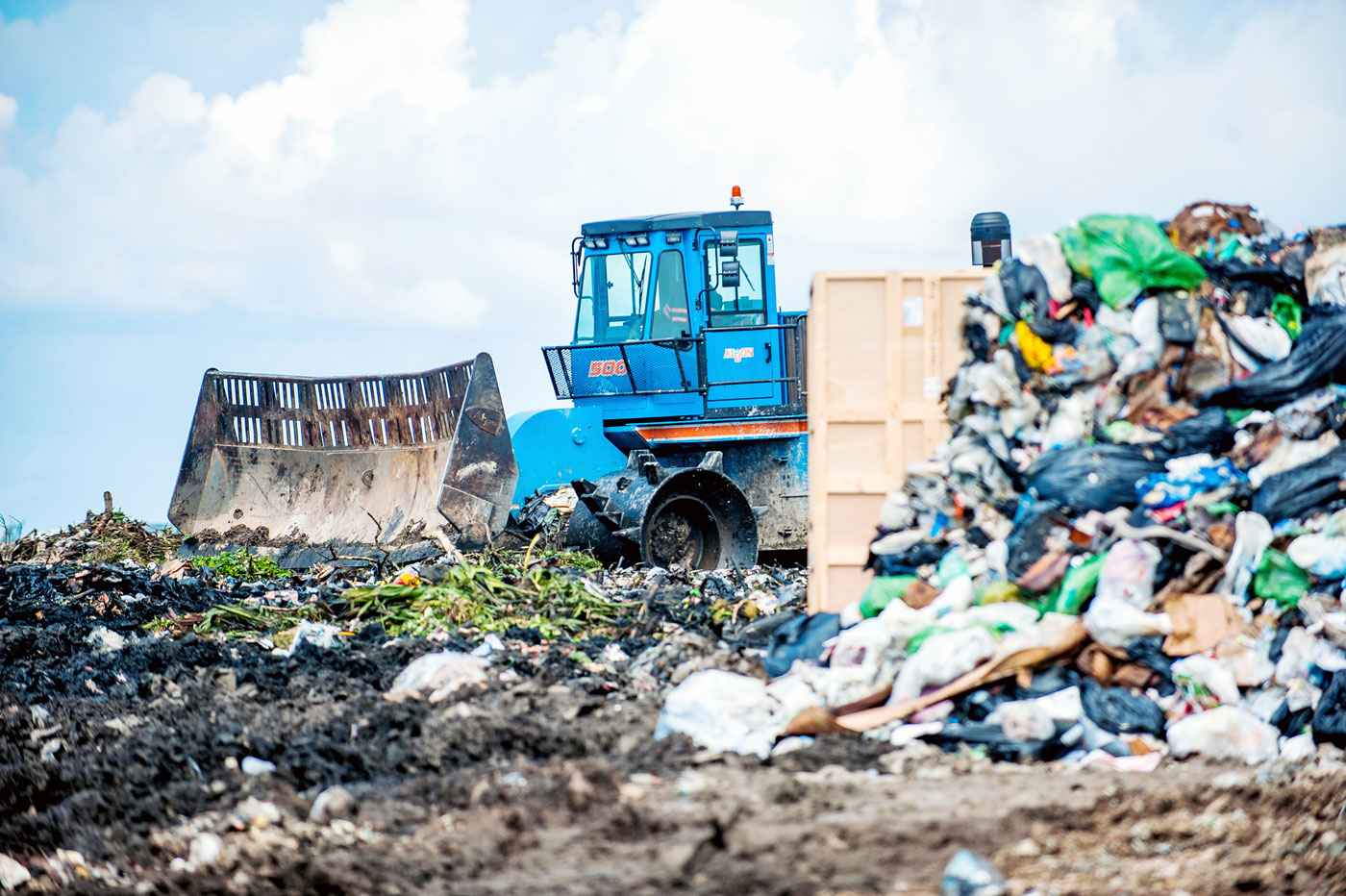
Government has dismissed concerns around escalating costs associated with the controversial ReGen waste management contract as “misinformation” and suggested a final deal to clean up the landfill and replace it with waste-to-energy and recycling facilities is close.
Former Finance Minister Chris Saunders, in a widely circulated WhatsApp message following his exit from the PACT coalition, claimed the cost of the 25-year project had risen to some $2 billion.

Premier Wayne Panton, in a radio appearance following that message, indicated a final price closer to $1.5 billion over the life of the contract.
Opposition figures said they were perplexed by the numbers quoted, suggesting the project cost when they left office in 2021 was around $600 million.
That tallies with a presentation given in 2021 by Peter Ranger, who was head of the major projects office at that time, which put the project cost at $163 per ton of waste processed.
Based on an estimate of 150,000 tons per year, that would be $600 million over 25 years.
In a press release issued Wednesday afternoon, government claimed there had been “misinformation” shared which “inaccurately describes both the costs associated with the project and its impact on current and future generations of Cayman Islands residents”.
“While negotiations are still ongoing, the contract cost is less than the figure shared on social media,” the press release from the Ministry of Sustainability and Climate Resiliency indicated.
That is understood to be a reference to the $2 billion figure quoted by Saunders in his WhatsApp message.
The release did not offer an alternative figure for the 25-year project cost or a clear explanation for the differences in the numbers being floated by Saunders, Panton and Progressives leader Roy McTaggart.
Panton has previously indicated the various numbers quoted did not represent an “apples for apples” comparison. While his ministry’s statement does not offer that like-for-like analysis, it does indicate where some of the differences may lie.
Two key numbers
The release indicates that there are two “key figures” associated with the project.
Those are the ‘contract cost’ – the amount to be paid to the Dart-led consortium annually for building running and managing the waste-to-energy plant and other facilities – and the ‘total projected cost’, which would include all the components of the waste-management system, including expenses borne by government outside of ReGen, such as funding for garbage collection.
The government’s current costs for the collection, recycling and disposal of waste is around $11 million, the release indicates.
Saunders, in a separate interview with the Cayman Compass, expressed concern that the project could lead to Cayman’s budget being unable to meet the legal benchmarks set out in the Framework for Fiscal Responsibility.
He said the project would deplete Cayman’s cash reserves, distort its debt ratios, adding there was “no scenario” under which the project could satisfy the FFR mandates. The Compass understands similar concerns have been expressed by senior figures in the Ministry of Finance.
Wednesday’s press release did not address those points, other than through the general comment that the “impact on current and future generations” had been misrepresented.
The only concrete figure quoted in the release is the 2021 figure of $205 million cost for construction of the facilities. The ministry indicates this is higher than the 2017 figure as a result of a policy decision by the previous Progressives government to increase the size of the waste-to-energy plant.
It does not state directly that this number has increased further, but adds, “It is also important to note that, in the six years since the Dart-led consortium was chosen as the preferred bidder, global supply chain issues and procurement challenges have increased costs for products and services worldwide.”
Finance model remains the same
The financing and repayment model outlined in the release is the same as that explained by Ranger in his 2021 presentation.
“The construction costs will be financed by the Dart-led consortium with no cost to Government until ReGen is fully operational. Once complete, Government will pay a unitary charge per ton of waste processed through the new facilities over the 25-year life of the contract. At the end of the contract, Government will take ownership of the facilities,” the release states.
Despite the many numbers floating around, the critical figure that will determine just how much government pays, appears to be that “unitary charge per ton”.
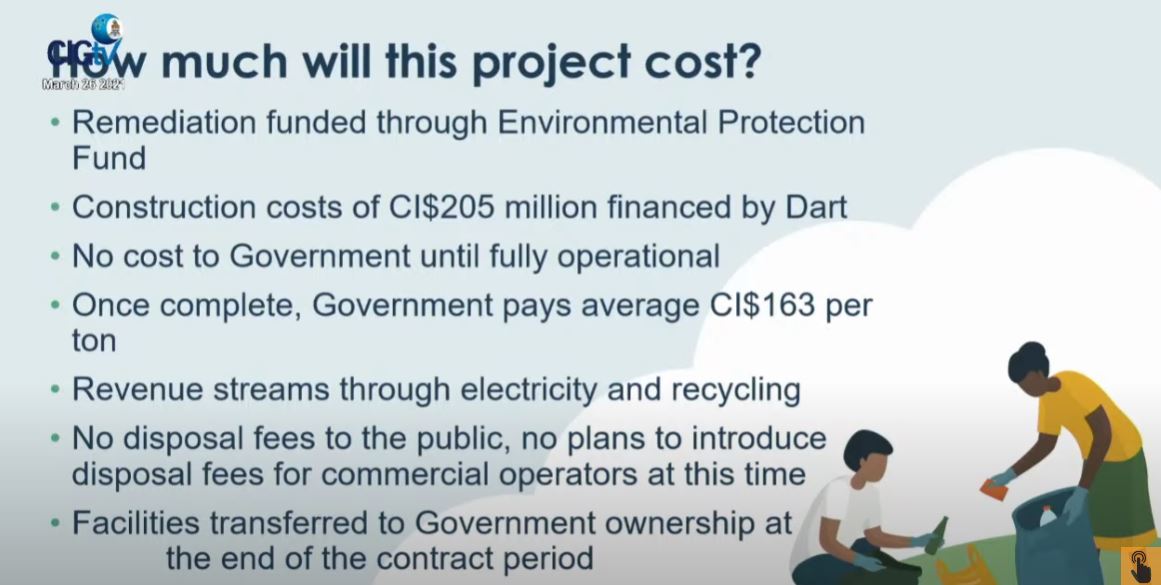
At the time of Ranger’s presentation in 2021, it was $163 per ton, leading to the 25-year estimate of around $600 million. That number appears to have risen, but it is not clear by how much.
As the government statement indicates, this would be over and above the annual running costs of the Department of Environmental Health, and there is potentially a second, separate number for the total waste management costs.
In terms of like-for-like numbers, Wednesday’s statement simply indicates, “Financial modelling for the project was updated at the beginning of 2023. At this stage, final costs are still being negotiated.”
Referencing an Auditor General’s report which Saunders has suggested would back up his claims that the deal is not good value, the ministry spokesperson said this can’t be released until after the deal is signed.
“This report contains commercially sensitive information that the government is using to inform its ongoing negotiations and improve the overall value for money of the project,” the spokesperson said.
Waste management solution ‘urgent’
The ministry indicated it is in almost daily negotiations with the Dart group and that the environmental impact assessment is proceeding.
It indicated a commitment to get the project over the line, highlighting the limited lifespan of the existing landfill.
“Achieving an integrated solid waste management system is fundamental to safeguarding human and environmental health in our community and ensuring the sustainable development of the Cayman Islands. Put simply, the Cayman Islands cannot afford to keep landfilling our waste,” the ministry stated, reiterating that it would run out of space by 2026.
“There is no doubt that the country urgently needs an integrated solution for solid waste management that will significantly lower the amount of waste being landfilled.”
Related Videos










Well, whether it is $2 Billion or $1.5 Billion, that’s alot of Money. So, we should immediately re-instate the Infrastructure and Environmental Impact fees in these Islands, to pay for all of these important infrastructural projects. And I have to ask, in the current attractive investment environment such as the Cayman Islands, do we really need to have such generous Incentives and Concessions for large Developers and Investors??? Let’ the Cayman Islands get some more revenue to pay for all of the impacts instead!!