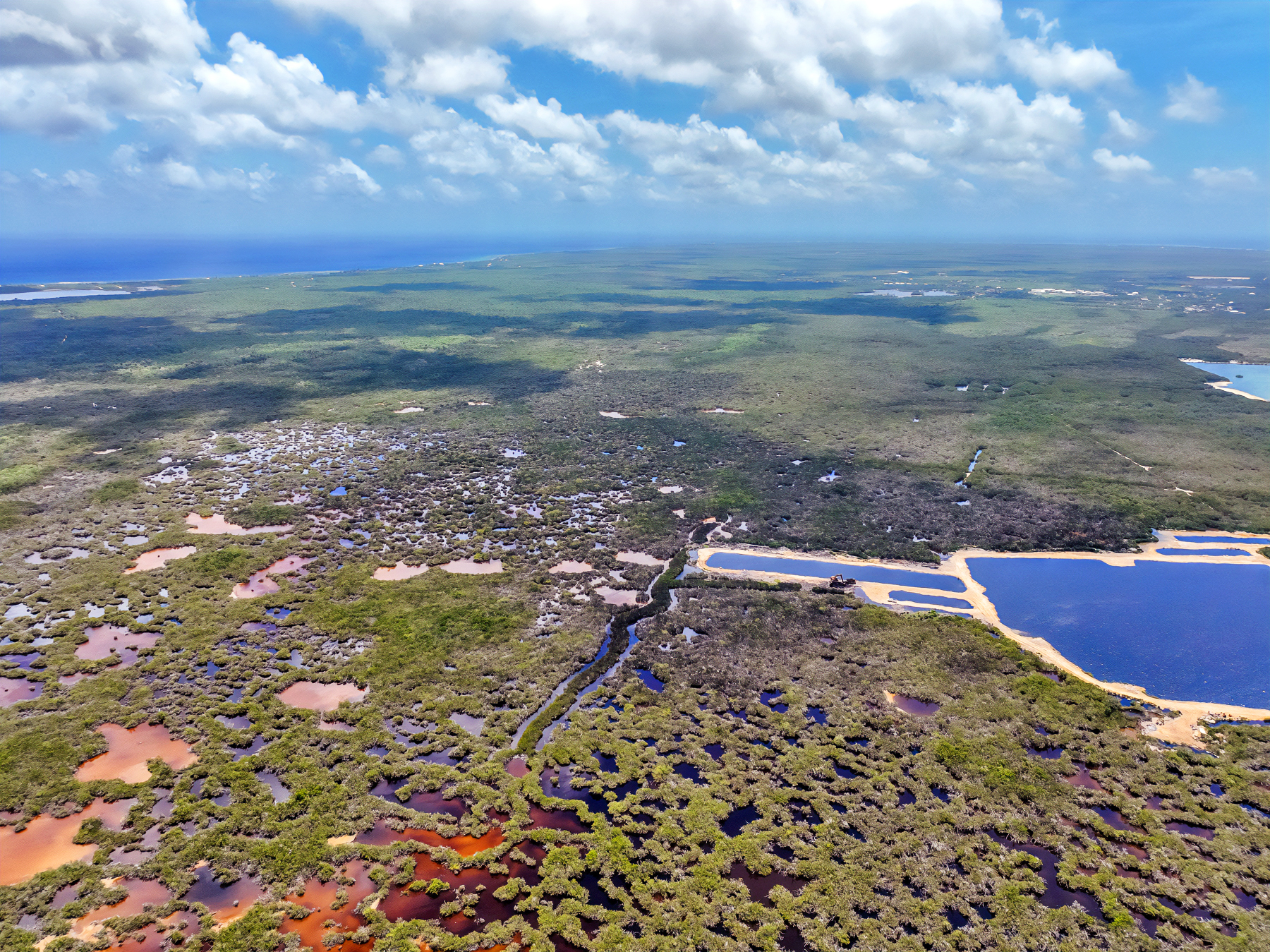
Members of Parliament have questioned the legality of an environmental impact assessment on the East-West Arterial extension which was ordered by the National Conservation Council, now that the council is not operating because several of its members’ terms have expired.
Referring to the council as “defunct” and “obsolete”, McKeeva Bush, Chris Saunders and Dwayne Seymour demanded to know under what legal authority a subcommittee of the council – the Environmental Assessment Board – is continuing to advise the government and National Roads Authority on the $3.4 million impact study.
During a Finance Committee meeting on Wednesday afternoon, Saunders opened the fractious questioning of Premier Wayne Panton over the road EIA, pointing out that the House had voted in April to drop the environmental study on the first section of the East-West Arterial extension and asking Panton, “When will the will of the people be carried out?”
Panton, who had also voted in favour of Bush’s private member’s motion to discontinue plans for an EIA for the road section between Hirst Road and Lookout Gardens, said two meetings had been held in recent weeks between the National Roads Authority and the Environmental Assessment Board. As a result of those meetings, he said, the timeline for the completion of the road had been moved up from December 2025 to July 2025.
He said government had received legal advice from the Attorney General’s Chambers that “notwithstanding the vote of parliament or the view of Cabinet, neither Parliament nor Cabinet could direct that the environmental impact assessment be terminated”.
Legal standing
Asked by Saunders what legal standing the Environmental Assessment Board has at this point, the premier responded that the attorney general had advised that even though the National Conservation Council itself does not currently have enough members to have a quorum, the board can still engage in the process, on an advisory basis, and is not making any decisions.
Bush argued that it appeared a decision taken by Parliament, when it voted in favour of his motion, was being “railroaded” by what he described as a sub-committee of a council “that does not exist”.
He warned that the government was leaving itself open to a judicial review.
“You have a council that is obsolete, it has not been reappointed,” he said. “They have a sub-committee to advise them to come and advise you. Other lawyers have said that cannot work. … I ain’t got no money but I would help whichever way I can if that’s what is going to happen. The will of the people cannot be pushed aside.”
Saunders echoed this sentiment, saying, “The National Conservation Council has a role to play in the approval process. If there is no National Conservation Council, what is the approval process now for this road?”
Panton said he plans to call a press conference in the next couple of weeks, in which the National Roads Authority, its consultants and the Environmental Assessment Board can explain the process and the timelines to the public.
Last month, the National Trust for the Cayman Islands raised the alarm over the National Conservation Council being effectively disbanded because government had failed to reappoint members or appoint new ones. It issued a statement which noted, “The lack of an active National Conservation Council is to the detriment of the people and environment of the Cayman Islands.”
The council’s 13 members were appointed in 2021 for two-year terms.
Progressives member and Red Bay MP Sir Alden McLaughlin asked why members of the council, which is a statutory body created under the National Conservation Act, had not been appointed or reappointed.
Panton explained that members’ terms had expired in recent weeks “and there have been some discussions about who should replace those people”. He said he expected the issue to be “resolved shortly”.
Back to the drawing board?
Seymour asked, in light of the support that the House had previously shown for dropping the EIA on the first section of the road, if government would consider going “back to the drawing board” once a hydrological study of the area had been completed – expected in August this year.
He noted that the original December 2025 target included the timeline to carry out the EIA, and said if work on the road begins once the hydrology study is complete, without waiting for the impact study, the road could be finished by 2024 – before the next scheduled election in 2025.
Panton replied that significant progress had already been made on moving the work for the road forward following the recent meetings between the relevant parties.
Bush and Saunders both asked Panton to lay a copy of the advice from the attorney general on the matter before the House, which Panton assured them he would do as soon as he obtains a copy.
Related Videos