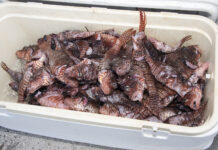
An apparent increase in sightings of lionfish on Grand Cayman’s reefs could be attributed to fewer organised culling tournaments on the island.
Mark Orr, chief conservation officer of the Department of Environment, and one of the organisers of the Cayman United Lionfish League (CULL) tournaments, says the frequency of these culling efforts impact the population of the invasive species in Cayman.
With a number of regular lionfish cullers having left island, fewer teams than usual took part in the last CULL tournament, in May this year, and there was a seven-and-a-half month gap between that tournament and the previous one.
Orr said a rise in sightings of lionfish “happens every time we ease up a bit”.
In recent years, CULL had been holding up to four tournaments a year, with 10-15 teams catching more than 300 fish each time. Each team would pick an area and return there over the two-day cull.
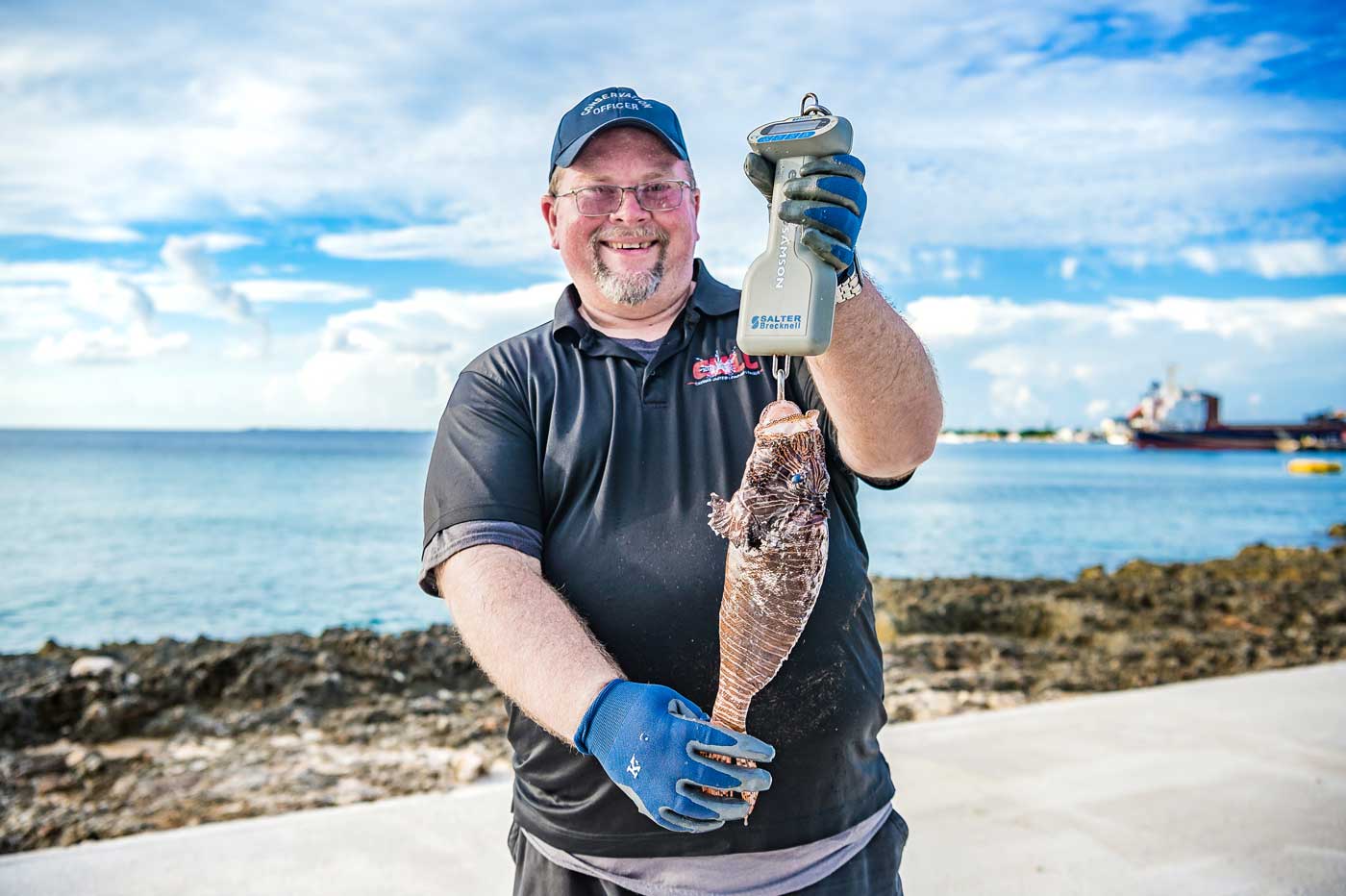
But with longer periods between the culls because of the COVID pandemic and other issues, the lionfish returned to many of the dive sites where the cullers had been controlling them.
After the most recent long gap between tournaments, 434 lionfish were caught, even though there were fewer teams than usual taking part. Orr said more fish were culled per team than is typical.
Similarly, in 2020, when diving was shut down temporarily, there were no CULL tournaments organised for nine months. In January, the cullers caught 464 lionfish. Then, in the first tournament after COVID lockdown restrictions were lifted, in October, the cullers captured 861 fish.
More and bigger lionfish
The longer the period between the culls, the bigger the fish that are being caught, Orr has observed.
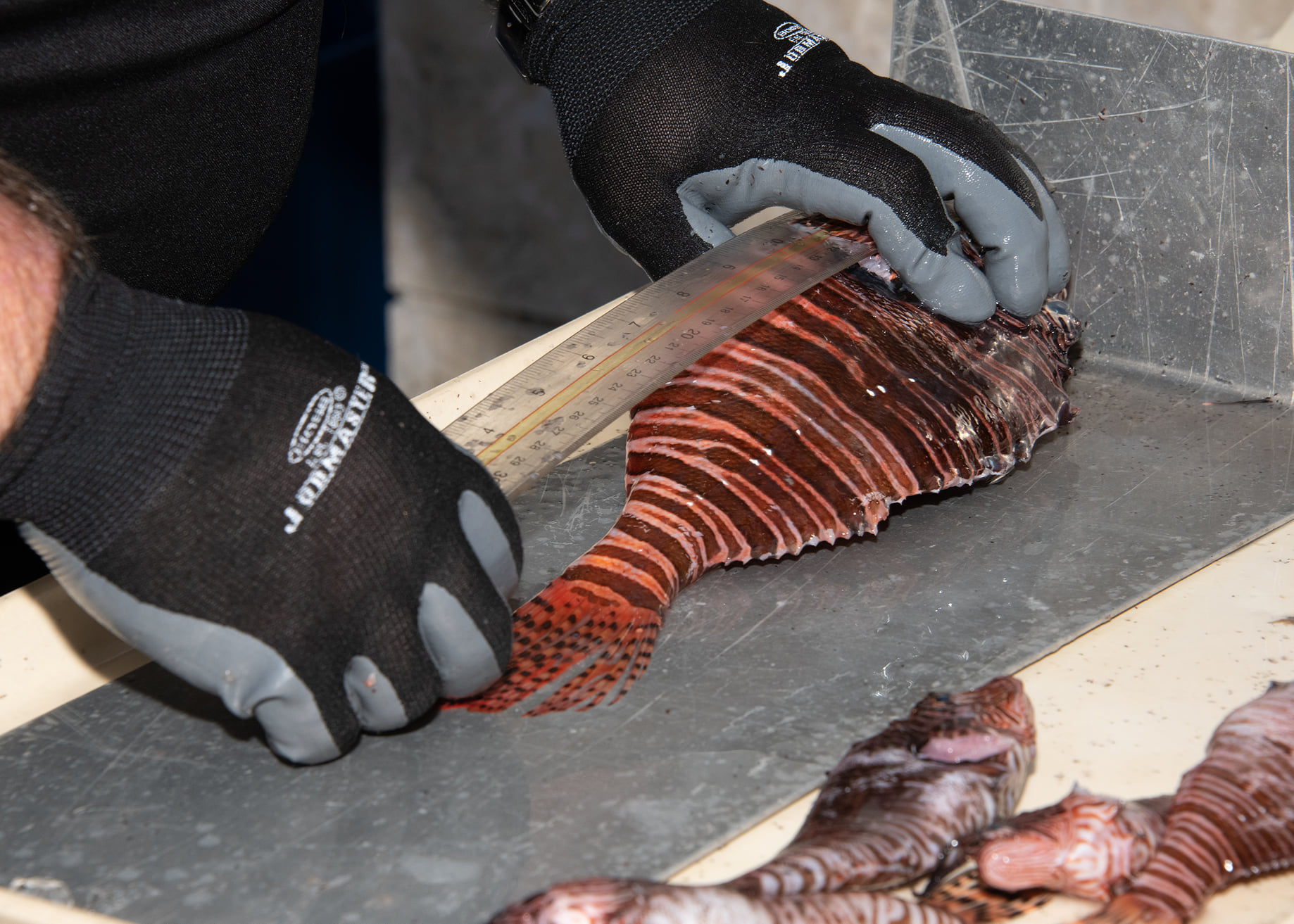
In the most recent tournament, while the biggest lionfish caught, at 286mm, was not a record-breaker, it was close to it, and there were many similarly sized fish culled over that same weekend. He said in previous tournaments, the typically largest fish were about 250mm. At the May tournament, cullers caught about two dozen that were longer than 280mm.
“It shows they’ve been around a long time,” Orr said. “We need to keep hitting them.”
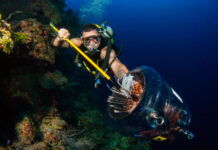
The culling of lionfish in Cayman is also limited by a lack of spears, as a person must be registered by the DoE to own one of the trident sling spears that are used in lionfish hunting. The DoE used to supply those spears to registered users, but is no longer doing so for individual divers – only to dive shops that can then authorise their customers to use them for training or on culls.
New regulations surrounding the use of spears in Cayman are in the works, which may also address the spearing of lionfish.
Orr acknowledges that other factors may be at play when it comes to lionfish populations on the local reefs, such as algal coverage, as lionfish tend to prefer “clean coral” so may be found in concentrated numbers in areas with little algae grown.
Water temperature is also likely to play a role, he said, based on the fact that when the invasive species started expanding along the US coast from Florida, the spread stopped as it reached colder climes in the more northern coastal states.
Some of the habits and behaviour of the lionfish are still baffling the scientific community, as there has not been a lot of study of them at deeper depths. It’s not known how deep these fish can be found – though recent video footage of them has been recorded as deep at 2,000 feet in Cayman, Orr says – nor exactly what might drive them to go deeper or shallower.
“Every time we think we know something about them, it goes to the opposite,” Orr said.
Related Videos