

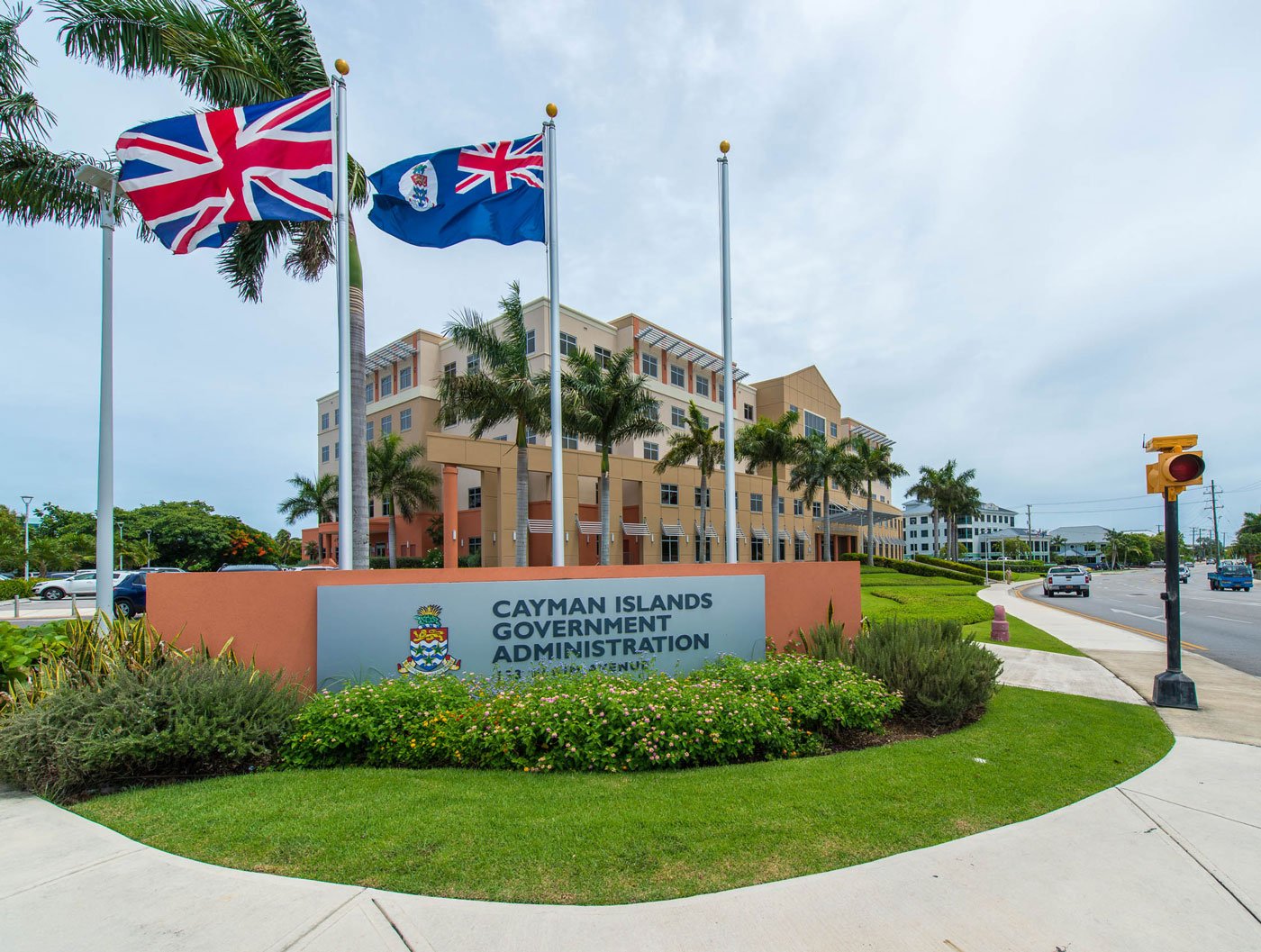
Government earned $19.5 million more in revenue in the first six months of the year, compared to last year’s figures, driven in part by stayover tourism accommodation tax, vehicle charges and work permit fees.
Between January and June this year, the government collected just over $656 million in total revenue, according to the latest government financial report. This included $621.2 million generated by taxes and fees, which was $14.1 million higher than budget expectations, and $7.1 million higher than last year’s first-half results.
While revenues for the first six months of this year are up, so are expenses, with government spending $490.2 million, which was $14.5 million higher than budgeted.
The second quarter financial report noted that, by 30 June this year, there was a $166.2 million surplus for the entire public sector, which includes core government, statutory authorities and government-owned companies.
The report showed that by the end of the first six months of 2023, government’s cash position was $398.2 million.
Revenues
The rising number of post-pandemic tourists coupled with more expensive room rates led to government earning $28.8 million in tourism accommodation charges in the first six months of the year – $19.6 million more than the same period last year. This was also $12.4 million higher than budget expectations.
Government collected $9.1 million in work permit fees in the first six months – $3.2 million more than in Jan.-June 2022, “due to continued increased demand for workers following the reopening of the borders and continued economic growth”.
Meanwhile, government earned $6.6 million in motor vehicle charges, a similar figure to 2022, but nonetheless $5.3 million more than expected, due to a higher than expected number of vehicles previously being imported, the report noted.
Despite this, the duty on imported vehicles in the first six months of this year, at $10.8 million, was almost a million dollars less than the same period last year.
Overall import duties earned government $116.3 million, compared to $109.4 million in the first six months of 2022.
Mutual fund administrator fees, totalling $3.2 million, and private fund fees of $2.8 million performed better than anticipated, due an increase in the volume of funds registered, the financial report stated. While the mutual fund administrator fees collected were $0.3 million less than last year, the private fund fees earned government $1 million more than last year.
Expenses
Personnel costs in the first six months of 2023 were $216 million, which was $13.5 million lower than budgeted, as a result of vacant posts across several ministries, portfolios and offices, government stated in the report.
It noted, however, that this year’s personnel costs were higher than last year’s – by $17.4 million – due to a cost-of-living adjustment awarded in September 2022 and a salary increment awarded in December 2022.
Payments to the Cayman Islands National Insurance Company (CINICO) and the Health Services Authority were higher in the first six months of this year, compared to the same period last year, by $2.5 million and $4.4 million, respectively. This increase for CINICO was due to higher-than-expected health insurance costs for retired civil servants, while the HSA increase was attributed to rising costs of care for indigents, which exceed its budget by $6.6 million.
Paying for medical care for Caymanians in local and overseas facilities in the first six months of this year was $21.3 million more than the $10.8 million budgeted.
Transfer payments of $31.9 million were $5.4 million more than budgeted for the six-month period, mainly due to the overages in spending on scholarships and bursaries by $4.9 million and financial assistance by $2.4 million, the government stated.
By the end of June, government had operating cash and deposits were $222.9 million and reserves and restricted deposits of $175.3 million, for a total balance of $398.2 million.
The report noted that the recent financial results had “positioned the Government to be optimistic about its overall performance for 2023”.
However, it cautioned that there were likely to be increased personnel costs as more vacancies are filled and more capital projects come online over the second half of the year.
It added that the half-year report highlighted that core government revenues must exceed $978.1 million set out in the original 2023 budget in order to reach the revised target of $1.037 billion detailed in the Strategic Policy Statement.
Related Videos










Can we have a report on Cayman Airways financial “contribution” over the last 12 months?.