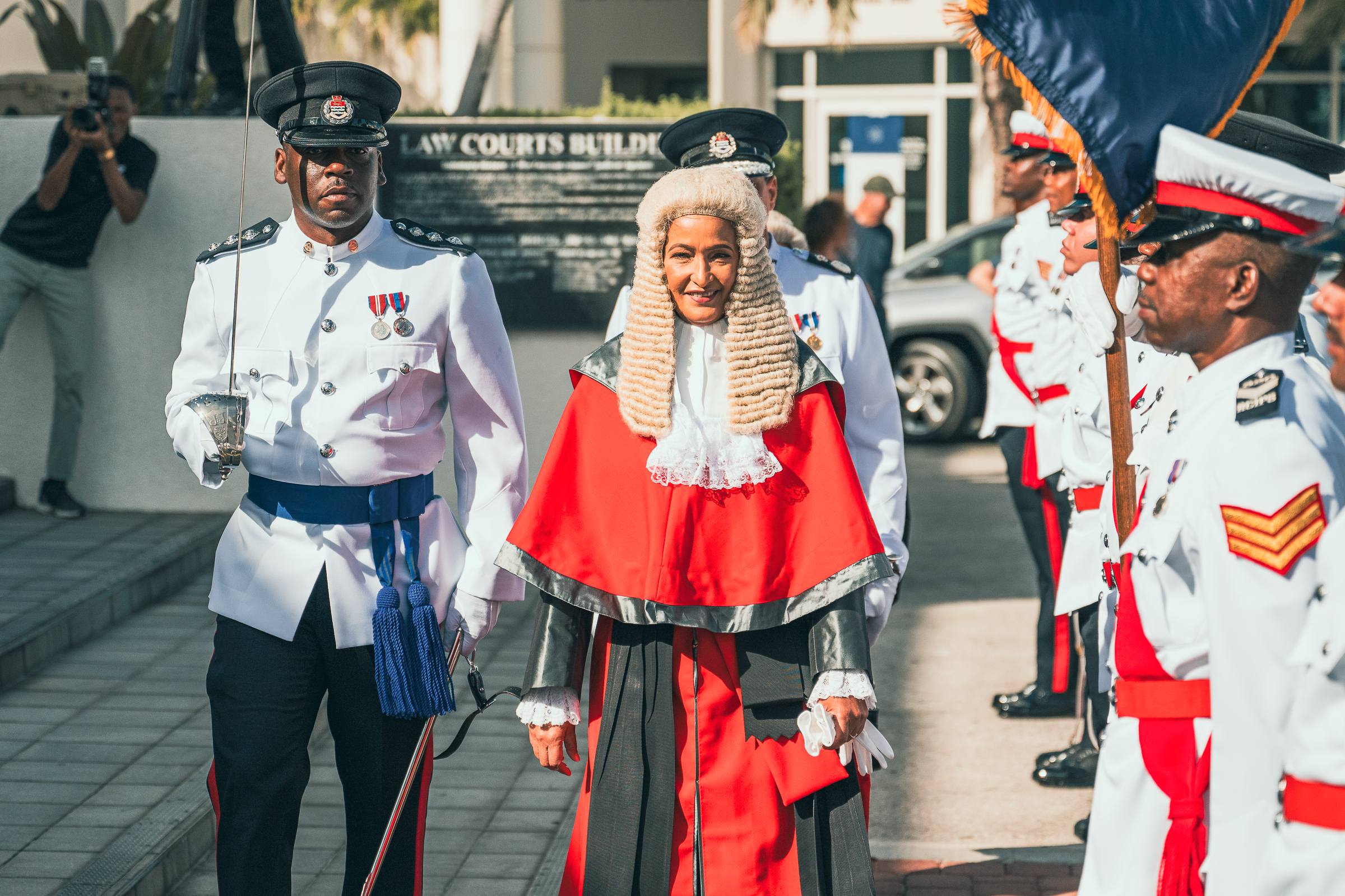
In changes to the court system, Chief Justice Margaret Ramsay-Hale has announced that the courts will now sit in three separate terms each year, with ‘vacations’ in between. Justices of the Peace are also set to preside over Traffic Court cases from later this year.
Currently, the court sits for one year-long term, which begins in January each year.
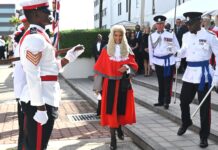
Ramsay-Hale, at the official opening of Grand Court on Wednesday, 10 Jan., said the court was “bringing back vacations”.
The introduction of terms and vacations at court was “critical for many reasons”, the chief justice stated.
One simple and practical reason is that the roof of the courthouse needs repair, and that work cannot be done while courts are in session, she said.
Another reason, she explained, is that the “registries are bowing under the pressure of work. They need to stop, so they can regroup.”
And she added, “Finally, the judges are tired, especially the judges who sit in crime [cases] all year long. In England, they’ve done studies that show that judges who sit in violent crime [cases] sometimes develop PTSD (post-traumatic stress disorder). I’m pleased to report we don’t have that problem, but there is no reason why we should drive our judges to exhaustion.”
The breaks between sittings will allow judges to write judgments, and allow for training of staff and judges “without disruption to the court business”, the chief justice said.
The new Grand Court Rules have been gazetted and came into effect on 10 Jan.
Term dates
The Grand Court’s spring sitting will be from 4 Jan., or the first working day immediately thereafter, until the Wednesday before Easter Sunday. The summer sitting will be from the second Tuesday after Easter Sunday until 31 July, or the last working day thereafter. The winter sitting will begin on the third Tuesday of September, and end on 22 Dec. or the last working day thereafter.
This means that the judges will sit for 12 weeks in the spring, followed by a week off. Then, the summer term lasts 16 weeks, with between six and seven weeks off (depending on when Easter falls), and the winter terms lasts just over 13 weeks, followed by two weeks’ vacation.
Earlier in her speech to the court staff and officials who had gathered for the court opening, the chief justice had addressed the Grand Court’s disposal of criminal cases. Last year, there were 104 new indictments before that court, which disposed of 119 cases throughout the year.
“That is a clearance rate of 114%,” Ramsay-Hale said. That involved disposing of cases that were already before the court, as well as new ones introduced in 2023.
The clearance rate in 2022 was 102%.
The chief justice explained that the court aims for a 100% clearance rate, to prevent a backlog.
JPs to ease magistrates’ case loads
Addressing the introduction of justices of the peace to the Summary Court, over which magistrates currently preside, Ramsay-Hale said, “We are well on the way”, as she indicated several JPs in a pilot group sitting in court at Wednesday’s Grand Court Opening ceremony.
The JPs have been undergoing training, including familiarisation with the court and its processes, and there are plans for them to partake in mock trials, she said.
Magistrates have “devoted a lot of time mentoring the JPs”, the chief justice said.
Their training will continue throughout the first half of this year.
“In 2024, justices of the peace, sitting in the Summary Court, will become a reality,” Ramsay-Hale stated. “They will be deployed in the Traffic Court, which will relieve the magistrates of a significant amount of their current case load.”
Director of Public Prosecutions Simon Davis, in his delivery of some statistics from his office on Wednesday, said that, in 2023, more than 1,000 cases had been referred to Traffic Court.
The addition of JPs to the Summary Court roster means additional court space will be needed, the chief justice noted, because on some days, the court would deal with 100 to 120 people. “This cannot be accommodated in the courts that we have, apart from Court 5, when the Financial Services Division is not sitting.”
Related Videos