

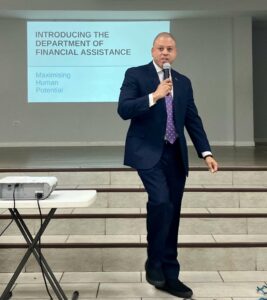
Large increases to benefit payments for rent, utilities and food as well as new stipends for phone, internet and transport have been pushed through to help Cayman’s most vulnerable cope with the rising cost of living.
The package of increases come alongside a total reform of the Needs Assessment Unit, which is responsible for approving and administering support to those in need.
From today large families – of seven or more – will be able to get as much as $3,000 for rental support, $850 for food and $600 for utilities. Smaller families will get proportionately lower amounts. Government has, for the first time, also agreed to fund rental deposits – highlighted by charity workers as a key barrier for people in getting access to housing.
New benefits include up to $100-a-month for internet and transport and $150 for phone bills.
The salary thresholds to qualify for assistance have also been broadened, to encompass a wider number of struggling families.
Deputy Premier André Ebanks said, “Given existing economic and societal pressures, it is time for more strident steps to help the most vulnerable in the community and provide stronger opportunities to enter the formal economy.”
The Ministry of Social Development, which Ebanks leads, has taken a carrot-and-stick approach to its reforms of the welfare programme, also introducing a fraud hotline and beefing up its compliance unit to target people cheating the system.
A new Financial Assistance Act was passed in 2022 and is gradually being brought into force.
It will culminate with the transition of the Needs Assessment Unit – which has faced criticism in the community for being inflexible and unresponsive to the needs of the people it serves – with a new Financial Assistance Department.
Consistent support
Ebanks said the law was the first comprehensive document underpinning how Cayman administers government payments to those in need. He said the aim was to make the unit more efficient and responsive, to provide consistent support to those that needed it and to give the tools to those temporarily out of work to get back on their feet.
Many of the changes in the law – including the addition of a new expedited one-time ‘emergency circumstances assistance’ package offering immediate relief to those in crisis – were driven by feedback from the public and non-profits in a wide consultation exercise.
Ebanks said, ”The invaluable feedback received at the close of last year and during the development of the new Act and associated Regulations has guided our decisions, instilling confidence that these reforms will significantly improve the lives of those dependent on our services. For too long changes to financial assistance have been static or incremental one-offs that have not been community or data-driven.”
Around 1,419 families receive some form of support from the Needs Assessment Unit, according to a 2022 report.
Related Videos













So if a family can “earn” CI$53400p.a. courtesy of Govt, where is the incentive for either parent to work for a living?.