While a wide range of resources, both public and private, are available for people with mental-health issues, some still must deal with long waits for treatment and related high costs.
These and other issues were addressed at a Mental Health Commission public meeting in Bodden Town on Thursday.
Members of the commission called upon the community to advocate for affordable health care, speak up against stigma, and address other challenges.
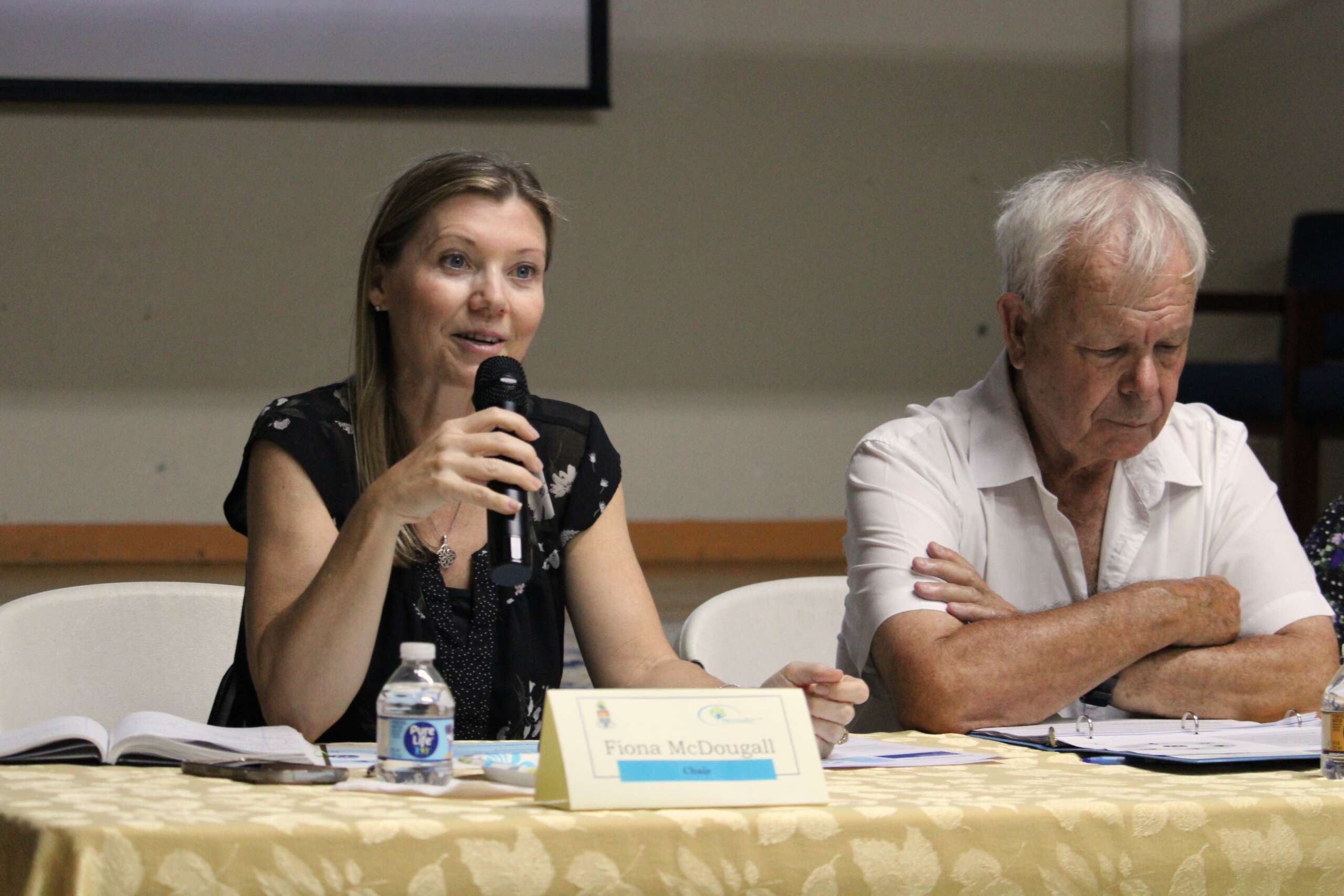
Fiona McDougall, who has been chairing the commission for about a year, explained how resources are disproportionately offered across the three islands and that, coupled with extended wait times, present significant barriers to mental health care.
“Although as a whole, we do have a lot of resources, the distribution of those resources and what’s available is something that we always want to keep an eye on to see if there’s opportunities for improvement,” she said.
Where to go?
In response to questions from about a dozen attendees, members acknowledged the difficulty some people with mental health concerns often face when trying to secure employment or housing.
Currently, some people in need of more substantial care must travel overseas to places including Jamaica to receive it, Alexander Henderson, deputy chair of the commission, explained.
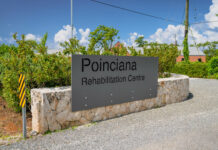
“There is a desire on the part of the community to bring those people home,” Henderson said. “We expect that a number – hopefully, although not likely, all – would be coming home soon, once Poinciana is open for business,” he said.
Commission members said the anticipated opening of the long-awaited mental health facility will provide new opportunities for patients, and part of its role is to regularly review their status.
Previous commission chair Dr. Marc Lockhart left his position about a year ago, citing his frustration with the delays with opening Poinciana and other initiatives.
Health Minister Sabrina Turner, who attended the Thursday meeting, said last month in Parliament that the opening date had been delayed again due to electrical concerns. The opening is now expected sometime in the second quarter of 2024.
Help for inmates
Henderson said that as with overseas patients, the commission reviews prisoners on remand who have mental health concerns.
“There are correlations between negative mental health outcomes and the criminal justice system,” McDougall said at the beginning of the meeting, noting that the prison does offer psychiatric resources for incarcerated people.
Henderson said there are only a handful of inmates at Northward Prison who, by law, need to be held ‘in a place of safety’ until they are able to understand the nature of their legal proceedings.
“There’s no better place for them at this time,” he said, adding that the commission reviews such files every six months to determine if the person is fit to plead.
McDougall said the commission has recently been focusing its efforts on providing training for officers often on the frontlines of helping people in a mental health crisis, including the Cayman Islands Prison Service and Royal Cayman Islands Police Service.
Commission member Dympna Carten noted the importance of training officers to recognise when someone is in a mental health crisis to make sure they get the help they need.
Fundamental freedoms
The commission also reminded the public that part of its remit is reviewing appeals for people who are compelled to receive confined mental health care.
Henderson explained that family members, friends and others close to a person who has been detained for treatment can appeal the decision. He said an emergency detention order or similar measure may be necessary to ensure the safety of the person in question or others.
“It is an unfortunate but entirely correct fact that many people who suffer from a mental health disorder either do not understand that they have such a disorder, or at least are unwilling to accept that fact,” Henderson said. “For such persons to receive treatment, and for treatment to be effective, unfortunately, an element of compulsion may be necessary.”
However, whenever fundamental freedoms are called into question, he said there always needs to be some sort of counterbalance.
Countering stigma
During the meeting, McDougall said the commission hopes to reach out even more to the community, reminding them of its role and helping educate the public on mental health issues.
With the assistance of a new communications person within the Ministry of Health and Wellness, the commission plans to ramp up its anti-stigma campaigns, aiming to ensure everyone in the community is treated equitably.
Mental Health Commission member Jackie Neil added that it is important for the community to push for affordable insurance and other change.
“Advocacy is a powerful tool,” she said. “In essence, advocacy is a catalyst for positive change, promoting respect, solidarity and a fair, equitable society for all.”
For enquiries to the Mental Health Commission, email [email protected].
Related Videos