

By Simon Cawdery, Compass Columnist

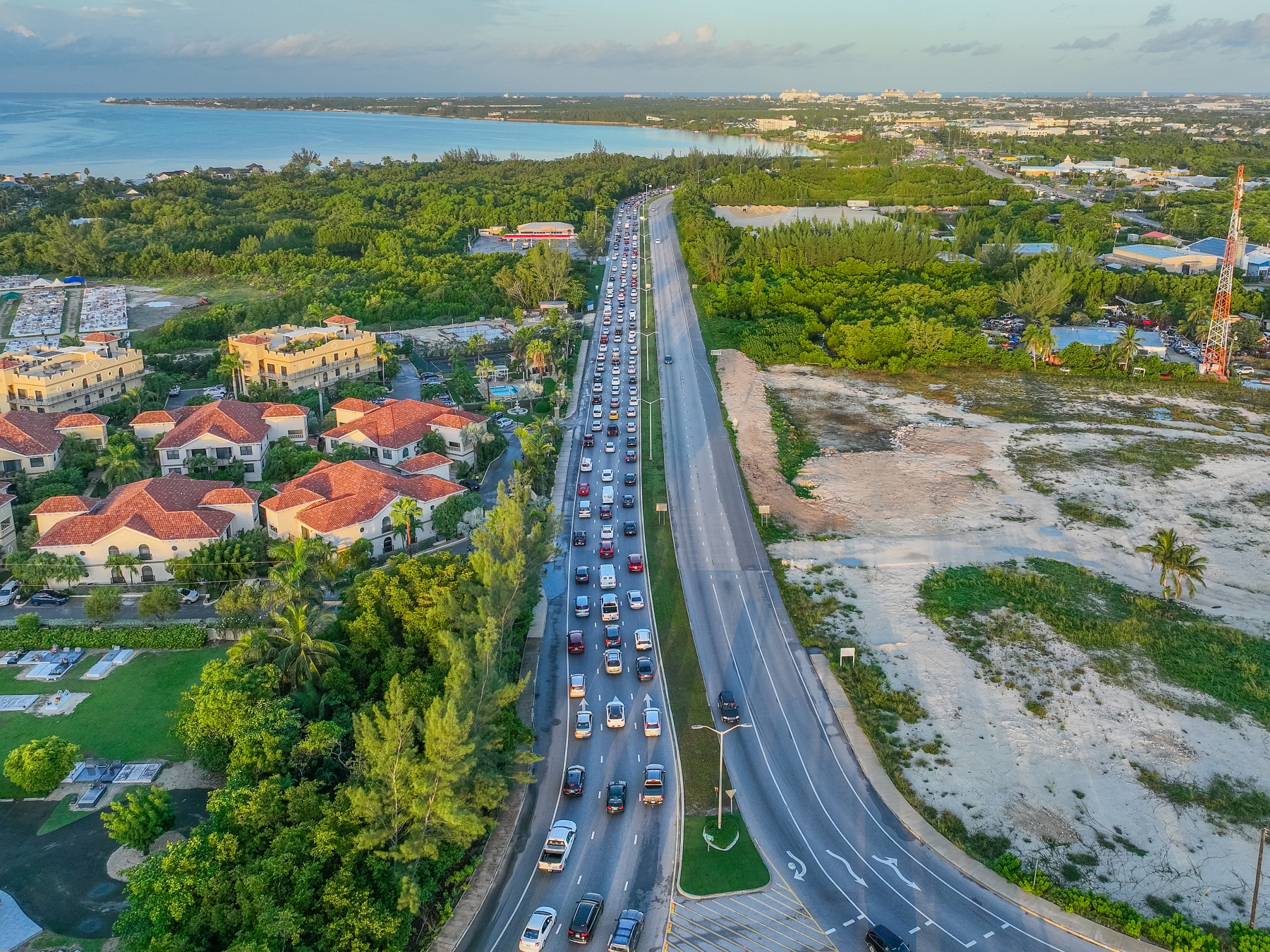
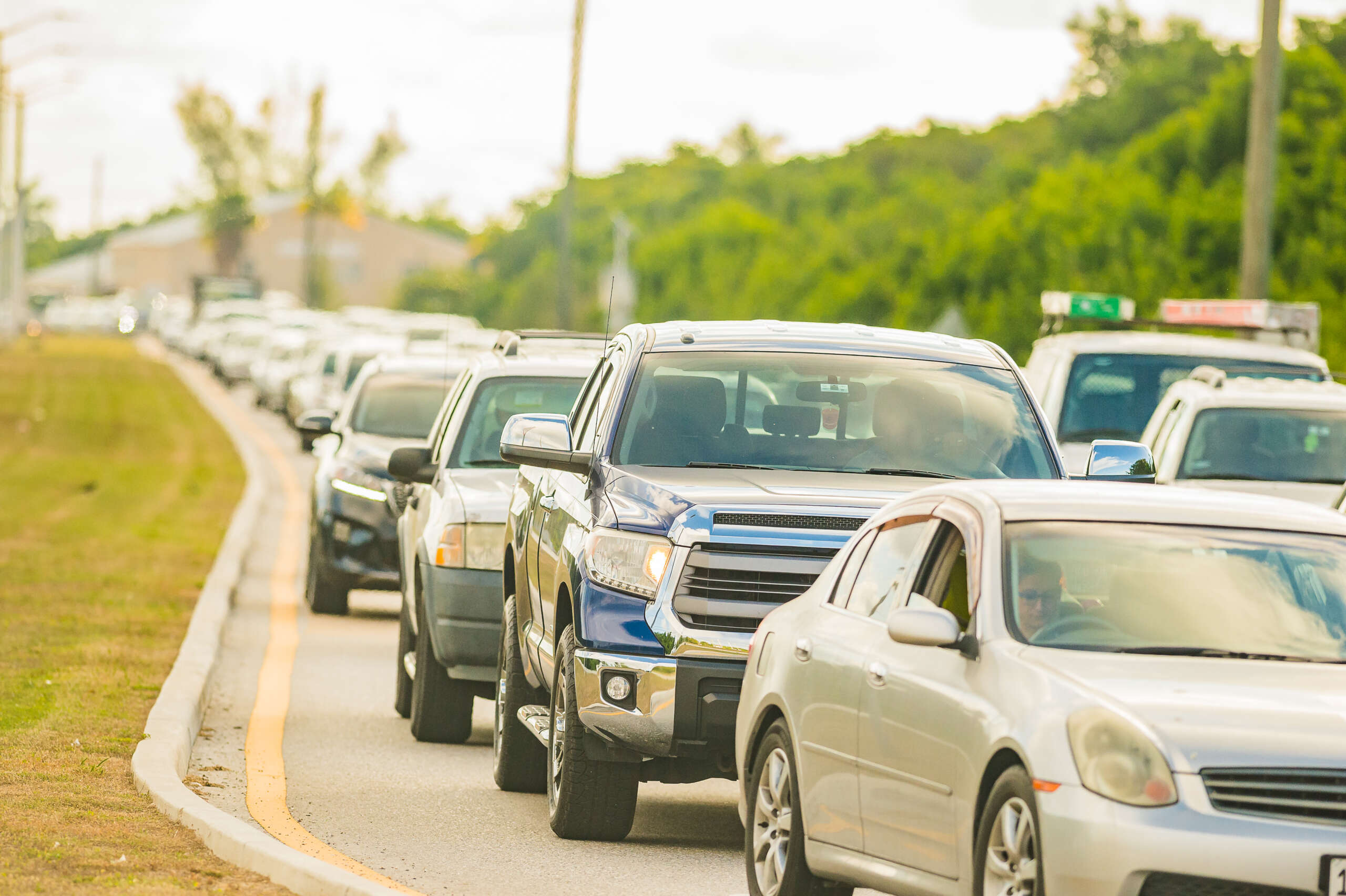
Conventional wisdom seems to be that Cayman has too many cars, too much traffic and it’s causing too many problems.
The irony of Cayman’s car congestion issue is that it seems as much as Cayman’s roads are congested, so too is the inclination and ingenuity to do something about it. Cayman lurches from one report to another with seemingly decades in between and nothing meaningful happening. Surely the best people to innovate and generate ideas for solving Cayman’s traffic situation are the people of Cayman?
Why don’t we open a competition for ideas? Challenge Caymanians and residents to innovate and generate solutions to Cayman’s problems. Then try a few of them. Take a lesson from the ever-evolving tech sector where ideas are tried, if they fail, junked, but if they succeed, enhanced, evolved and further improved.
Our current attitude seems to be a blend of “well, it’s too difficult so let’s not bother” and “but it’s going to upset some people and that may cost us some votes”. Hardly an inspiring approach.
In the spirit of ideas, allow me to propose some.
Not everyone is going to like them. Some of these ideas might be terrible failures… but, too often, political-type decisions seem to be about avoiding mistakes rather than realising their inevitability and therefore trying ideas until a good one works.
First and foremost, let’s address the actual apparent issue, that Cayman has too many cars. Does it? At 10:30am or 4pm or 5pm on a weekend, are there actually too many cars? I think the honest answer to that question is no.
Cayman doesn’t resemble the Arc de Triomphe every hour of every day (despite the best efforts of some tourists to turn our roundabouts into adventure parks). It only has traffic issues during peak periods. That’s not to say the situation won’t worsen, but let’s at least start with an honest assessment of the problem. The problem is peak traffic hours.
Peak-hours tax
And that points at the obvious solution. Pricing. Cayman currently charges people a fixed rate for their annual car renewal, an antiquated and illogical policy in my opinion.
What does it achieve? How much effort do we all go through to renew our car licence each year? Is the cost of human suffering and the human resources of official processing of the paperwork worth the cost?
I would bet that the Cayman Islands is in a net deficit from the car licensing experience if we properly accounted for all the costs, both those of staff and customers.
So, let’s scrap it and replace it with a better more logical system. At the very least, let’s tax cars based on their cost basis.
A far better taxation system for Cayman’s roads would be to tax users when the roads are busy. Then people can either pay the tax or take a bus (more on buses later).
Imagine if there were a $5 charge to drive into George Town or Camana Bay during the daily rush hour. That might put some people off travelling by car and consider public transport or cycling.
At other times of the day, when the roads are quieter, that tax can be zero.
Dynamic road pricing works well in places where it is operating, such as Singapore. It isn’t a question of “if it works” but whether we have the inclination to take action. After all, we already have, with the new road licences, digital capability.
Cycling safety
Let’s talk about Cayman’s roads.
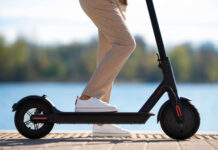
There are many cyclists in Cayman, and one can’t commend them enough for what seems, to my eyes, to be a pursuit laced with danger. Cayman roads are not fit for cyclists, notwithstanding a few paint brushes on the tarmac to remind car drivers what to aim for.
Even Paris, home to eclectic driving styles, has mini bollards along its roads to separate cyclists from cars. The idea of even the slightest graze from a knee-high bollard would undoubtedly help keep the cyclists safe as drivers take all precautions to protect their car from scratches and dents.
Many of the bypasses in Cayman have multiple lanes and areas to pull over in case of a breakdown. Physically separate the breakdown lane, not with paint, but with a pliable structure and start making Cayman’s roads cycle friendly.
Why not create cycle-highways from West Bay through Camana Bay, to George Town and out to Bodden Town? The road network exists, it just requires the inclination.
Taxation and the anomaly of favouring the wealthy
Tax systems exist to raise money for useful purposes. In an ideal world it would be moderately progressive so that poorer people pay less as a share of their income than the rich.
It is also often used, not unreasonably, to discourage certain behaviour (smoking, for instance) and encourage other behaviour. So, it is with electric cars. Import duty on electric cars is lower than combustion engine cars. Why? The argument is, presumably, that combustion engine cars are environmentally polluting and that we should motivate people to buy electric cars which have no tailpipe emissions and are thus “green”.
True in theory, nonsense in practice (in Cayman): In a country where power comes from nuclear, or wind or solar, then the argument is entirely reasonable. Cayman burns diesel. Thus, every time an electric car is plugged in, it is recharging by burning diesel… hardly environmentally friendly!
Electric cars are also more expensive than combustion engine cars. That means that a tax system that has lower taxes on electric cars versus combustion engine ones is clearly favouring richer people at the expense of the poor; not many lower-middle income families are buying $75,000 Teslas, and yet the government is encouraging exactly that sort of behaviour, to the detriment of middle-income households in Cayman.
Don’t get me wrong, if Cayman ever starts to produce a meaningful amount of electricity from renewables and there are electric cars up and down the price spectrum, I will 100% be in favour of lower tax rates on electric cars versus gasoline. But that day isn’t today.
Our current policy is perverse; it isn’t environmentally sensible, it isn’t economically sensible, and it doesn’t help many of the lower/middle-income households who are unarguably most hurt by the prior two years’ cost-of-living crisis.
Therefore, let’s scrap the idiocy of lower taxes on electric cars for now. Rich people who want to buy electric cars can continue to do so and pay the same tax rate as poor people who can’t afford to.
It would almost certainly raise more money for the government as well, since data suggests that higher-cost electric car buyers are relatively price inelastic.
Better use of public buses
It pains me to discuss buses. Firstly, because, well, where are they or when are they? It’s so easy to create an app with GPS so people know where the bus is, when it’s arriving. Yet Cayman doesn’t have one. Would it help or encourage people to take a bus? Maybe. It encouraged me to take a bus in London recently.
Let me set the scene. You go to work in the morning by bus, do your day’s work and find yourself having to work late to meet a deadline or to deal with a client matter. Imagine if work takes you past 7pm? I guess you’re walking home, as the buses don’t run in the evening. Who can therefore plausibly expect working people to rely on the buses? Taxi home when the buses stop running? Well, that’s the day’s wages gone. It’s just not a rational system we have.
The ‘solution’ suggested in reports that “the government must step in and run a comprehensive bus network” only require a brief recollection of Ronald Reagan when he said that “The nine most terrifying words in the English language are ‘I’m from the government and I’m here to help’.”
The government doesn’t need to run a comprehensive bus network for Cayman to have a bus network. Although it is true that there are occasions where the private sector may not be able to run a service profitability that doesn’t mean that the incentives of the private sector should be forgotten. Sometimes governments subsidise certain services because of their social good (externalities in economist-speak).
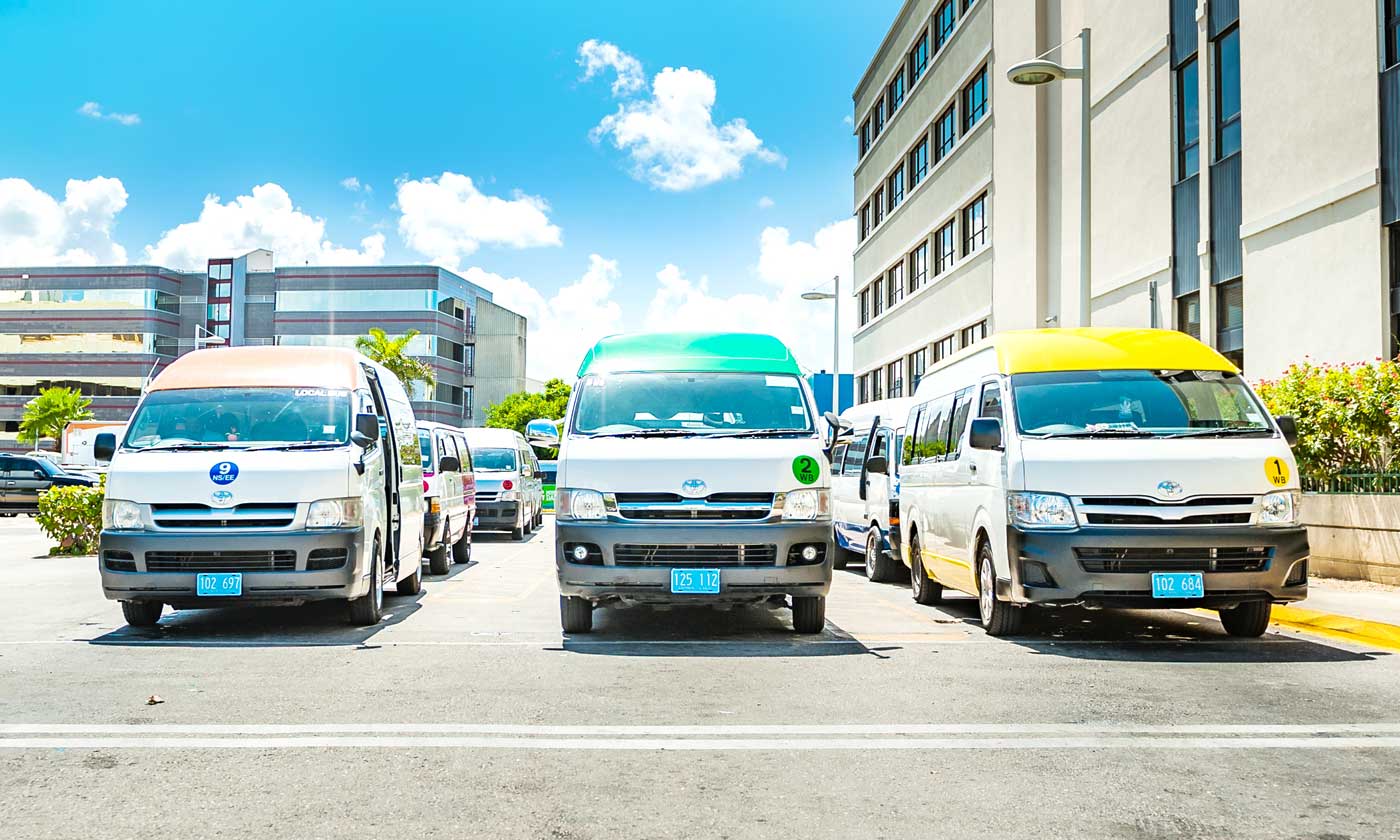
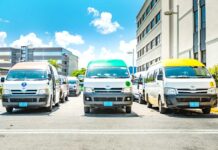
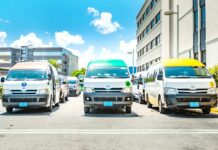
Thus, the government could run a tender, setting out clear rules on what minimum services need to be performed (6am to midnight, say), what minimum frequency (every 20 minutes, say), what size buses (minimum 20 seats, say) and what timeframe the buses must transport passengers from location A to location B. Then groups could tender to provide this service.
Some would tender and quote a subsidy of ‘x’, others a subsidy of ‘y’. All other things being equal, the lower subsidy wins. Any failure to meet the terms and the tender winner loses their licence. That way, government can help develop a national transportation system at the minimum necessary outlay while relying on the private sector’s inherently more fine-tuned incentives for delivery.
Let’s briefly mention road accidents. A scourge on our society, without a shadow of a doubt. But let’s also be honest. Let’s not pretend people are civic minded to ‘do the right thing’ and not drink-and-drive. They aren’t and likely never will be. On the other hand, give people a working viable alternative to driving drunk and most will take that alternative.
Let’s put on a bus service so people can get home in the evening. But let’s make the bus service an express service so that it stops at relatively few locations, as opposed to the current seemingly random stopping points (and frankly dangerous – I saw a bus disgorge passengers halfway around a roundabout recently) and accept that people may have to walk for 10 minutes to get to a designated (and safe) bus stop.
Talking of express bus services, how about a few bus hubs? How about a bus hub in, for instance, West Bay at the end of the by-pass with parking and air-conditioned shelter so that people can wait for the bus in a cool environment and secure a bicycle in a covered safe location
How about the same in Bodden Town and other key locations, to make the experience pleasant? I imagine coffee shops would be interested in supporting such venues and pay rent to reduce the costs.
Expanding the use of school buses
A major contributor to busy roads is the school system. How many cars does it take to transport kids to school? Apparently, an awful lot… and that creates congestion.
Well, here’s an idea… let’s ban parents from taking their kids to school by car, except in exceptional circumstances. Let’s mandate that kids must get school buses from set locations around the island. Suddenly, the road network clears of all those cars.

Parents would shuttle their progeny half a mile to a bus location and go home wondering what to do with the hours they have saved, as opposed to sitting in traffic to deliver their pride and joy to the school gates.
In this scenario, there would be just a handful of buses on the road rather than the hundreds and hundreds of cars going back-and-forth from homes to school.
The parking problem
Let’s assume, however, that people still drive to work. There’s a whole article needing to be written about George Town and the painful attempts to transform it one brick a year, but I shall save that fusillade for another day.
Rather, let’s look at what Camana Bay is doing, which is position the car parks at the outskirts of the town centre. Let’s do that to George Town. Then, properly pedestrianise downtown.
Each of the five main avenues into town should have a multi-storey car park in to which people park and then have a 5-7-minute walk to their place of work.
Traffic would be lighter as there would be much reduced through-traffic and, frankly, George Town would become immediately more pleasant. People might even want to live, work and dine there.
One big additional ask here though is to create some shade. Let’s hang some sun-sails from the buildings so people don’t sweat pints on a 5-minute walk. The current setup of a couple of dead palm trees hardly shades anyone and creates no incentive for people to walk around George Town.
Shade, car parking at the outskirts and pedestrianisation could all help create the conditions for fewer cars and a potential revival of our esteemed capital.
Status quo not working
In conclusion, the current status quo isn’t delivering value for the Cayman community. Hours spent in traffic are unproductive, inefficient, environmentally damaging and soul-destroying.
There are solutions out there. It’s just that Cayman hasn’t tried any.
Let’s not be afraid of making mistakes and try a new approach. But let’s also make sure the approaches that are tried are economically literate and logical.
Simon Cawdery, CFA, is an investment manager and governance professional who lives and works in the Cayman Islands. He writes regularly for the Compass.
Related Videos








Even Bangladesh has a light rail/monorail system:
‘When fortune favours Mozammel Hossain, it takes him around two hours to reach his office at Uttara’s House Building from his residence at Agargaon in the morning (11 miles, so similar to Bodden Town to Camana Bay). He spends another two hours on the way back in the evening. On the days he has no luck, which happens quite often, his time on the road stretches beyond four hours. …
Prime Minister Sheikh Hasina will inaugurate the first-ever electric public transport in Dhaka on Wednesday. And she will be the first to ride it.
Travellers and commuters like Mozammel will be able to take metro trains from the next day. A metro train is expected to take 20 minutes to reach Uttara’s Diabari from Agargaon, meaning Mozammel will be able to save at least three hours a day.
More than 50 countries across the world provide metro rail services. China alone has 46 metro systems, while the US and India have 15 each. Now Bangladesh is going to join the metro club.
“Now I won’t be reaching the office with a dishevelled look; or returning home in a grumpy mood. I’ll be able to spend more time with my family. This is something we can’t buy with money.” – Mozammel Hossain, a resident of Agargaon whose office is in Uttara’
https://bdnews24.com/metro-rail/xinc4i0jh1 – December 2022.
I take issue with the implication that electric cars are not environmentally friendly for Cayman and that the current duty regime for them favours the rich.
From a precise measurement of my own electric car for a week, it ran 104.8 miles on 52.1 KwH. Assuming CUC is still producing around 17 KwH/Gallon or diesel, it only burned three gallons, whereas my old car (of similar performance) would have burned at least 6 gallons of gas to go the same distance.
Electric cars are clearly environmentally friendlier from an energy consumption perspective, even though we generate most of our electricity from diesel.
There are many more less expensive and more efficient models than mine available now, therefore the government’s policy of encouraging the purchase of electric cars, especially less expensive models, which carry zero duty, favours the environment and lower income residents more than rich ones.
#1 The worse conditions you create for pedestrians and cyclists, the more people you force to get behind the wheel of a car and thereby provoke traffic jams.
#2. The question of transport is a question of mathematics and geometry. These sciences do not care what your culture or climate is because these are OBJECTIVE indicators.
In general, mathematicians and economists have long proved that the more roads you make, the more cars you actually get on the roads and even more traffic jams.
4 postulates proven by mathematicians say that it makes no sense to add new lanes or build overpasses in an urban environment.
1. The Pigou-Knight-Downs paradox states that expanding road capacity does not reduce travel cost because traffic may simply shift to the upgraded road from other roads, which increases the congestion of the upgraded road.
2. The Downs-Thomson Paradox that traffic will increase without limit until the option of public transport (or any other form of transport) becomes faster than the equivalent trip by car.
3. Dietrich Braess’s paradox is the observation that adding one or more roads to a road network can slow down overall traffic flow through it.
4. Lewis-Mogridge postulates that as more roads are built, more traffic consequently fills these roads. Speed gains from some new roads can disappear within months, if not weeks. Sometimes, new roads help to reduce traffic jams, but, in most cases, the congestion is only shifted to another junction.
These postulates don’t care if it is NYC, London or Nowheresville. Absolutely no difference.
Well written and spot on with many of the suggestions. Unfortunately, this quote says to me nothing will get done. Our current attitude seems to be a blend of “well, it’s too difficult so let’s not bother” and “but it’s going to upset some people and that may cost us some votes”. I am sure government will kick the can down the road again.
This brings to mind the issue of Govt. incompetence. Right after I arrived in early 1969 the UK sent a team of surveyors to Cayman and they produced the Cadastral Survey which provided every landowner with a guaranteed title, recorded in a new Land Registry. On completion they also produced the Master Ground Transportation Plan to provide for future traffic increase. This entailed surveying and Gazetting wide land corridors to provide for future roads to be built accross the whole island. The intention was that this land be preserved for future key roads to all the districts. Unfortunately successive Governments did nothing to preserve these corridors, allowing uncontrolled development in these prescribed zones, resulting in the mess we are now all in. This can all be blamed on lack of accountability which has always pervaded both Govt and the Civil Service.
Excellent article, but I expected to read about an idea that seems obvious to throw into the mix: Ferries. We could have 5 hubs (or stations), each with parking, cafes and convenience store: Rum Point, Savannah, George Town Yacht Club, Camana Bay, and Barkers. Wouldn’t that be worth exploring?
Designated bus stops and a proper bus system! These bus drivers are dangerous; someone is going to get killed by these bus drivers. It’s a game for the drivers, a competition for who can get to the next rider. We are a large city with a population of 75,000; the time is NOW to get a proper system. Love your ideas and the idea of a competition.
I believe the zero proper bike lanes is one of the major issues. The island is behind on having real bike access. Especially in the day and age of the E Bike. No proper bike lanes hurts all economic classes when trying to get to a job but especially those that can not afford a car. While many argue that land owners would not give up a few feet of land, there are already side walks in many sparse places from Bodden Town to Camana Bay but they are unconnected, don’t encourage biking and have no bollard.
The public buses are clearly another issue. While nothing has been done with the Deloitte report, buses can’t facilitate taking on bikes and there is no set stops. They can stop every 50 ft until they are full to the max while people wait in the sun. Also, who knows when the bus will come. Your guess is as good as mine.
It makes little sense why more school buses aren’t used. Can public areas like Spotts Beach or the West Bay stadium be places for public school buses to pick up children in the morning? The amount of cars it would take off the road would be enormous. It is clear on a day like today 4/2/24 that when no schools are in session, traffic is at ease.
Great article with nice ideas and this is a very true line as the other commentor said from the article, ““well, it’s too difficult so let’s not bother” .
I do not know if this suggestion has ever been trialled.
For me the issue is only school traffic. We are now in Easter Holidays and with no school buses or parents taking kids to school we have no issues.
Why not trial for say 2 weeks, starting and finishing schools 1 hour later so school busses start at 8am instead of 7am.
Currently all traffic seems to be on the roads at the same time.