


Wanted: Teachers, nurses, doctors, vets and police officers.
Job requirements: To educate our children, keep our families and pets healthy and our streets safe.
Qualifications: Years of education, specific training and experience.
It is a seemingly idyllic job offer – the kind made by public and private institutions in Cayman every week. But the promise of a generous tax-free salary in the sun increasingly comes with a catch. Amid a surging cost of living, that salary is spread thinner than ever before.
As a result, Cayman is facing recruitment challenges in middle-income professions, including education and healthcare, that are vital to the functioning of society.
The inflation impact is magnified for people with children, with the costs of raising a family in Cayman escalating far beyond what most salaries can comfortably cover.
That means it has become far harder for employers to bring in the highly educated and experienced workforce they need. Some are turning to younger, less-experienced hires as a result of better-qualified, mid-career professionals being unable to afford to bring a family here.
Professions that are crucial to society and require higher education, specific training and experience – like teachers, veterinarians and pharmacists – are impossible to fill entirely from the local population.
And efforts to bring in the best candidates from overseas are increasingly being stymied by the sheer cost of moving to Cayman.
The salary looks good, until you see the expenses
At Island Veterinary Practice in George Town, Dr. Brenda Bush is seeing more candidates than usual turning down job offers.
“Whenever we put an advert out there, we get flooded with responses, but then it is silence. Once they start looking at rent, food, childcare, school fees, they think again.”

She said school fees were the big concern for parents, with free education largely unavailable to expatriates in Cayman. Retaining good staff is also a challenge.
“We had a vet that had to leave and go back to the UK once they had their second child. The school fees were just too high.”
Ironically, the same recruiting phenomenon is rife among schools themselves. Some have started offering free places to the children of teachers in an effort to recruit experienced educators.
Private-school fees have risen steadily over the last few years to a range of around $15,000 to nearly $30,000 annually, depending on the age of the child and the institution.
Cayman International School director Jim Urquhart said he faced the same challenges in trying to bring in experienced teaching staff.
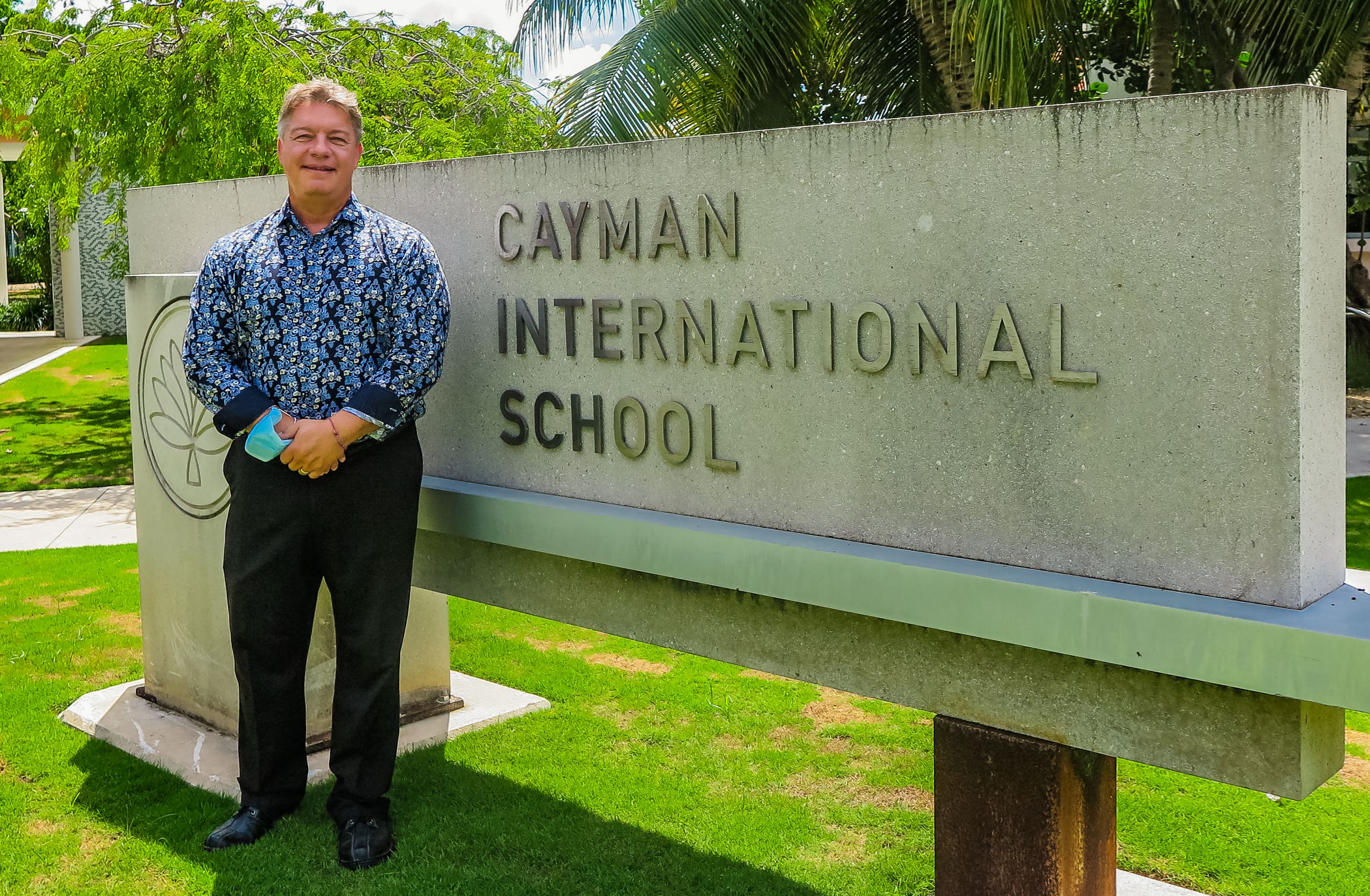
“In our recruiting, we are brutally honest and transparent about the cost of living and the challenges experienced with respect to the lack of affordable housing, in particular,” he said.
In a 30-year career at what he describes as ‘flagship schools’ all over the world, Urquhart said he could ‘count on one hand’ the number of candidates who had turned down job offers.
“Since arriving in the Cayman Islands, four years ago, I have had 17 people decline job offers – six people this year alone,” he said. “The reason cited each time for declining is the cost of living and the inability to maintain their current lifestyle.”
Barely breaking even
Urquhart acknowledged that the fees at CIS and other private schools contributed to the cost-of-living challenge.
A parent with two teenagers at Cayman International School could be spending almost $60,000 on school fees alone.
Even if both parents have ‘good’ jobs, it is hard to make those numbers work for families, says Joanna Boxall, publisher of Cayman Resident and Cayman Parent.
The Cayman Resident website includes information and budgeting advice for parents, including a hypothetical scenario of likely income and costs for a working couple with children.
The expenses column in that scenario has increased to such an extent that the hypothetical couple – an accountant earning $6,500 per month and a human resources advisor earning $5,000 per month – are barely breaking even.

The cost-of-living crisis – long a challenge for many people on lower salaries – is bubbling up to impact middle-class and even well-paid, white-collar workers.
A mother of four children contacted Boxall through the Cayman Resident website for help putting together a budget after her husband, a banker, was offered a high, six-figure salary to come to the Cayman Islands.
“The budget just didn’t work and they had to turn down the job,” she said.
What makes the challenge more acute is that the cost-of-living mark-up in healthcare, housing and education has a disproportionate impact on people with children.
Demographically, says Louise Reed, managing director of CML Offshore Recruitment, these people, typically in the 30-50 age bracket, are in the sweet spot for employers, having established themselves in their careers.

But the increasing costs of childcare, education, groceries and housing for couples with children is “daunting”.
She added, “This is especially true for middle-income professionals and those with multiple children, where these costs may be prohibitive.
“This is particularly problematic for positions that require the relocation of talent to Cayman for specific skill sets that are difficult to recruit locally.”
Recruitment professionals have proposed possible solutions including employers contributing to housing or school fees or simply paying higher salaries.
Data analysed by the Compass shows that the median salary has stagnated in recent years, despite double-digit increases in the consumer price index.
Police and government workers easier to recruit
Not all professions are impacted equally, though.
The Royal Cayman Islands Police Service is midway through a recruitment drive, both locally and internationally.
In the police force, as in the civil service, health care is covered through CINICO for employees and their children, who can also take places in public schools at significantly lower cost.
For doctors, too, the dynamic is slightly different. One private healthcare provider said its staff were well-paid enough to absorb those increases.
Nurses and health technicians are a bigger challenge, however.

It is also worth noting, one employment lawyer told the Compass, that there has not been a decline in demand for work permits; the numbers have actually gone up.
“Work permits are still increasing but there are lies, damn lies and statistics. It could the be case that people are recruiting from different parts of the world, for example India or South Africa, where the higher salaries in Cayman are more attractive.”
He said businesses may also be recruiting younger people or couples if candidates with families were turning down offers.
A crisis in education?
At CIS, director Urquhart only sees the problem getting worse. He warned that schools on island were themselves challenged by rising costs for salaries, health insurance and facilities upkeep, among other things.
Capital costs to expand places – which have been in short supply at private schools – also add to the bill.
Urquhart estimates that most private schools will need to increase fees by a minimum of 5% each year in the near term just to meet expenses, noting government also faces increased costs for public schools.
“The rising costs of school fees is not just a private school challenge – the cost per pupil in the government schools is also rising, and the government schools are among the high cost schools per pupil on island,” he added.
“In the long term, perhaps more affordable housing near schools could assist in remedying some of the issues for people in the health and education sectors, as well as hospitality.”
Beyond this, he believes the island could be heading for a recruitment crisis in education.
“The Cayman Islands in general will have greater difficulty attracting good teachers because of a global teacher shortage in developing and so-called developed countries alike,” he said, attributing this to a combination of retirement, the numbers of people leaving the profession, and less interest from graduates in teaching as a career.
That in itself is a consequence of cost-of-living increases, he said, with fewer young people inclined to pursue long and expensive post-secondary school studies for middle-income careers in health and education, where salaries have been stagnant for years.
He queries, “Financially, why would a young person engage in that many years of full-time tertiary education to serve in those fields?”
Caymanians seeking lower costs overseas
While this article has focused primarily on the challenges in recruiting overseas talent, the cost-of-living problem impacts Cayman families significantly.
There is anecdotal evidence that Caymanians are emigrating to find more affordable opportunities (the Compass will tackle this issue in a separate article).
“This is of particular concern to younger Caymanians I talk with as they are worried about what the future might hold and if they can afford to stay and live on island,” Urquhart added.
“I can see people leaving the island to less-expensive countries to take advantage of geo-arbitrage – and this could have not just talent loss of young Caymanians but also long-term cultural implications.”
- Are you a Caymanian that has left Cayman because of the cost-of-living? Contact James Whittaker at [email protected].
Related Videos













The irony is that if the expat can’t afford to live here how is it expected caymanians to live? Yes one can say our children can attend government school but then, the regular caymanian worker don’t make an average salary of $6,500. At least the expat has choices, what choices does the caymanian have?
It would be interesting to find out how many Caymanians have moved to the UK where medical treatment and schooling are free, and they can vote at elections.