

The Central Planning Authority has deferred an application for the creation of a 99-lot residential development site to seek legal advice on whether it can lawfully charge fees for an after-the-fact application for a subdivision, for which land has been cleared without authorisation.
During a CPA meeting on Wednesday, 5 June, attorney Samuel Jackson, representing Cayman Development Group, argued that it was impossible to submit an after-the-fact application for a subdivision, given the process set out in law for a subdivision to be established.
“For a subdivision to be created, an application must first come before the CPA, at which stage the law prescribes the elements that must be presented. Then upon approval from the CPA, the applicant then submits the plans to the Lands Registry who legally creates the subdivision and issues a corresponding number,” Jackson said.
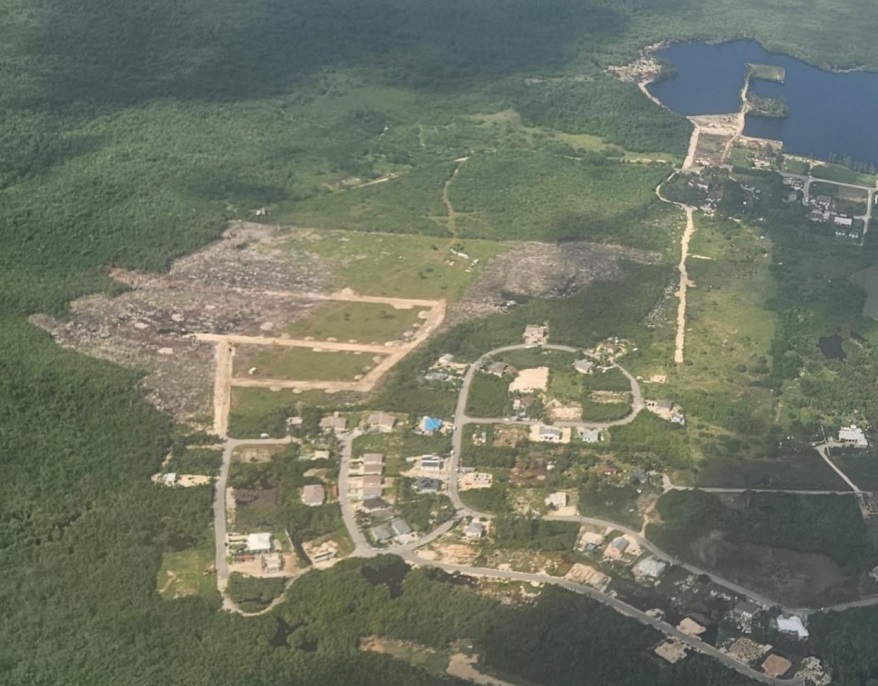
The application for the subdivision was submitted by Cayman Development Group on 6 Oct. The site is a 33-acre lot located in Frank Sound in North Side.
Sometime between the submission of the application for the subdivision and 9 Nov., approximately 15 acres were cleared by machinery without permission. The clearing has subsequently developed into a point of legal confusion.
According to Jackson, his clients were notified that, for clearing the land without permission, they would be required to pay a fine that is 10 times the regular price per acre of $100.
Through its lawyers, the Cayman Development Group stated that, while a substantial amount of the property had been cleared previously, the land cleared most recently was “not virginal cleared land that was the home to some protected species”. They claim instead that the property had been cleared to make room for a cow pasture decades before they purchased the property.
“We paid a fine of $15,000 to the planning department (on 4 June) for the 14.96 acres that were cleared without permission,” said Jackson, who asked that the matter be put aside so they could address the matter at hand – the application for a subdivision.
The matter could not progress, however, because the board pointed out that the $15,000 fine that was paid was in relation to the unauthorised clearing, for which they did not have an application before them.
“There are two matters here and I do not wish to conflate them,” said CPA chairman Ian Pairaudeau. “The first matter is that of the unauthorised clearing and the fact that there is no application to deal with that matter. The second is the application for the subdivision.”
At the centre of the back and forth was the question as to what constitutes a subdivision.
Is a subdivision the assignment by the Lands Registry of boundaries that divide a larger parcel into smaller parcels and, if so, does the subdivision only become applicable following the approval of the CPA/lands registry?
Or will a subdivision still exist if someone goes about dividing a parcel with roads that serve as the primary boundaries of the smaller parcels within the larger plot?
According to Jackson, a subdivision is the former of the two. However, members of the CPA contended that there might be merit to the thought of a subdivision also falling under the second definition.
In the current case, the developer has already cleared a substantial part of the land and installed a network of dirt roads, which mirror plans for where asphalt roads are to be installed.
Nonetheless, Jackson contends that a subdivision has not been formed and, therefore, no after-the-fact application can be legally sought.
“The only other way in which a subdivision could be created outside of the first option is where a person who owns a parcel of land then leases it to someone else, and in doing so they would have created a subdivision,” he said.
Ultimately, the CPA ruled that the Department of Planning would issue an enforcement notice so the $15,000 fine could be properly allocated.
Next, an after-the-fact application for the clearing of the land was to be heard, at which stage members would also consider an application for a subdivision in whichever form it materialises.
No date was set for the next meeting.
Related Videos












One assumes from this request that the Planning Board has never charged penalty fees in this situation. If not, why was this anomaly allowed to continue for so long without the law being changed?.