Two Cayman dive instructors have returned to the island after spending a year working in Texas with NASA astronauts, including the two astronauts currently stuck on board the International Space Station.
In early 2023, Hunter Taylor, 33, and Sam Lungari, 30, left their jobs as dive instructors in the Cayman Islands to take on a dream job – using their dive skills to help astronauts prepare for living in space.
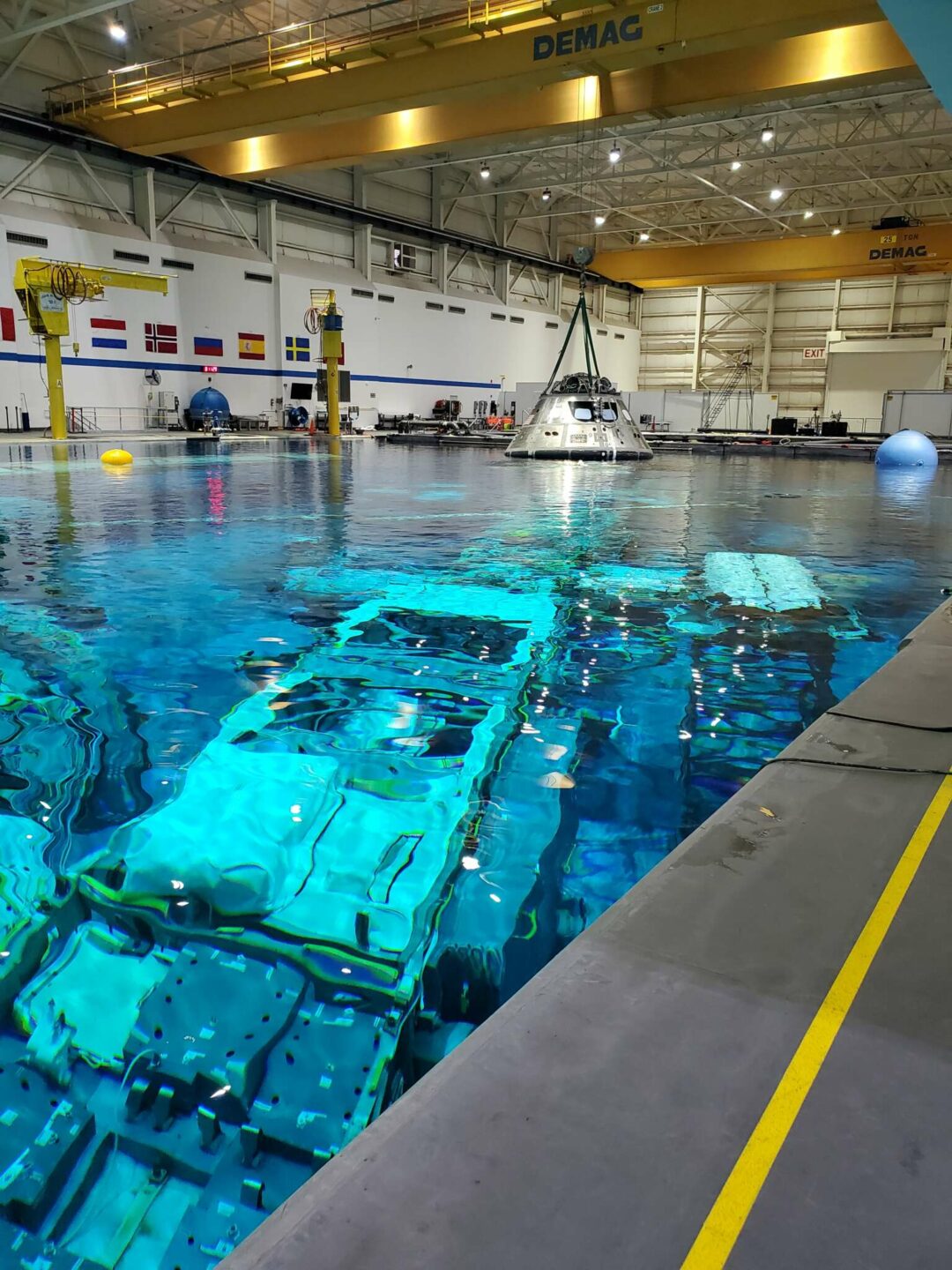
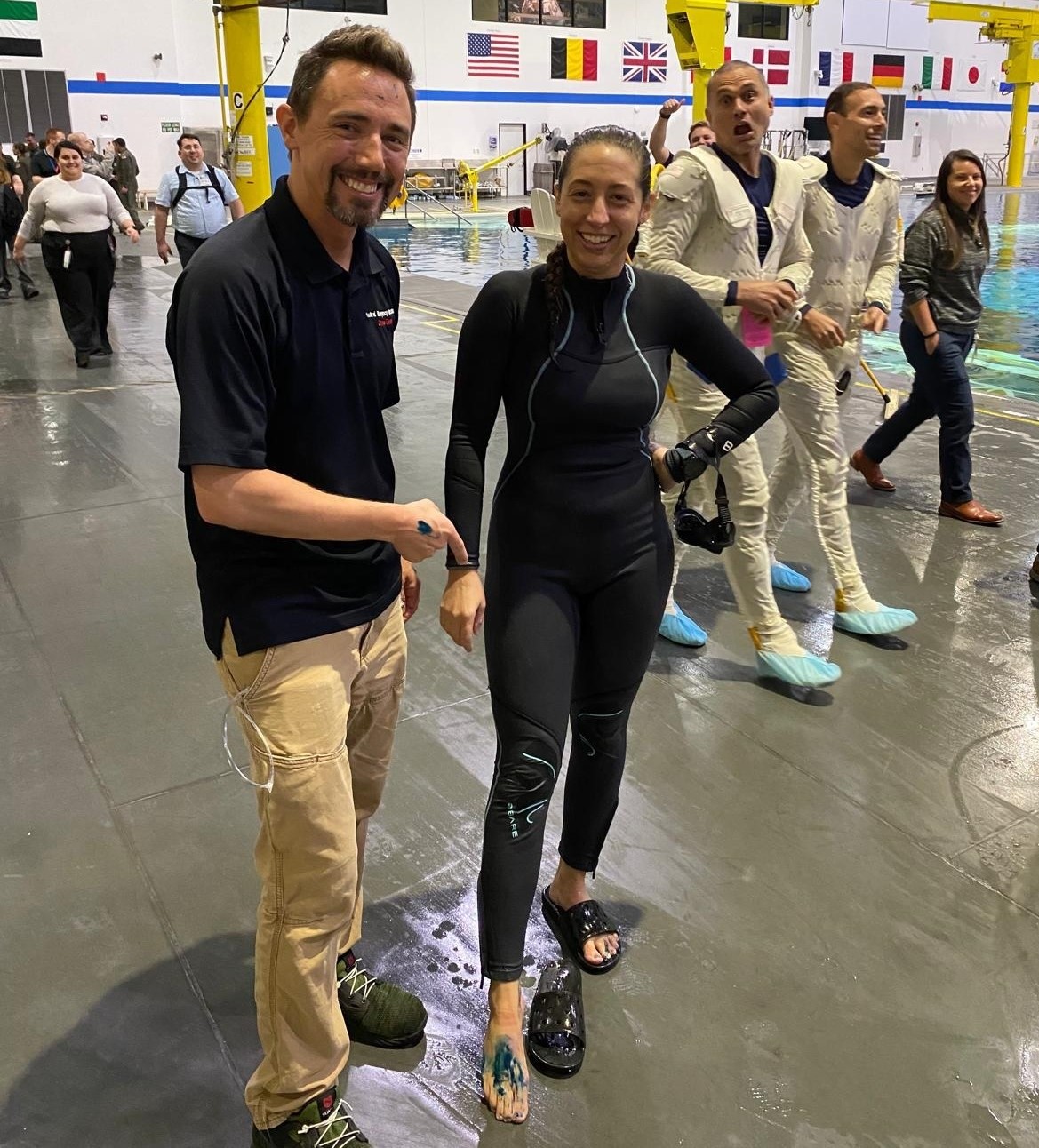
The couple worked at NASA’s Neutral Buoyancy Laboratory in Houston, which houses one of the world’s largest indoor pools. The 40-foot-deep pool contains life-size replica parts of the International Space Station, as well as a moonscape and the Orion space capsule, which is part of the Artemis lunar programme.
Before they took off for the ISS two months ago, astronauts Sunita Williams and Butch Wilmore were working with Taylor, Lungari and the rest of the NASA team at the giant pool to prepare for the mission.
Williams and Wilmore were supposed to spend eight days at the space station, but have now been there for more than two months, due to a fault in the Boeing Starliner capsule on which they were supposed to return to Earth. They may have to remain at the station until next year.
The Cayman dive couple, who worked closely with both astronauts, describe Williams, or “Suni” as they call her, as a legend.
“She was awesome,” Lungari said. “She was there [at the pool] a lot.”
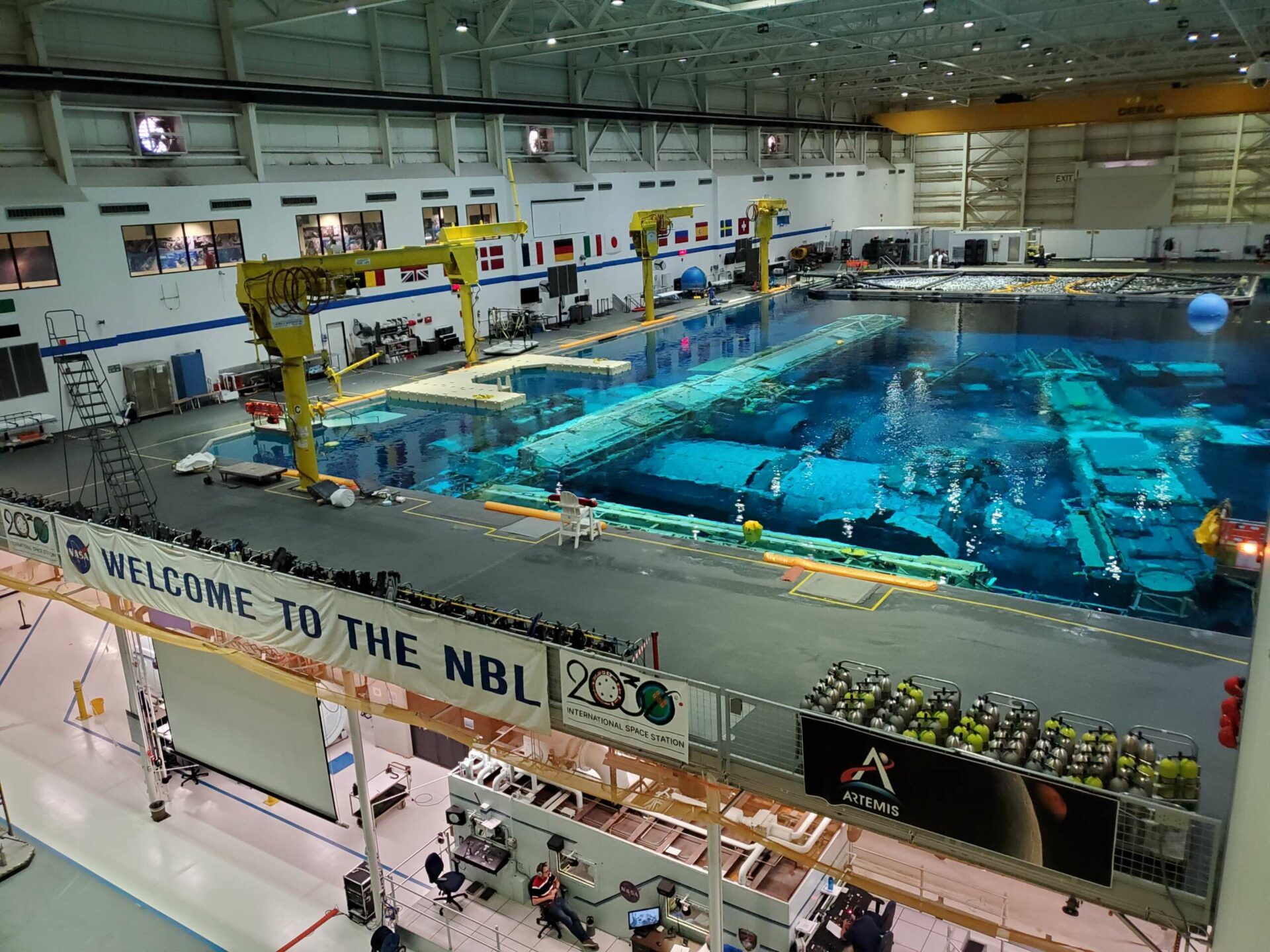
At the Neutral Buoyancy Laboratory pool, conditions are created mirroring those of the zero-gravity vacuum of space that the astronauts will encounter, and it’s the job of scuba divers like Taylor and Lungari to keep them safe, record their movements and help them prepare for their missions.
“The astronauts have to start the ‘ISS walks’ in the airlock [in the pool]. They have to practise getting in and out,” Lungari said, as she described astronaut candidates, who have yet to go into space, taking five to 10 minutes to get into the tight space in their suits and then get out again.
“Suni got in the pool, grabbed the airlock and went in feet first and was in position immediately. I was, like, ‘That’s it? That was fast’. Watching people who have been in space do their thing, you say, ‘Oh, so that’s how it looks’.”
The 40-foot-deep pool at the laboratory is used for a variety of purposes, including mission planning, procedure development, hardware verification, astronaut training, and refinement of time-critical operations necessary to ensure mission success during spacewalks.
The pool is 202 feet long, 102 feet wide and holds 6.2 million gallons of chlorinated water.
Getting to NASA
Taylor says he became aware of the possibility of being a diver for NASA a decade ago, as he was training to be a dive instructor in west Texas, when his course director listed some of the jobs he could do with his dive certification. The director’s daughter was working at that time at the Neutral Buoyancy Lab, “so he tossed it in there as a fun fact, that you can even work for NASA”, Taylor said.
Fast forward 10 years when Taylor and Lungari, both originally from the US, were considering a change of scene from Cayman and their jobs at Ocean Frontiers, and applying for work at aquariums and other places. Taylor remembered that off-the-cuff remark and began searching for information about diving for NASA, and applied for that too.
“Three months after I applied, I’d given up all hope on that one,” Taylor said.
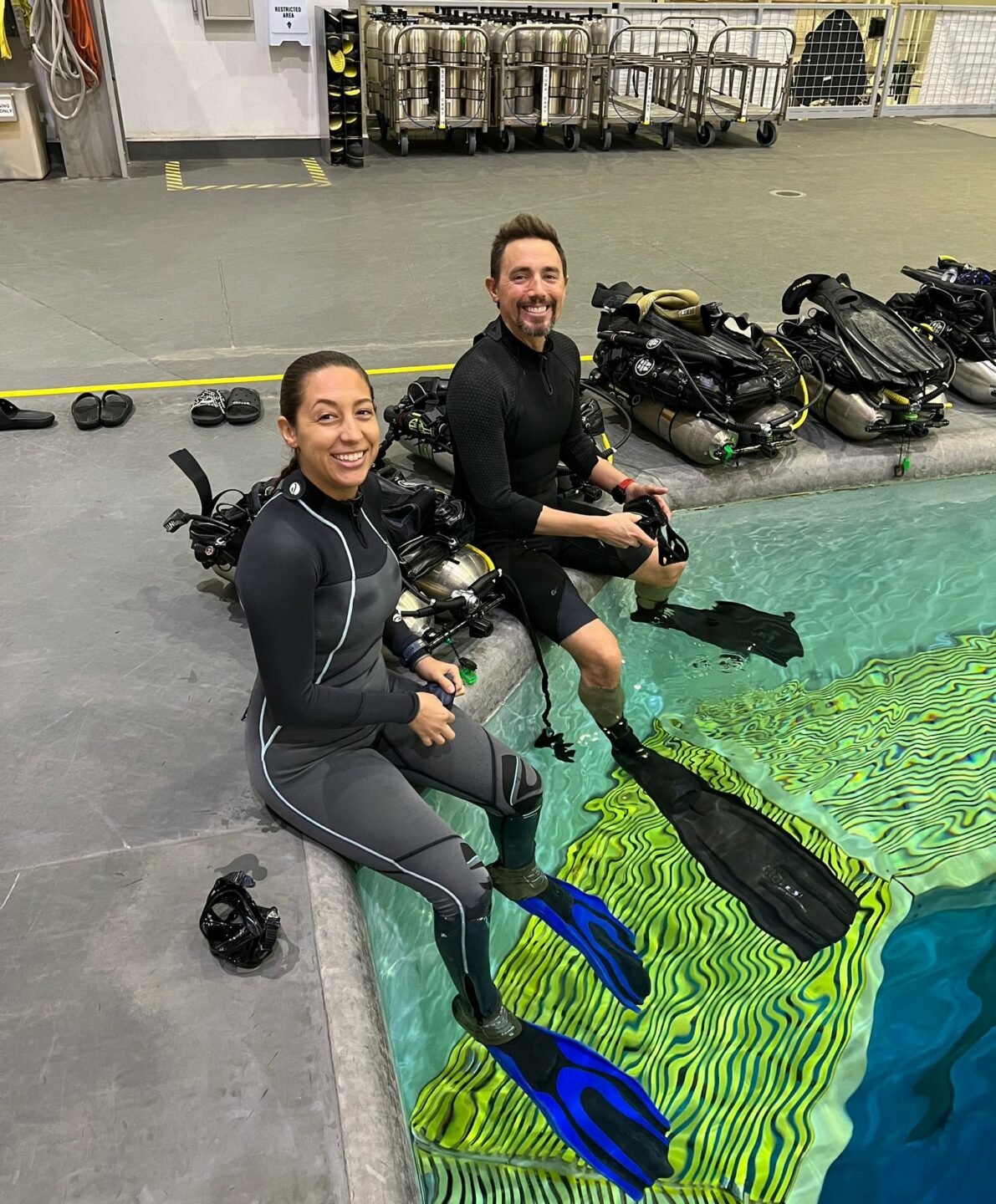
But just as the couple were getting set to spend the summer in Vermont driving boats while they figured out their next step, Taylor received an email from NASA, inviting him for an online interview. Following that interview, which went well, he was invited to visit the lab for a “swim test”.
Despite practising for the test swim at the little pool at Ocean Frontiers in East End, in which he had to do 24 laps to cover the required 550 yards in 12 minutes, he failed the test, swimming it in 12 minutes and 30 seconds.
He did pass the next two tests – treading water for 10 minutes and swimming underwater for 50 feet.
There were two other people interviewing and being tested at the same time, he said.
“Immediately, I was a bit crushed I’d failed the first part, but all three of us failed. I was the only one who passed the tread, and then we got to the underwater bit, and I was the only one of the three of us to pass that. So, I was feeling a bit better, but, you know, I had failed, I’d flown all that way, and I was 30 seconds from getting this big dream position that we’d been so excited about.”
But then, he was offered the job.
While he started at the NASA pool facility, Lungari worked at a local dive shop until another position at the lab opened up a couple of months later. In her swim test, she swam the distance in 10 minutes, 53 seconds.
Underwater space station
The first couple of months were spent familiarising themselves with the pool layout, “learning the map of the ISS basically”, Taylor said.
One part of the job that came as a surprise to both of them was the heavy lifting.
“You expect to do all the astronaut diving stuff, but a lot more of the job was lifting very, very large, heavy objects with a large crane. Because all of the objects were inside the pool, we were the people who configured it for whatever tests they were doing next. Similarly with the upcoming lunar projects and, of course, performing the lunar landing,” Taylor said.
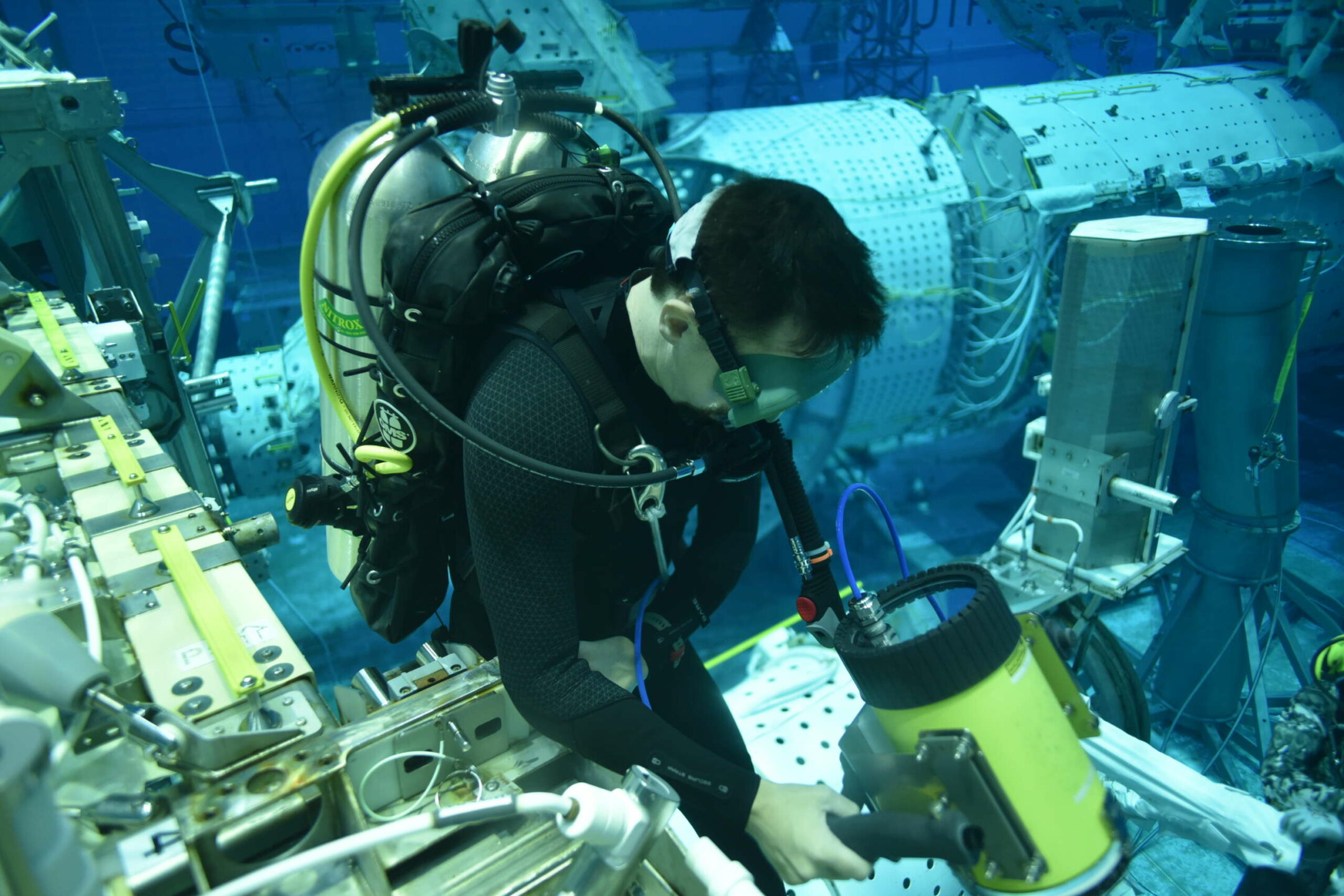
Showing the Compass a video taken from the crane platform as it moves across the entire pool, Lungari explains that about 80% of the US part of the International Space Station is replicated in the pool.
The ISS is a collaboration between the US, Russia, Canada, Japan and the participating countries of the European Space Agency.
Each astronaut, as they work on ‘fixing’ or ‘maintaining’ parts of the ISS, is accompanied by four divers – two for safety purposes, one to film every move the astronaut makes, and one ‘utility’ diver to hand tools to the astronaut.
Lungari explains that while the utility diver job may sound easy, “you need to know exactly what task the astronaut is doing, and what that section of the space station looks like … so you have to understand as much about the equipment as the astronaut does”.
It takes about a year-and-a-half to be trained to be a utility diver, so both Lungari and Taylor worked as the camera divers and the safety divers during their year at NASA.
The divers and the astronauts all use ‘doubles’ – two tanks of enriched air – to ensure there’s enough air to breathe during the two-and-a-half hours or more they spend underwater.
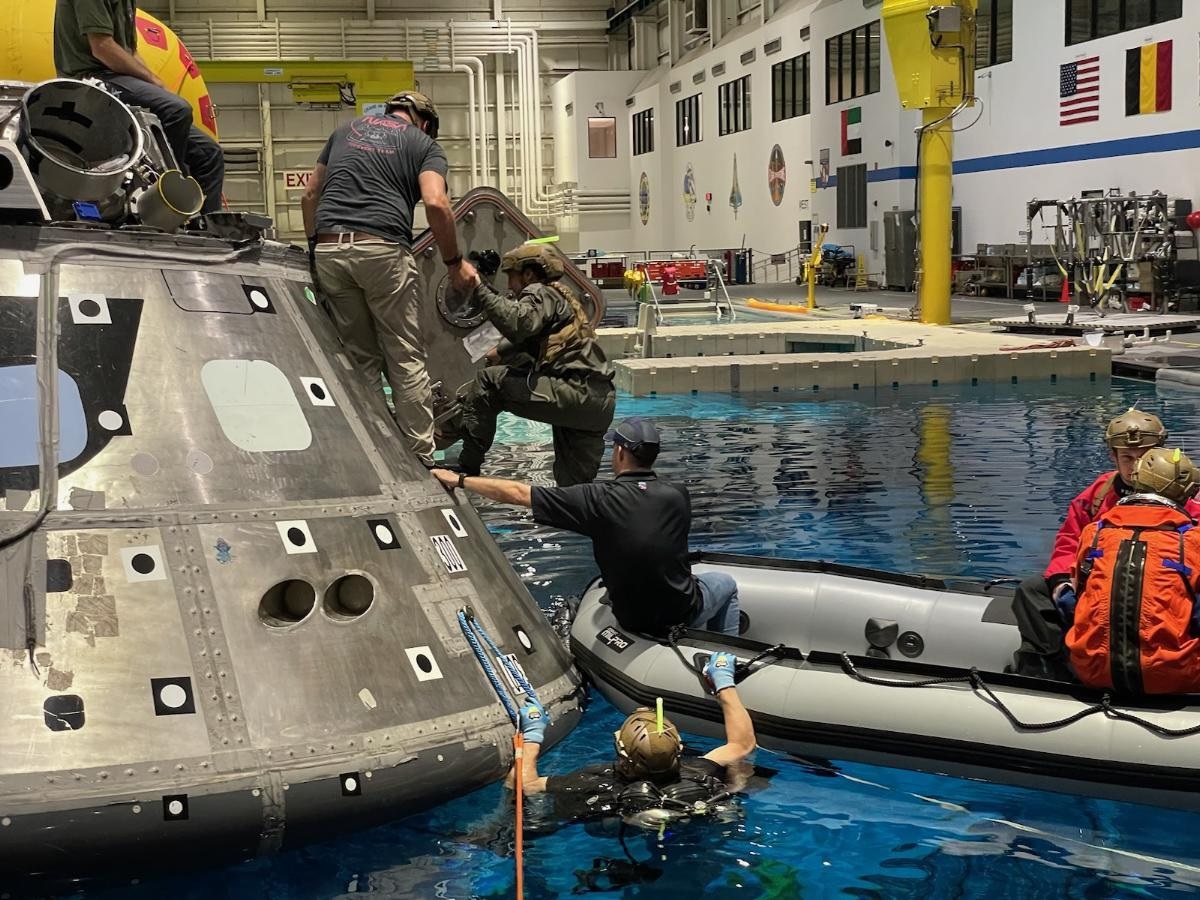
The pool is currently being used by astronauts practising ISS ‘extra vehicular activity’ – or space walks – as well as the primary training ground for what NASA calls ‘AsCans’ – astronaut candidates.
“So, it’s a training ground,” Lungari explained. “They each have 10 pool sessions, and there are certain tasks in each session. The first two are just getting used to being in the suit, just bending their arms and trying to reach for things. … Imagine squeezing a tennis ball for six hours straight and the tension on your hand. That’s what it feels like to try to grab things with the suit on because the suit is pressurised. You only have so much dexterity.”
To prepare to do any task outside the space station, the astronauts practise the manoeuvres and skills over and over again at the pool.
“Those very same people who were doing it in the pool are doing it for real in the ISS,” Taylor said.
While this work is most often routine maintenance, in some situations, if something unexpected happens or something breaks on the space station, the team on the ground – and in the pool – have to replicate the scenario and figure out how to fix it and relay that information to the astronauts in space.
Lungari recalls one such incident while she worked there, saying, “We had to troubleshoot in the pool how to fix something that actually broke in space.”
Pool sessions
Every single pool session begins the same way – the astronauts, who usually work in pairs, are lowered into the pool and the divers check their suits for leaks. The divers then take them to the bottom of the pool and start “playing with weights” to ensure the astronauts are neutrally buoyant in the water – not sinking nor rising – duplicating the zero-gravity of space.
Ensuring the astronauts are weighted correctly, no matter what position they are in – upright, on their side, on their back – was the “most important and challenging part of doing the job”, aside from astronaut safety, Taylor said.
Carrying out mock rescues was also an oft-repeated exercise. The divers would be informed via powerful underwater speakers that one of the astronauts was in trouble and they would have to carry out a ‘rescue’.
They would also sometimes work in darkened conditions, when the lights in the pool facility are turned off, to replicate a ‘night pass’ – when the ISS passes into shade every 90 minutes in space.
Speaking with space
Taylor pulls up on his phone a photograph of Hurricane Beryl shot from the ISS as the storm barrelled towards Cayman last month.
“The guy who took that photo, we worked with him quite often,” he said.
Before they left, the couple also got to talk to two recently graduated ‘AsCans’ on board the space station who were communicating via their iPads.
Lungari describes how one of them pointed the iPad at a window on the station so those at the pool facility could see Earth from space. “This was a live stream of space on an iPad!”
Coming home
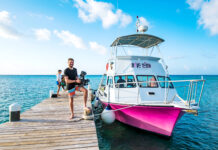
Despite having a job that enabled them to talk to people in space and spend their days swimming around a pool with astronauts, the lure of the ocean and the Caribbean sunshine proved too compelling for Lungari and Taylor, who left NASA a couple of months ago to return to Cayman and their jobs at Ocean Frontiers.
“I never want to say a single bad thing about the job,” Taylor said. “The job was incredible. It was an excellent place to work, and the workload was highly appropriate. But we were used to seeing sunshine every day.”
As well as working in the pool, doing a government job also involved a lot of time on a computer and, in some respects, that made it “a classic desk job, which I’d never had before”, Lungari said.
They both felt being dive instructors offers them an opportunity to make a difference in people’s lives.
“NASA is not nearly as fun when you’re not going to space,” Taylor said. “Whereas, here, the job we do, we get to do it with the people. We get to do the same experience that they’re getting, whereas in that job, you were helping the astronauts but never actually doing the thing.”
Related Videos