


From the yellowing pages of a century-old journal comes a swashbuckling true story of high stakes adventure on the Caribbean Sea.
Two rival expeditions – one a scruffy schooner manned by a hardy crew of Caymanian sailors, the other an America’s Cup-winning yacht helmed by “gentleman adventurers” from Harvard and Yale – competed in a race against time and the elements to recover treasure from a sunken Spanish galleon at Pedro Bank.
The story of these two rival syndicates – pieced together from the journal and contemporary press accounts held in Cayman’s national archive – is an extraordinary account that includes encounters with massive tiger sharks, a deadly hurricane and a double-crossing diver.
It features reefs being blown apart and Caymanians diving for gold coins and silver doubloons as a storm closed in.
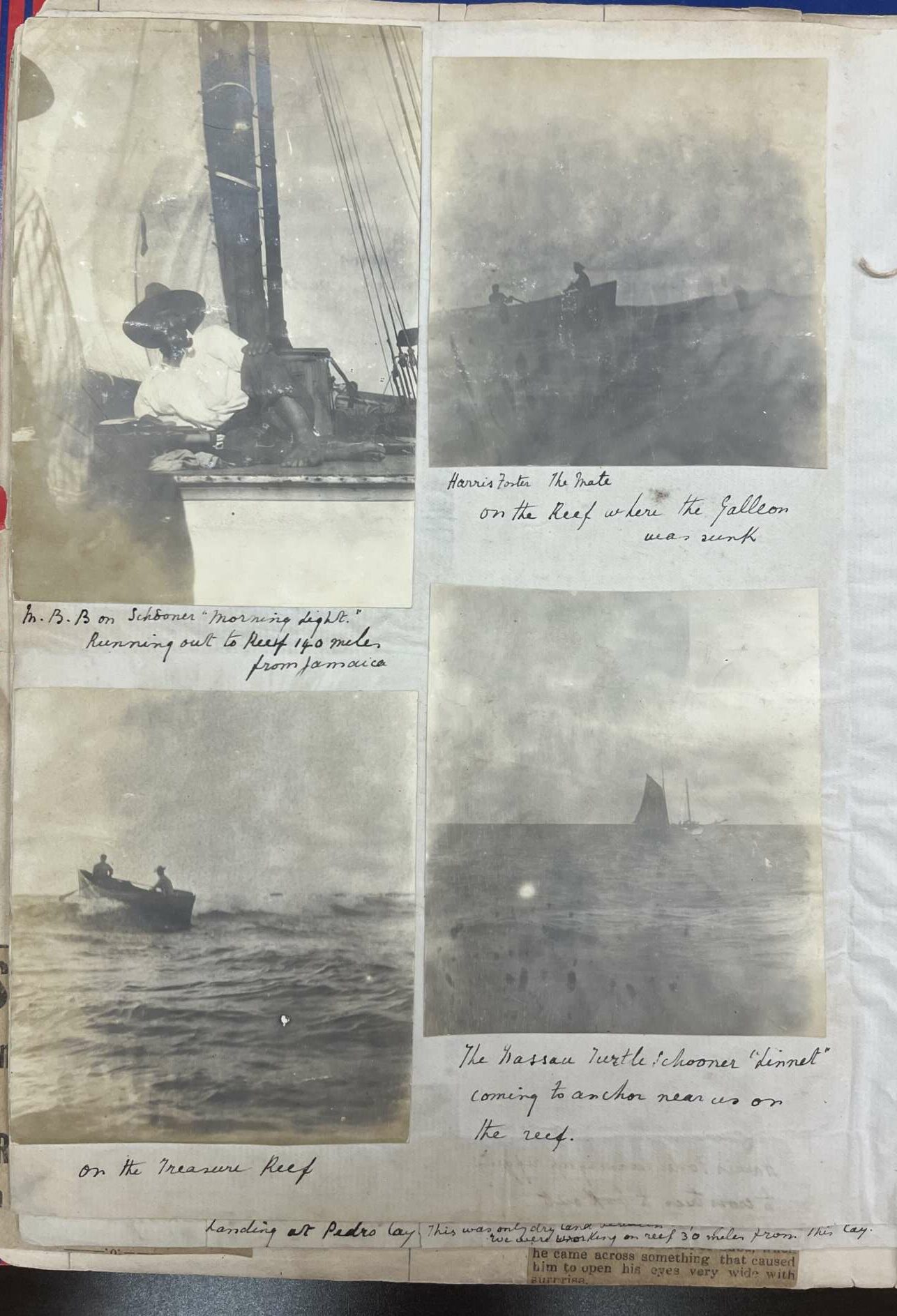
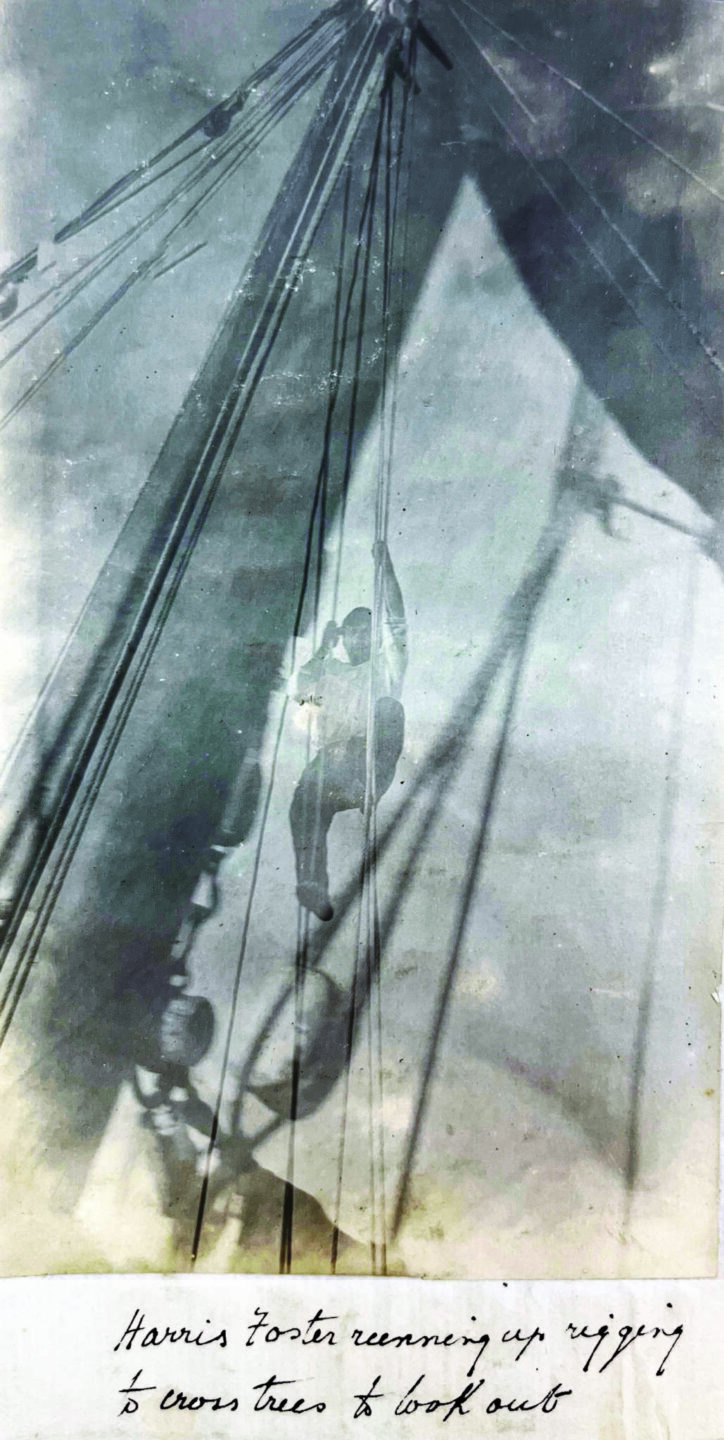
The journal also includes one of the earliest known photographs of Caymanians – a hardy crew of resolute men with broad hats and bristling moustaches – as they get set to depart for Pedro Bank on board the schooner Morning Light.
The original owner of the journal is unknown, but it is likely that it belonged to Maurice Blake, the son of a former governor of Jamaica, Sir Henry Blake, who in 1908, chartered a Cayman Brac schooner to mount an expedition to Pedro Bank to find treasure from an old Spanish galleon that sank on the shallow reefs, hundreds of years before.
At the time, the quest for the treasure fired the imaginations of readers around the world; the journal includes photographs and news clippings dating back over 117 years.
These show pictures of the Caymanians, and information about the two rival syndicates, along with their efforts to recover the gold and ancient artefacts on the reef.
Chapter 1: Maurice Blake’s discovery
Blake was in Jamaica as an attorney to fight on behalf of claimants following an earthquake that occurred in that country in 1907.
According to the Jamaica National Heritage Trust, in addition to the terrible loss of life, the earthquake and subsequent fires caused significant damage in Kingston.
As many as 800 policy holders made insurance claims involving 23 insurance companies, leading to a complex court case.
According to a contemporaneous article in the Daily Mail, most of the insurance companies denied responsibility for the damage, claiming it was beyond the scope of their coverage. They ultimately lost the case.
Chapter 2: ‘A certain spot in the Caribbean Sea’
The case, a major story in itself, is significant because it was during these proceedings that the idea of the treasure hunt was first hatched. An individual named S.C. Burke provided the background information to the Jamaica Guardian newspaper in October 1908.
“Two or three years ago, Mr. G. Phillpotts Brown of this town, elder brother of the acting Attorney General, got information from some Cayman Islanders of a certain spot in the Caribbean Sea near Jamaica where they had found treasure.
“As these men produced some of the gold they had dived up, Mr. Brown not unnaturally believed them, and carefully stowed away the knowledge he had acquired for future use, together with the gold.”
Brown told the story to one of his clients, A. J. Laymon, a professional diver engaged in the harbour works at Falmouth, who was ‘keenly interested’. It wasn’t until the story reached Maurice Blake, however, during the insurance case in Montego Bay, that things started to move.
Blake, E. G. Hemmerde and Lewis Ashenheim formed a syndicate to search for more of the treasure.
“A schooner was to be chartered and a diver engaged to go down and get up some of the unknown treasure which was believed to be lying at the bottom of the ocean.
“In this connection Laymon’s name as a diver at once cropped up, and on his being communicated with, he agreed to join the syndicate on the terms that he put up no money but gave his professional services as a diver for a share in the proceeds of the venture, if any.
On these lines it was arranged that a schooner should be chartered, an expedition fitted out, and Blake, who was still the keenest of the party, determined that on his return from England he would go with the Caymanians and Laymon to the site of operations to hunt for treasure.”
According to the news clippings glued to the pages in the journal, this plan would have been carried out in early June 1908; however, Maurice Blake’s return to Jamaica was delayed due to another legal case.
However, while he was away, the diver A.J. Laymon decided to go behind the back of his partners and “he went over to America and formed another syndicate”, Blake wrote.
Chapter 3: The gentlemen adventurers
The diver Laymon explained, “I was approached by a well-known local gentleman whose name I cannot mention. He suggested that an American syndicate might be formed.
“Well, afterwards the gentleman I refer to wrote to some friend of his in New York and the outcome of that was that I went to New York and the syndicate known as the Southern Research Company was duly formed. The capital is 30,000 dollars, and I may say that the Mayor of New York is one of the shareholders.”
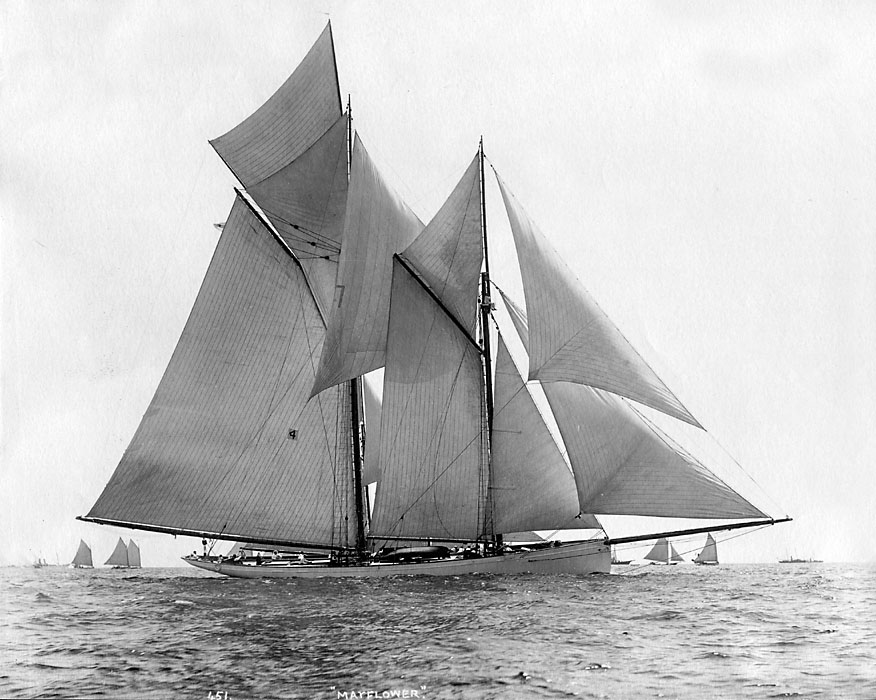
A clipping from The Telegraph newspaper explained, “The crew of gentlemen adventurers, eight in number, were all graduates of Yale and Harvard, and chartered an old yacht, the ‘Mayflower’, which defended the America’s Cup against Sir Thomas Lipton, and they took with them two divers accustomed to work in deep waters.”
Laymon was publicly accused of double-crossing Blake in the Jamaica Guardian newspaper. In response, Laymon claimed, “There is no secret about the Cayman treasure at all – never was – never has been. It has been known to a number of Caymanian fishermen for years and all that was left for anyone who wanted to search for the treasure was to go to the Cayman Islands and hire a man to take him to the spot.
“It is not only one Caymanian who knows about it, but probably half a dozen and all that has prevented them from exploiting it to the fullest is that some of it lies in water that is too deep for them unless they are provided with the proper diving apparatus.”
Laymon also claimed he had warned the Jamaica-English syndicate that $500 was not a sufficient sum to allow them to mount the expedition and make a thorough investigation.
“They either had to get another 500 dollars, or I would drop it, I explained,” adding, “they didn’t get it, and I dropped it like a hot brick”.
He also suggested there had been some earlier expeditions to the wreck site, including one in 1899: “The first find, which was valued at 3,000 dollars, was apparently the contents of one of the treasure chests which, when the vessel broke up, dropped into a cleft.
“All that has prevented more being got is the fact that no organized expedition has ever set out to the spot and that the remainder, except for a few odd doubloons, is at too great a depth for the fishermen to tackle it.”
Chapter 4: The Morning Light
On 4 Aug. 1908 Blake received a letter from George Brown of Montego explaining that Laymon had gone back on the arrangement and left Jamaica for America to form another syndicate, and as a result they would have to put off the expedition.
The same day Blake sent a cable back to Mr. Brown saying he was leaving London immediately and heading to Kingston, he added “We must reach reef first; have sloop ready.”
When he arrived back in Jamaica, Blake said, “I found no arrangements had yet been made. I went to Montego Bay and wrote to Cayman, but before I got a reply, the ‘Morning Light’ came in.
“As soon as I found the Captain of the Morning Light, he remarked that we were the very men he was looking for, because he had heard about our syndicate, and was anxious to go to the place; within an hour we had chartered his schooner and made all arrangements to start at the earliest possible moment.”
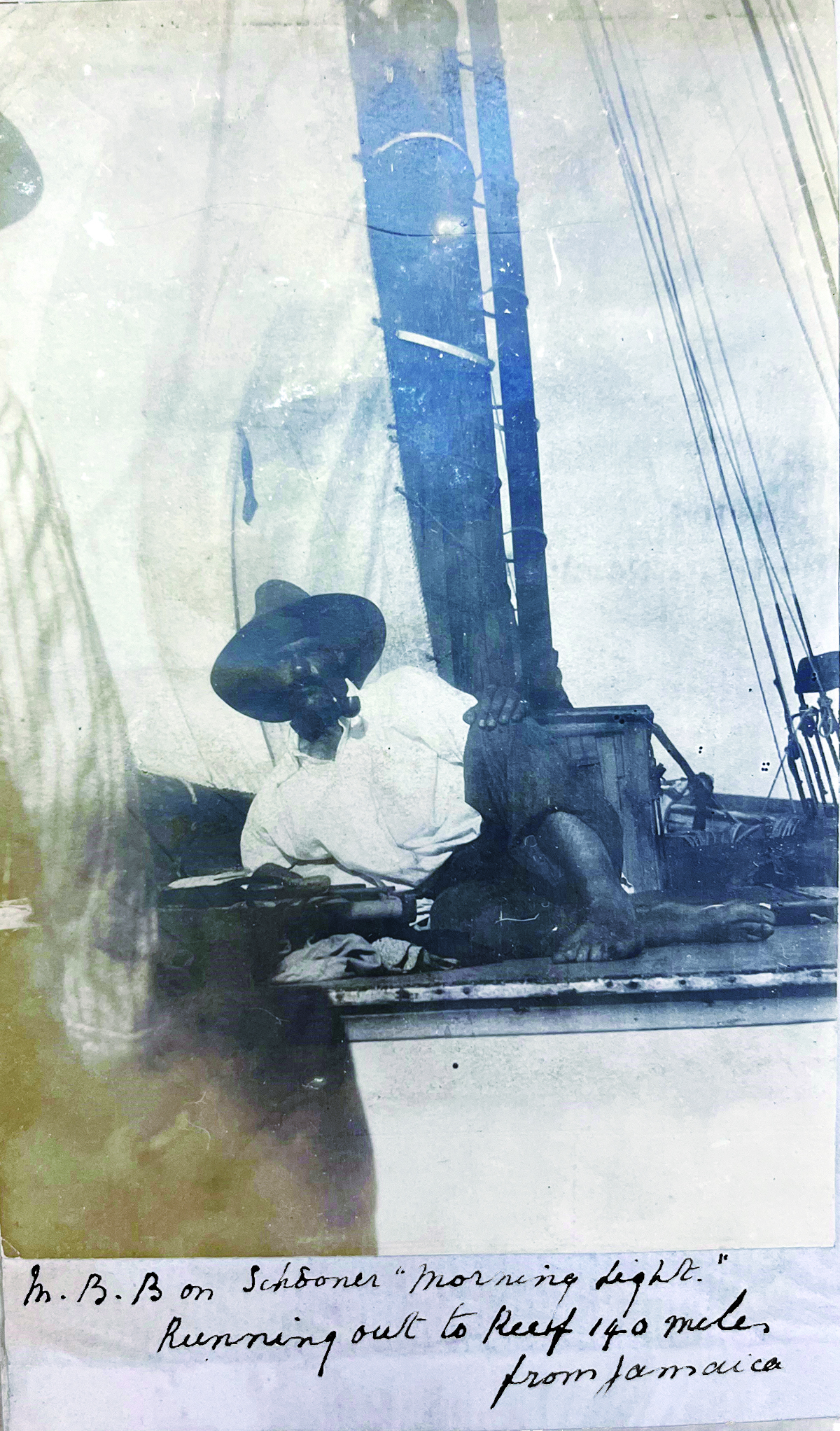
The American vessel Mayflower left New York for Jamaica on 18 Sept. 1908, the same day Blake set off for Pedro Bank in the Cayman Brac schooner Morning Light.
A representative of the Gleaner later interviewed Blake about what occurred after they set sail.
“The party sailed from Montego Bay on the Schooner Morning Light, a Cayman Brac vessel of 33 tons. It was hoped that Mr. G.S. Philpots Brown, the well-known solicitor of Montego Bay, would have gone with the expedition, but he was unable to go, and the party consisted of Mr. Blake and the Captain and crew of the Morning Light.
“The captain’s name was Elijah Foster, and those aboard the vessel with him were his son, Alfred Foster, (who was the mate of the vessel). Harris Foster, his nephew, Hurlstone (crew), and Tom Wood (the cook) and Sam Gordon, a boy. The captain and crew were all Caymanians, with the exception of the boy, Gordon who hailed from Montego Bay.”
Blake continued, “The Morning Light sailed from Montego Bay on the evening of Friday, September 18th, and arrived at the spot where the treasure hunting was to be carried out, early on the following Monday morning. The place is about 140 miles south of Montego Bay.
“We did not have what you might call good weather for working the whole time,” said Mr. Blake, “and we anchored about a mile off and had to work on the reef itself.”
Chapter 5: Diving for treasure
Here the narrative is best left to the journal itself. Blake, if indeed he is the author of the document, wrote:
“We would go off in canoes and had to anchor right in the middle of the surf. The spot is about ten feet deep. While we were there the diving practically all done by Harris Foster, Hurlstone and myself.
“Sam, the boy, occasionally had a dive, but he could not stay under very long. Our method was to blow up the place (using dynamite), and we could fill buckets with rock and sand, break them up and then sift the sand, but the work was made very hard owing to the big surf on the reef.
“While working under water we would suddenly be picked up and swept seven or eight feet, with considerable risk of being knocked against some very sharp coral.
“The trip was very interesting, but one difficulty with naked diving (breath hold diving) was there were a great many sharks about.
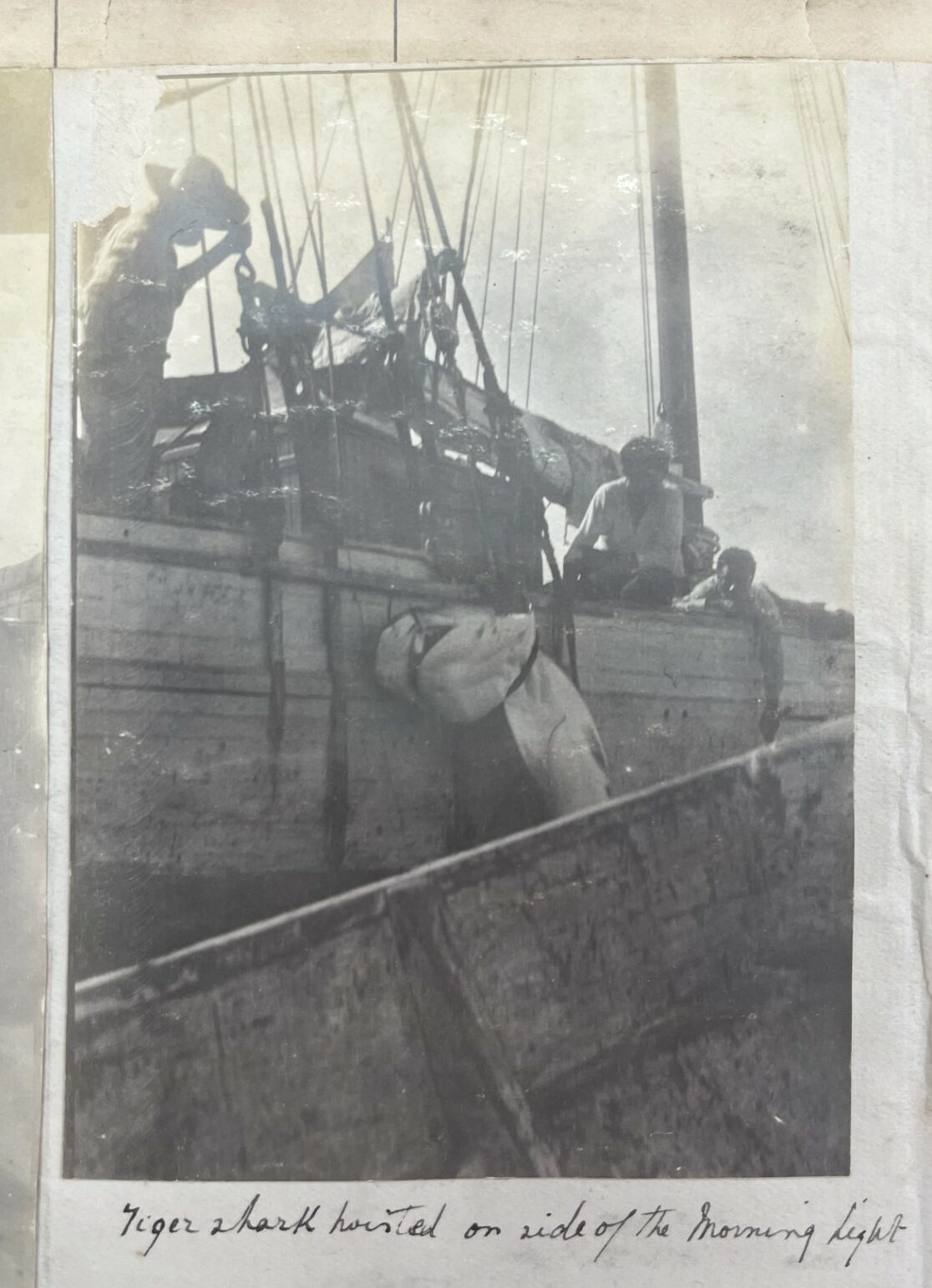
“We hooked one 14 feet in length. It towed us about in the canoe for three quarters of an hour and when it became exhausted we got it to the surface, and I shot it.
“Amongst the others which we saw was one fully 40 feet long and it chased the mate of the vessel who was in the canoe right on to the reef.
“We were at the spot for about a week and we got some gold – some Spanish pieces of eight, they are called – but it was extremely hard work throughout. We were in and out of the water for about five or six hours a day.”
Chapter 6: Concern for the Morning Light and the Mayflower
While Blake and the Caymanians were already out on the reef on Pedro Bank, the diver Laymon was again interviewed by the Jamaica Guardian.
“I am expecting the Mayflower here every minute with expeditionary party on board, and in fact, I am at the present time rather anxious, as she has now been sixteen days out from New York,” Laymon said.
The journalist interviewing him for the story then asked, “Perhaps she has come across the tail end of a hurricane?”
Laymon responded, “That is what I am afraid of; but as she has auxiliary steam and is perfectly seaworthy, I think she would be able to weather it alright.”
“We will start out,” he said, “the day after she arrives here.” He then added, “She has a complete equipment for treasure research which includes sand pumps and everything that is necessary for the carrying on of treasure-hunting operations on a large scale.”
Laymon acknowledged that the young barrister Maurice Blake knew the place where the treasure was located, but he was skeptical as to his ability to get at the precious metal. “He will just clear the way for us. When our party gets there, why we will just go to work as if he weren’t there.”
Chapter 7: Into the storm
On 1 Oct. 1908, the United States Weather Bureau provided a cable with details of a cyclone travelling west across the Caribbean Sea towards Jamaica. J.F. Brennan of the Jamaica Weather Service reported that the hurricane had now curved up to the northwest and into the windward passage between Cuba and Haiti.
He said, “The track places the centre of the disturbance today about one hundred and fifty miles northeast of Jamaica. The Island has consequently escaped, within narrow limits, the arrival of a cyclone of marked intensity.”
The same day, the Jamaica Gleaner ran a report noting, “The Mayflower with her party of American treasure-seekers has not yet arrived here, and some anxiety is felt about her as she must have got into the wake of the cyclones that have been playing such havoc with shipping in West Indian waters within the past fortnight.
“Mr. Maurice Blake who left Montego Bay a short time ago on a similar mission as the Mayflower’s party is bent upon, was expected back from the scene of operations yesterday, but up to afternoon no report has been received of his return.”
Chapter 8: The safe return of the Morning Light
A Sunday, 27 Sept. 1908 entry in Blake’s journal said, “the weather began to get nasty. The wind had gone round and was blowing right on to the reef, and both the captain and myself were anxious about the vessel dragging, and we spent most of that night on deck.
“Next morning things looked so bad that the captain suggested we had better run for the nearest cay, a distance of about 30 miles. We got there and laid off on Monday night, but the breeze was freshening and we dragged about 75 fathoms during the night.
“The next day, Tuesday, we decided to return to Jamaica. We had a very rough time coming across, and in the afternoon, we thought we would meet a hurricane, because the wind was freshening all the time and the barometer was very low. We sailed as near to the wind as we could, trying to make a point as near Montego Bay as possible, but the nearest spot we could strike was Carlisle Bay.
“At night fall we were about eight miles from land, but the captain did not dare to try and make a harbour that night, there being no lights. So we stood out to sea again…One very heavy squall struck us. We were reefed down, but we had to lay to with everything off and ride it out for about an hour under bare sticks. Eventually, we got to Montego Bay at midday on Friday (2 Oct.).”
Chapter 9: ‘Snatched from the jaws of death’
The Panama Line steamer Advance reported that they sighted the Mayflower during a gale, 300 miles east of Florida, on Saturday (3 Oct.). “The vessel was in distress, but the Advance, owing to the heavy sea, could not launch a boat. The Mayflower had only a stump of a mast left, from which flew a rag of sail.
“After waiting several hours, the Advance resumed her voyage, leaving an unidentified fruit steamer, to standby (the Mayflower), whose condition at this time was deplorable.”
That unidentified steamer ended up being the Norwegian vessel Hippolyte Dumois, which eventually rescued the 12 men on board the Mayflower.
The New York correspondent for The Telegraph described what happened when they arrived back in New York on 9 Oct.:
“Snatched from the jaws of death, six Varsity men, all bearing the traces of severe hardship, arrived here at midnight…they described the tragic shipwreck of the yacht Mayflower, which years ago in two straight races beat the sloop Galatea for the America Cup. The Mayflower met with disaster during a hurricane 200 miles east of Watlins Island.
“Her crew composed of gentlemen adventurers, fired with the ambition of seeking treasure from the hold of a sunken Spanish galleon in the Caribbean Sea, experienced within three days enough of danger, suffering and likewise seasickness, to last them for the rest of their natural lives.”
The article continued, “In the climax of the gale last Thursday the Mayflower actually dipped her mastheads into the sea, and the water rose to her skylights. After a terrific pounding the crew cut away the rigging and hacked away the mast. In the Mayflower were three tons of dynamite, and each crash jarred the stern in such a way as to suggest that an explosion might take place at any moment. With the hatches awash, and at the mercy of the tremendous seas, the collegians spent three terrible days and three sleepless nights.
“It was not until Sunday, that the Hippolyte Dumois, after two hours of manouvering, succeeded in getting a lifeline across to the dismantled yacht, and by this means man after man was dragged into safety aboard the steamer.
“Two days before they had practically given up all hope of rescue. Box by box they had thrown overboard three tons of dynamite, but, to their horror, they found that each box floated, and it was not until the boxes became saturated, and ceased bobbing around the derelict vessel, that all danger of explosion ceased.”
A member of the crew of the Mayflower added, “We were reduced to such a state that nobody seemed to care very much whether we were blown to atoms aboard the ship, whether we starved, or whether we drowned – it was all one to us. To lighten the ship, we also jettisoned barrels of flour and beef to the amount of nearly three tons.”
As the Norwegian vessel pulled away with the rescued crew, the Mayflower’s timbers had parted, and the old racer was rapidly sinking.
On 9 Oct., Maxwell Hall, the Jamaica government meteorologist, wrote to the newspaper, saying, “After reading the account in yesterday’s Gleaner of the sailing trip taken by Mr. Blake, I think it advisable to call attention to the great risk he ran in searching for curios among outlying reefs at this time of the year.
“I cannot recommend such sailing trips during the hurricane months of August, September and October,” he said, adding that another Caymanian schooner recently ran straight into a hurricane: “She left Cayman Brac for Santiago and put into Montego Bay on the 30th having encountered a terrible storm in which the captain was washed overboard.”
Epilogue: Praise for the Caymanian crew
During a final interview with the Jamaica Gleaner, the expedition leader said, “I should like to say that if I ever go on such an expedition again, I should make every effort to get the same crew. They are really fine men, those Caymanians.”
However, Blake had far less pleasant things to say about the diver Laymon who double-crossed him. “For Mr. Laymon to say that he would go to the reef and work just as if we were not there is one thing, to do it is another. We were all armed, had 150 pounds of dynamite in addition, and had not the slightest intention of quietly allowing anyone to jump our claim.”
Related Videos






This is a great story. Am trying to learn about my heritage. Currently reading a small reader with publish date around 1970 that was to be a history of the Island as ordered by Cayman Government. Thank you for this kind of writing, we need more. THANK YOU.
Awesome story! I love the historical documentation.