

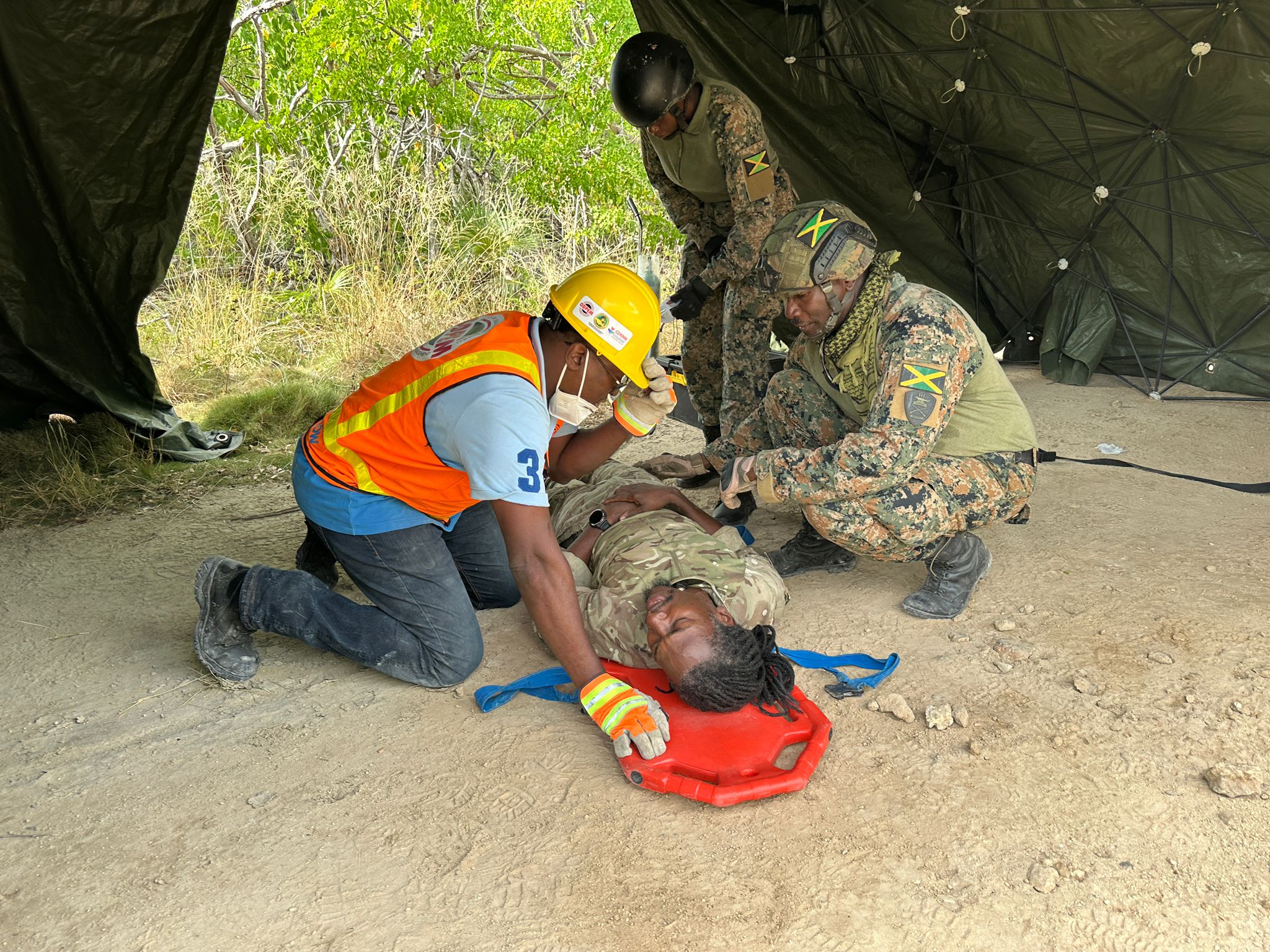
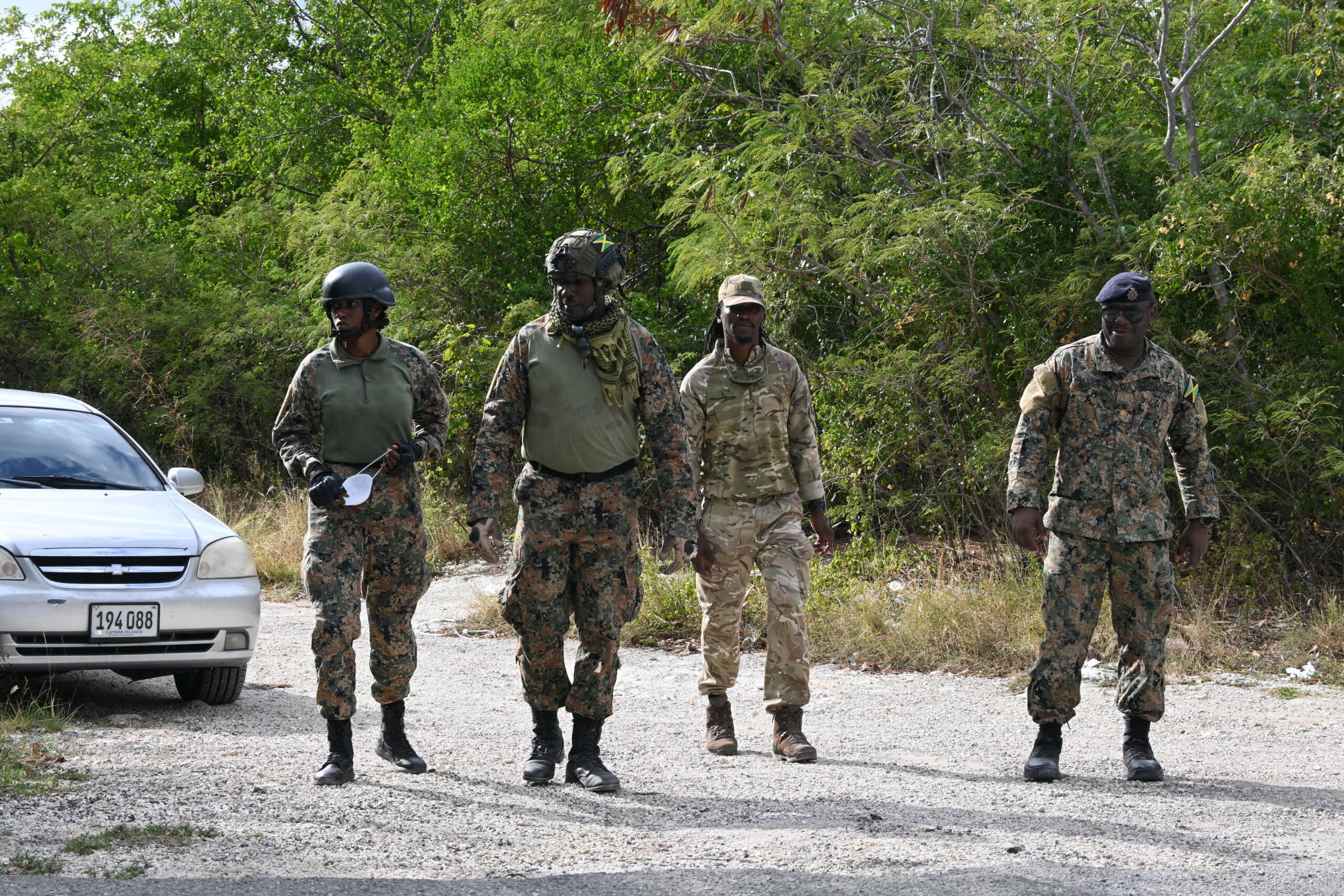
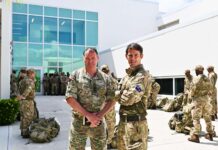
Shouts of “hustle, hustle, hustle” echoed on Friday afternoon in West Bay as roughly 200 local and visiting military and emergency response personnel kicked into gear, simulating a full-scale earthquake response scenario.
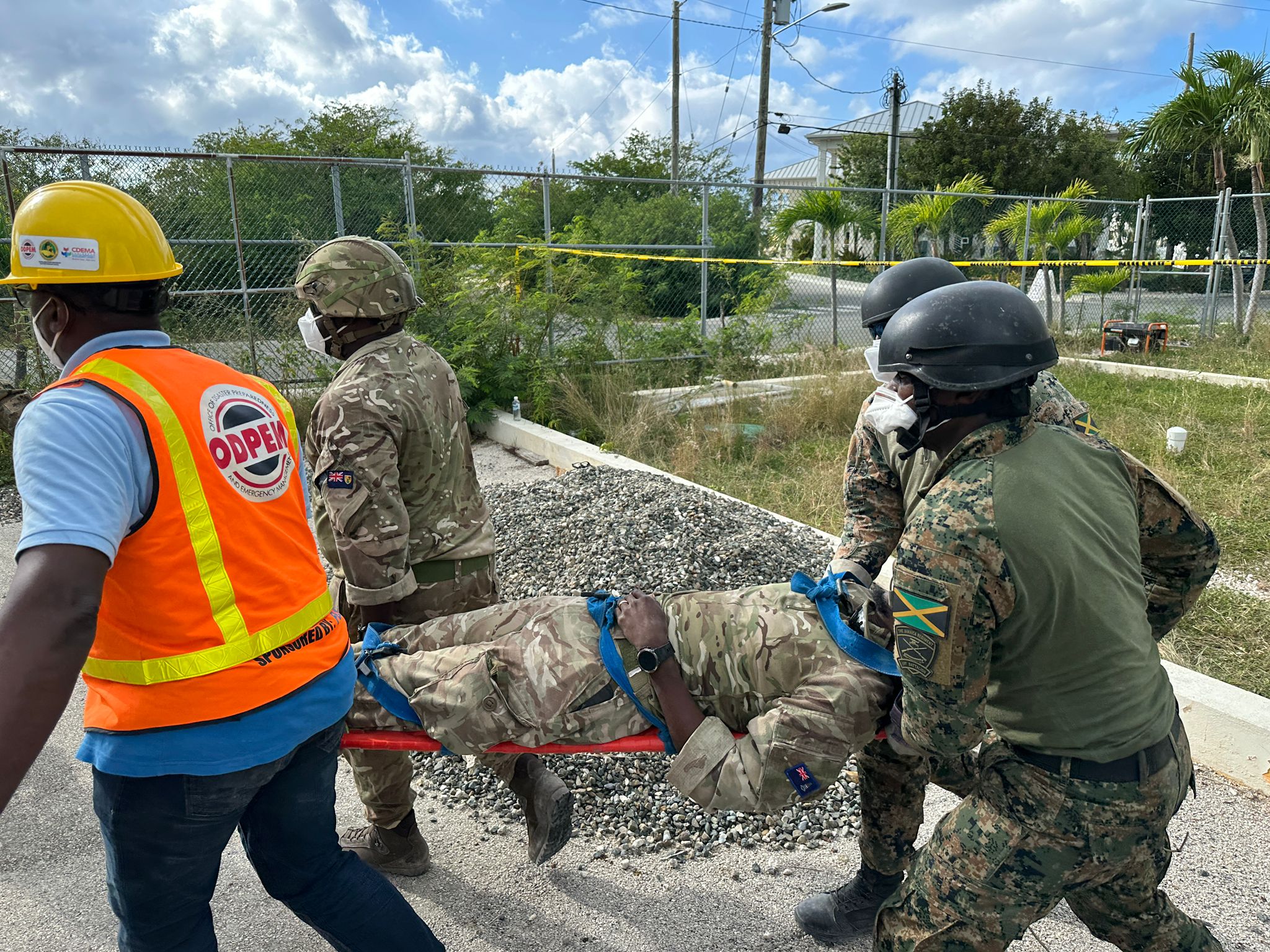
Carrying a ‘wounded evacuee’ from a ‘collapsed’ building, members of the regional Event Horizon contingent put their relief skills to the test on the final day of the humanitarian aid, disaster response and maritime law enforcement exercise.
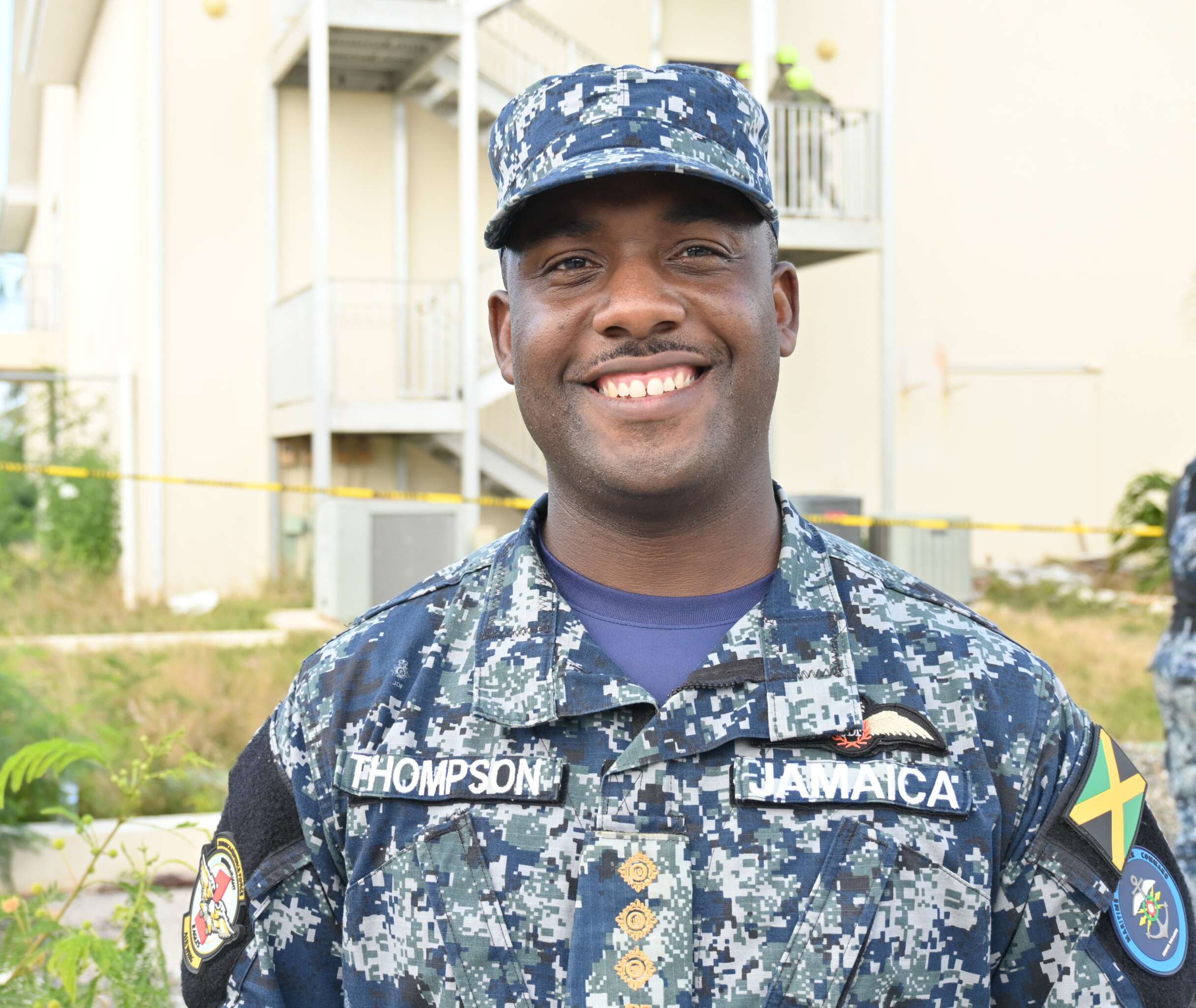
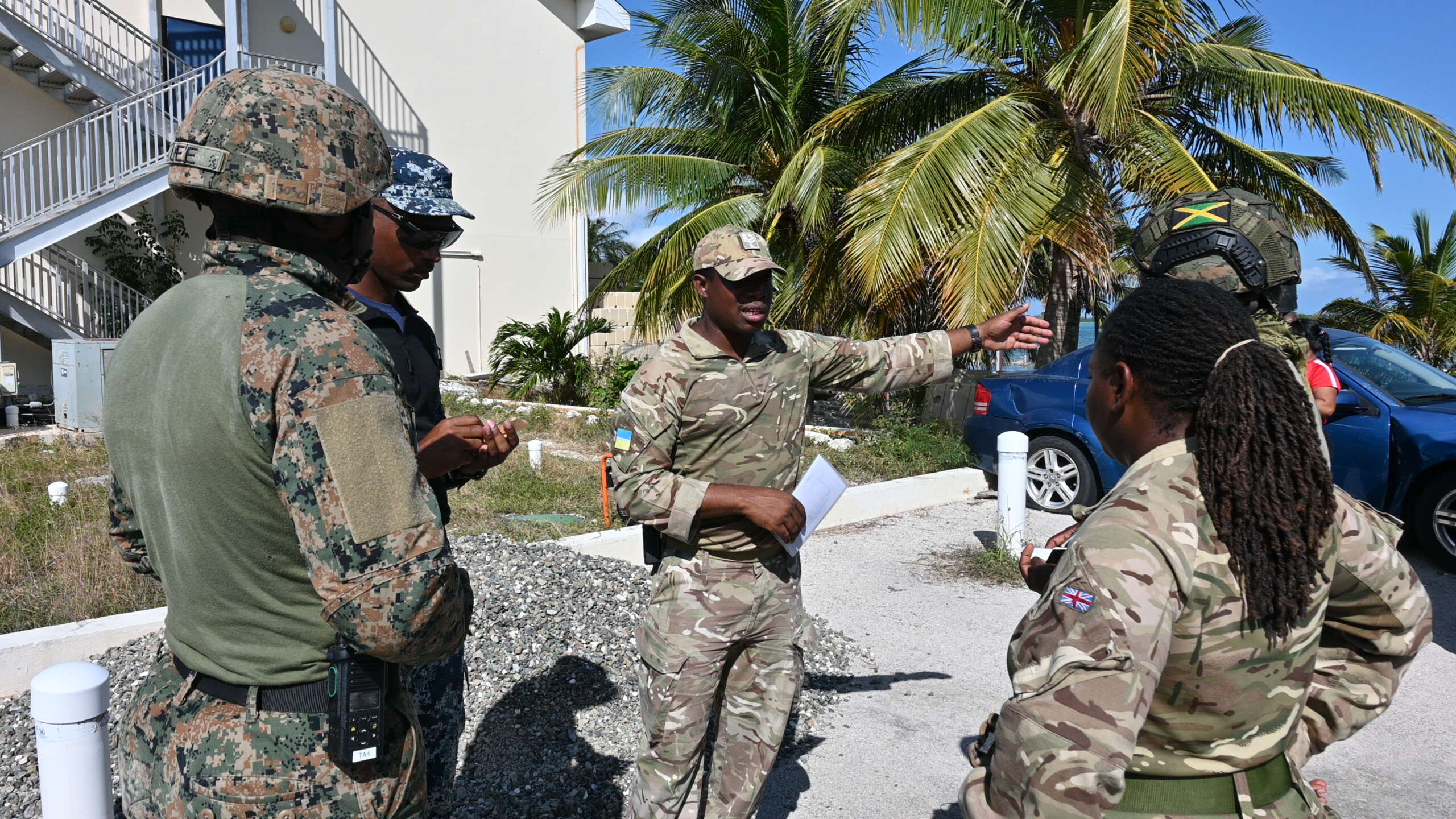
“Primarily, we are testing the collaboration between partner agencies because we, of course, want to be efficient at our jobs as well as effective. We are also testing safety and the whole collaboration and coordination between partner nations in terms of use of personnel and assets,” Captain Cleon Thompson of the Jamaica Defence Force told the Cayman Compass at the exercise.
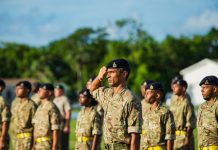
The Event Horizon initiative is being hosted by Hazard Management Cayman Islands as the coordinating agency for disasters locally and also the Cayman Islands Regiment, which had a major role in transportation and logistical aspects of the exercise.
Thompson said about 212 personnel from the local and visiting contingents took part in the final exercise on Friday at a three-storey building at Dolphin Cove in West Bay near Garvin Park.
The earthquake exercise was one of three scenarios participants navigated to test their skills.
Important training tool
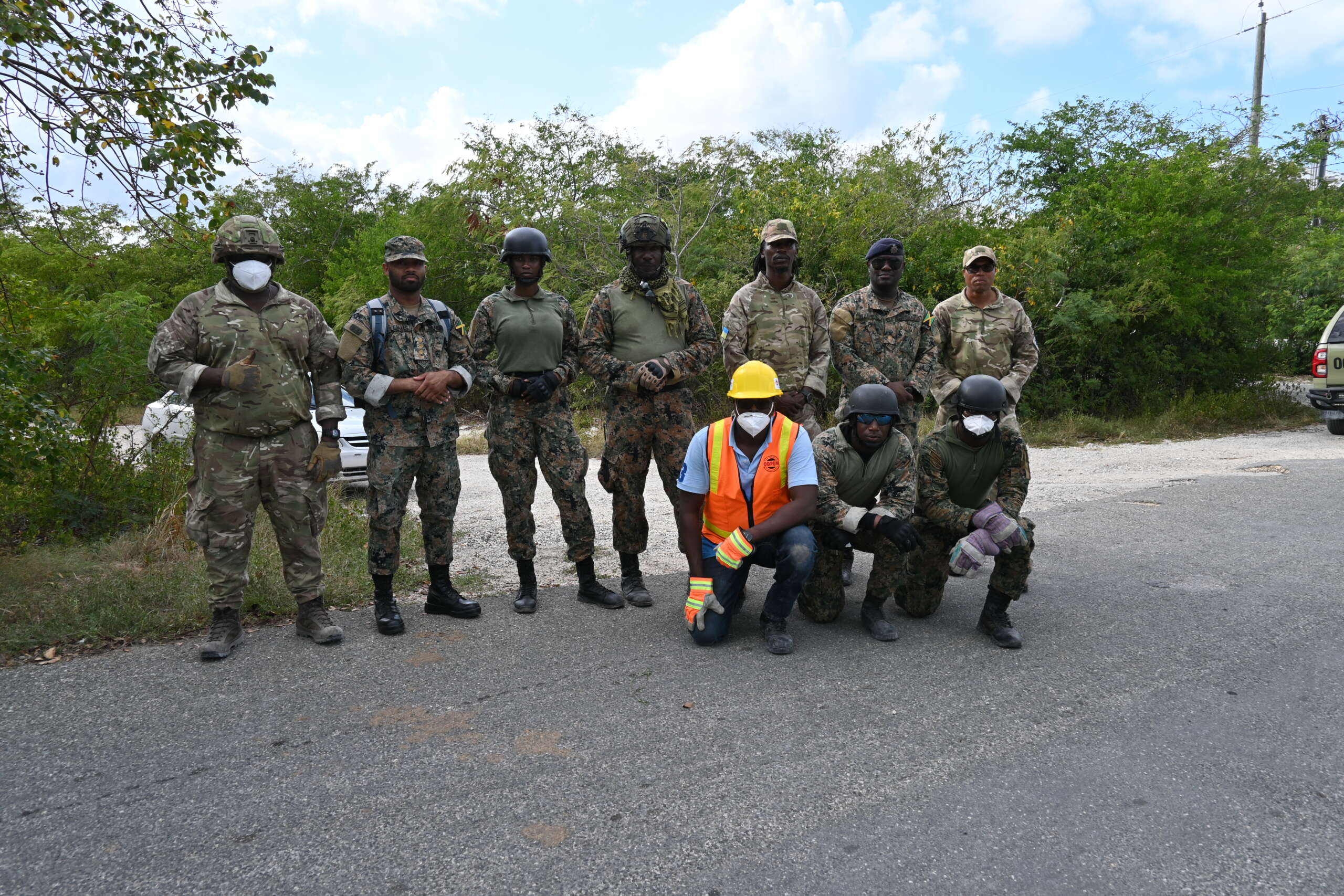
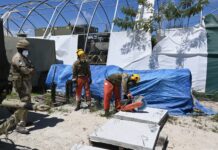
In Friday afternoon’s session, members of the Cayman Islands Regiment, the Royal Bahamas Defence Force, the Turks and Caicos Islands Regiment and the Jamaica Defence Force worked together to breech the walls of the ‘fallen’ building using sledge hammers and drills.
They then entered the building to find ‘wounded residents’ in need of medical evacuation.
They also had to ramp up security to clear the mock disaster area, as people posing as frantic relatives tried to get into the fallen building.
Roger Carter, Cayman Islands Regiment commander, said he was pleased with the work that the teams had done and their relief response during the exercise.
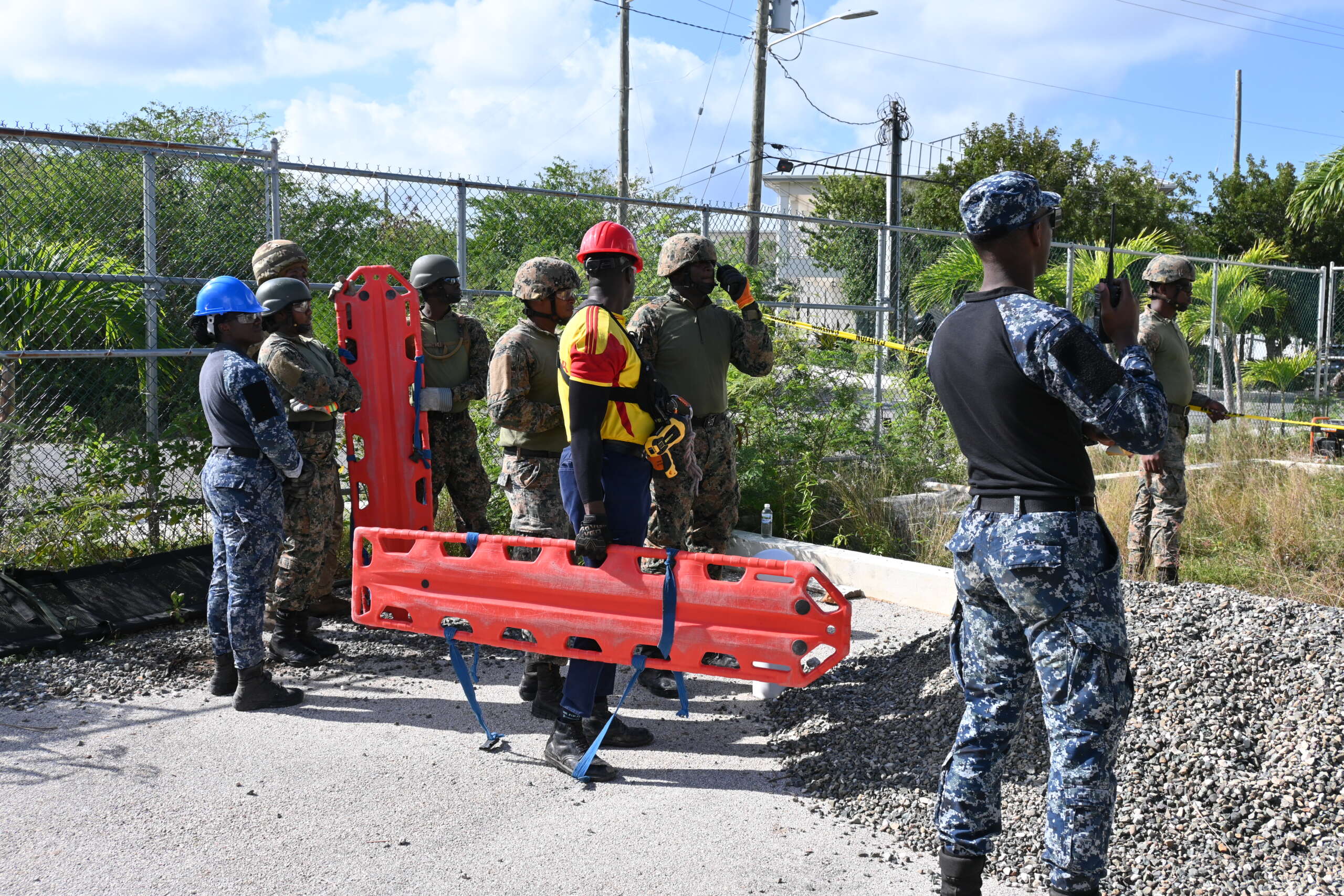
“We started off doing humanitarian assistance and disaster relief, and that’s the skills that you need for a hurricane. Then we moved into urban search and rescue, which are the skills that you need more for an earthquake,” he said.
Coleman said being able to see the teams in action had been a useful and important exercise.
“ It’s been a very long week, but a very successful week. We’ve done lots of different trainings throughout the whole week. We’ve been doing search and rescue at sea. We’ve been doing a drug intervention and interception. We’ve also been doing lots of training led by the CI Regiment,” she said.
Carter said, looking back at the day’s events and the regiment’s progress, “ I’m really proud of what I’ve seen.”
“We’ve come a long way in just a very short time. We’ve only been around for about four and a half years, but we’ve reached the point now where we can actually teach other people the things we’ve learned. So I’m really happy to see what they’ve been able to accomplish,” Carter said.
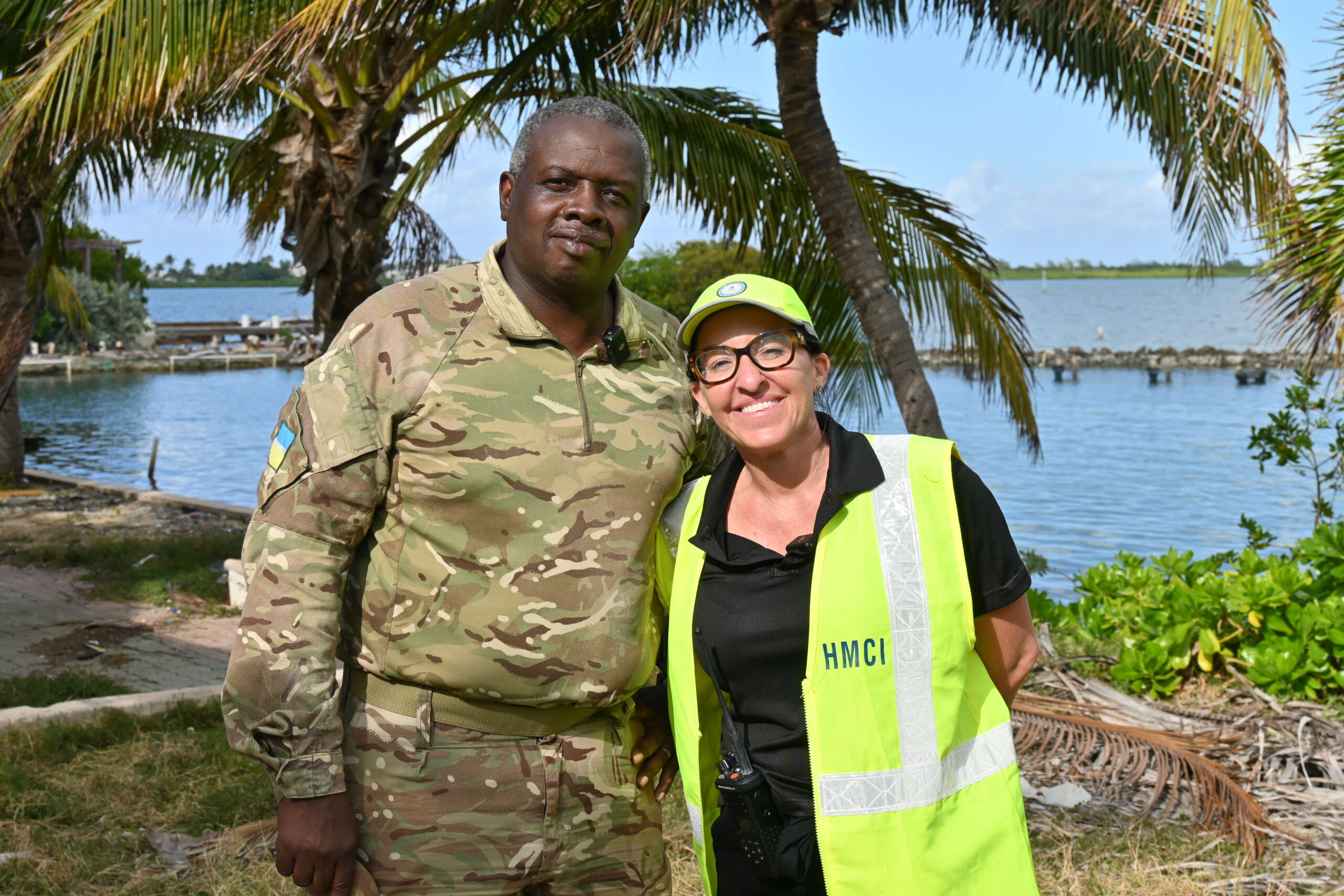
Coleman said it was good to see more than eight months of planning for the Event Horizon exercise come to fruition.
“ It’s one thing learning different tools and techniques and again, practicing our skill set. But learning to work together, learning each other’s trades, each other’s cultures is such an important aspect of what we’re doing this week,” she said.
Related Videos






Sorry for asking these questions, but all I see is “Carrying a ‘wounded evacuee’ from a ‘collapsed’ building….” with lots of idling people around, lots of people posing for a photo, walking. What else did they do? How are they going to access a victim under a collapsed building? What tools and equipment will they be using? Do they have skills to operate the equipment? Knowledge of how to dig out victims under collapsed buildings? Many collapsed buildings burn – fire extinguishing skills and equipment?