

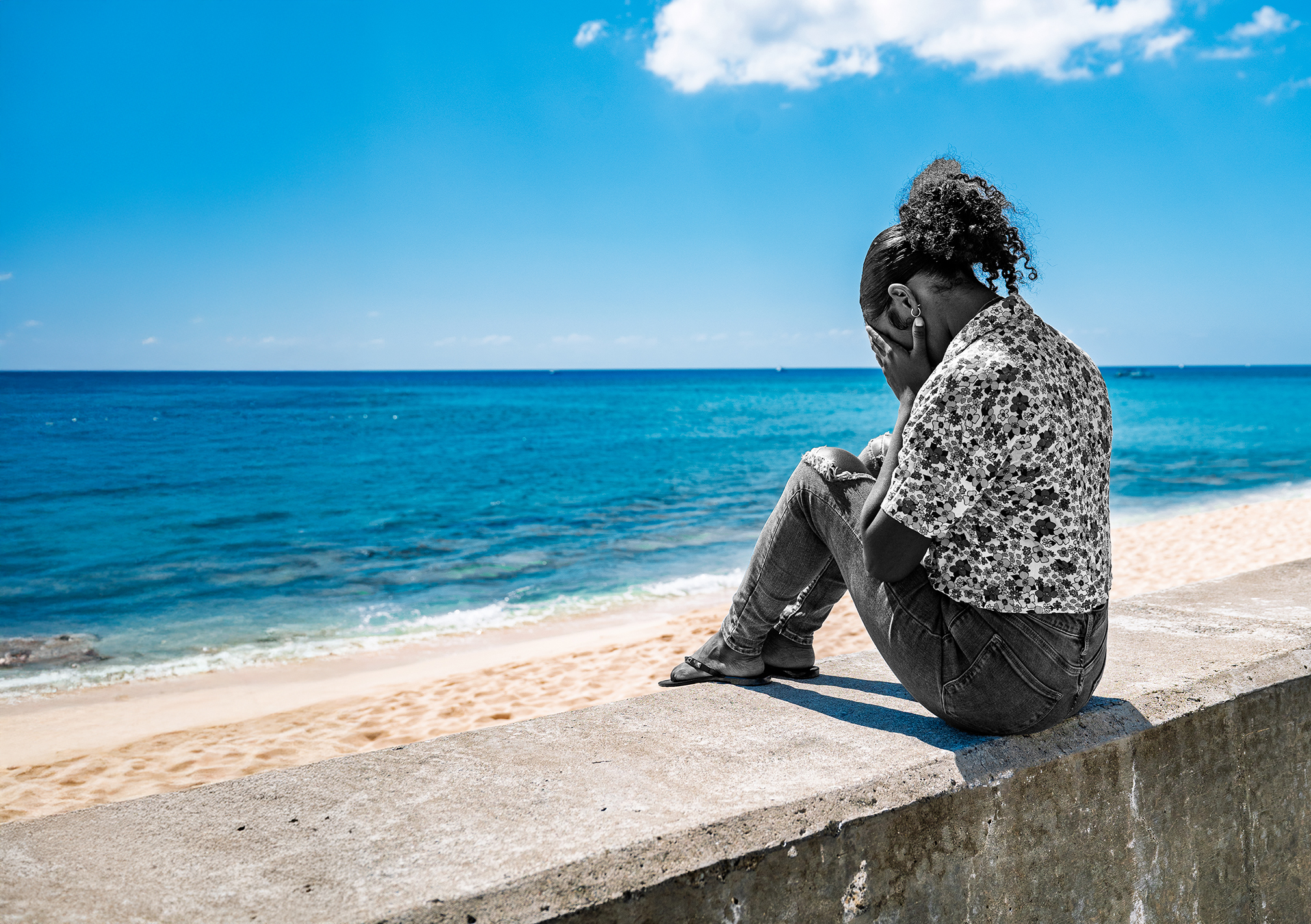
Suicide risk and mental health problems in the young are at a “crisis” point and not enough is being done to tackle the problem, Cayman experts have said.
Dr. Erica Lam, a psychologist who works with mental health charity the Alex Panton Foundation, said a major survey of 3,339 schoolchildren from Years 6 to 12 had found 529 of them had suicidal thoughts and 247 had tried to take their own lives.
She said, “Right now, young people are struggling.”
Lam added the number of youngsters reporting suicidal thoughts or attempts was “quite high for a small community like Cayman”.
She said, “What is concerning for us is that only one-third of them have sought help.”
Lam, a consultant clinical psychologist at Aspire Therapeutic Services, said a quarter of youngsters aged 9 to 13 who took part in a National Drug Council survey said they had “considered” suicide and one in four had self-harmed.
She added that Cayman’s young people showed higher rates for depression than might be expected.
Lam said that Cayman was 2% higher than the global rate for diagnoses of anxiety among young people.
She added, “It has been quite consistent in terms of mental health in the Cayman Islands being worse than global data. The diagnoses for depression are four times higher than in the global data.
“The data for depression, globally speaking, is about 1.1% — in Cayman it’s 4.6%.”
But she said it was unclear why the islands recorded higher levels compared to other jurisdictions.
Lam added, “We need to collect more data on why we have more diagnoses.”
Increasing access to mental health treatments
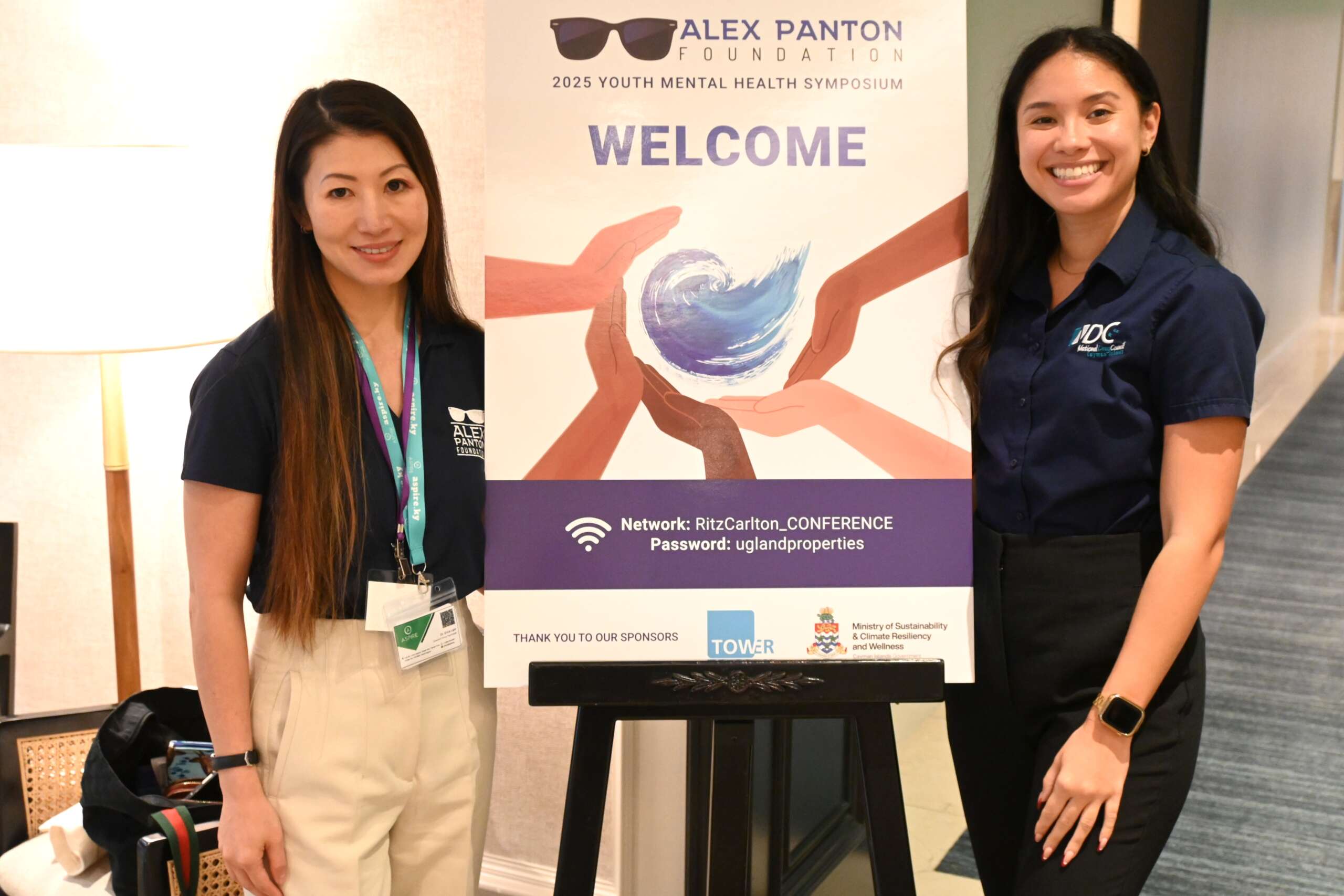
She was speaking after she and Laila Shim, research analyst at the National Drug Council, delivered the 2024 results of a regular biennial survey of mental health in the young at the Youth Mental Health Symposium on Saturday, held at The Ritz-Carlton in George Town.
Lam said the numbers of those seeking help had increased significantly in the last two years, there were still children with problems that did not ask for assistance.
She added, “There is stigma. There is also private health insurance. It’s not like the UK where everything is free. That’s a massive barrier, but stigma plays a big role as well.”
Lam asked, “Is it because things are so expensive here and our lack of resources?”
But she added that the number of youngsters seeking help had “increased massively” compared to previous surveys.
Lam said surveys showed only about 5% had sought treatment in 2018 and 4.4% in 2020, when COVID-19 disrupted normal life.
But that figure had risen to 32.2% by the latest survey last year.
Lam said, “That’s significant. Alex’s Place, which is the accident and emergency mental health facility, opened last year — the helpline opened last year and my clinic has expanded to meet the demand.
“Making mental health services accessible is what saves lives.”
She added, “Students’ understanding of mental health has greatly increased as well. A lot of it has to do with access to services and attitudes in schools.
“People were shocked by the number of suicide attempts and suicidal ideation and have worked hard with education and health authorities to tackle this problem.”
Lam said higher scores for “adverse childhood experience” (ACE) among youngsters were one of the contributory factors to poorer mental health later on and that Cayman’s ACE rate was “three times higher” than global figures.
She explained, “In the Cayman Islands, children are experiencing a lot more trauma than shown in the global data.”
Shim added that more young people in Cayman identified their gender as non-binary compared to world figures and that they were “more likely to report suicidal ideation and “have worse mental health than those who identify as boys or girls”.
Lam said tackling the crisis among the young required a joint effort.
She added, “The private sector and education should all work together, share the resources, aim to reduce stigma and increase awareness, particularly in the area of relationships of parents and educators to young people.
“They are the first point of contact — that’s what the World Health Organization recommends. It’s about providing accessible, focused education to private resources and our community.
“Right now, increasing awareness, increasing training and normalising mental health are very important.”
Rhonda Kelly, the marketing chairwoman of the Alex Panton Foundation, who lost her daughter Addison to suicide in 2022 at age 16, said that Cayman’s approach to mental health had come on by leaps and bounds in recent years.
Kelly, who also spoke at the symposium, runs the Addison Kelly Mental Health Education Fund, in partnership with the Alex Panton Foundation, which is approved to provide mental health first aid training.
She agreed the figures for suicide and suicidal thoughts among the young in Cayman were “absolutely shocking”.
Kelly said, “The best thing that mental health training is going to do for us as a community is to get us to open up and talk about mental health.”
She also agreed that cost and stigma could be deterrents to the vulnerable seeking the help they needed.
Kelly said, “We have to be honest. There is a a certain level of that which is going to happen, but the Alex Panton Foundation has a financial assistance programme for people whose insurance doesn’t cover them.”
She added stigma still existed “to a certain degree”, but highlighted the same problem existed in other parts of the world.
Kelly said, “I think if you go to certain areas of the US and anywhere else in the world, there is still a stigma about mental health.”
She added, “The whole symposium overall showcased a lot of information that was very valuable. We have a very good mental health community, a lot more than other places our size.”
Mental health resources
If you, or someone you know, is struggling with issues similar to those raised by this article, there are resources available to help.
- In an emergency, call 911.
- Mental Health Helpline. Call 1-800-534-6463 (MIND) Monday to Friday, 9am to 5pm, to talk to the Mental Health Helpline.
- The Alex Panton Foundation. The non-profit’s primary objective is to raise “awareness of mental illnesses affecting children and young adults in the Cayman Islands with a particular focus on anxiety and depression”.
- Department of Children and Family Services. For non-critical services provided by DCFS, email [email protected] or call 949-0290 in Grand Cayman and 948-2331 in Cayman Brac, Monday to Friday, 8:30am to 5pm.
- The Cayman Islands Crisis Centre. Provides support to all victims of domestic violence through “services and programmes focusing on domestic and sexual abuse”. Among its services, it provides shelter, counselling, a 24-7 crisis helpline on 943-2422 and a kids’ helpline on 649-5437.
- There are also a number of private health care providers, offering counselling and support, such as Infinite Mind Care and the Wellness Centre.
Related Videos












In light of these facts, and the data from studies that show the clear link between cannabis use and suicide among young persons, why would a responsible government even consider putting the decriminalisation of “small amounts of ganja” forward as an issue to be decided on by way of a referendum? This link between cannabis use and suicide among young persons is not a private opinion; just look at the data from Colorado alone.
(Pastor M. Alson Ebanks)