


Egg prices are at a record high in supermarkets in the Cayman Islands, amid signs that prices may be starting to stabilise after months of sharp increases.
The implications of US tariffs on Mexico and Canada, however, could place further price pressure on imported food products and the impacts are yet to be determined.
Food industry professionals in the Cayman Islands were hopeful for a steadying market and an easing of costs for bakeries, restaurants and grocery stores.
“We absorbed some of the increased costs over the past few months, but eventually we had to raise the price of cakes,” said Sandra Gimao, who works at Treats Restaurant in West Shore Plaza on West Bay Road.

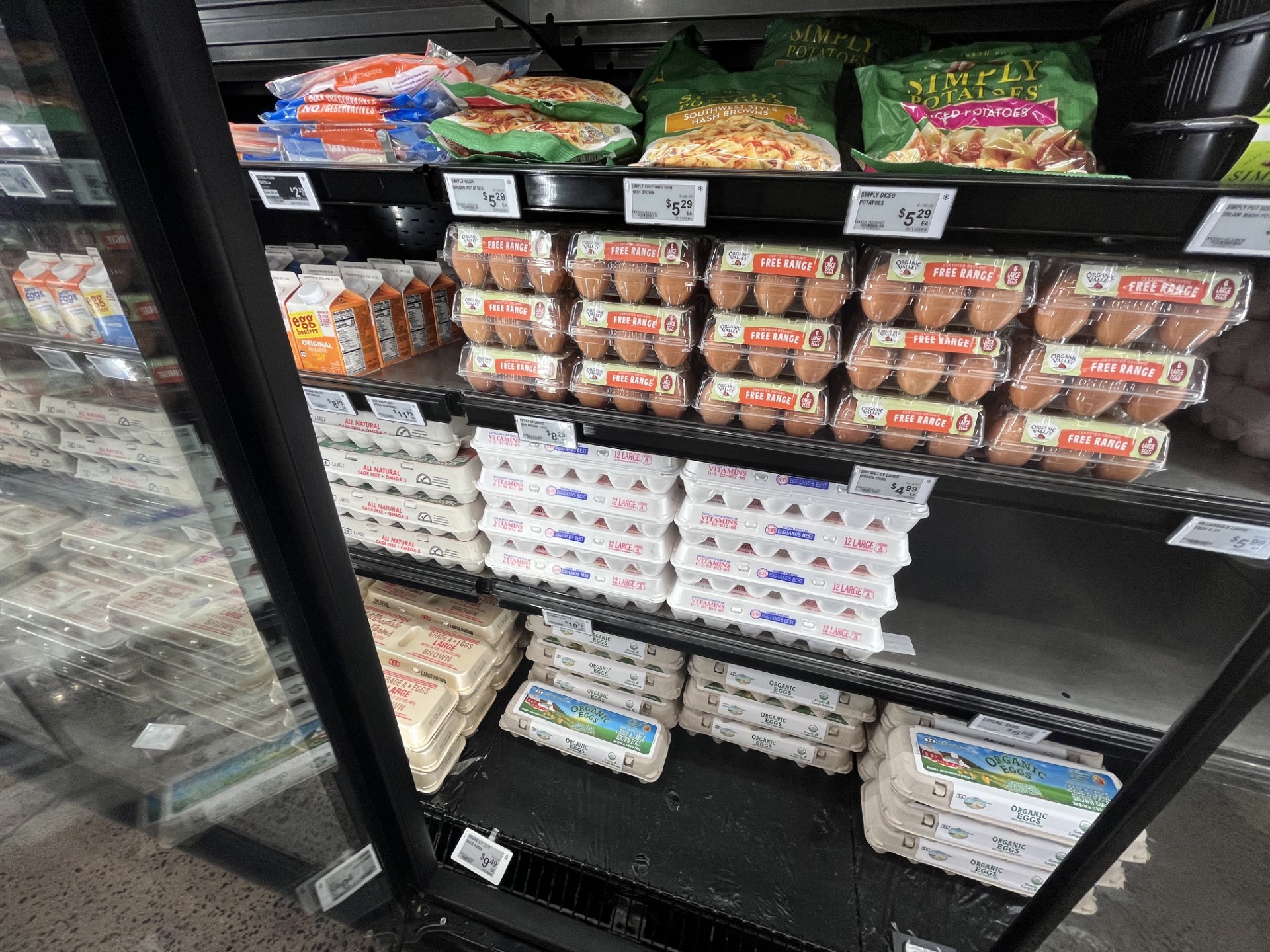
The Compass found that currently a dozen imported eggs run from just under $10 to $10.99 at one of the large supermarkets in Grand Cayman. For organic or free-range eggs, the prices trend higher.
Local eggs, offered at a lower price point, had sold out at the supermarket visited by Cayman Compass on Tuesday.
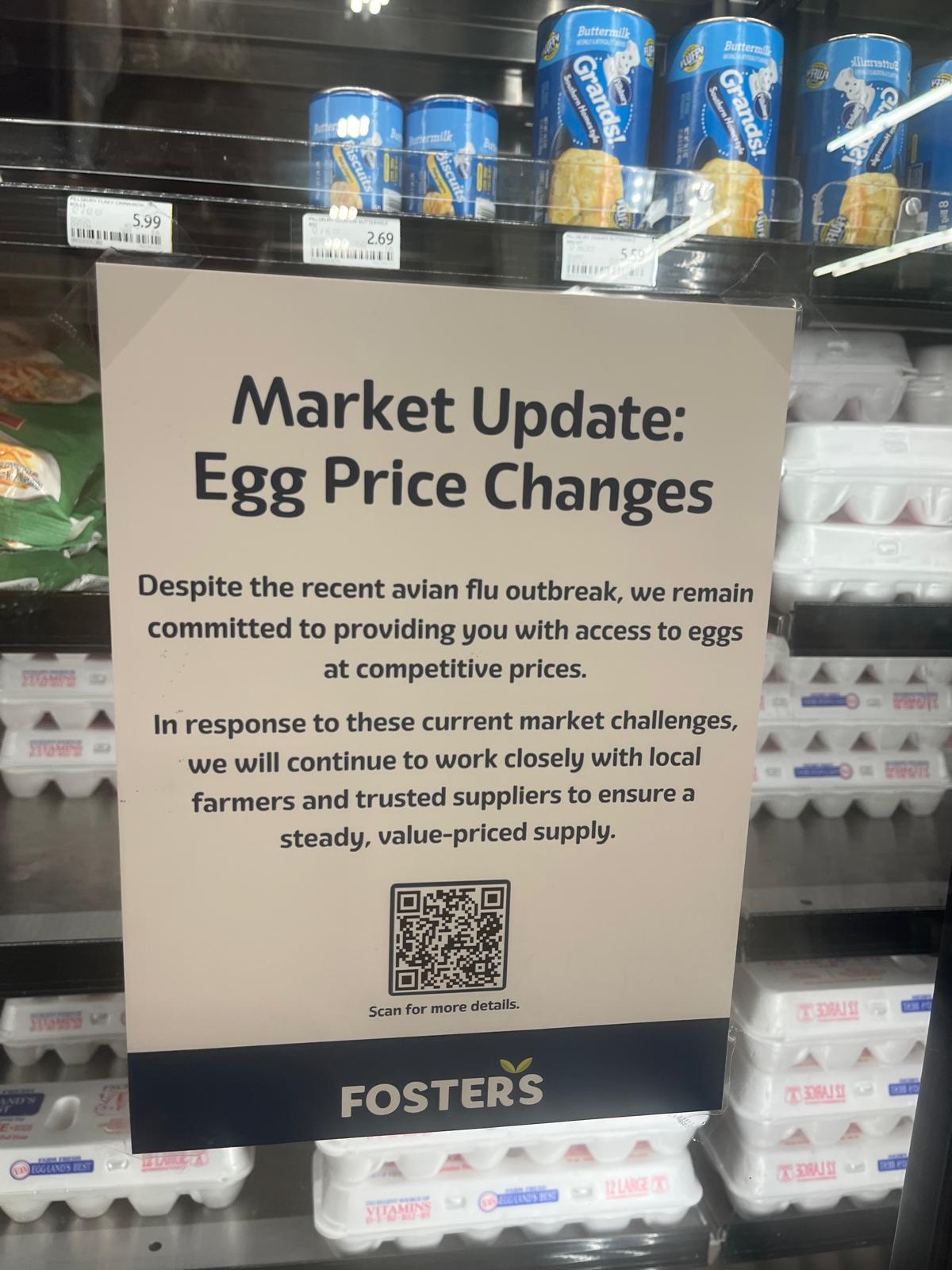
Increased production costs for feed, transportation and labour are partially responsible for the high cost of eggs, but the avian influenza outbreak in the US is considered the primary reason for the spike in prices. The avian flu has led to the culling of millions of egg-laying hens, significantly reducing egg production.
According to the US Centers for Disease Control and Prevention, more than 166 million birds have been affected by the avian influenza since January 2022.
CNN quoted the US Department of Agriculture as saying, “About 8.3 million birds died in January because of those outbreaks.”
A US$1 billion initiative recently launched by the US Department of Agriculture aims to address the ongoing challenges posed by highly pathogenic avian influenza and rising egg prices.
While some of the funding will go towards enhanced bio-security measures to protect flocks on poultry farms, another part of the billion-dollar initiative will look at “temporary measures to adjust egg imports and exports, ensuring a robust domestic supply”.
Exact details of how this would be accomplished have not yet been confirmed, but it could mean an inward focus on the US supply to ensure local availability and price stability in the United States.
Increasing local production
Meanwhile, in the Cayman Islands, many people are turning to local backyard farmers in search of better deals.
According to a June 2023 CIG TV report, a group of 16 local commercial farmers, included in a pilot programme, was producing around 105,000 dozen eggs annually, representing 60% of local production.
“Our goal is to improve the market share of local egg producers by 40% in four years, and a 100% increase in egg production over the same period,” said Minister for Agriculture Jay Ebanks on 22 June 2023.
To support that goal, government established a national egg strategy, opened a new Poultry Innovation and Education Centre and launched the pilot programme with local commercial farmers, each who had at least 200 egg-laying hens.
One of those farmers, Clarence McLaughlin, recently appeared on a Z99 radio show.
“It was the minister’s idea to help us produce more,” McLaughlin said.
“The minister [Jay Ebanks] brought down an expert to guide us and the main objective was to produce more eggs.
“I don’t know if he saw into the future in terms of what was going to happen with the price of eggs, but he has done a number of things that have been really helpful to farmers.”
Ebanks, whose team is leading the initiative, said, “The aim of the national egg strategy is to increase market share of local eggs, improve market access for local egg producers and certify egg farms across the islands.”
Related Videos













Eggs: Chickens lay eggs regularly, and we have no issues in Florida. Roosters and hens are a perfect match made in heaven, so help your farmers.
On the subject of prices oil is at it’s lowest price for 3 years, yet this is not reflected at our gas stations. Do we not monitor pump prices?
As with everything in Cayman, as prices increase our import duties also increase. CIG continues to get a windfall when prices escalate. We need to cap import duties to a fixed fee vs a percentage.