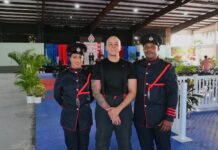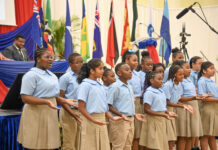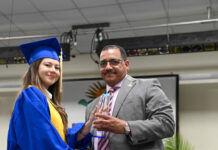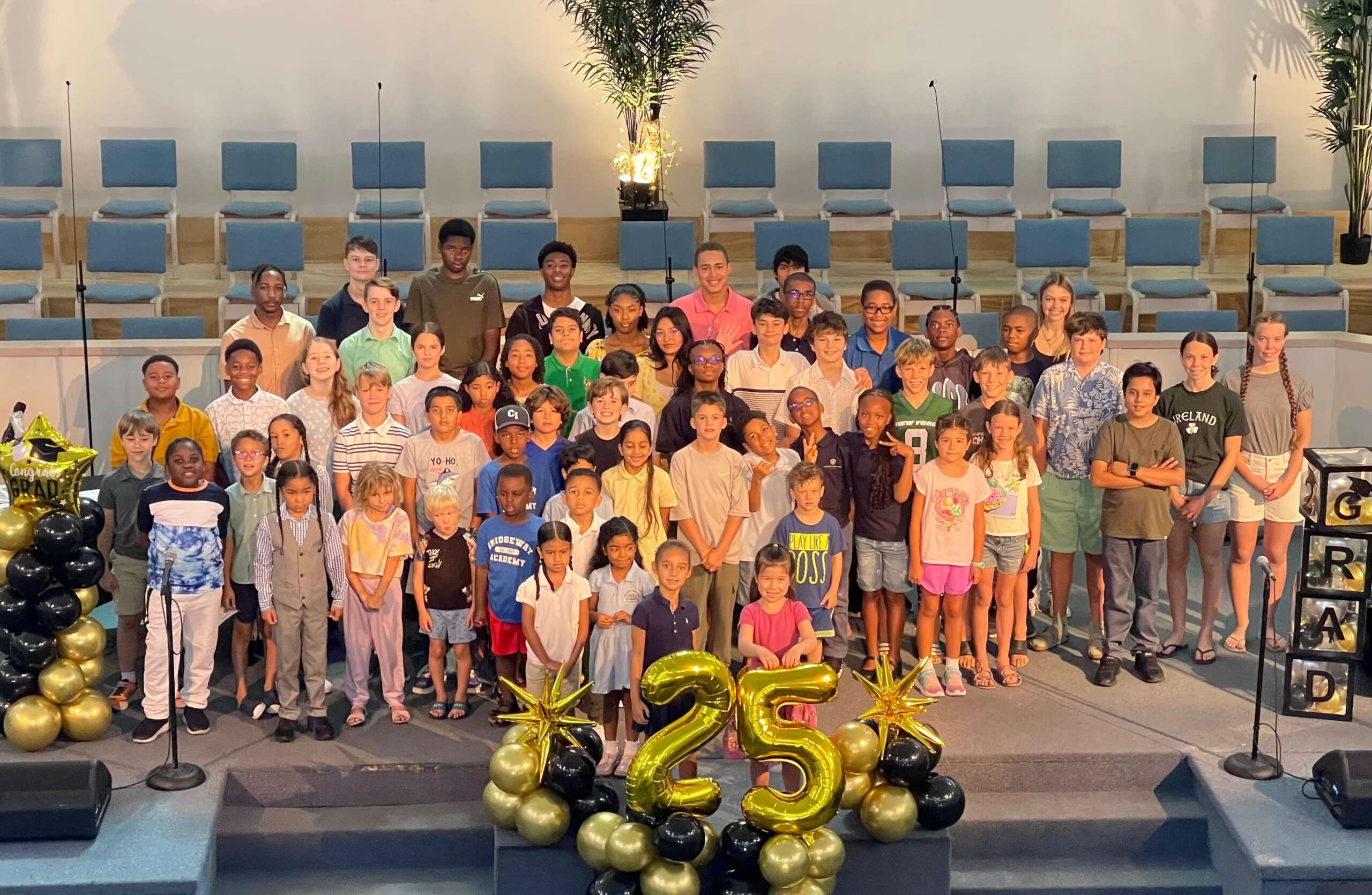
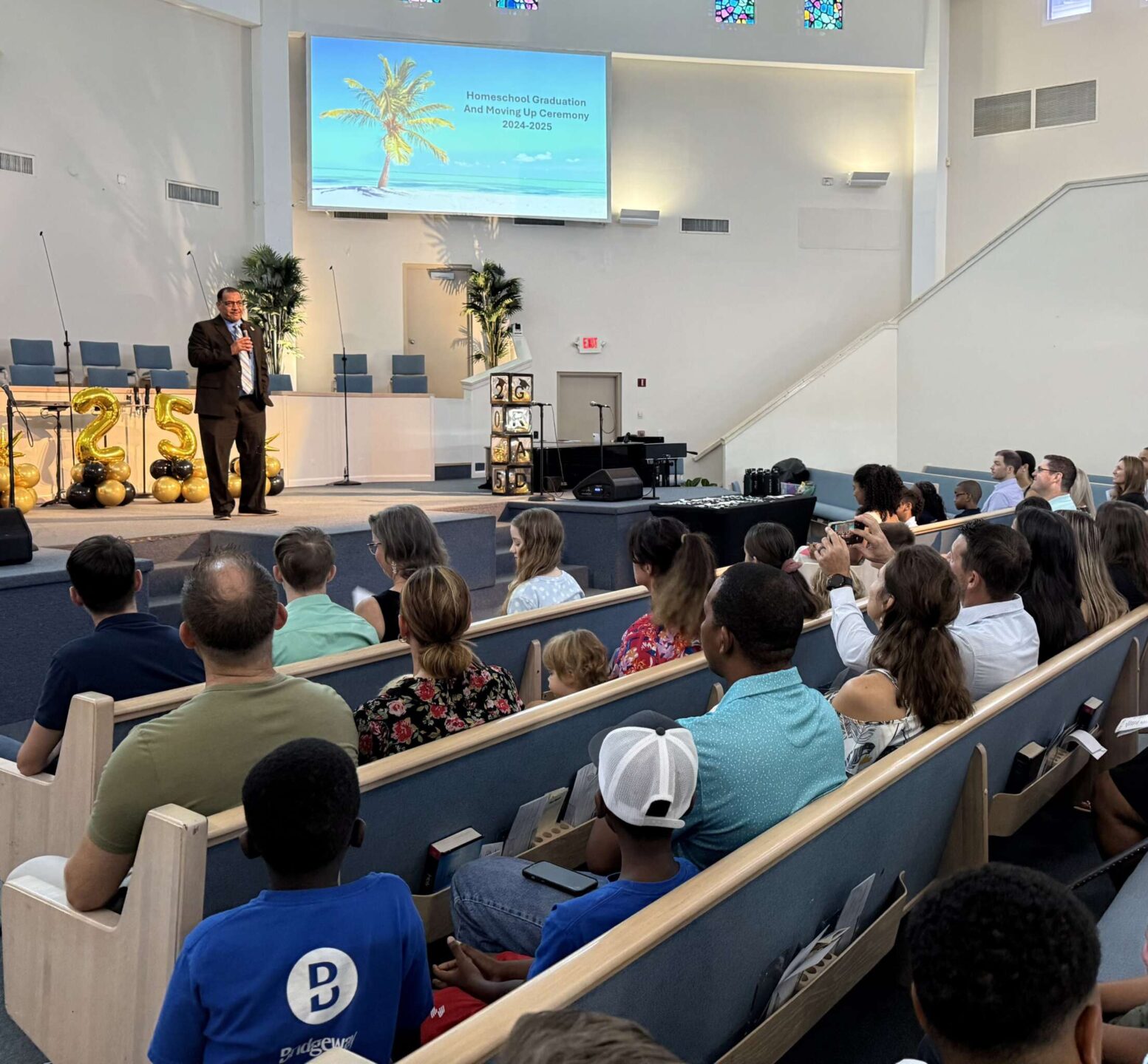
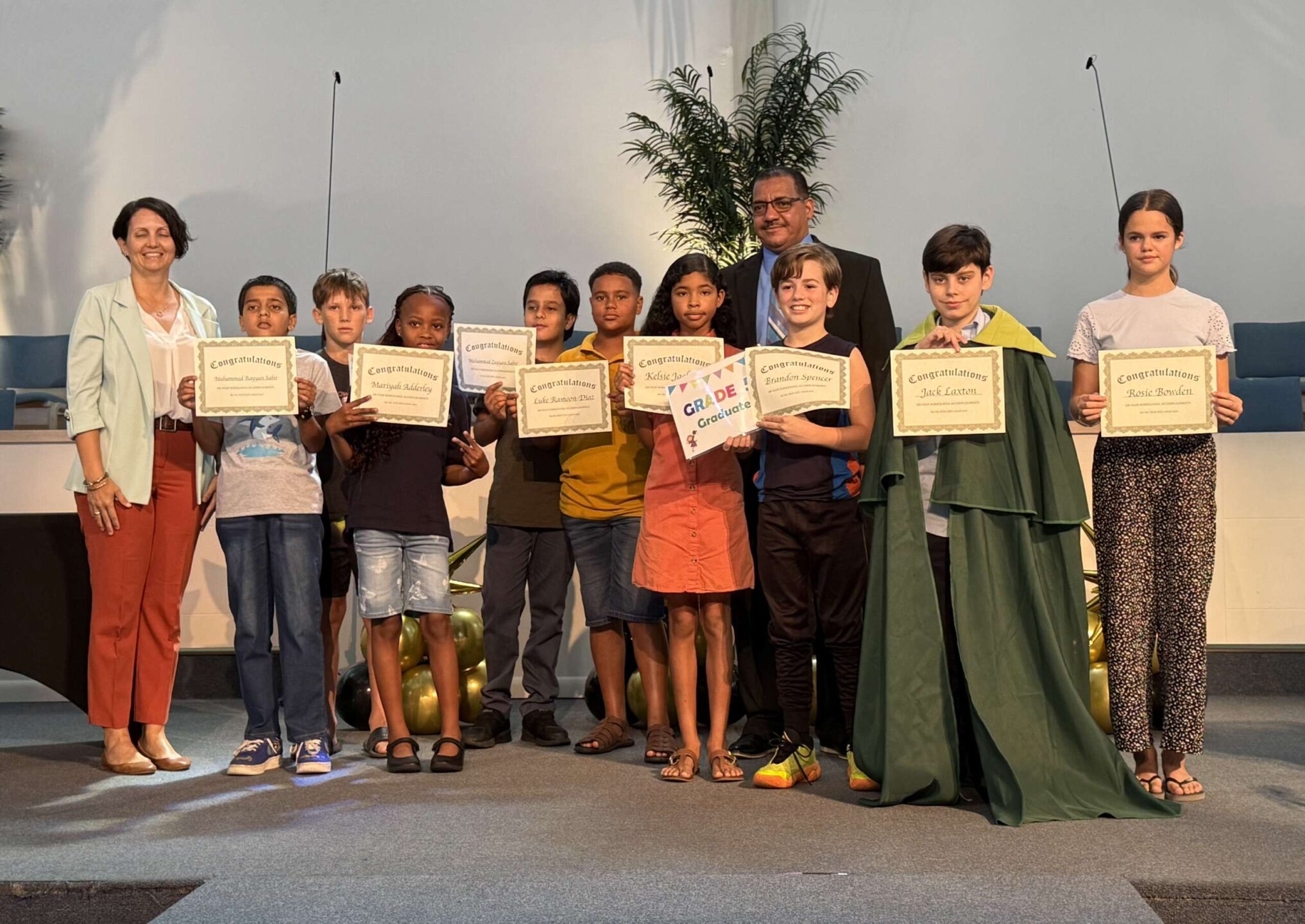
From the outside, it could be any typical school graduation. Dozens of excited children – one wearing a graduation gown to mark the occasion – are receiving certificates, a collection of treats, including food-and-drink gift vouchers, and a personalised key ring, and are having photos taken by proud parents before heading out to let off steam at the sports centre across the road.
What makes this event, held on 30 May at the First Baptist Church off Crewe Road, different from most school graduations is that all the children were homeschooled, ranging from pre-kindergarten level at under 3 years old to 12th graders who, at the ages of 17 and 18, are heading off to further education, travel or a full-time career.
“It’s the fifth year that we’ve done this,” said Kathleen Spencer of Homeschool Cayman, a support network of homeschooled children which organised the event, “but the second year we’ve done it in a venue with air-conditioning! This event is a great way to bring everyone together – the children, their parents and people from the Department of Education [Services] – and it’s a great way to give a shout-out to our homeschoolers and to show what they’ve achieved during the year. This year we even had the minister for education attend the event, which is a first for us.”
Addressing the children from the stage, Spencer said she was keen to “bust the myth” that homeschooled children miss out on social activities.
“Buckle up!’ she said with a smile. “I’m going to tell you what we’ve been doing this year.”
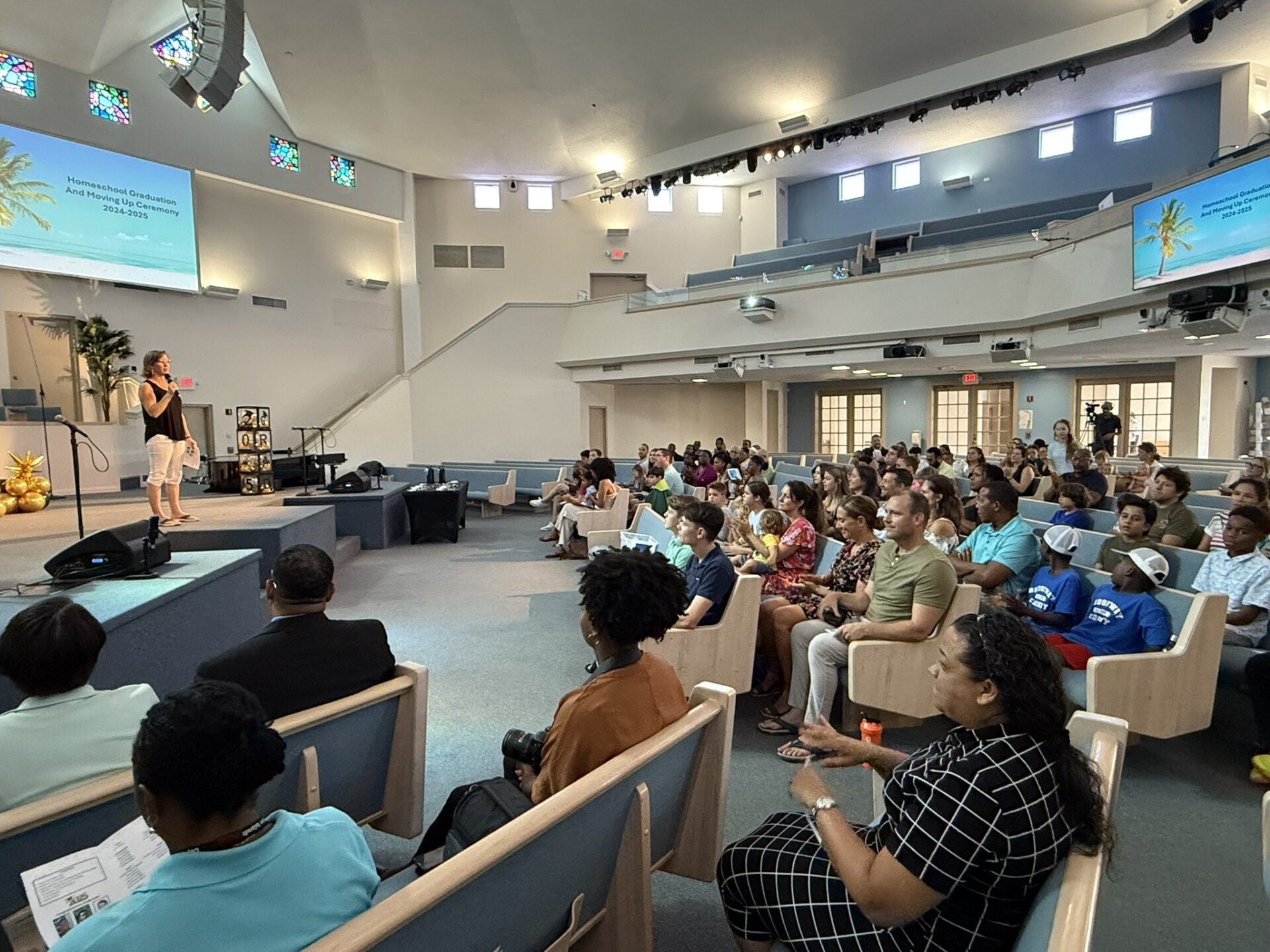
Students, some shy, some more confident, took turns acknowledging the applause of the parents for their extracurricular achievements and activities, which included in the exhaustive list: squash, pickleball, tennis, parkour, Ninja warrior, gymnastics and swimming, boxing, basketball, volleyball, sailing and athletics, spelling bee, maths competitions, music, drama, speech, choir, dance, debating tournaments, mentoring and Battle of the Books – not to mention field trips to the Central Caribbean Marine Institute in Little Cayman, the Cayman Turtle Centre, Radio Cayman, the airport and the fire service, plus more relaxing activities, including community hangouts, board-game groups and escape rooms.
“Look around and tell me how many of you have met somebody new or made a new friend that’s a homeschooler this year,” she told the audience. “This includes adults, too. This is what we’re all about. We’re about connecting each other and participating together. Because homeschooling, let’s be honest, can be lonely, if all you’re doing is schooling at home, right? But when we come together as a community who all have the same goal, we can do amazing things.”
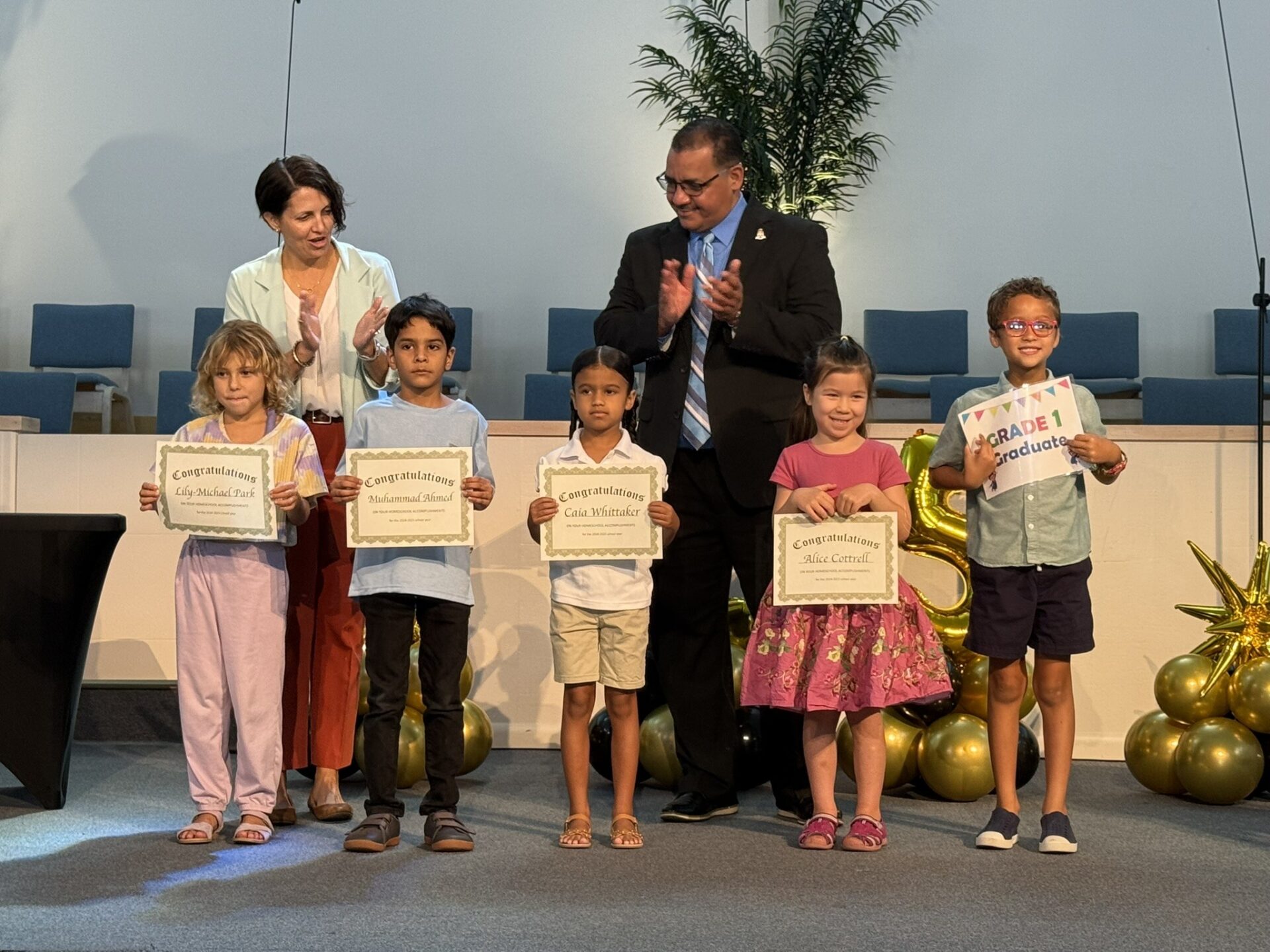
Speaking to the Compass at the event, Minister of Education Rolston Anglin said, “It’s incredible to hear the stories of young people and children whose parents have taken on the task to not only be the figurative teacher, but the literal teacher,” he said. “It’s an incredible, incredible commitment. It’s not easy to be a teacher, and I can’t imagine what it’s like to be a teacher of your own children. That must be incredibly challenging, but also rewarding. We need to continue to support this community, ensure that children are getting good, solid instruction and are ready for the world of work or university once they finish education.”
Anglin said the policy around homeschooling was going to be updated by his department to make the process more efficient to better support parents and families, and added that he was impressed by the amount of sporting and social activities the children attend throughout the year.
“Socialisation is a key, key part of human development and the parents clearly get that,’ he said. “I think homeschooling has a place in every education system, because parents and families have to have that choice.”
There are currently 136 children who are homeschooled in Cayman, with Friday’s event attended by more than half.
While the decision to homeschool might be a complex one, the process is quite straightforward. Every parent wishing to homeschool their child or children has to first submit an application to the Department of Education Services to approve the curriculum they choose to follow. After that, they’re good to go, with a home visit from the department during the year to check that all is well.
The Department of Education Services says that the curriculum must include reading, writing, mathematics, sciences, arts, physical education, social studies and the history and culture of the Cayman Islands.
Though parents do not have to teach from an accredited programme, it is encouraged, with popular options including UK-based Wolsey Hall, Oxford or the US Christian curriculum Abeka.
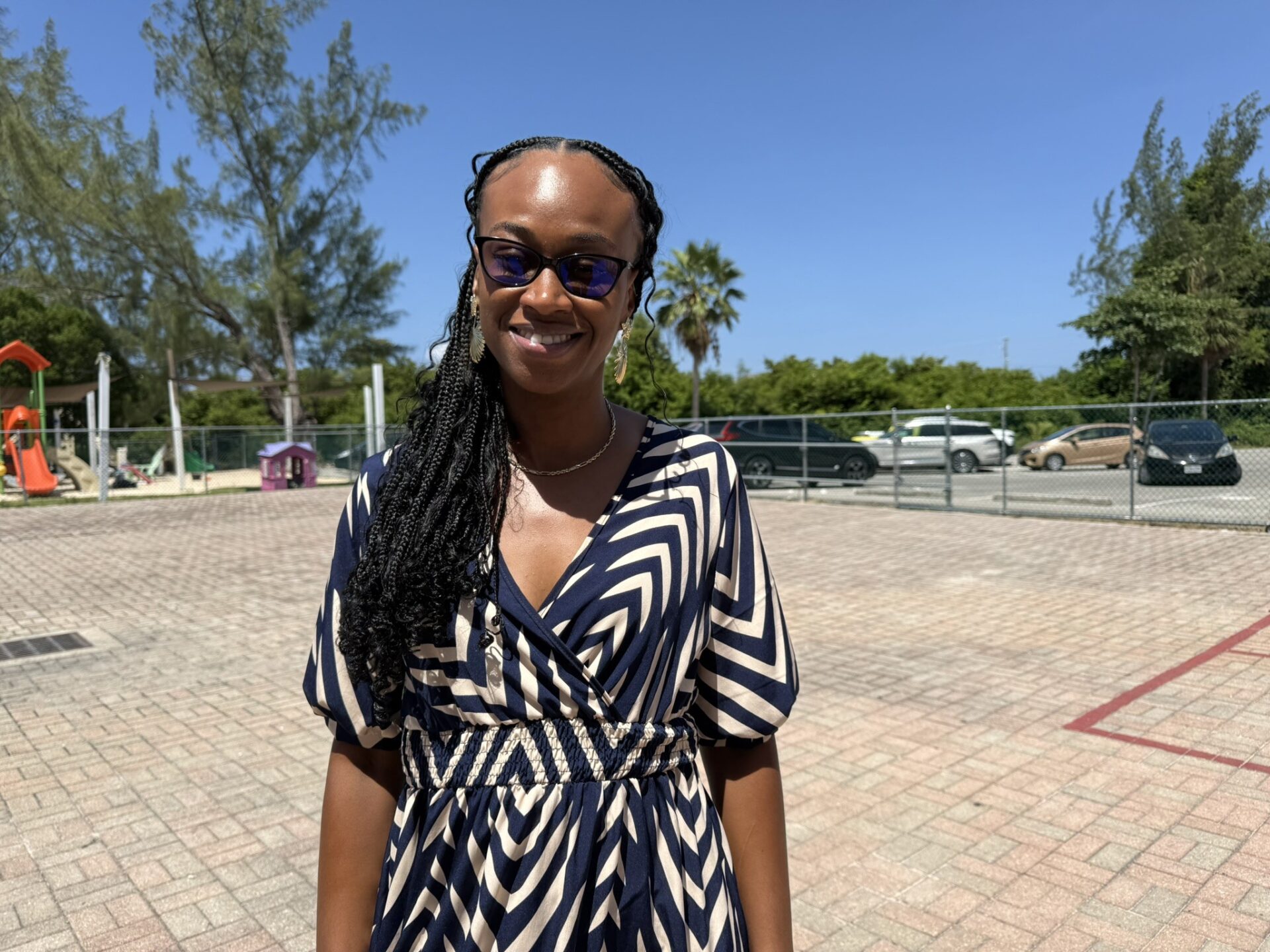
Entrepreneur Melesia Adderley homeschools all four of her children, aged between 9 and 14 years old. The three eldest used to go to regular school in Cayman, but when the COVID-19 pandemic happened, she and her husband decided to move to homeschooling and have continued ever since.
With a master’s degree in education, Adderley had been considering it for some time, and the pandemic proved the tipping point to make it a reality.
“Doing homeschooling has been extremely beneficial for our family,” she says. “It has changed our lives, our children love it. We ask them all the time if they want to go back to traditional school and they’re like, ‘No, mommy, no!’ It’s really given us opportunities.”
Flexible study
For the Adderley children, she says homeschooling has allowed them to work at their own pace, take more time on subjects if they need to, or move quicker like her eldest son, who has been able to take software development courses at university level from age 11.
“I think homeschooling gives you more flexibility to be able to do a range of things, whereas in the school system, it’s more structured in the sense where you have to go to this class at a certain time,” says Adderley.
“And with homeschooling, schooling doesn’t really take as long as you think it does. The academic work at high school level takes maybe about three to four hours and then you have the rest of the day to yourself to be able to explore your passions, dive deeper into what you love to do and incorporate learning into your everyday life.”
Her advice for families considering homeschooling as an option is to choose the curriculum which best suits your family.
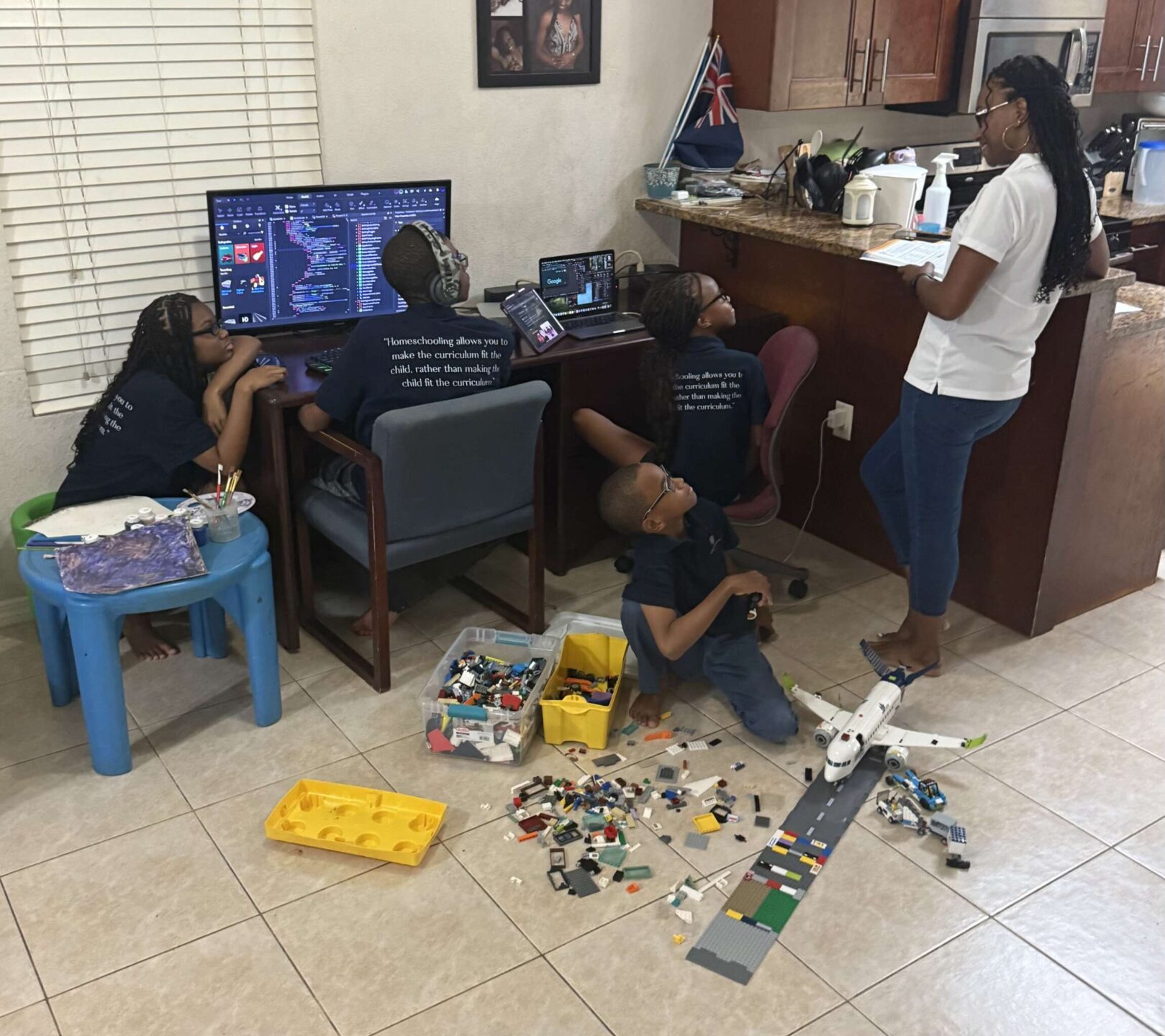
“It’s not about trying to replicate the classroom at home, it’s about what works best for you and your children,” she says.
“Do you want an online programme, or a paper-based programme? Do you want them to have live classes? Do you want them to self-pace? Figuring out how you want to structure your home school could be a bit overwhelming, but once you figure out what exactly works for your family, to me, it’s a lot less stressful.”
“My children go to school online, so an actual teacher will facilitate their learning,” she adds.” They get up in the morning, do their chores and attend their lessons. I’m able to monitor what they’re doing, see how long they spend on their schoolwork, their grades and everything. So it’s a complete, comprehensive programme.”
Extracurricular activities
Like many of the homeschooled children at the graduation, the Adderley children take part in a whole range of outside activities, including gymnastics, cricket, pickleball and tennis. They also go on field trips and play dates.
“Having events like today’s help to make us, as parents and students, feel that we are a part of this world,” she said. “We’re not outsiders just because we’re not attending traditional school. We’re a loving, supporting community, and having things like this is great to show people in Cayman that homeschooling is something that you can consider.”
She adds, “In a way, we’re kind of alleviating the pressure off the public school system as well, and that will help them to make things a bit easier for the whole Caymanian community.”
There are a myriad of reasons why parents might decide to homeschool their children.
Sometimes it’s purely practical, with people moving on island and then having to wait until there’s a place available for them at school, which means they might homeschool in the interim. Religious beliefs could play a part too, but one of the biggest reasons for many in the expat community is the high price of a private-school education.
“Cost is a big reason why parents might choose to homeschool their children,” says Joanna Boxall, owner of Cayman Resident and contributor to Cayman Parent’s education pages. “If someone has several children going through private school, it can be really expensive.”
Costs vary depending on the school and the age of the child, but can range from $12,000 to $25,000 and upwards per child, per year. This means that the cost of putting three children through private school could easily run into $60,000 a year or hundreds of thousands of dollars over the years of schooling.
It isn’t just about cost. Both Boxall and Spencer said that bullying was another significant reason why parents might choose to take their children out of school, or a child might have special educational needs which require more individual support. Some children might not cope well with being taught in a large, classroom environment, with Cayman’s classes in both public and private school typically containing 25-28 children.
Lifestyle choices
“For some people, it’s a lifestyle,” says Spencer. “It’s just how they want to school their kids. Some people might want to go travelling and to have the flexibility to take their children with them. Also, when you think about it, how many hours do you spend sitting in traffic in the morning?”
Boxall points out that parents with a background in education themselves might be more interested in homeschooling, but these days a lot of teaching is online so you don’t have to be a qualified expert yourself. “When children are younger, it’s more hands-on, but later on it’s mostly online and the courses can be very comprehensive,” she says.
Spencer and her husband have four children who have all been homeschooled from the very beginning, with her eldest now at university but living at home and doing it online.
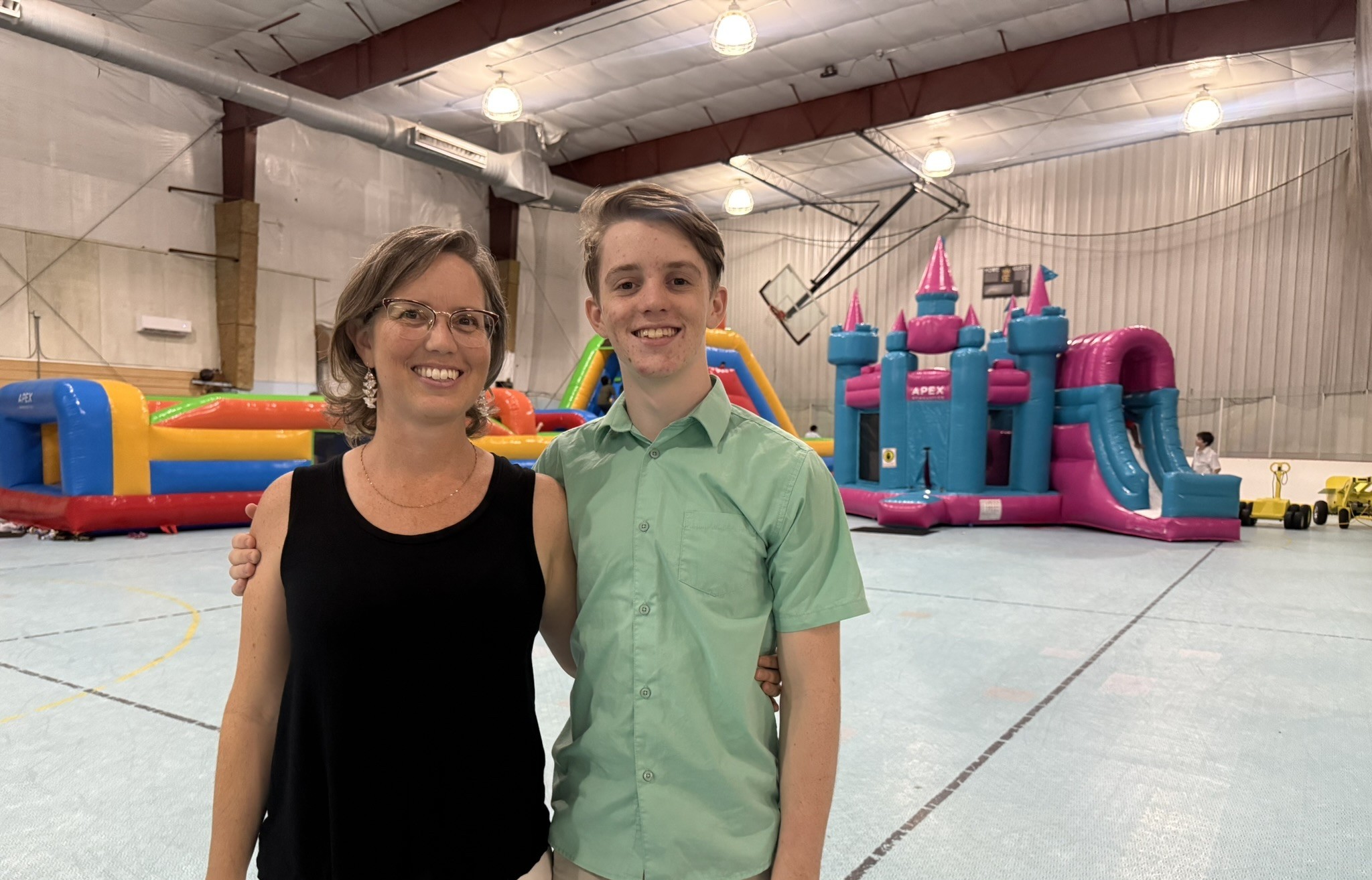
“For us, it was just a choice of wanting to have more time together,” says Spencer. “Our four kids are all really different, and it’s allowed us to find what they’re really interested in and what they’re good at, and you can cater a lot more to their strengths and really help them in the direction that they want to go.”
The flexibility of homeschooling, she added, means that children can advance at their own pace, either getting help with things which need more work or not being held back at the pace of the rest of the class.
But Spencer warns that it’s not an easy option to juggle the role of parent and teacher.
“You need to figure out when you’re putting your teacher hat on and when you’re putting your parent hat on, so that when school is over, you can have the time together as a family,” she says. “There are good days and there are bad days, of course, so it’s great to have the support from the homeschooling community.”
Parents have to be more intentional about making play dates or whatever their children are involved in, she says.
“We never had an issue because we had church, and my children were involved in sport and music so they were around a lot of other kids anyway. And I would even argue that not all socialisation you’re getting in school is good socialisation, right? Like, there’s a lot of habits at school that I don’t want my kids to pick up, and a lot of words I don’t want them to hear or say.
“But you have to be very proactive as a parent. Some people are very hands-on themselves, or others have a tutor to come and help with certain aspects.”
Eight children – four homeschooled
With eight children aged between 7 and 29, Maria Jackson-Argueta has experienced both sides of the homeschool debate. Her eldest four all went through Cayman’s public school system, while her youngest four are all homeschooled.
“I always wanted to homeschool my children, but with the older ones I just couldn’t find a way to do it, as I worked away from home full time,” she says. “With the second four, I was able to get more help and make it work.”
She says she finally just “decided to plunge in” with the second four, having spoken to another family who was also homeschooling, and there was a bit of trial and error to start off with about what curriculums would work best for her children. Her 16-year-old year son Michael is now studying a UK-based programme, “which is working really well for him at a pace he’s comfortable with”, while her 14 year-old daughter Mia-Samara is on a US-based learning course.
“This way, it’s much more personalised for each child,” she says. “In the conventional school system, you just progress regardless.”
While Jackson-Argueta, who runs her own business from home, is now able to have more help with the children this time around, she says that it could be hard to make it work without the finances to be able to do that, in spite of the huge savings on private school education. It also means a lot of juggling.
“You’re taking on the role of a teacher around the clock, and in the meantime I’m still running my business while still running a home,” she says.
One of main attractions of homeschooling for Jackson-Argueta was to be able to control what her children were learning at school, both inside and outside the classroom.
“This way, I know what they’re being exposed to, I have control over that, and even in a faith-based school they would still be exposed to a lot of things that I might not want them to be.”
One positive aspect, says Jackson-Argueta, is that her children learn who to take responsibility for their own learning, as well as helping out with the household chores. “They learn to be independent as well as chip in in the home which teaches them responsibility.”
Another of the proud parents at the event was Deon Dowers-LeBlanc who, with her husband, has been homeschooling their two sons, Josiah and Caleb. Caleb will be in the eighth grade next school year while Josiah was one of the graduating students this year.
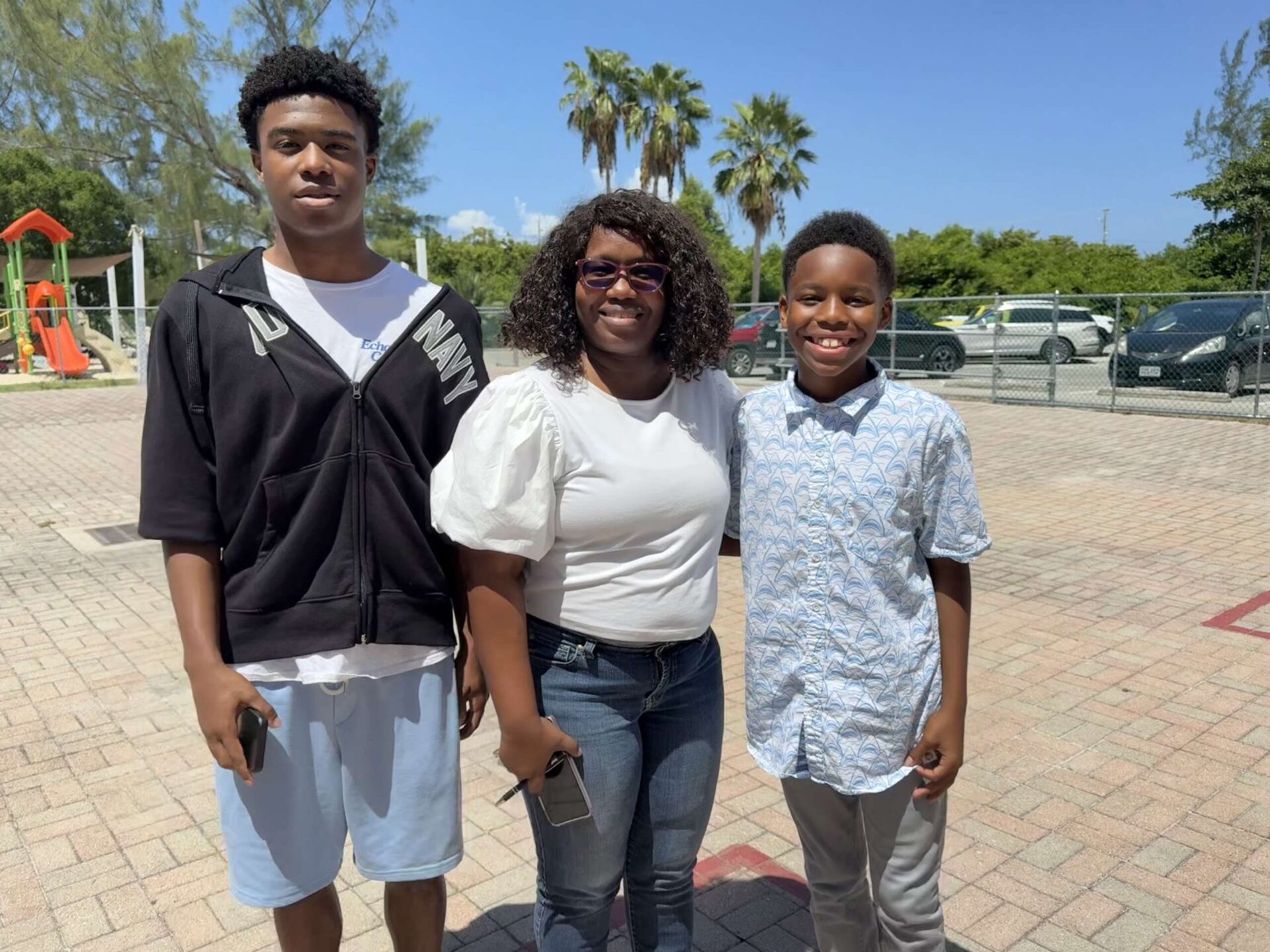
While Dowers-LeBlanc had herself been educated in the traditional system, she had been attracted to the flexibility of homeschooling. She had tried it out when the family was living in the US, but it hadn’t worked out for them. When they moved to Grand Cayman a few years ago, they decided to give it another go.
“When we did our research, we realised that it was so much more than just sitting down and opening up a book,” she says. “You have so many online options and you can put different curriculums together, so it gave us the opportunity to make a curriculum fit the child instead of the child fitting the curriculum.”
Second time round, everything worked much better, says Dowers-LeBlanc. “We school on the go! We’re not confined to the walls of our home. We can go to the park and school our kids, our kids learn going to the grocery store using math, science; we travel occasionally too, but that doesn’t stop the boys from learning, because we use the online school option so they don’t miss out on school.”
When COVID-19 hit, she says, and everyone was trying to work out how children could be taught remotely, “it didn’t affect a lot of homeschool students because they were already learning online”.
Any concerns over homeschooled children suffering from lack of socialising, says Dowers-LeBlanc, might have been an issue in the past, but aren’t today, in her view.
“My boys are involved with YMCA baseball and Cayman Islands Little League, and they also play soccer – my youngest son recently went to the UK with his football team and trained with Chelsea, while my oldest son travelled to the Bahamas and Florida for baseball games. Outside of games, my boys are involved in the home-schooling community and we ensure that we put on a lot of activities so that kids can get to meet each other.”
So what advice would she give to parents who are thinking about homeschooling their children?
“Be open minded, there are so many options out there,” she says. “Do your research and look for support. It can get overwhelming. It can get frustrating, because as much as we love it, we’re not saying it is easy, it definitely isn’t, but you can make it fun. Make it in such a way that at the end of it, not only is your child learning, but the relationship between you and your child is expanding.”
It seems fitting to leave the last word to a former homeschooler. Mark Westin, 28, a Compass TV videojournalist, says, “Homeschooling gave me the freedom to really pursue the things I was interested in and, for me, that was representing the Cayman Islands in rugby, and honing my craft in filmmaking.
“A flip side to homeschooling is that there’s more of a burden on the student to be self-sufficient and, of course, everyone is different and people operate better under different circumstances, but that’s the beauty of homeschooling: individualised learning.”
More information on homeschooling can be found online at Homeschool Cayman and Cayman Resident.
Related Videos