

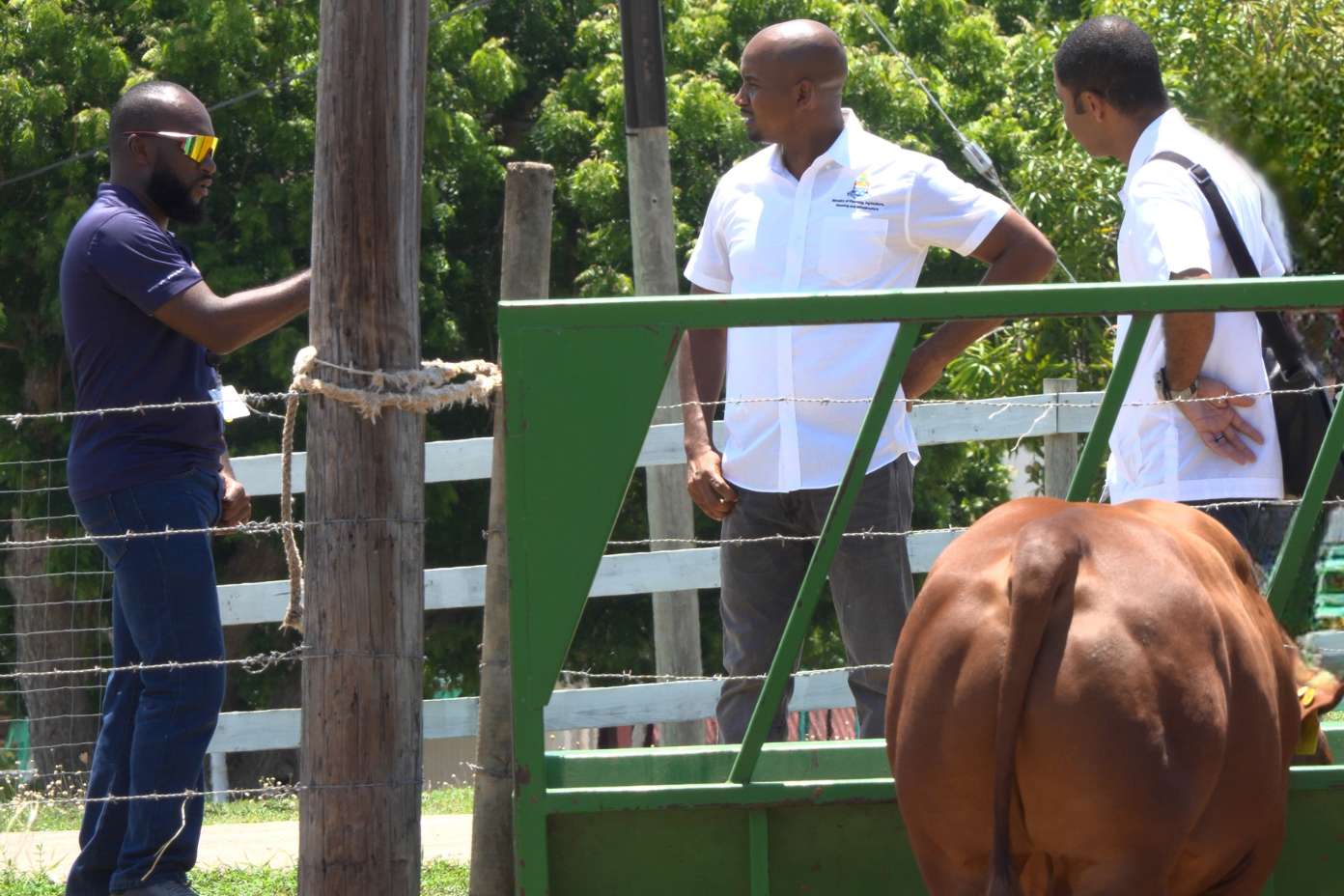
Wilbur Welcome, the new director of the Department of Agriculture, says that bolstering Cayman’s food security will be a major priority under his leadership.
Welcome – who officially took over from Brian Crichlow on 1 June – has been tasked with overseeing the strategic direction and daily operations of the department, with a focus on empowering local farmers, enhancing food security and advancing sustainable agricultural practices.
“The department will be improving our efficiency and the services we provide, as well as our customer service,” Welcome told the Compass. “This dovetails into our focus on improving the farmers themselves – their farming practices, record-keeping, crop management and livestock care – and building upon existing programmes.”
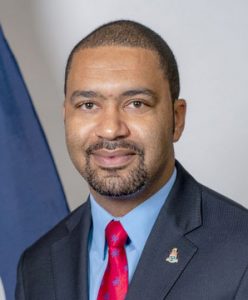
In an interview with the Compass, Welcome and Demoy Nash, Department of Agriculture acting deputy director, pointed to Cayman’s over-reliance on food imports – particularly from the United States – as a vulnerability that is being addressed in part by improving local production. Currently, the Cayman Islands imports roughly 90% of its food, with more than 80% originating from the United States.
“It’s not that we have to grow all that we consume – but we must have access to food based on our preferences and dietary need,” said Nash. “In the Cayman Islands, we currently have that. But what makes food security an issue is the food source – where we derive our food from.”
Food security: A multi-pronged approach
In 2022, the agriculture ministry released the Cayman Islands Food and Nutrition Security Policy, with the objective of adopting a multi-dimensional and multi-sectoral approach to food, nutrition and health.
“We are linking food security to food and nutrition security, because there’s a nexus,” Nash explained. “It means, if our food is more nutritious, if it is less travelled, if it is fresher, it means we’re healthy. We’re not just consuming food, but we are taking in greater levels of nutrients – which means we benefit.”
A key pillar of the policy is the National Egg Strategy, or NEST, which aims to expand commercial egg production, create quality standards and open new markets for local producers.
“We’re confident that Cayman can become self-sufficient in eggs,” said Welcome, highlighting the department’s activities – certifying poultry farms, improving traceability, and offering hands-on support through extension officers who advise on sanitation, spoilage prevention and regulatory compliance.
Jay Ebanks, now in his second term as minister for agriculture, has called eggs a “quick win” for the sector and has publicly set a goal to reduce poultry imports by 40%.
“We’re very eager to grow the egg production of commercial farmers and get those eggs into the supermarkets,” said Welcome, sharing that a luxury hotel on-island has already begun to source its eggs locally – a major milestone for the programme.
Beyond poultry, Cayman is looking to strengthen its livestock resilience. Meat is Cayman’s largest food import category, totalling US$34 million in 2023.
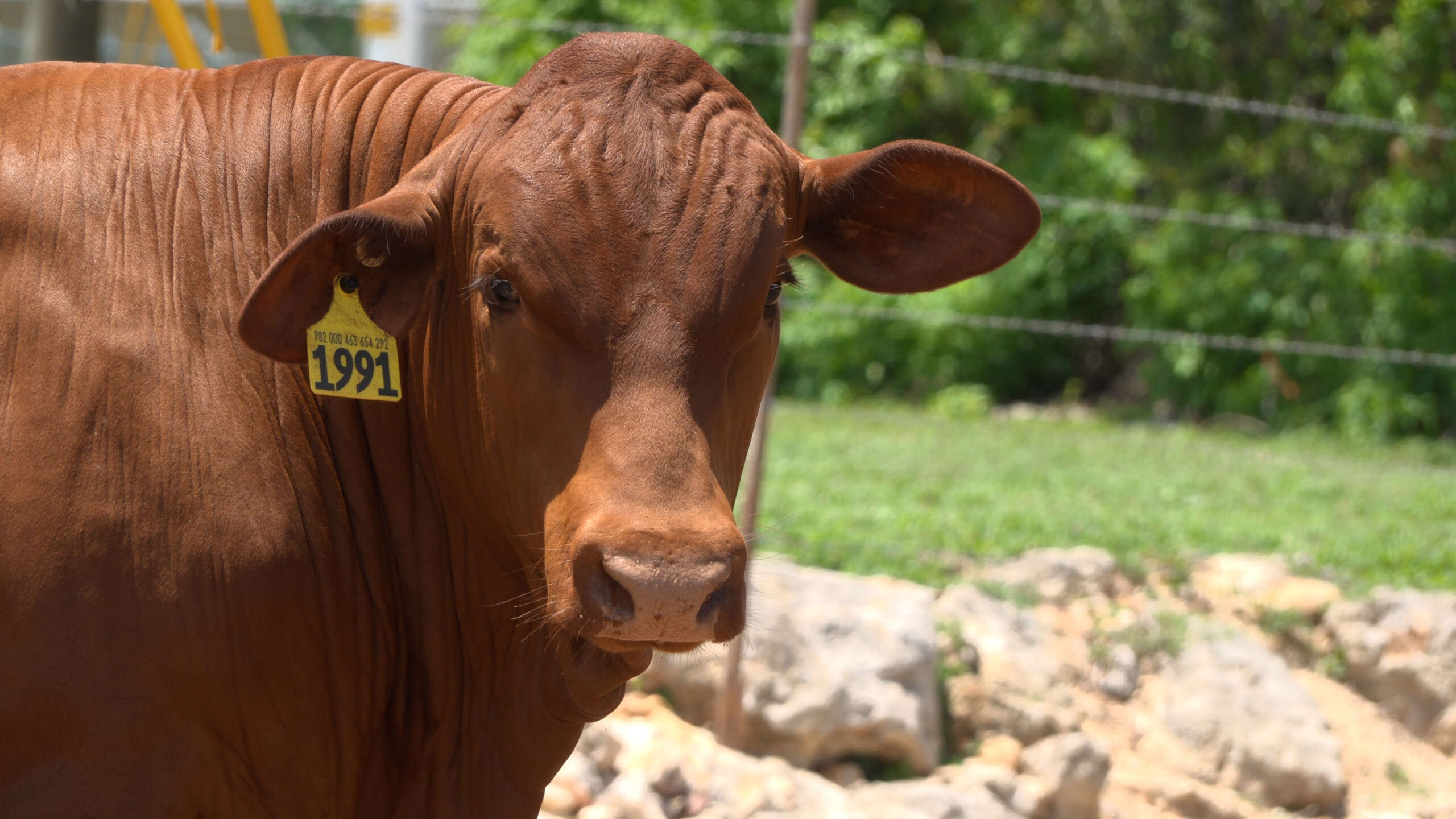
In that year, the Department of Agriculture brought in 22 Jamaican Red Poll cattle as part of the nucleus breeding herd project, which aims to improve the genetic quality of local cattle and support long-term meat self-sufficiency. Welcome and Nash said that the pure-bred cattle are ideally adapted to Cayman’s climactic conditions and are accessible to local farmers through a stud bull service.
Making the most of limited land
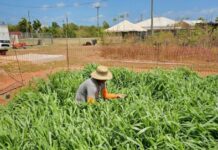
Nash said that access to capital and land continue to be two major issues for local farmers. With only 2% of the country’s land considered arable, acreage is a critical bottleneck. A government land-lease programme aims to address this by allocating subdivided Crown land to farmers at an affordable cost. The first 15 plots are expected to be distributed soon.
Recognising these space constraints, Welcome and Nash also pointed to the need for controlled-environment agriculture – greenhouses and vertical farms – as essential components of Cayman’s food-security strategy.

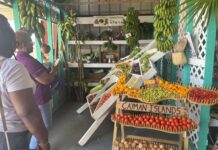
Residents can also expect a major push toward backyard farming and small-scale community agriculture in the months to come. “It needs to be all hands on deck,” said Nash, stressing that this approach helps to improve production, quality and nutritional content, and adding that there will be some announcements made around this strategy in the near future.
“If we adopt that kind of approach, it means there will be more food,” said Nash. “Locally grown means fresher, less travelled and more nutritious. What we’re realising is a lot of what we are consuming – especially leafy vegetables – by the time it arrives, almost 40% of nutrition is already gone, and the shelf life is seriously reduced by over 50%…”
In this light, the department is also stewarding vital plant genetic resources, housing Cayman’s only mango and avocado germplasm collections in Grand Cayman and Cayman Brac – part of long-term efforts to preserve local biodiversity.
Welcome emphasised that the agriculture department plays an essential role in supporting food security and is open to serving the entire community.
While it remains the primary supplier of inputs for local farmers, the Department of Agriculture also offers resources, guidance and support to all residents of the Cayman Islands to help strengthen local food systems and promote greater self-sufficiency.
Related Videos








Welcome aboard Mr. Welcome, I wish you success in your new role. The complaints I have is that the department is never stocked whether it be feed for livestock, equipment or chemicals. It has been years since a particular equipment has not been stocked, yet AL T has them at a very premium cost. Then only cows, goats and chickens are freely allowed to be imported by the department. Why not similar animals are not allowed for meat security? Mr. Welcome, I truly hope you have the mind set of thinking outside the box and is truly devoted to the farmers.
Eating local is expensive. Even with fruits, it’s often cheaper to import them aparrently than grow them here.
Obviously at some point in time in the future we will have to put tariffs on imported meats in order to make local meat production more profitable for the local farmers.
While those of us who realized our vulnerability as a country dependent on other countries for our food supply invested significantly but were on able to find a consistent outlet at the supermarkets on a weekly basis with the price per lbs also being unsustainable. Take a look at the tiny space allocated on the supermarket shelves for local meats. Also when inquiring just about weekly about sending more beef I was told he did not want to stress Lincoln too much. Seeing the times before us I will begin to reinvest in cattle again for the necessity of making this country less vulnerable to the mad men of this present age.
Yes please and finally!