

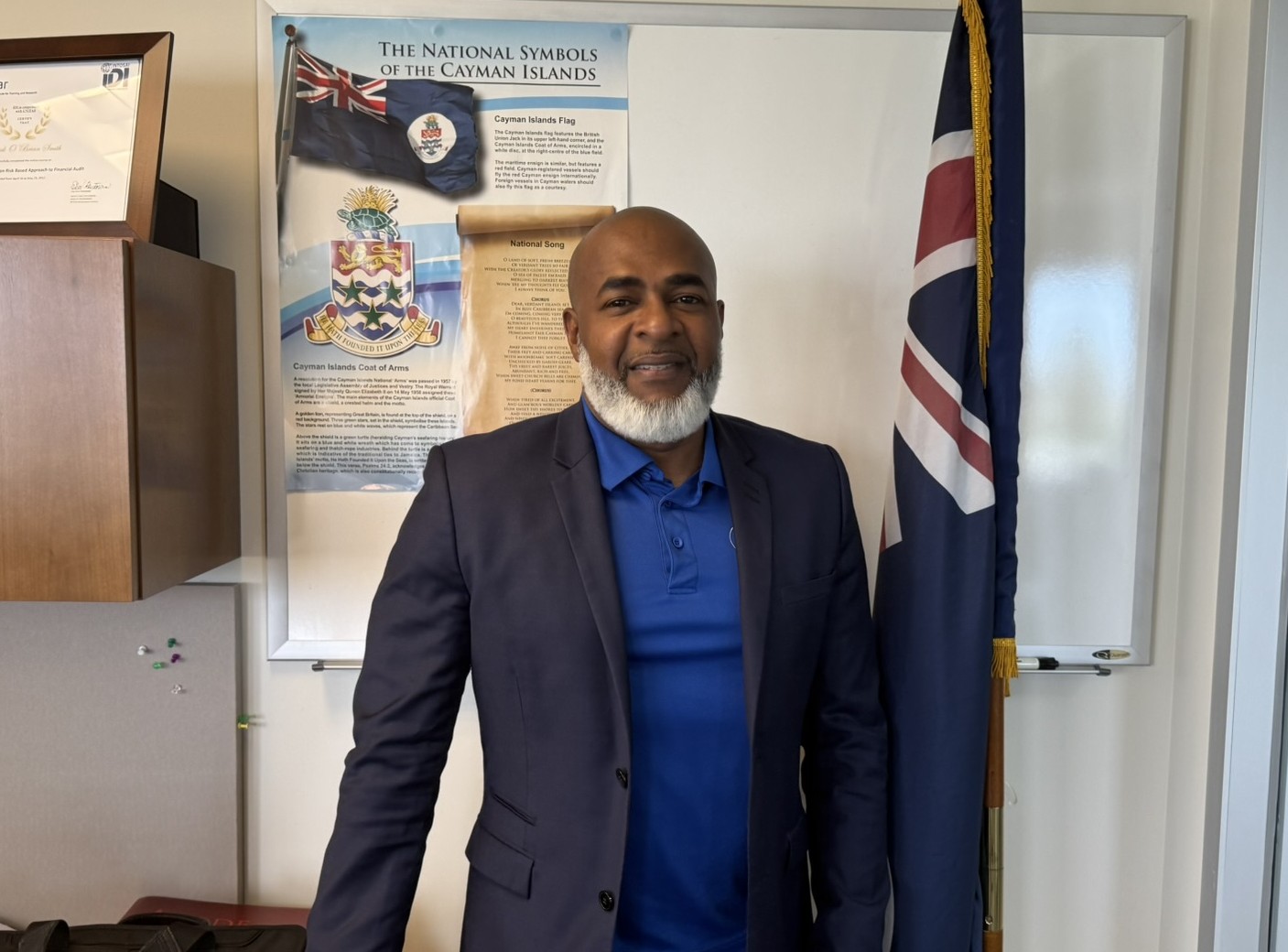
Patrick Smith is only a few weeks into his new job as auditor general of the Cayman Islands, but having spent the last 23 years working in the auditor general’s office, he is probably the most prepared to ever take up this high-profile role.
With the nation’s budgets under scrutiny and a new government gradually revealing its spending priorities, Cayman Islands’ finances are in the spotlight as never before, which is just fine with father-of-two Smith, whose love for numbers makes him the ideal person to highlight exactly where public money is being spent.
Originally from Barbados, Smith moved to the Cayman Islands in March 2002 to join the Office of the Auditor General as senior auditor, an entry-level position.
“It was one of those situations where I happened to be browsing the internet and came across this job opportunity in the Cayman Islands,” Smith recalled. “I was just about to turn 30 and I’d never worked outside of Barbados before, and I thought here was a chance to explore beyond my comfort zone.”
Passion for numbers
While the location might have been a new one for Smith, auditing was very familiar to him, in spite of initially studying civil engineering at the University of the West Indies. It was in his first year that Smith was exposed to accounting for the first time and, as he put it, “I realised I had a serious passion for it, so I switched from engineering to accounting.”
So what was the appeal of accounting?
“I never liked mathematics,” he said, “but accounting is so different, the numbers are real, they actually mean something. It’s not abstract at all. It’s dynamic.”
Smith’s experience working for KPMG and then a manufacturing plant in Barbados helped in his initial interview for a position in the auditor general’s office, because government was at the time about to do a major building project and was looking for someone with engineering experience.
Over the 23 years since, Smith has worked in many roles, including as deputy auditor general responsible for financial auditing and, most recently, deputy auditor general, corporate and international, which led the office’s corporate governance arm, as well as overseeing financial audits conducted by private firms on behalf of the Office of the Auditor General and helping develop audit offices around the world.
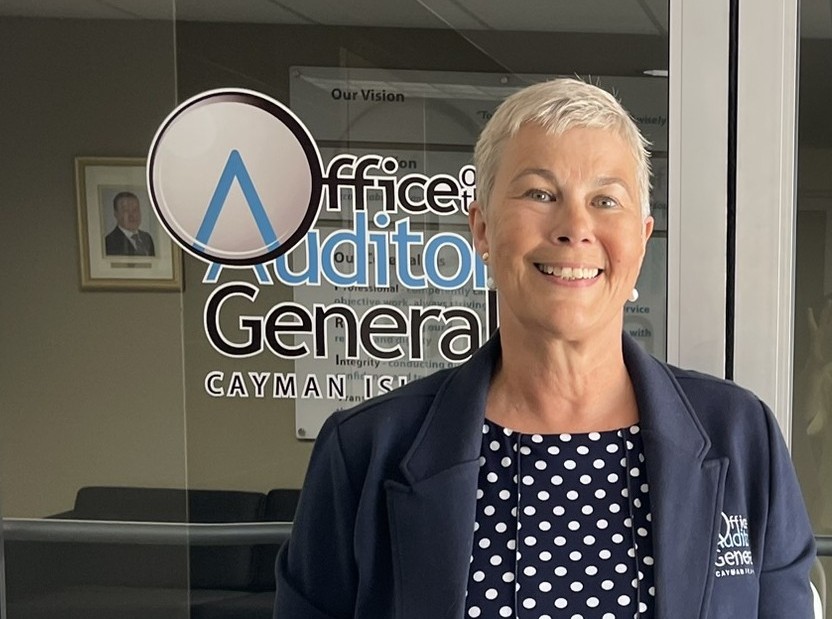
When previous Auditor General Sue Winspear stepped down from her role to move back to the UK, Smith, 52, applied for and got the top job, and began just weeks ago.
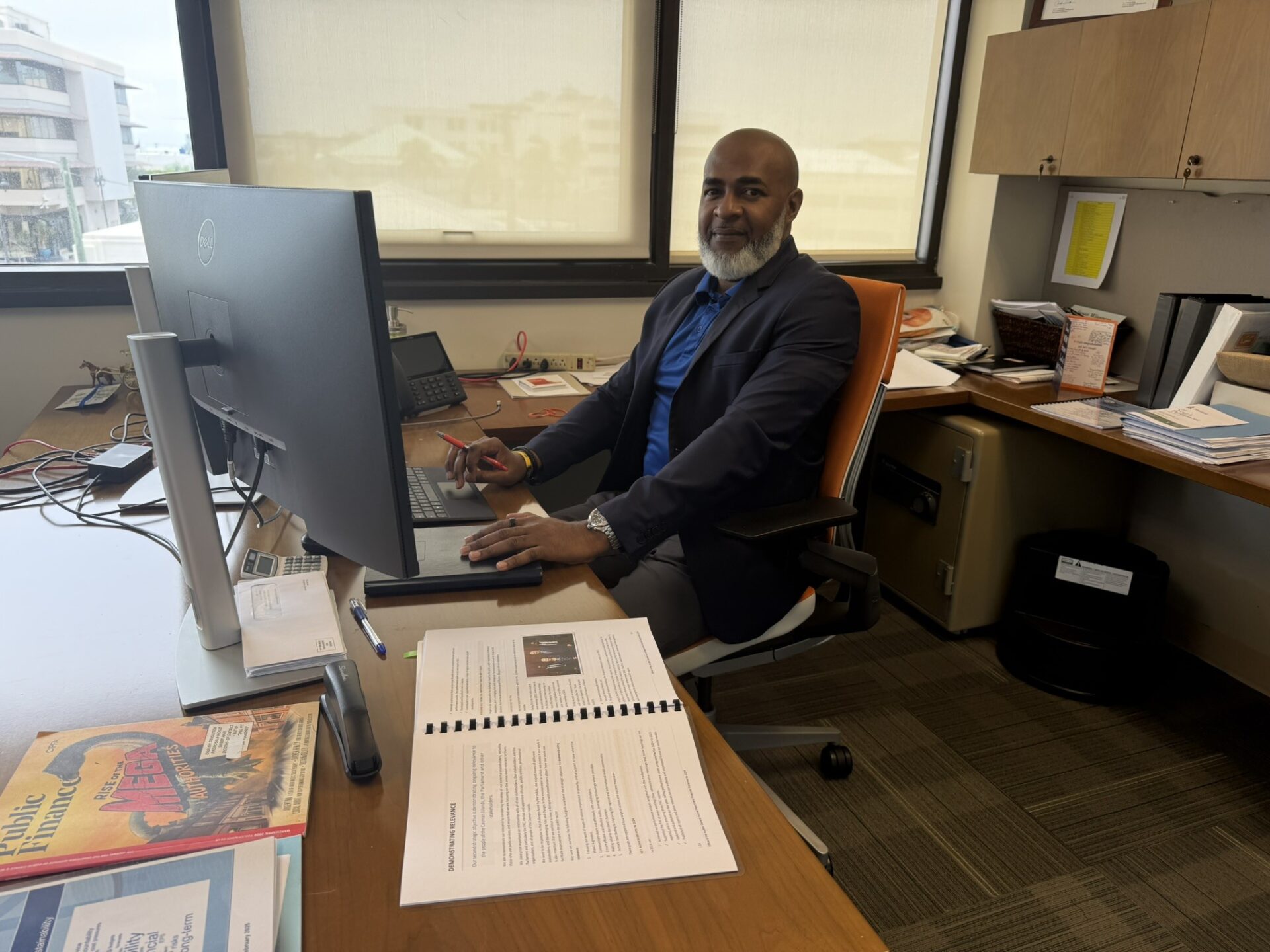
So how has accounting changed over the years? “It’s becoming more proactive,” said Smith, whose office carries out financial and performance audits on a year-round basis. “We’re not just sitting back and waiting to get information. Instead, we’re doing more detailed risk assessment and there’s more stakeholder engagement as well.”
Smith is keen to raise public awareness and engagement of the role of the Auditor General’s office.
“When I joined in the early 2000s there were a lot of questions about the OAG, such as ‘What does it actually do? What is its function?'” he said. “Over the years, I think that’s probably been dispelled, but there’s a lot more we want to do to raise awareness.”
Even though Cayman doesn’t have a direct income tax, Cayman’s indirect taxes, such as when you buy property, register a car or buy goods, mean that when the government spends money, it’s public money which is being spent. “The question is always, ‘Is it value for money?’” said Smith.
Government oversight
During Winspear’s tenure, her office became known for not pulling its punches in its reports, which called governments out for, among other things, late and inaccurate accounting, not complying with regulations, not following procurement rules, incorrect valuations, poor financial controls and understatement of liabilities.
It made for uncomfortable reading for the relevant departments, but clearly set out the need for robust and effective oversight.
“We don’t go seeking punchlines or headlines,” said Smith, “but in the case of an issue which needs to be addressed by the government, it’s our responsibility to the public to make sure that the issues are presented as transparently and as fairly as possible … If you spend the time doing all the work, but then produce a report that isn’t digestible by the key stakeholders and the public, then we’ve kind of lost the mission.”
The role of the auditor general, explained Smith, is to ensure that the country’s money is being spent in the most efficient, effective way, which means looking at financial stability and making certain that government has a balanced and sustainable budget, so the economy will be stable for the next generation.
Smith is quick to point out that the Office of the Auditor General does not tread on areas of government policy, but it will analyse the implications of policy decisions on public finances and the wider society.
“It’s about going through and showing the financial impact of decisions,” he explained, “not just about how much it’s going to cost to build a building, for example, but to maintain that building for the next 50 years or so. What has happened in the past is that there’s been a projection that’s limited to the cost of the capital project [without] the running cost of it going forward for the next couple of years.
“Sustainability is about ensuring not just being able to build that building, but to ensure that you can maintain and operate it over the life of the building.”
It isn’t just about looking at it from a purely financial aspect, though, as building a school will have a certain cost but, said Smith, “you might be able to demonstrate that you’re producing students of a higher calibre, or the building also has another purpose, such as a hurricane shelter or a community centre”.
While the new government is just a few months into its administration, auditing never stops, running on a five-year rolling basis.
Explained Smith: “The new administration will be now starting to determine their financial policies and their priorities. As they start to roll out projects, then we’ll start to see ourselves what their plans are and what might supersede things that were there from before, from the last administration.”
With reports from the Office of the Auditor General calling the level of spending by the previous administration “unsustainable”, looking at financial stability and viability is an inherent component of the work of Smith and his colleagues.
“How much we do it will depend how critical the situation becomes, so the wider that gap between the current revenue and the expenditure develops, then it becomes more of a matter of bringing it to key stakeholders’ and public attention,” he said.
‘Myopic mindset’
Sounding a note of caution, he warned that there has previously been a “myopic” mindset which leads to a “We’re good this year. Let’s see what happens next year” attitude.
But, said Smith, “We’re saying no, let’s plan ahead for the next five years, 10 years, 20 years, and see what you actually need to do to ensure in those years that you can maintain some level of stability.”
The key to this, in his view, is to have realistic budgets with full cost implications. He suggests that having independent assessment oversight, similar to the Congressional Budget Office in the US or the UK’s Office of Budget Responsibility, would be a useful addition to the process.
“We’ve done some reports indicating some deficiency in the budgetary process,” he said diplomatically, “so I think there needs to be more enhancement to ensure that budgets are realistic. The numbers have meanings, it’s not just mathematics. They have to be aligned with the projects and the decisions being made.”
As for the current financial situation, it might not be until next April or May until there is a clearer idea of the overall picture, after the end-of-year reports come out and his office checks all the figures. Smith is keen to stress that the most recent figures coming from government are unaudited and indeed unseen by the Office of the Auditor General, and the accuracy of those forecasts can vary considerably.
“If you’re going through a process that isn’t very robust,” he noted, “you will find some level of fluctuation from month to month in terms of what you actually expect from your final numbers.”
Backlog
This is an issue which Smith and his colleagues have been dealing with for years. The reality is that the overall government accounts, known as the Entire Public Sector, or EPS, are currently backlogged. The latest accounts which the Office of the Auditor General went through were from 2020 and the office had to give them an adverse opinion, which means that those numbers cannot actually be relied upon.
“It’s not overwhelming, but it is concerning,” he said. “Having four years of financial statements in a backlogged state is a concern because it impacts on your ability to make good decisions going forward.”
It might sound worrying, but the situation has certainly improved from what it used to be.
“To put things within context,” said Smith, “just over 10 years ago, almost every single ministry in government was receiving a disclaimer of opinion, which means that we could not give an opinion. We couldn’t even start to do a proper audit.”
Things have changed, he added. “We are at a point now where almost all bar one has received a clean opinion up to this point in time for 2023. For the most part, we’re seeing a high frequency of clean audit opinions.”
Definite improvement
“We’ve definitely seen a lot of improvement,” he said. “The greatest concern at this point would probably be that we haven’t been able to give a clean opinion for the EPS statements, and there’s also the backlog. But government has come a long way when it comes to financial reporting.”
Smith is optimistic that within a few years, the Entire Public Sector will be properly audited – “that’s a goal, for sure” – and then there wouldn’t be a gap as there is currently.
To aid government auditing going forward, Smith is hopeful that staff training and IT systems will combine to reduce the workload for employees, such as by reducing manual invoicing and ensuring that the proper systems are in place. He also wants to increase ways the public can access information, such as via social media, and make it easier for the public to flag concerns over public spending.
Another priority is to see an Auditor General Act passed through Parliament, so that the the office is no longer embedded within the government structure but stands completely independent, and Smith would also like to see more accountability when it comes to enforcing standards in public life.
Given his workload, does the new auditor general feel optimistic about the financial situation of the Cayman Islands?
“I do,” he said. “I think the Cayman economy is a resilient one.”
He added that, unlike other audit offices around the world, the Cayman Islands office has a “strong-enough reputation so that when we produce a report, or we raise a matter of concern, we do get traction from key stakeholders, and that can make a change. I think as long as we are doing our function well, and we’re constantly basically raising matters to the government’s attention, I think we will continue to see improvement, and that, in of itself, would be good for the long-term economy as well.”
A thick skin is often required for any role which involves telling people or institutions things that they might not want to hear, and the position of auditor general is no exception.
“I know there will be things basically that will be said against the office, against me, my office,” said Smith, “but we don’t take it personally. We know we’re doing the right thing. The role isn’t a subjective one, it’s based on factual information, not on personalities or desires. We go through a quality-control process to make sure that all evidence is supported and vetted properly and we ensure that staff review things over and over again.”
Talking of staff, Smith is keen to continue Winspear’s work on having a career path for Caymanians within the office. “Our vision is to develop and bring young Caymanians through the office, and that some will go on to wider public service.”
As for Smith himself, when he is not working, he spends his time being a “taxi service” for his two daughters and playing the occasional game of pickleball. He even enjoys a bit of karaoke and can sometimes be found belting out Elton John tunes at the Mango Tree in George Town.
As Smith heads into his 24th year at the Office of the Auditor General with his highest-profile role yet, ‘I’m Still Standing’ seems like a definite one for the playlist.
Related Videos









Budget for a beach restoration
Mr Smith is well qualified for his position. All we need ask is that he follows in Ms Winspear’s footsteps and keeps the heat on the Civil Service and other Govt related entities.