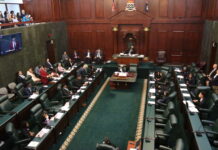
The nation’s finances were at the forefront of the first day of the new Parliament, with the government being questioned over whether the Cayman Islands is still likely to end up in the red at the end of the year.
After Parliament had been officially opened by Governor Jane Owen and the official photograph of MPs and staff had been taken on the steps of the Parliament building, the first session of the 2025-26 Parliament resumed on Wednesday afternoon with the tabling of 10 annual reports, including the 2024 annual reports for the Ministries of Youth, Sports and Heritage; Home Affairs; and Finance and Economic Development, the Office of the Commissioner of Police and the Financial Reporting Authority.
Ministers questioned
While Premier’s Questions was on the agenda for the first time since Parliamentary rules were changed, no questions were asked of new Premier André Ebanks, and instead his ministers faced questions from the opposition.
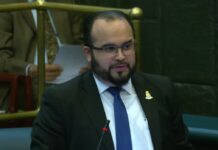
In an intense opening exchange, Minister of Finance Rolston Anglin was asked by Opposition Deputy Leader Kenneth Byran whether the government was still projected to show a deficit, in light of the first-quarter surplus recently announced.
In response, Anglin said that the first quarter of each year “always produces a surplus, because the majority of government’s revenue is received before March 31 due to income earned from financial services and the tourism industry’s peak season”, adding that historically, the last months of the year usually operated at a deficit.
In a reference to the previous administration, Anglin added, “Further, the possibility of a deficit for 2025 can be significantly attributed to the expansionary fiscal policies that were approved during 2024 and the four-month period ending April 30, 2025,” listing spending on areas such as financial assistance to Caymanians, ex gratia payments to seamen and ex-servicemen, pension increases, the cost of living adjustment to civil servants and various building grants as reasons.
Noting an increase in monthly deficits year-on-year in April and May, Anglin said, “The task of the government is to curtail the rate of the deficit trend shown in April and May of 2025 and the remaining seven months of 2025 so that an overall deficit for 2025 is averted. However, this may prove impossible given the nature of the increases mentioned above.”
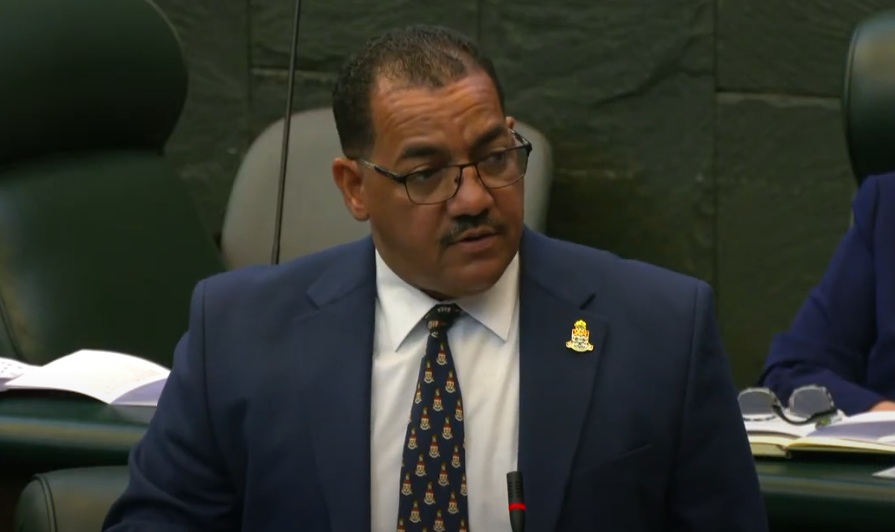
It was then the turn for Bodden Town East MP Dwayne Seymour to quiz Jay Ebanks, minister of planning, lands, agriculture, housing and infrastructure, first on government plans for affordable housing, and then about the East-West Arterial road extension.
Jay Ebanks confirmed that the environmental impact assessment for the extension was completed and published last month. The next stage will be to present the documents to Cabinet, with the timeline for the construction of the road to be decided “once the country’s projected financial challenges have been resolved”.
He added that the government “is fully supportive of building the East-West Arterial road extension”.
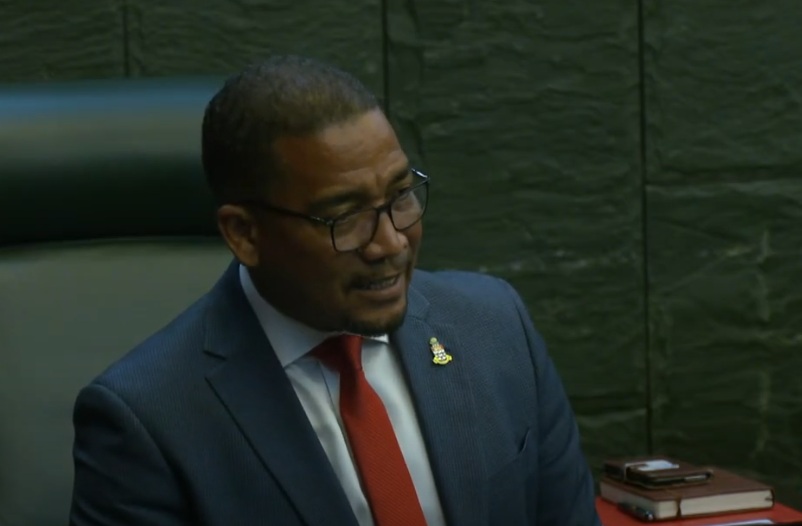
Isaac Rankine, minister for social development and innovation, and youth, sports, culture and heritage, was then asked by Bryan about how many Caymanians are currently receiving rental assistance by the Department of Financial Assistance.
Rankine told the House that as of 7 June, the Department of Financial Assistance was supporting 578 households, 543 of which were headed by a Caymanian while 35 were headed by a non-Caymanian parent looking after a Caymanian child. He added that the ministry was currently reviewing options of adding to social housing stock, such as buying property, using property already owned by the Crown and possibly developing partnerships with the private sector. So far this year, $3.4 million has been spent on rent for those receiving assistance.
In response to a question from Seymour about what is being done to change the reluctance of property owners in accepting tenants with rental assistance, Rankine said that there were sometimes delays in paperwork, but that there was also a campaign being planned to try and address the perception of the system.
Harassment bill scheduled for 2026
The final topic to be discussed was when the Anti-Sexual Harassment Act would come into force, having been passed by Parliament in February. Rankine, now the minister responsible, said that the underlying regulations and policies needed to be developed first, with the full legislation expected to be rolled out by the end of 2026. This led Bryan to ask, “What would take so long, a year and a half, for this very important legislation to be implemented?”
“The most important aspect of the act is that entities formulate a policy and commit to protecting their staff, customers, clients [and] tenants,” Rankine said.
“If the systems and processes are not in place to check compliance, enable legal recourse for the victims to make complaints to an authority or for consequences to be applied, then it will be pointless. The initial step must be to change attitudes and culture in organisations and have the entities recognise their responsibilities. Thus, giving sufficient time for that process is imperative for successful implementation.
“It should be noted that until the act comes into force, citizens still have the ability to make complaints under the Gender Equality Act or the penal code, depending on the severity of the incidents.”
Parliament continues all week.
Related Videos