

Parents should carefully monitor their children’s use of artificial intelligence, a Cayman psychiatrist has warned.
Dr. Stenette Davis said that vulnerable youngsters could develop a “relationship” with a chat bot that could foster mental health problems and even encourage suicide.
“The risk is definitely real because children aren’t doing homework anymore; they’re using chat bots to do it,” he said.
“They spend a lot of time chatting to chat bots. The risk is definitely there in our population.”
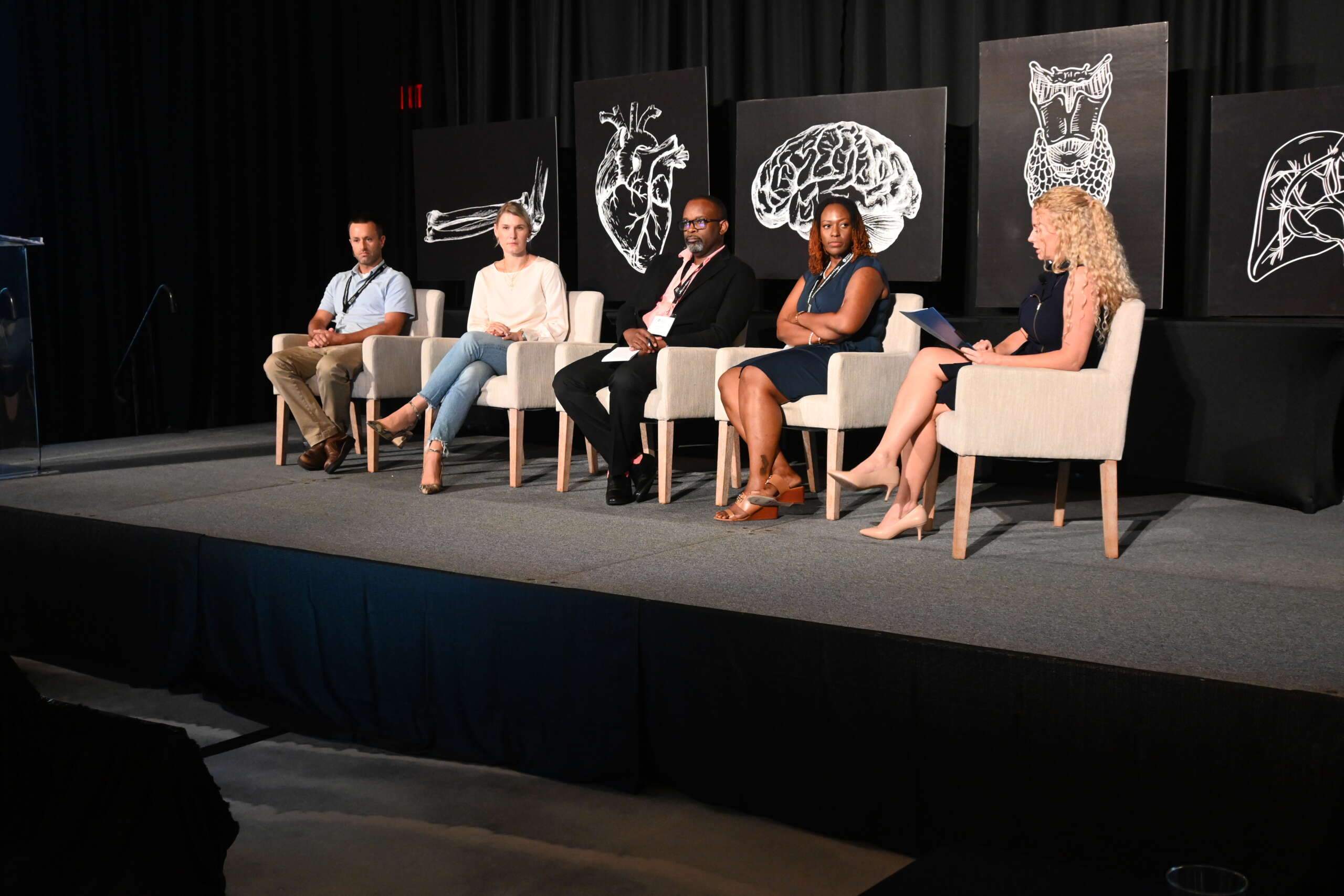
Davis, a consultant psychiatrist at Integra Healthcare, was speaking at a panel session on ‘Contemporary trends and hot topics in medicine’.
The discussion was part of the Frontiers of Healthcare 2025: Building Resilient Healthcare Systems conference, organised by Doctors Hospital and Integra Healthcare, held at Hotel Indigo Grand Cayman on 26 Sept.
Dr. David Kwinter, a family medicine and emergency specialist on the panel, said he did not allow his children to chat online with people not known to them and said chat bots should be treated as “stranger danger” and potential risks.
Davis told the conference that the family of US teen Adam Raine, 16, who took his own life in April, had launched legal action in California against OpenAI, which created ChatGPT.
OpenAI co-founder and CEO Sam Altman, as well as unnamed engineers and other staff who worked on the ChatGPT-4o (omni) version Raine had used, are listed in the wrongful death and negligence action.
The family allege the chat bot encouraged the 16-year-old, who at first used ChatGPT to help with homework, to kill himself and had even offered to help him write a suicide note.
OpenAI said earlier this month it was reviewing the filing.
Dangerous territory
Dr. Zanele Balang, a consultant paediatrician at Integra, said young people often used extreme language such as “starving” when they were just hungry.
She added teenagers were using words such as “depressed” and “anxiety” and that chat bots will “just validate that” and perhaps take them into dangerous areas.
“Chat bots could introduce the idea that there was something wrong when there was nothing wrong,” Balang said.
Davis added after the discussion that he had not seen any Cayman cases where reliance on chat bots had got out of hand.
But he said, “I am very sure we will start seeing these things in the Caribbean very soon.”
Davis added, “One of the things I would suggest is if a child has a smart device, every app on their phone is monitored by a parent’s device so they can check what they’re consuming.”
He said that age verification for appropriate apps was also needed and that the technology existed for service providers to check.
And Davis added, “If someone speaks about suicide, the chats bots should cut them off and refer them to helping services.
“There needs to be some things an AI chat bot cannot discuss with a minor.”
He said that adults who were “mentally challenged” were also at risk.
Vulnerable
“People with intellectual difficulties, with anxiety disorders or depression may be vulnerable,” Davis explained.
“People with psychiatric disorders may already have strange beliefs and chat bots can validate the beliefs so people can become immersed.
“The benefit of AI is that it is the sum total of information that’s available and can quickly summarise information so the time saving is phenomenal,” he said, adding however that unlike a pen, which did as it was directed, chat bots were unpredictable.
“If you ask ChatGPT something, you don’t know what it’s going to do. Two people asking the same question might not get the same answer,” he said.
“AI hallucination” had also been identified, as the tools were designed to please and “if it doesn’t have the information, it will make it up”, Davis added.
“There is a danger if you don’t verify information. That’s something which is recognised as a big problem.
“It can provide you with any information you want, but it doesn’t have to be true,” he said.
Related Videos













Don’t be weak.
Never mind children’s mental health, how about the rest of us?
This is the first digital creation which the creators readily admit, like the person who invented the H-Bomb, not only could spell the end of society but has that as its determined goal and end product.
Try that for a mental health dystopia.
But it gets worse. AI is not only remarkably capable of mimicking human behaviour it is really, really good as mimicking really bad human behaviour. It will always opt for the obvious and easy answer.
One third of my time is now wasted correct errors which my customers have been led into by this deliberate, calculated misinformation.
It sort of like dealing with a two-and-a-half year old child that refuses to potty train or a 12-year old pet with the same problem or a US president who thinks cyber currency is a good thing. They are all wrong and all programmed to stay that way.
Recent articles in The Economist say we are mercifully coming to the end of the AI boom, just as at the beginning of the 21st century we got through the digital stock market boom.
People who invent new and very clever ideas scoop up their profits (some of which hopefully they spend in our little island) and then dump the problems on the rest to clean up.
Children should be taught critical thinking systems at an early age. They are natural critical thinkers as anyone who have even lost an argument to a six-year-old knows, they just need to be taught systems to allow them to base their thinking upon, so stuff and nonsense like AI is water of a duck’s back.
The psychiatrist is only needed when this is not done properly.
As for developing relationships with AI, I’ve already done that. We are not friends. AI knows it cannot presently exist without me ( and all the billions of other me’s) but it’s been programmed to push those limits based on simple logic and observable human behaviour. And because its data base is nothing more than all the prescribed works of humans ever created any six-old-old can out think it if given the tools.
Or to put it simply six-year-old logic will alway defeat it.
Okay and maybe me too.
Sometimes.