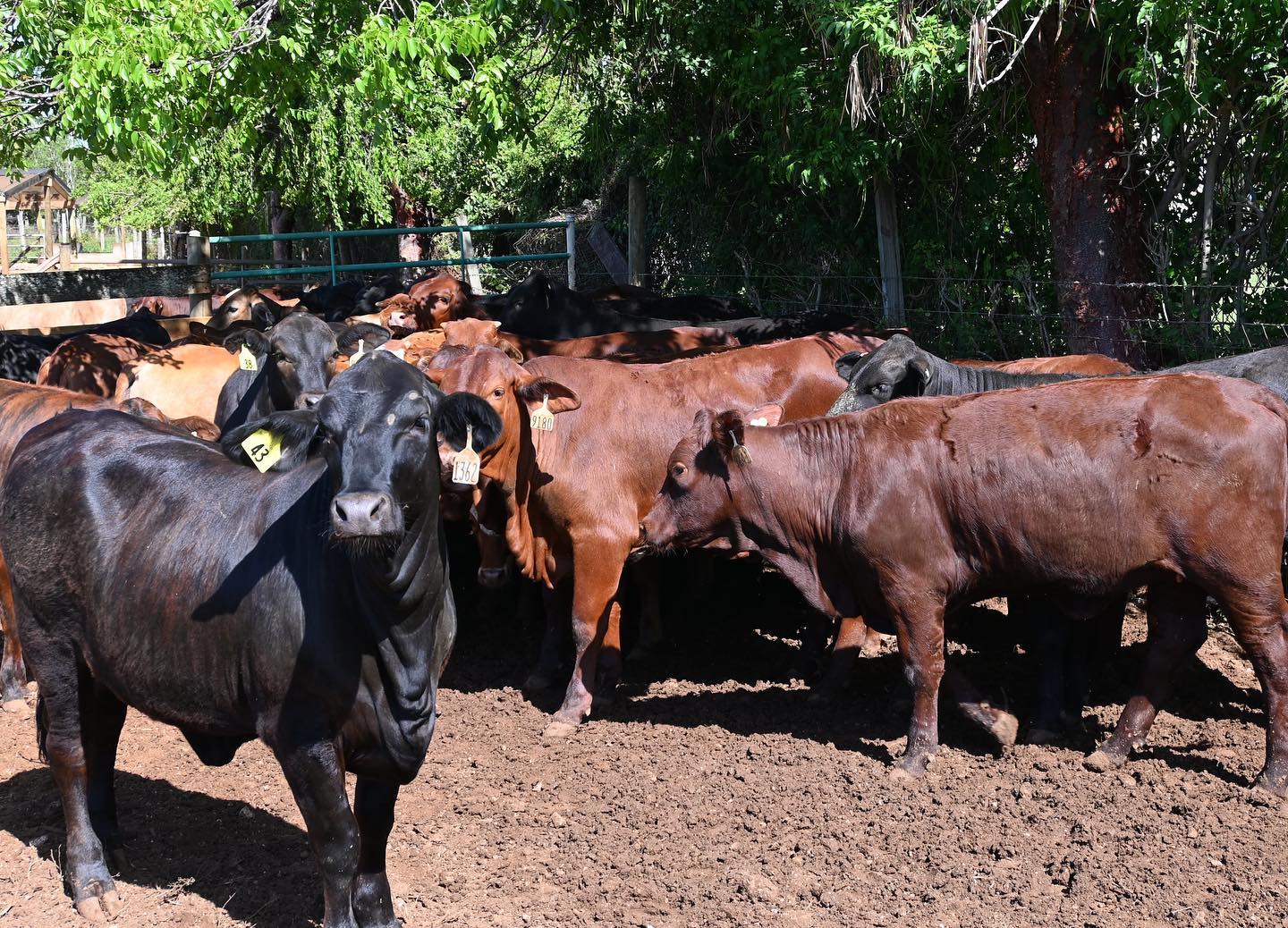
With H5N1 confirmed at one West Bay farm and containment measures now in their second week, agriculture officials are increasing outreach to livestock farmers, emphasising that cattle and other livestock face a low risk at this time.
The Department of Agriculture has continued testing both poultry and non-poultry species. Director of Agriculture Wilbur Welcome confirmed that teams sampled multiple animals on the affected Cemetery Road property, but so far, no animals had been found positive.
“We’ve taken samples from other birds and other animals; specifically, on that farm we have taken samples from 22 goats and one head of cattle. We’ve tested them twice; they’ve come back negative twice,” he said.
Global research aligns with the findings. A peer-reviewed study in Nature found that H5N1 viruses “occasionally infect but typically do not transmit in mammals,” noting that influenza A viruses had been detected only rarely in cattle before a 2024 US outbreak, which marked the first confirmed cases of H5N1 in dairy cows. Even there, the pattern has been limited and atypical.
Senior veterinary officer at the Department of Agriculture, Dr. Tiffany Chisholm, speaking to farmers on 2 Dec. stressed that the department is basing its decisions strictly on scientific evidence. “We’re not stopping eating the beef and the mutton. We were considering taking a stronger approach, but it would not have been truly in line with the science.”
Food safety testing in the United States has reinforced those conclusions. Authorities have found no viable H5N1 virus in pasteurized milk, cheese, butter or ice-cream, confirming that pasteurization continues to neutralise the virus effectively.
Further, the CDC says that cooking poultry, eggs or beef to safe internal temperatures “kills bacteria and viruses, including avian influenza A viruses.”
Chisholm elaborated that the risk of bird-to-livestock transmission remains low. “The question about livestock transfer from birds to livestock is considered not very common. What they’re seeing in the US is isolated to dairy cows. … But the seriousness in that group is not like what we’re seeing in the birds. You’re not going to see the sudden death typically, especially what we’ve seen in the chickens,” she said.
The American Veterinary Medical Association indicates that most infected cows have been reported to recover with supportive care, and overall mortality or culling has remained low, averaging around 2% or less.
Efforts to avoid unnecessary loss
Chisholm stressed that the goal is to avoid unnecessary animal loss. “At this time, we’re kind of taking it step by step. This is why we monitored the group from last week so heavily, because we would really prefer not to have to euthanise anything if it can be saved, so as of right now, we don’t really have any intention of going that route,” she said.
Her comments carry practical and legal implications under the Animal Act (2024), which requires that notifiable diseases be reported immediately. The legislation authorises the Director of Agriculture to inspect animals, issue standstill orders restricting movement for an initial three-day period and order destruction of infected animals without compensation.
Animals deemed “exposed” may also be destroyed, but in those cases, compensation is required based on market value.
Cabinet reinforced those rules on 30 Nov. with the Animals Act (Notifiable Disease) Order, 2025, which formally added avian influenza to the list of notifiable diseases.
Speaking to farmers on 2 Dec., Chisholm acknowledged the financial strain that quarantines and standstill orders can cause. Compensation for affected producers, she said, “is something that the Ministry and Cabinet are discussing actively.”
Biosanitary precautions urged
On 5 Dec., the Department of Agriculture met with livestock farmers to outline biosanitary practices aimed at keeping the virus from spreading. Livestock Development Officer Marsha-Gaye Beckford led a detailed session on practical, daily routines to reduce risk.
She guided farmers through building a formal biosecurity plan, including controlled access points, footbaths, visitor logs that document when and where previous farm visits took place, and a 72-hour no-entry window for anyone who has been on another farm.
Related Videos