

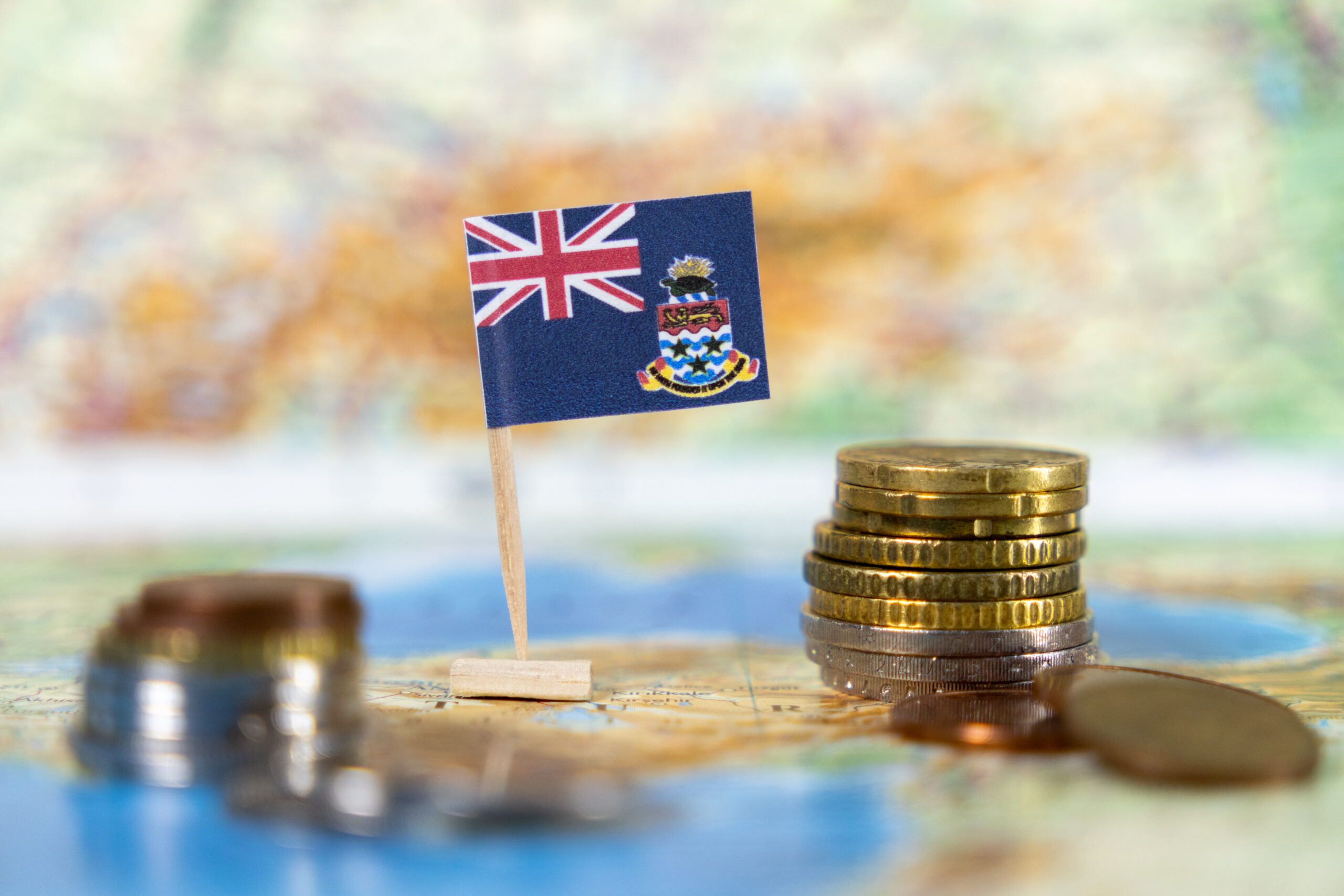
Recent data from the Economic Commission for Latin America and the Caribbean shows that Cayman’s economy is growing more quickly, with lower debt levels, than most of its neighbours.
On 16 Dec. the commission, which is a UN body, published its ‘Preliminary Overview of the Economies of Latin America and the Caribbean 2025’. The comprehensive report doesn’t mention Cayman yet it paints a detailed picture of other English-speaking, Caribbean island economies that allows for useful comparisons.
Economic growth
Data from both CIBC Caribbean and the Economics and Statistics Office estimate Cayman’s 2025 economic growth at 2.6%, which is higher than the three-largest English-speaking Caribbean island economies. The commission calculates that Jamaica’s economy grew by 1.5% in 2025, Trinidad and Tobago expanded by 1.3% and the Bahamas by 2.1%.
There are some outliers, such as Barbados, which grew at 2.9%, but in general Cayman grew faster than other major English-speaking Caribbean islands’ economies in 2025. The commission estimated the average growth for the region – on GDP-weighted basis –at 1.9% for 2025, which was below the global economy’s 3.2% expansion during the same year.
Looking ahead to the full year for 2026, CIBC Caribbean believes Cayman’s growth will slow to 2.2%. The commission also sees lower regional growth in 2026, with Barbados forecast to expand at 2.1%, the Bahamas at 2.0%, Jamaica at 1.4% and Trinidad and Tobago at 0.9%. Those lower numbers will bring down the commission’s forecast for the English-speaking Caribbean to 1.8%, while the rate of global growth is expected to fall to 3.0%.
Debt drags down growth in the Caribbean
One factor weighing down on the English-speaking Caribbean economies is their heavy debt loads. Public debt in the Caribbean stood at an average of 68% of GDP in 2025. “Fiscal space remained limited amid persistent deficits and declining but still-high debt levels,” the report said.
In simple terms, repaying international creditors means making tough decisions in the local economy. “Fiscal balances in the Caribbean are expected to worsen,” said the report.
“Although some countries managed to improve their fiscal balances by increasing tax revenue or curbing public expenditures, others faced additional spending pressures linked to greater interest payments, especially on debt denominated in foreign currency or owed to a large share of foreign creditors, which represents a source of macroeconomic vulnerability.”
In comparison, Cayman’s public debt stood at just 6.9% of GDP in 2025, with CIBC predicting the same for 2026. That lighter debt profile is a competitive advantage for the Cayman Islands. But unlike other Caribbean island economies, it is unable to raise revenues through direct taxation and instead must resort to increasing fees or cutting costs.
Related Videos











Finance is being driven into the ground with the current government and its very sad to see.
With population heading toward the 100,000 Cayman can no longer rely on the fee for service approach to funding our public utilities and services or the lack of them.
As Islanders we have resigned ourselves to living year-to-year in reliance upon the world’s need for our services both financial and tourist.
But the world is changing rather fast and we need to respond to those changes to protect the interests of this island’s democratic government and the people living here under it.
Essential services have always been a public domain and those countries dealing with the balance between the public demands to keep things running and the requirement for private capital to be protected have thrived and those that haven’t, well most of them cease to exist.
Comparing our growth to that of other siland economies and patting ourselves on the back for being number one is a fairly useless exercise. It would be quite odd if we were not and it is quite odd we only only #1 by a short head.
If we want to put our economy into an international perspective, we would be better to consider ourselves what we really are which is an ex officio extension of the City of London — and I don’t mean the borough or metropolis – I mean the City itself — a part of the globe that has been a global trading centre since pre Roman times and somehow still is.
Right now, attempts by the government of the UK to impose oversight on vital branch plant operations of The City including ourselves, while it is doomed to ultimate failure, emphasizes a point, sometimes lost. The City continues to mediate more wealth in more someone politically disparate parts of the world than any other institution anywhere ever has.
As to whether it always will, that depends on a lot of things including this Island and our need to accept, rather than marvel at, our leadership and show that leadership by simple example.
Without presuming to tell anybody how to deal with problems they have likely got a far better grasp on that I, Cuba is about to become a major problem, not an immigrant problem, a health problem. Cutting off fuel is going to shut down health care and thousands are going to get very ill and die. It is starting already with dengue.
The US is pushing Cubans back into the middle ages with a political agenda which probably makes sense if you live in DC but if you are a neighbour is just worrisome.
During Covid we adopted the classic, “shutting the city gates” solution to plague. But it cost us dearly. and it did as much to postpone as to prevent. Unvaccinated Islanders were getting Covid months, sometimes years after, the storm had passed the rest of the world.
The best assurance against foreign incoming infection is a healthy vaccinated population especially our infants and elderly.
Both prenatal and perinatal care, if done using the tools available today, is a magnificent and very inexpensive barrier to disease and the most certain investment in social wellbeing — low police costs — we can achieve.
Vaccines are part of that.