

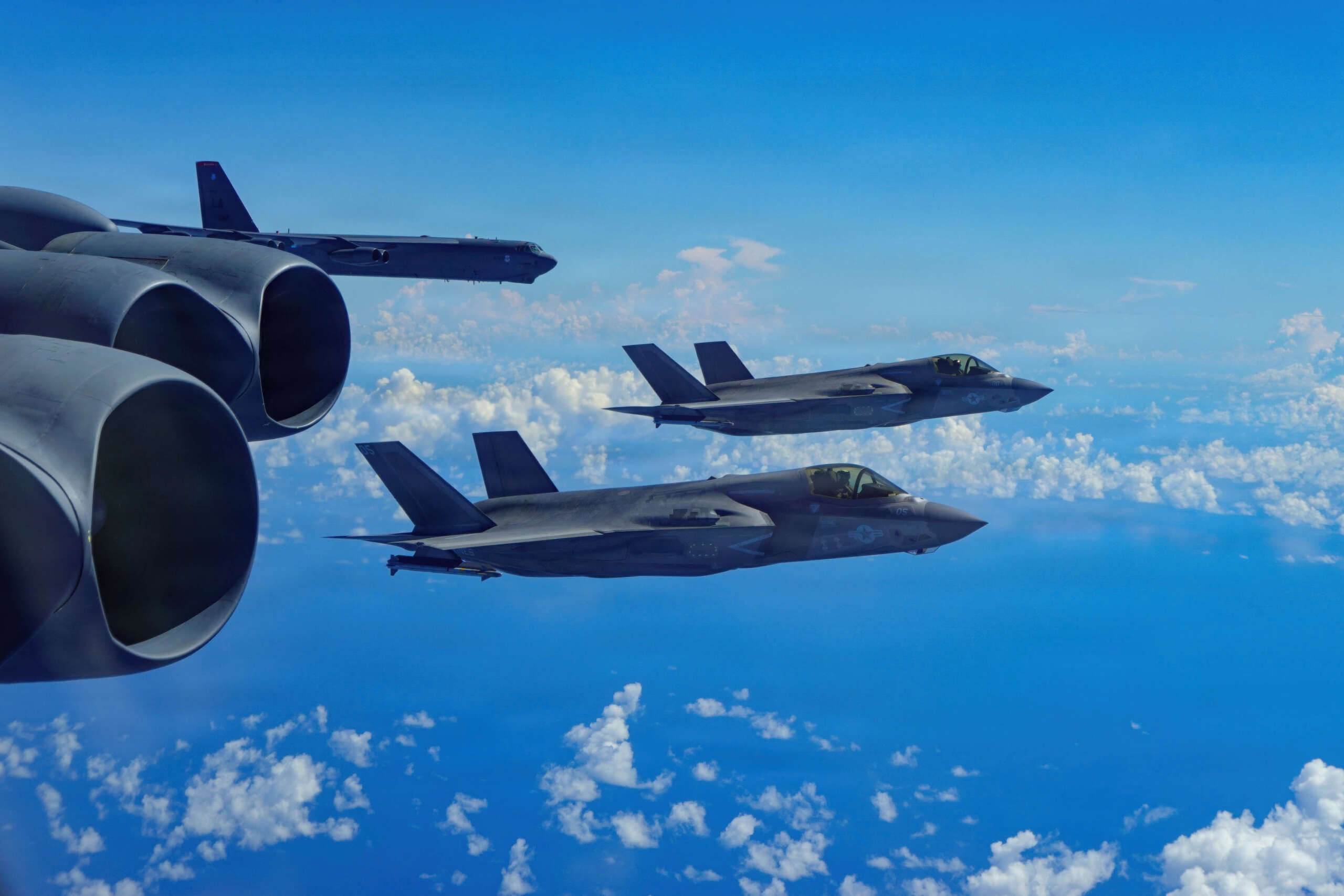
Over the past two months, more than 60 people have been killed in US air strikes against what it has described as narcotics traffickers in the Caribbean.
The deployment has raised fear and suspicion across the region amid confusion over the wider motives of the Trump administration. While some support a tougher stance against gangs that traffic guns and drugs, others fear a breach of national sovereignty and accuse the US of extrajudicial killings.
The Compass takes a closer look at the biggest US military deployment in the Caribbean in three decades and asks what’s behind it and what it means for Cayman and its regional partners.
This article is based on interviews with regional and international foreign policy experts, as well as reporting from the BBC, The New York Times, Reuters and The Washington Post.
What is happening?
Since the beginning of September, the US has undertaken a series of air strikes against suspected drug traffickers off the coast of Venezuela.
Following the first strike on 2 Sept., US President Donald Trump claimed 11 people were killed, and he posted a short video clip of a small vessel appearing to explode in flames. At least nine similar strikes have followed in the western Caribbean, as well as four in the eastern Pacific.
While the US says it is targeting “narco-terrorists”, it has provided no evidence that its victims were transporting drugs or any legal justification for the attacks. Reports in Colombia and Trinidad suggest that fishermen may have been inadvertently killed in the strikes.
The UN’s human rights chief Volker Türk said on 31 Oct. that such attacks were a violation of international human rights law.
“Over 60 people have reportedly been killed in a continuing series of attacks carried out by US armed forces … in circumstances that find no justification in international law,” he said.
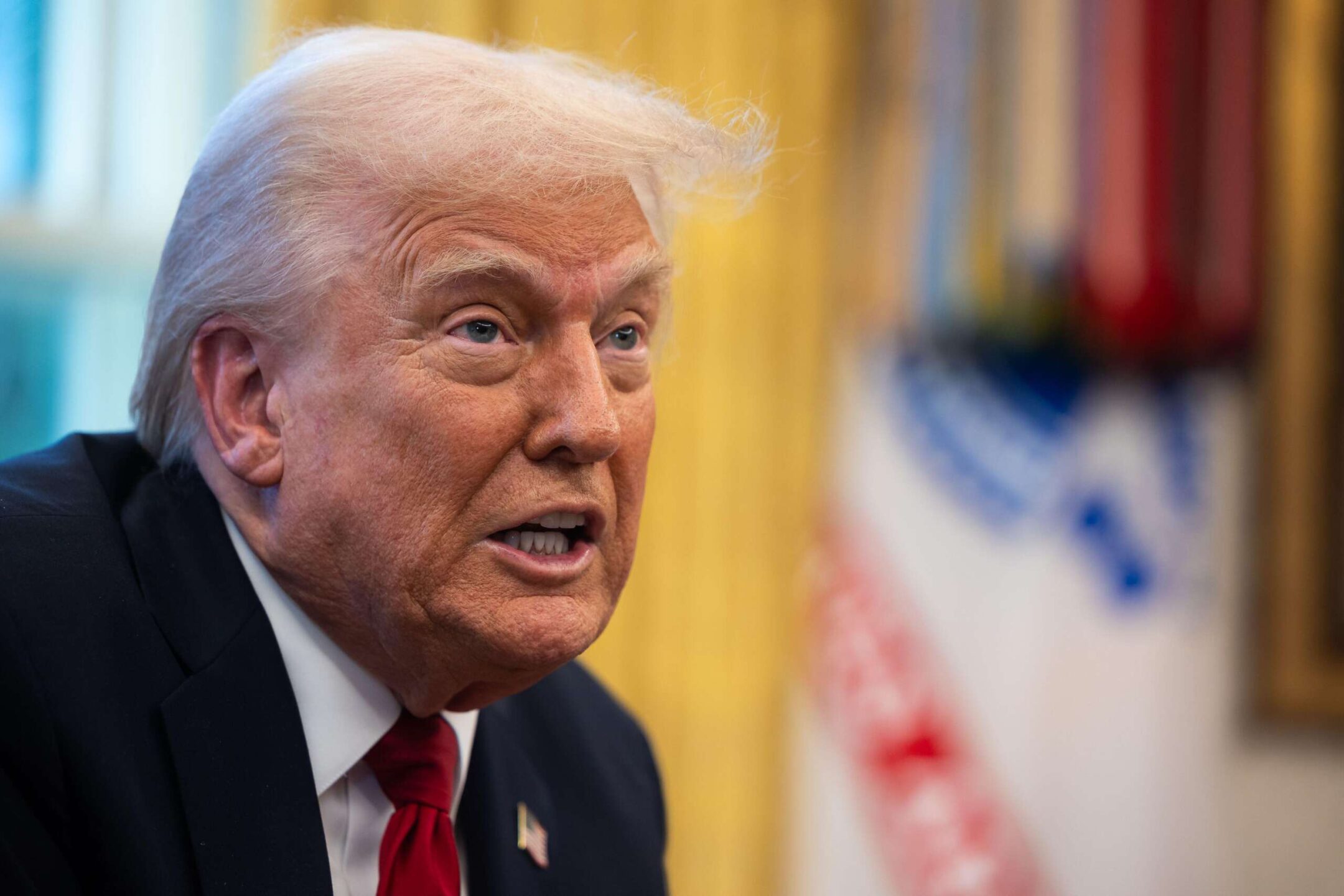
Trump has justified the strikes as an attack on drug traffickers that are poisoning Americans.
He said, “I think we’re just going to kill people that are bringing drugs into our country, OK? We’re going to kill them. You know, they’re going to be, like, dead.”
What does the US deployment in the Caribbean look like?
The US military build-up in the Caribbean is now the largest since 1994, when the US sent troops into Haiti as part of ‘Operation Uphold Democracy’.
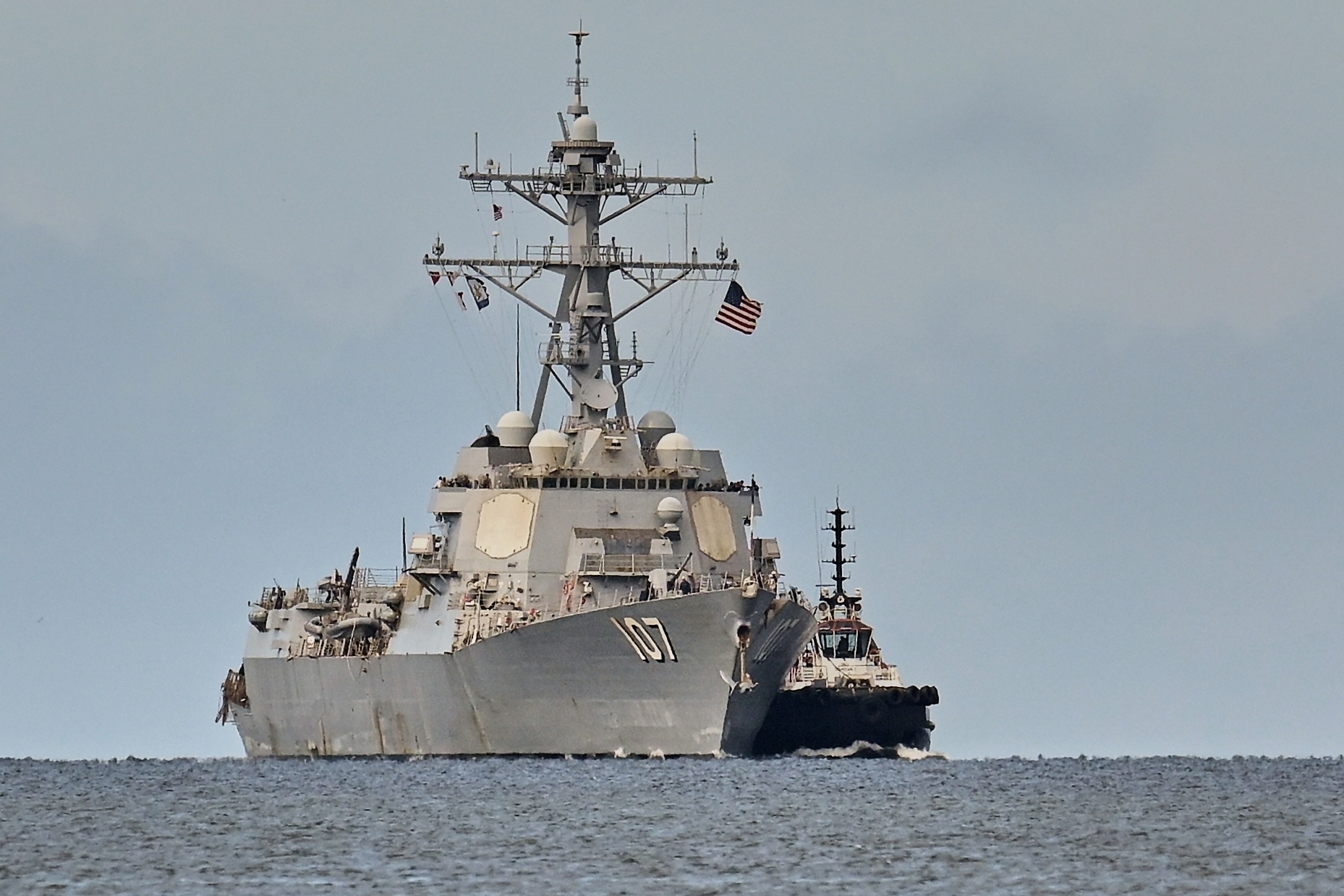
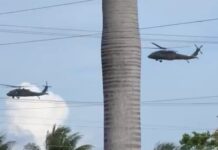
The recent build-up began in August with the arrival of warships, a nuclear-powered submarine, fighter jets and spy planes, according to reporting by Reuters. Military bases in Puerto Rico and the US Virgin Islands are reportedly being enhanced, and the USS Gerald Ford aircraft carrier group is being deployed. At the end of last month, an estimated 10,000 US troops were in the region.
Does the US plan to invade Venezuela?
Trump has previously suggested that ground strikes in Venezuela could be next. However, he accepted in a recent 60 Minutes interview that that was unlikely, while insisting that Venezuelan President Nicolás Maduro’s “days are numbered”.
There is a more general acceptance from the Trump administration that it would need to seek approval from Congress for a ground deployment in the South American country.
What’s the wider US motive?
The justification of going after cartels is seen by many as a smokescreen for a wider goal of regime change in Venezuela. Other observers believe even that aim is viewed as a stepping stone to toppling the communist dictatorship in Cuba and addressing the growing influence of China in the region.
Peter Wickham, director of Caribbean Development Research Services, told the Compass he believes the military build-up is an intimidatory tactic aimed at provoking the capitulation of the Maduro regime in Venezuela. He believes talk of targeting narcotics traffickers is little more than a “useful excuse”.
Rebecca Bill Chavez, president and CEO of Inter-American Dialogue, said tackling drug trafficking in this way represents a “sharp departure” from decades of regional cooperation, embedding regional law enforcement on board US ships to ensure respect for sovereignty. She said the current approach signals “militarisation over partnership” and risks alienating regional allies.
Reporter Anatoly Kurmanaev, in an analysis of the conflict for The New York Times, believes the policy aim is to topple Maduro and argues that Cuban-American Secretary of State Marco Rubio is driving it with one eye on Cuba.
Alejandro Velasco, associate professor at New York University, who teaches courses on contemporary Latin America, says the Latin American policy is “primarily Marco Rubio’s ideological project”, motivated by a desire to oust the government of Venezuela and weaken the allied government of Cuba.
Does the US have authority for its air strikes?
Trump argues that he doesn’t need congressional approval for strikes against narcotics traffickers, which the US has designated as being quasi-terrorist organisations. The rationale is similar to the US justification for the global ‘war on terror’ that followed the 11 Sept. 2001 attacks.
“If you are a narco-terrorist smuggling drugs in our hemisphere, we will treat you like we treat Al-Qaeda,” US Secretary of War Pete Hegseth said in a social media post. “Day or NIGHT, we will map your networks, track your people, hunt you down, and kill you.”
However, no one in the Trump administration has publicly provided a legal basis for its action.
The BBC reported that a memo sent to the US Congress, which was leaked, said it had determined the US was in a “non-international armed conflict” with drug cartels.
Republican senator Rand Paul has publicly questioned the policy, suggesting the US needs congressional approval for strikes of this kind, saying the war on crime is a law-enforcement matter.
“So far, they have alleged that these people are drug dealers,” Paul said. “No one said their name. No one said what evidence. No one said whether they’re armed. And we’ve had no evidence presented. So, at this point, I would call them extrajudicial killings.”
Amnesty International has accused the US of “murder”.
“In the last two months, the US military’s Southern Command has gone on a murder spree by following the Trump administration’s illegal orders,” said Daphne Eviatar, Amnesty International USA’s director for human rights and security. “The administration has not even named its victims, nor provided evidence of their alleged crimes. But even if they did, intentionally killing people accused of committing crimes who pose no imminent threat to life is murder, full stop.”
Daniel Noroña, Amnesty International USA’s advocacy director for the Americas, added, “The Caribbean and eastern Pacific are not warzones where the US military can bomb boats the White House claims carry enemies.”
Who supports the action?
The Venezuelan government and its autocratic leader Maduro are deeply unpopular, and there is significant support for regime change. A notable supporter of the US action is recent Nobel Peace prize recipient María Corina Machado who praised the action as “absolutely correct”.
The Venezuelan opposition politician, who is in hiding amid a crackdown from the Maduro regime against his democratic opponents, made a video statement saying he was “not a legitimate head of state”, and that Trump’s actions would “protect millions of lives of Latin American citizens and certainly Venezuelan citizens”, according to Politico.
Calling Maduro “the head of this narco-terror structure that has declared war on the Venezuelan people and to democratic nations in the region,” Machado said criminal structures sustained the regime with the trafficking of drugs, gold, weapons and people.
“You need to cut those cash flows,” she said. “Maduro started this war, and President Trump is ending that war.”
Machado has been an influential lobbyist behind the scenes, persuading the Trump administration to take a tough stance against Maduro.
Another supporter is Trinidad and Tobago Prime Minister Kamla Persad-Bissessar, who has blamed drug cartels for the violence on the Caribbean island, which is close to Venezuela.
“The pain and suffering the cartels have inflicted on our nation is immense. I have no sympathy for traffickers; the US military should kill them all violently,” she said in a statement issued in September.
Which Caribbean governments are against it?
There has been fear and outrage in some quarters, as well as a sense of powerlessness in a region that lacks a coordinated military or even coast guard.
CARICOM nations signed a joint communique affirming that the region is a “zone of peace” that should remain free from military intervention.
While the leaders expressed concern about drugs and weapons trafficking in the region, they insisted this should be addressed “through ongoing international cooperation and international law”.
Trinidad and Tobago declined to sign the joint statement.
Barbados Prime Minister Mia Mottley – perhaps the most recognisable leader in the region – condemned the US action.
“We are facing … an extremely dangerous and untenable situation in the southern Caribbean,” she said, according to The Washington Post.
“Peace is critical to all that we do in this region, and now, that peace is being threatened,” she said.
How has Cayman responded? Does it affect us at all?
The UK, which handles diplomacy and foreign relations on behalf of the Cayman Islands, has been reticent to make any comment on this issue.
Asked by the Compass about Trump’s strikes on Venezuela during a press conference in Cayman in September, UK Overseas Territories Minister Stephen Doughty sidestepped the question.
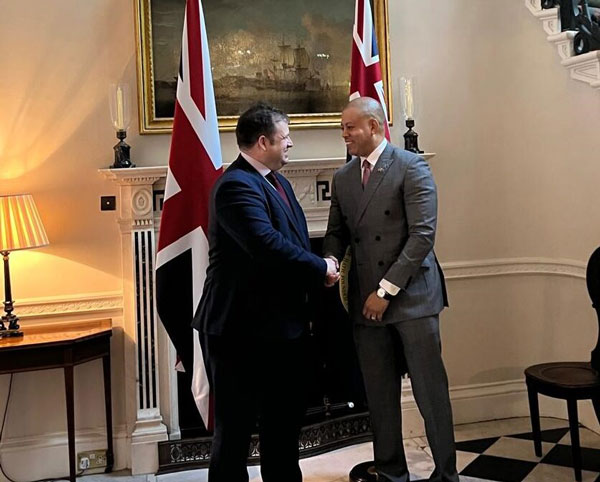
“I’m not going to comment on individual US operations or their relations with individual countries,” he said. “That’s for the United States. But what I will say is we do share the wider concerns, not only that the US has, but many of the independent Caribbean states and other overseas territories have.”
He went on to cite drug and gun trafficking and illegal migration among key regional concerns.
What about fishermen?
There are reports that Trinidadian and Colombian fishermen have been killed in the strikes. But sorting fact from propaganda has proved difficult.
Nonetheless, the military actions have frightened anglers in the region.
“Everybody’s terrified,” Gary Aboud, corporate secretary of the non-profit Fisherman and Friends of the Sea in Port-of-Spain, told The Washington Post. “There’s no law and order on the sea.”
Anderson Zoe, a fisherman in the northwestern village of Toco in Trinidad, said, “Fishers are really very much concerned.”
“There is no press-pause button or reconciliation if you are targeted and you are suspected and you are blown out of this world,” he added.
Cayman lacks the kind of wide-ranging commercial fishery industry that would be threatened by action as far afield as Trinidad, and law enforcement officials here expressed doubt that the US strikes will impact Cayman at all.
But the climate of fear impacting fishermen has spread to Cayman. Charles Ebanks, an established local angler, said there were still a handful of boats that ranged as far as the Central American coast. He added that he had skipped a deep sea fishing tournament off Jamaica this year.
“To get shot out of the water by US Coast Guard going to Jamaica to fish is not worth it,” he said.
Does this help with the war on drugs in the region?
There’s no question that the Caribbean has a drug and gun trafficking problem.
The Compass reported extensively on the illicit trade last year.
At the time, Lieutenant Colonel Michael Jones, head of the CARICOM Implementation Agency for Crime and Security, said there was a significant challenge in the region with transnational organised crime.
He cited a nexus of gangs, with ‘franchises’ throughout the Caribbean, that were responsible for trafficking weapons, narcotics and even people. Jones advocates for a regional coast guard to help address the issue across a porous marine border with territorial waters shared by numerous under-equipped islands.
Anthony Clayton, of the University of West Indies and the lead author of Jamaica’s national security strategy, said the region, in part, has itself to blame for failing to properly collaborate on security and intelligence.
“We could do a lot more than we’re currently doing to shut down some of the illegal trafficking, but this is something that countries have so far failed to do,” he told the Compass.
Wickham said he is unconvinced that the US action will have any lasting impact in the war on drugs at all.
“The US drug problem does not originate in Venezuela, and Trinidad’s issues with crime are considerably more complex than their PM would have us believe,” he said.
What about innocent victims?
If there have not been innocent victims already, the longer the US action continues, the more likely that becomes.
Clayton argues that the threat of organised crime and drug trafficking in the region is real. And he sympathises with Trinidad, which he said is facing surging organised crime linked to Venezuelan gangs. Despite that, he said, there is deep concern across the region.
“If it is cartel guys on a boat packed with drugs, then nobody is going to be too sorry, but at some point, inevitably, they’re going to sink a leisure craft or something and say, ‘We thought it was trafficking drugs’, and it turns out that actually it wasn’t. So people are not very happy with the way this is going,” he said.
Related Videos








No sympathy for drug smugglers or the Maduro regime.
The boats intercepted were fast boats of the type used by the cartels, not fishing boats.
Maduro lost the last election by a substantial margin, he declared himself the winner anyway and shot/arrested anyone who disagreed.
A good friend used to live in Caracas (capital of Venezuela) many years ago and described it as as fabulous and well off country. It has the largest oil reserves in the world.
Yet it’s been destroyed by years of corruption and socialism.
No love lost for the Maduro regime in Venezuela as his bad acts are legion and he and his predecessors have ruined a once vibrant and successful country.
That said, the current U.S. Administration is acting without any regard to the rule of law in both domestic and foreign theaters of operation. Like Maduro, Trump shares many autocratic traits and worse yet has an utter disregard for the U.S. Constitution and the country he is seeking to ruin.
AGREED!
Trying to solve this problem with the same tactics that have been used for decades is worthless. These drug traffickers are animals. They gain power through murder and lawlessness. Their elimination is the only option. Finally something is being done.
Drug dealers would not exist without a market. The USA happens to be, traditionally, the largest market for drug use. Imagine what a difference it would make if the US would spend the billions of dollars which a major military deployment costs in offering programs for drug users to get clean and getting homeless people off the streets.
This military buildup has less to do with stopping narco trafficking than launching an invasion, which while in progress, will give Dictator Trump the opportunity to extend his second term by declaring martial law during wartime and canceling 2028 elections. Project 2025 is already in progress and its goal is to secure a 3rd term for Trump, if he survives his hidden health issues.
International law declares that these actions in international waters is illegal but US doesn’t care. MAGA “policies” are based on lies and hypocrisy and it’s ironically hypocritical that the country with the most drug users is blaming the countries which supply it’s cravings.
Clean up your own home first Trump! But no, that would be the tact of a leader with a brain and a heart, not Trump or his svengali Steven Miller!
People who cheer on these illegal actions should be careful with their support. In the blink of an eye, a deranged and unpredictable US President could decide to target nearby “tax havens” or alleged “transhipment points” with embargo actions which could ruin their economy. Did he care that Canada and Denmark are sovereign countries when he spoke of a 51st state or “taking Greenland”? You think that a little Brit flyspeck island would be immune if Rubio and Miller convinced Trump, somehow “the Caymans” are a threat to “US lifestyle”?
It doesn’t have to make sense for those guys.
Every 9 or 10 months as many young Americans die from drug overdoses as died in the entire Viet Nam war. It was far past the time when drastic action was needed. Fiddling while Rome burns is never the right choice.
While our immediate concern must be for our own pleasure and commercial boat owner’s safety, these are attacks on a sovereign national’s shipping in the high seas without the authority of US congress.
Or to put it more simply, a unilateral action by presidential decree against one particular country that has leadership he opposes.
It is very clear the United States intend to establish a strong sphere of influence limited to north, central and south Americas and the region’s contiguous islands as it retreats from power in Asia and Europe.
It is also vey clear that military aggression is both the most expensive and least long term effective means of geographic control.
This is 19th century gunboat diplomacy of a sort last practiced in this region by the US when Teddy Roosevelt was president and the Spanish were the enemy.
Military action against one sovereign nation, as we discovered inEurope in 1938, usually presages similar action against another. What President Eisenhower termed the Domino Effect.
British failure to protest what amount to piracy on the high seas, or a return to Elizabethan privateering in our waters, is a reflection of that island country’s own altered priorities since it split from the European Common Market.
Nontheless it remains the UK’s job to manage our foreign policy on our behalf and a weak response to illegal international action always triggers more of the same.