

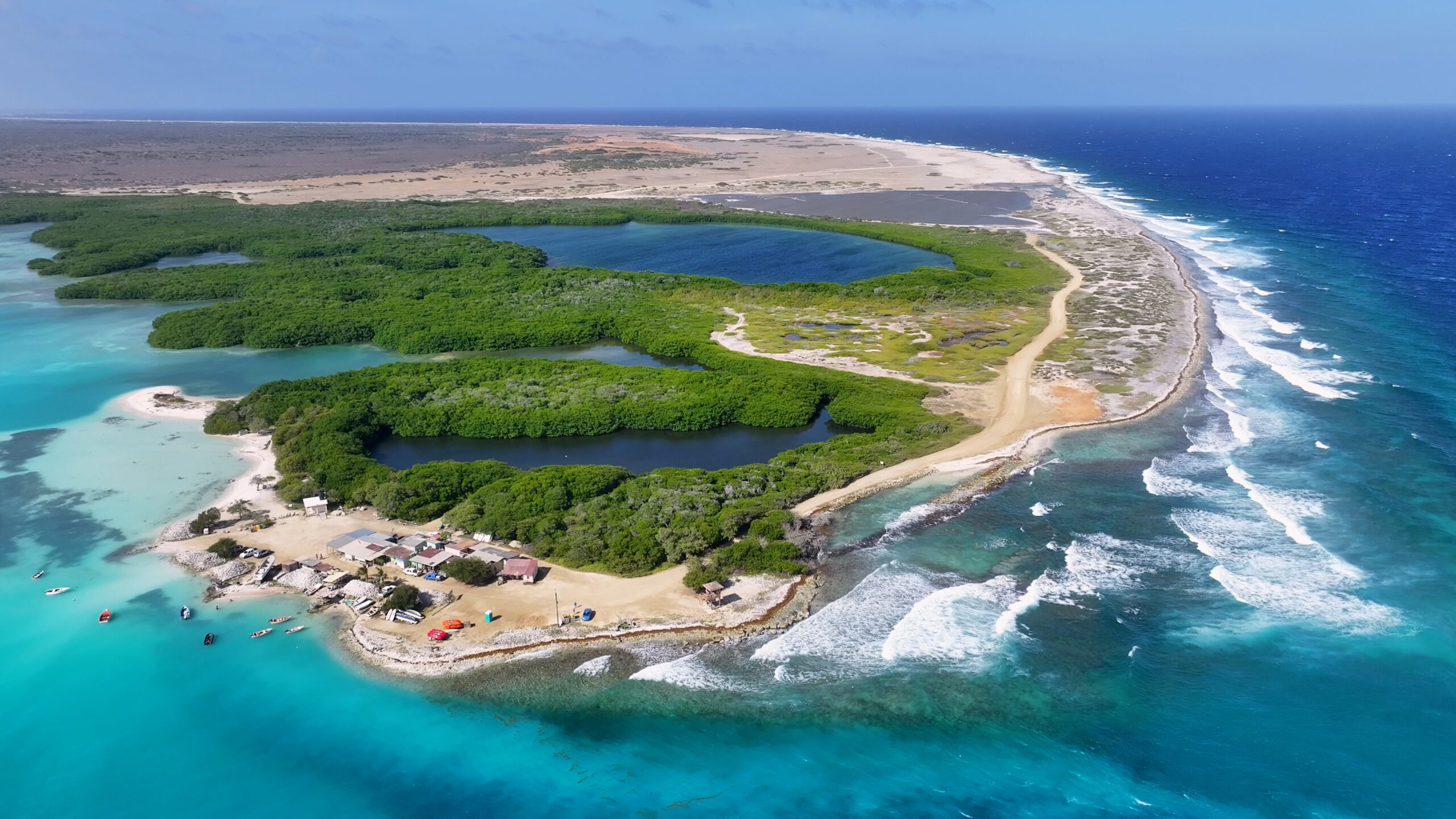
A landmark court judgment has put new focus on the responsibilities of major European powers to protect small island territories in the Caribbean from the impacts of climate change.
A Dutch court ruled on 28 Jan. that the Netherlands violated the human rights of residents on the tiny island of Bonaire, a Dutch territory, by failing to implement adequate emissions policies or adaptation measures.
The district court in The Hague, Netherlands said the government must take stronger action to protect the island, which is vulnerable to sea-level rise, loss of coral reefs, storms and flooding.
The successful lawsuit, brought by eight residents of Bonaire and Greenpeace Netherlands, could pave the way for similar action in courts around the world.
The ruling held that “the inhabitants of Bonaire have been experiencing the negative effects of climate change for many years and to an increasing degree” and that it was “not disputed that by 2050, a significant part of the low-lying areas of Bonaire will most likely be inundated.”
The court ordered the Dutch government ensure the drafting and implementation of a national adaptation plan covering Bonaire, according to a breakdown of the judgment on the Climate Court watch website.
It also ordered the state to incorporate absolute economy-wide emission reduction targets into national legislation. At the same time, the court emphasised that it could not order legislation with a “specific, concretely defined content”.
The judgment states that “the mitigation and adaptation measures as a whole taken by the competent authorities in relation to the inhabitants of Bonaire do not meet the obligations that the State has assumed in a UN context.”
The ruling acknowledged, “Climate change is a complex global problem that poses a serious threat to people without it being clear who exactly is causing what damage. This lack of certainty, however, does not allow countries to point fingers at each other while failing to take sufficient measures themselves.”
Legal experts told the ‘New York Times’ that the case solidifies the concept of state responsibility to its citizens to protect them from the economic and environmental impacts of climate change.
Potential implications for Cayman
The implications of that principle extend beyond the Netherlands, raising questions for Caribbean territories, including the Cayman Islands, which face similar climate risks but operate under different constitutional arrangements. Bonaire, one of the Dutch ‘ABC’ islands – along with Aruba and Curaçao – in the western Caribbean, is home to around 27,000 people and is famous for its snorkelling and scuba diving.
Bonaire is officially part of the Netherlands, meaning there is a more direct burden of responsibility for the Dutch government.
Responding to questions from the Compass, Cayman Islands Governor Jane Owen said climate mitigation and adaptation are priorities discussed regularly between the UK and its overseas territories, including at Joint Ministerial Council meetings with UK ministers.
She emphasised that while environmental responsibility in Cayman is devolved, the UK continues to provide funding, technical advice and capacity-building support.
Owen highlighted a decade worth of funding form the UK focusing with a particular focus on climate mitigation and adaptation. She highlighted support for storm surge modelling, coral reef protection and seabed mapping among a number of recent projects.
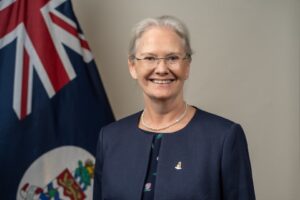
Current UK support includes provision of flood sensors, advice on emissions target setting and access to green finance, she added.
“As Governor, I value this collaborative approach to addressing shared climate security challenges and recognise the important role the UK can play in providing technical advice to complement the expertise within the Cayman Islands,” she said.
Global accountability
Marla Dukharan, a Caribbean economist who has written about climate justice, told the Compass that all small islands, like Cayman and Bonaire, combined account for less than 2% of global emissions, yet face some of the greatest impacts. Cayman is already facing coastal erosion, loss of coral reefs and increased threat from extreme storms, some of which has been attributed to climate change.

While Cayman’s territorial relationship with the UK is very different to that of Bonaire and the Netherlands, Dukharan said the case was instructive and correctly framed the issue in terms of the human rights of frontline victims of climate change, and the responsibilities of countries that have historically benefited from carbon-intensive development.
“We really need the major polluters to take action according to their historical and contemporary contributions to the stock of carbon and greenhouse gasses, and according to their ability to pay,” she said.
Cayman has a Climate Change Policy and a National Energy Policy, but sustainability groups say implementation of these has been slow.
‘Delayed action’
Dejea Lyons, executive committee member of Sustainable Cayman, said the Bonaire judgment was a landmark moment for climate justice in island territories.
“In Cayman, we are already living the consequences of delayed action – our coral reefs have collapsed to just 6% live coral cover, undermining food security, coastal protection, tourism and community resilience,” she said in a statement to the Compass.
“Both the Cayman Islands Government and the UK Government have a responsibility to protect people in this territory from foreseeable climate harm. Cayman must not be left exposed by gaps between policy and action.”
James Whittaker, president of the Cayman Renewable Energy Association, drew similar conclusions. Despite policies that work on paper, he said, Cayman was not doing enough to implement effective policies on climate change and energy.
“The UK government has a responsibility to ensure Cayman and other [UK Overseas Territories], who are on the front line of the negative effects of climate change, have all the resources needed to adapt and mitigate the negative effects on our future generations.
“This includes ensuring the Cayman Islands Government is held accountable to fully and effectively implement our National Energy and Climate Change policies,” added Whittaker.
James Whittaker, the Cayman Compass journalist and James Whittaker, president of the Cayman Renewable Energy Association, are not related.
Related Videos












Sorry, but holding the Netherlands or Great Britain responsible to climate change ignores reality. Even if both these two countries disappeared beneath the waves it would hardly make any difference.
Carbon in the atmosphere floats around the world, and the biggest culprits are China, USA and India. Sue them if you want to make a meaningful difference.