

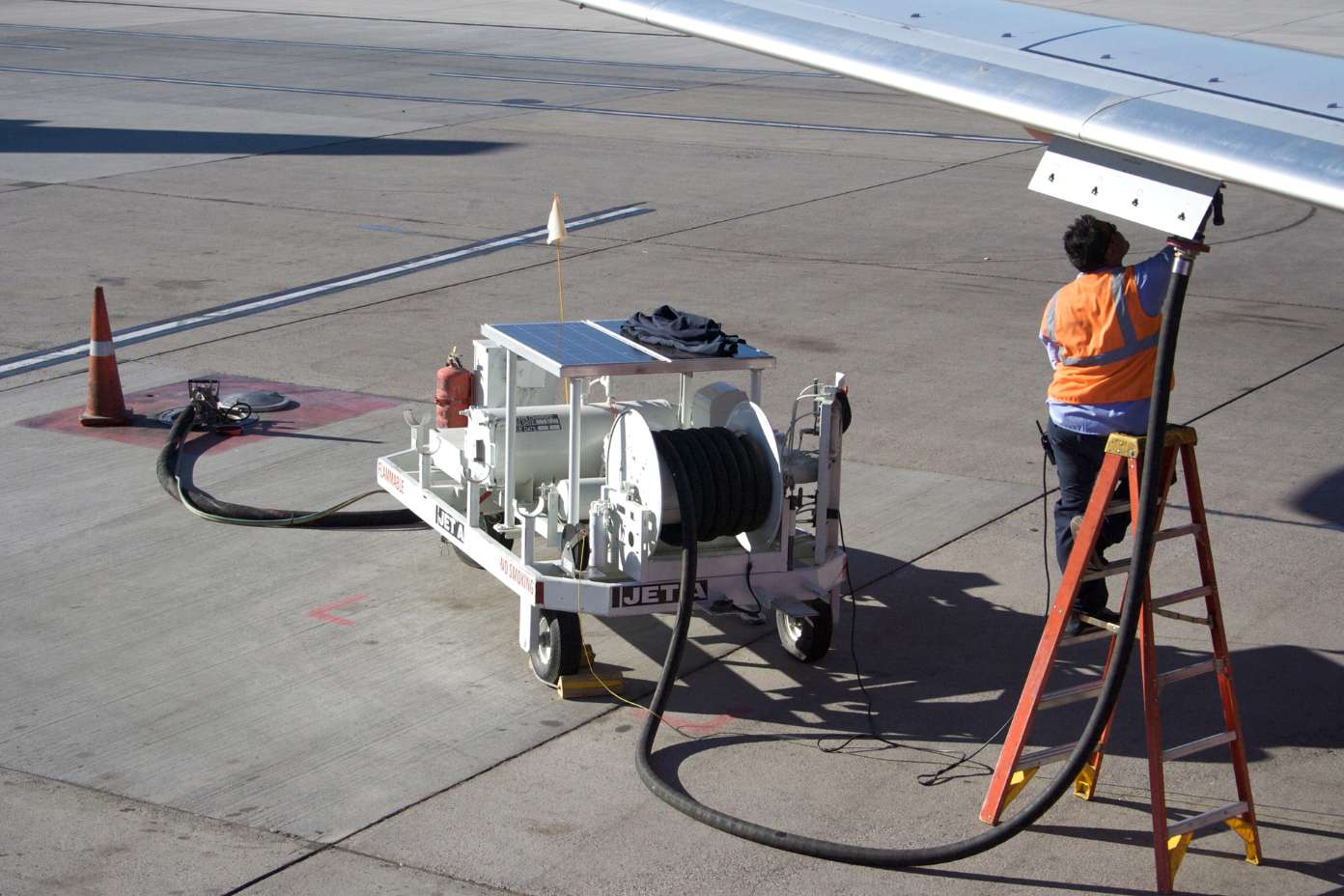
At a Glance
• Rising oil prices are increasing airline fuel costs and some airlines are already raising fares to cover the added expense
• Fuel surcharges on British Airways flights between Grand Cayman and London have recently increased.
• US airlines serving Cayman are more exposed to fuel price swings after scaling back fuel hedging in recent years.
• Cayman Airways says oil price changes typically take 30–90 days to filter into ticket prices.
Rising oil prices linked to escalating military actions in the Middle East are beginning to push up operating costs across the global aviation industry, raising the prospect of higher airfares for travellers flying to and from the Cayman Islands.
Fuel is one of the airline sector’s largest expenses, typically accounting for about 29% of total costs. Analysts say there is a close relationship between jet fuel prices and ticket prices, meaning that when fuel becomes more expensive, airlines must either absorb the additional cost or pass some of it on to passengers.
The effect can be particularly significant on long-haul routes, where fuel represents a larger portion of the total fare.
“The cost of fuel is not amortized in the same way on a long-haul flight as on a short-haul flight,” said European travel company, Bluevalet. “It is estimated that for a long-haul flight, the price of oil accounts for 35 to 45% of the price of the ticket. For short-haul travel, it represents only 25 to 35% of the ticket cost paid by the passenger.”
As jet fuel becomes more expensive, some airlines have already begun adjusting pricing, with travel agents reporting increases in fuel surcharges on some long-haul routes.
Fiona Brander of Travel Pros Cayman said fuel surcharges on British Airways flights between Grand Cayman and London Heathrow have begun to rise as airlines respond to higher operating costs and could continue to rise if fuel prices remain elevated.
She noted that a business-class ticket issued on 6 March carried a fuel surcharge – listed under tax code YQ – of US$832. When the same flights were priced again this week, the surcharge had increased to US$932.
Economy tickets have also moved higher. A fare issued on 5 March between Grand Cayman and London Heathrow carried a fuel surcharge of US$414, compared with roughly US$454 now being quoted for the same flights. Premium economy fares have followed a similar pattern, with a ticket issued on 21 Feb. showing a surcharge of US$486 that is now pricing closer to US$526.
Cayman-serving US carriers exposed
Cayman’s airline market structure also heightens its exposure to fuel price swings. More than 80% of stayover visitors arrive from the United States, meaning the island relies heavily on US carriers whose pricing is closely tied to fluctuations in jet fuel costs.
According to analysts, major US carriers including American Airlines, United Airlines, JetBlue and Delta have largely scaled back widespread fuel hedging in recent years, leaving them more exposed to swings in global oil prices.
Fuel hedging allows airlines to lock in future fuel prices through financial contracts. Carriers that hedge a significant share of their fuel needs can cushion themselves against sudden price spikes, while those that hedge less must absorb increases in real time as market prices rise.
United Airlines, which operates four nonstop routes between Grand Cayman and the United States with 23 weekly departures to cities including Newark, Houston, Chicago and Washington Dulles, has already warned investors that higher fuel costs could affect ticket pricing.
Speaking at an industry event, United CEO Scott Kirby said the spike in fuel prices will have a “meaningful” impact on the airline’s financial results and that fare increases could come quickly as airlines adjust to the new cost environment.
Other US airlines serving Cayman face similar pressures as fuel costs climb. American Airlines operates the largest network from Grand Cayman, with about 49 weekly flights from US hubs including Miami, Charlotte, Dallas, Chicago and Philadelphia. Delta Air Lines runs roughly 13 weekly flights connecting the island with cities such as Atlanta, Detroit and New York, while JetBlue operates about 10 weekly services to New York, Boston and Fort Lauderdale.
Southwest Airlines, which operates around eight weekly flights between Grand Cayman and Orlando and Baltimore, may have slightly more insulation. Analysts say the carrier still holds a small number of legacy fuel hedging contracts that could offer some protection if fuel prices rise.
At the lower end of the market, ultra-low-cost carriers could face the greatest strain. Travel industry analyst Julian Kheel, founder of airfare comparison service Points Path, said airlines such as Spirit Airlines, which through 12 April, runs three weekly flights between Grand Cayman and Fort Lauderdale, have less flexibility to absorb higher fuel costs.
Their business models depend on very low base fares, leaving limited room to offset higher fuel expenses by raising prices in premium cabins.
Henry Harteveldt, president of Atmosphere Research Group, said airlines typically begin adjusting prices in business and first-class cabins before gradually moving to economy fares if fuel costs remain high.
Cayman Airways expecting delayed impact
Paul Tibbetts, executive vice president for commercial affairs and chief financial officer of Cayman Airways, said the full impact of oil price movements on airline fuel costs is usually delayed because aviation fuel prices are tied to international benchmark indexes.
“Fuel prices for airlines, including Cayman Airways, are linked to international benchmark indexes such as Platts, so increases in oil prices will ultimately affect airline fuel costs,” Tibbetts said. “However, because fuel supply contracts are typically structured with some delay, it can take around 30 to 90 days for those changes to be reflected in the prices airlines actually pay.”
He added that airfare adjustments also tend to unfold gradually because airlines operate in highly competitive markets and many tickets are sold weeks or months before a flight takes place.
Related Videos











Wait til it hits imports and pricing at the markets – food is going up again