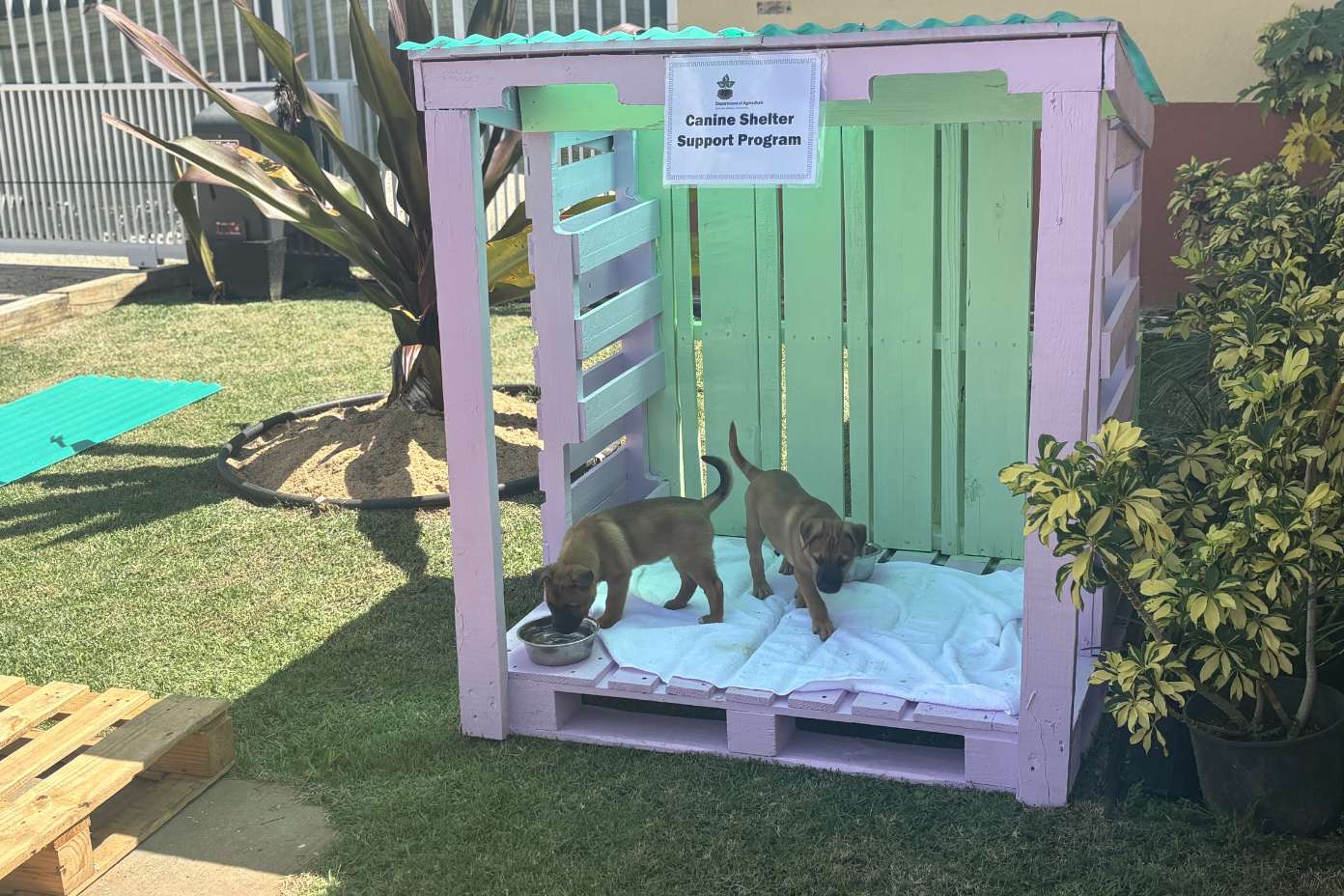
Old shipping pallets that once carried livestock feed at the Department of Agriculture are being given a second life, this time as sturdy shelters for dogs in need.
The Department of Agriculture has begun building recycled doghouses as part of a new initiative aimed at reducing animal neglect in Cayman. The shelters, constructed primarily from repurposed wooden pallets, are being distributed to low-income residents whose outdoor dogs lack adequate protection from the elements.
The programme, known as the Canine Shelter Support Programme, was developed by the department’s Animal Protection and Enforcement Unit as a practical way to address one of the most common issues reported to animal welfare officers: dogs without proper shelter.
“The majority of the neglect calls that we investigate revolve around not enough shelter or not properly suited shelter for animals,” said Erik Bodden, senior animal welfare officer at the Department of Agriculture.
“As a department, we identified this as a quick win for the 2026 financial year to help address concerns across the Cayman Islands – in Grand Cayman, Cayman Brac and Little Cayman,” he explained.
“We often receive reports from lower-income communities where dogs are kept outdoors, and our goal is to support those owners by donating doghouses free of charge. The expectation, of course, is that recipients are responsible animal owners who genuinely want to improve the welfare of their animals.”
Around 300 animal neglect cases are investigated each year in the Cayman Islands, according to Bodden, many of them tied to inadequate living conditions for outdoor dogs. While education and compliance notices resolve many situations, officials say the new shelters provide another tool that allows officers to assist owners before enforcement becomes necessary.
‘Inexpensive yet sturdy’ shelters
The shelters themselves are intentionally simple and low-cost. Most of the structure is built from wooden pallets reclaimed from the department’s commercial centre, where livestock feed shipments arrive stacked on the crates.
Once pallets become available, staff members with construction experience assemble the shelters using basic materials and tools. The only new material required is a single sheet of green corrugated fiberglass roofing purchased locally.
Bodden said the goal was to create shelters that are inexpensive yet sturdy, using pallet wood for the structure and fiberglass roofing for safety, since more hazardous materials like zinc could pose risks to energetic dogs.
Each shelter can be assembled in a matter of hours.
“A minimum of three to four hours, depending on the manpower, maybe five hours max,” Bodden said, adding that the process simply involves assembling the pallets, securing them with screws, adding supports and installing the roof.
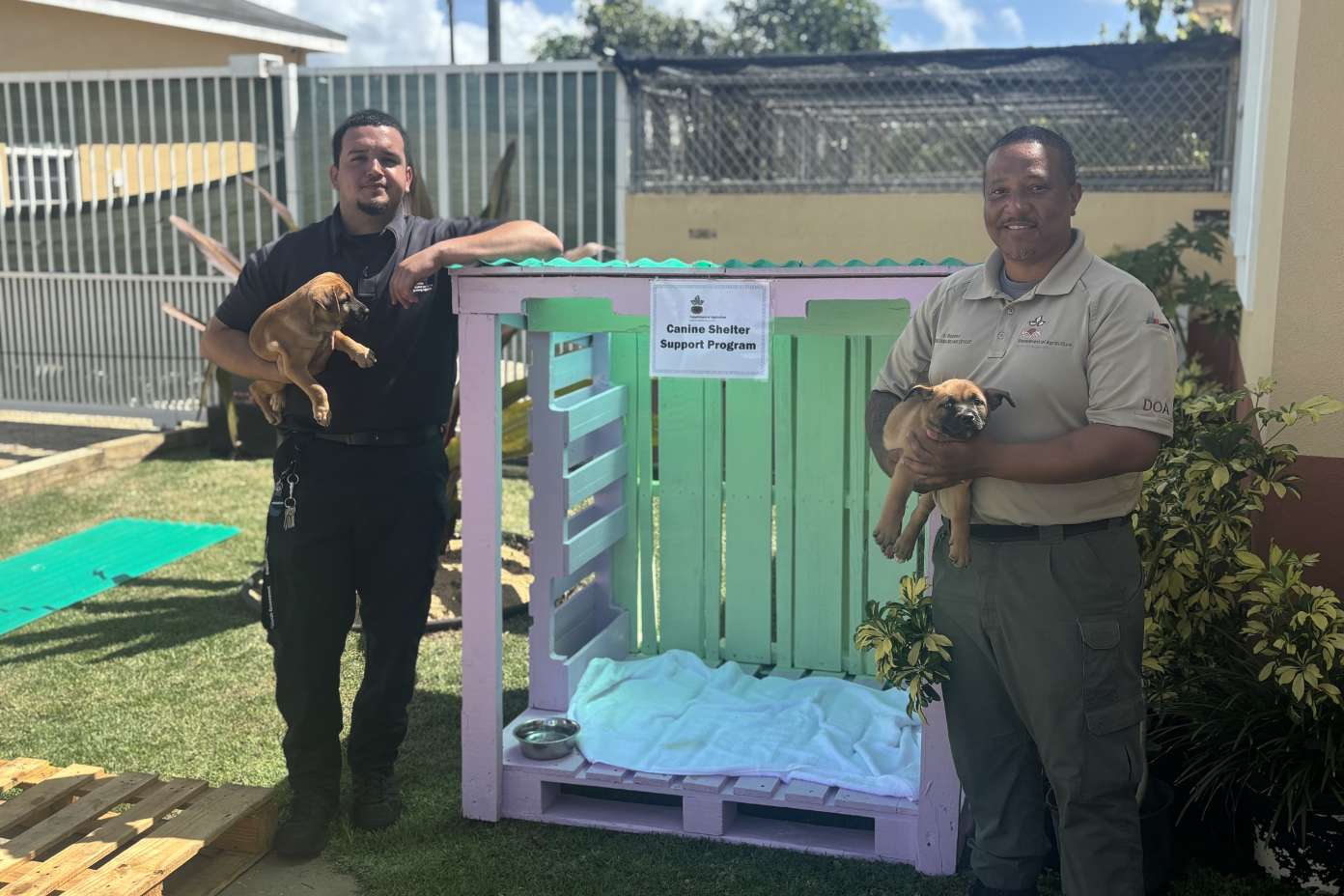
The department built its first prototype to showcase at the 2026 Agriculture Show and plans to construct about 30 shelters during the current financial year. Five additional doghouses are expected to be completed before the end of the month.
Once available, animal welfare officers will begin distributing the shelters during investigations where they determine a dog owner meets the criteria for assistance.
The doghouses will not be available through a public application process. Instead, they will be issued case-by-case when officers encounter situations where animals lack adequate shelter and the owner demonstrates a willingness to improve conditions.
Benefits of the programme
“This programme is important because it helps reduce cases of animal neglect by ensuring dogs have proper shelter,” said animal welfare officer, Iñaki Watler. “It improves overall animal welfare within the community by protecting animals from harsh weather and unsafe living conditions.”
Beyond improving animal welfare, officials say the programme also helps strengthen relationships between enforcement officers and the communities they serve.
“Providing assistance rather than only enforcement, helps build stronger trust between the community and animal welfare officers,” Watler said. “This trust encourages residents to report animal welfare concerns, allowing issues to be addressed earlier and more effectively.”
Related Videos