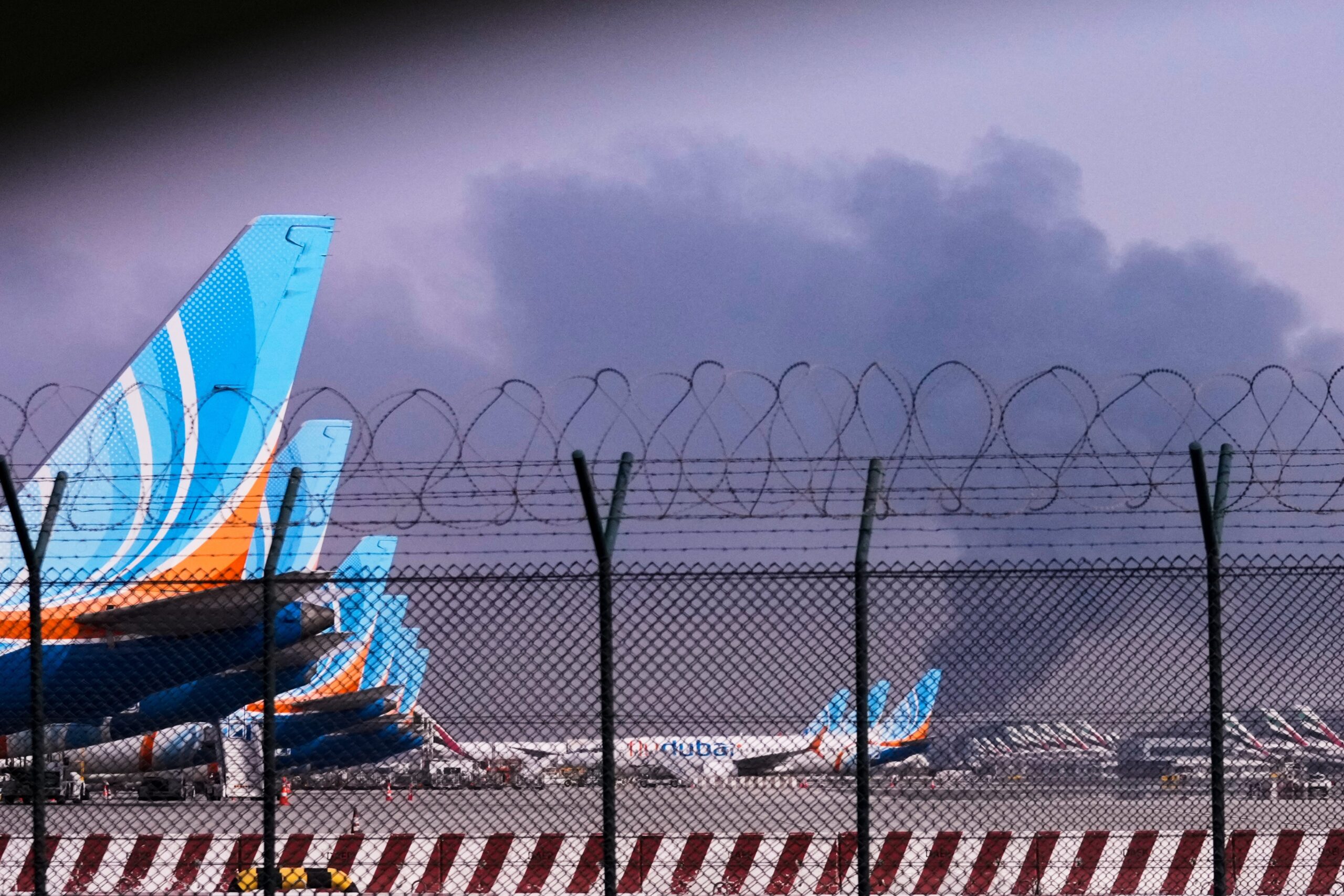
Drone strikes on Dubai’s airport and financial district are undermining its ability to operate as an international business hub.
On 16 March, Dubai’s airport was temporarily closed following a drone strike. At the time of publication some flights had resumed, yet the emirate’s airlift has already been severely reduced with several international airlines halting flights. British Airways also announced on that date that flights to Dubai would be cancelled until June, citing “continuing uncertainty of the situation in the Middle East and airspace instability”.
Dubai authorities have been keen to downplay the impact of Iran’s attacks, yet the restrictions on travel to and from the jurisdiction clearly undermine its ability to operate as an international financial hub. The airport attack follows strikes on the Dubai International Financial Centre.
A Dubai-based financial services worker, who spoke to the Compass on the condition of anonymity as they did not have permission from their employer to comment on the situation, said the corporate response has been mixed. “Some firms still expect their workers to go to the office; others are letting people work from home, while some have paid for emergency flight and accommodation solutions.”
Several Cayman-based companies, including Walkers and Maples Group have a presence in Dubai.
“As a precaution, our Dubai colleagues are currently working from home, and our business continuity arrangements are in place,” said a Walkers spokesperson. “Operations continue as normal, and we are delivering uninterrupted service to clients.”
The Compass understands that some Caymanian workers in Dubai have been relocated to other jurisdictions, although it’s unclear what the implications of these temporary solutions would be in the long-term.
Iran’s strategy
The joint US-Israeli action in Iran has been successful from a military point of view, says John Sitilides, national security senior fellow at the Foreign Policy Research Institute in Washington DC. “But Iran is responding with asymmetrical warfare by shutting down the Strait of Hormuz, terrorising shipping owners and persuading insurers that the risks aren’t worth covering.”

And while increasing global energy prices is Iran’s main weapon, it also wants to destabilise US allies in the Gulf. “These Gulf States were never really safe havens because the threat from Iran was always there – it’s just now that Iran has decided to unleash that force,” said Sitilides.
Ultimately the fate of Dubai’s status as a financial hub “depends on the nature of the Iranian regime that emerges from this conflict”, said Sitilides. “It will come down to international perceptions of Dubai’s future geopolitical and geo-economic security, so it’s hard to predict at this time.”
Meanwhile life on the ground in Dubai remains mixed. “It depends where you live,” said the Dubai-based financial worker. “If you are by the coast then you will see more drones and missiles. Where I live is calm and the only difference is that there is less traffic on the roads and people in the malls.”
Related Videos