Meteorologists are predicting a somewhat below-average hurricane season, with a developing El Niño emerging as a dominant factor shaping regional weather patterns.
Researchers at Colorado State University (CSU) are forecasting 13 named storms for the 2026 Atlantic hurricane season.
Of these, six are expected to become hurricanes, and two are predicted to reach major hurricane strength – defined as a Category 3 or higher.
Overall activity is projected to reach about 75% of the long-term seasonal average. A typical season produces 14 named storms and seven hurricanes.
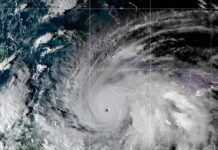
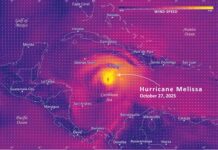
The 2025 season also produced 13 named storms, but the distribution was unusual: only five became hurricanes, yet three intensified into Category 5 systems – Erin, Humberto, and Melissa. Jamaica was particularly devastated by Hurricane Melissa, which made landfall as a powerful Category 5 storm.
The Atlantic hurricane season officially runs from 1 June to 30 Nov., with peak activity typically occurring between August and October.
Forecast uncertainty
CSU’s early outlook, issued each April, comes with notable uncertainty this year. Researchers point to warmer-than-normal sea-surface temperatures across parts of the Atlantic and Caribbean, combined with the expected development of El Niño between May and July.
El Niño is a recurring climate pattern marked by warmer waters in the eastern and central tropical Pacific. It typically increases vertical wind shear – strong upper-level winds that disrupt storm formation. As a result, Atlantic hurricanes during El Niño years tend to be less frequent and less intense.
Phil Klotzbach, senior research scientist in the Department of Atmospheric Science at CSU, noted that there are “high levels of uncertainty … associated with our early April outlook”.
CSU will issue updated forecasts on 10 June, 8 July, and 5 Aug.
Preparedness remains essential
Despite the expectation of fewer storms, experts stress that residents should not let their guard down. “It takes only one storm near you to make this an active season for you,” said Michael Bell, professor of atmospheric science at CSU.
Stay informed about storm activity affecting the Cayman Islands by visiting the Cayman Compass Storm Centre at caymancompass.com/ storm-centre during hurricane season.
This article originally appeared in Compass Media’s 2026 Emergency Guide.
Related Videos