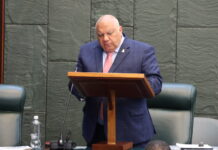
The Cayman Islands Real Estate Brokers Association has responded to Parliament’s 25 June motion to restrict non-Caymanian real estate agents.
The motion proposed restricting the granting of new real estate agent licences to Caymanians; those holding Caymanian status with full and unrestricted rights to work in the Cayman Islands; or those who are holders of a valid Residency and Employment Rights Certificate granted on the basis of marriage to a Caymanian, and who possess full legal rights to work in the Cayman Islands.
On 1 July, CIREBA wrote a letter to the Cayman Compass to outline the association’s reaction. “We support the goal of greater Caymanian participation; we have a direct interest in it, and the sector is already, for its size, among the most Caymanian-owned and Caymanian-staffed in the Cayman Islands,” wrote association president Brian Wight.
One of the chief justifications for the motion, which was passed with cross-party support, is that Cayman’s politicians are confident the jurisdiction’s desirable qualities make its real estate a relatively easy sell. Yet Wight disputed that notion.
“It is tempting to credit the islands’ obvious appeal, and that appeal is real,” wrote Wight. “But we are not the only regional jurisdiction with appeal, so why do people place trust in the investment profile of Cayman Islands real estate, more than our neighbours? And what would happen if that was inadvertently lost in the exuberance to push forward a popular change?”
A complex issue
Another commonly cited point in favour of the motion is that selling real estate does not entail a special skillset that requires international workers. Yet Wight maintains that it is a more complex trade than people realise.

A “well-located property is only the start of what is often the largest financial transaction of someone’s life, frequently involving complex finance across more than one institution and jurisdiction,” wrote Wight.
“What sustains the market is the trust people place in the integrity of that transaction, and in the jurisdiction behind it,” continued Wight. “That trust does not come from the building; it comes from the standards, the professionalism and the confidence that surround it.”
In approving the motion, Premier Ebanks had suggested the change might be included in legislation due to be passed in September. But in his letter, Wight called for a more thorough review of the potential impact of the motion before any new legislation or regulation is passed.
“A decision of this importance should not be taken without thoroughly evaluating its effects, precisely because the aspiration to grow Caymanian careers depends on the industry remaining robust enough to sustain them,” wrote Wight
Related Videos