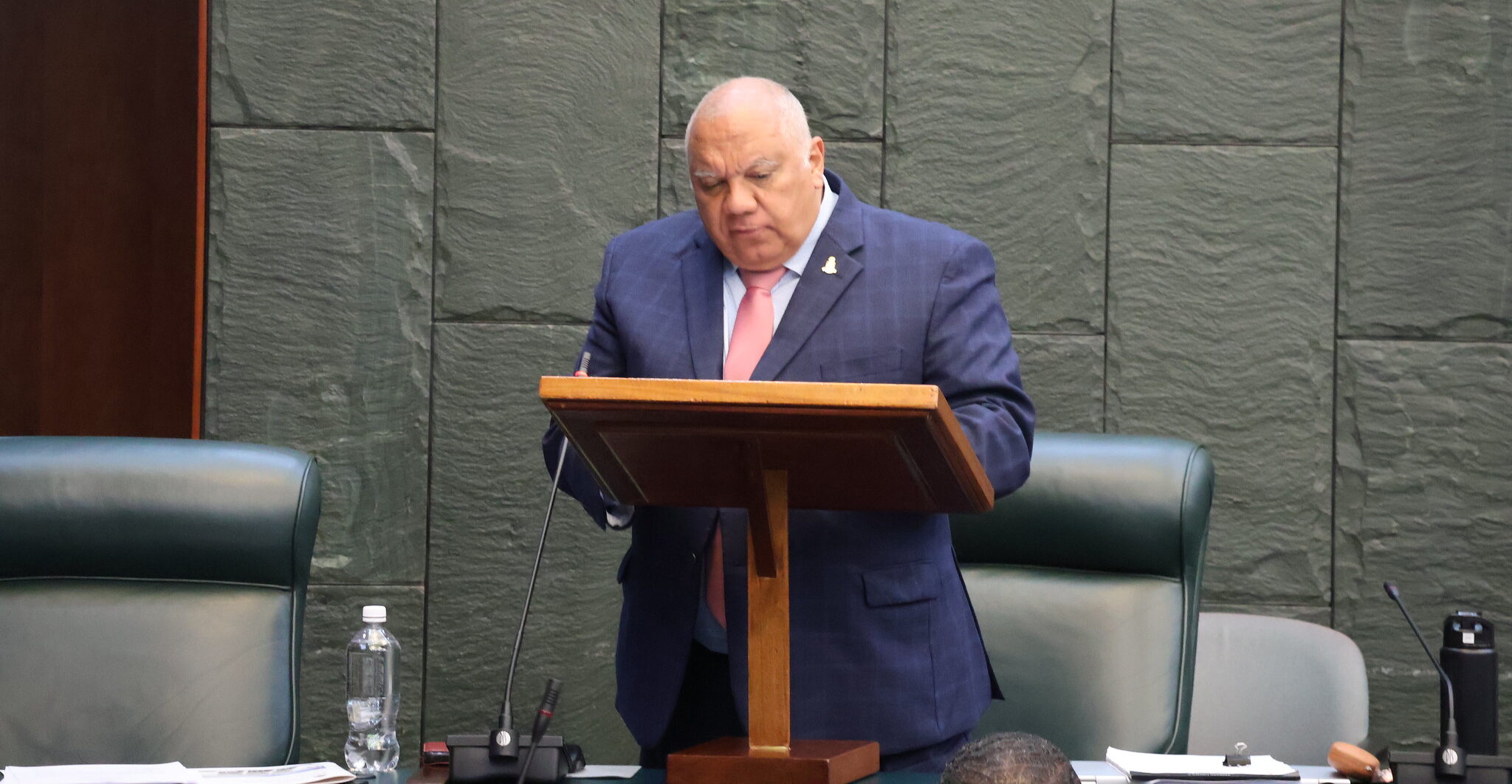
A private member’s motion “to Strengthen Oversight, Consumer Protection, and Caymanian Participation in The Quantity Surveying and Valuation Profession” passed with cross-party support in an early-morning session of Parliament on 25 June.
It asks government to review whether quantity surveyors, valuers and property cost consultants need local regulation, while also calling for increased Caymanian participation in the sector.
“Quantity surveyors, land valuers and cost consultants play a significant role in determining the cost, valuation and financial outcomes of construction and property-related projects in the Cayman Islands,” said opposition member for Red Bay Roy Tatum, who brought the motion before Parliament.
That means the niche industry is involved in “some of the largest financial commitments undertaken by Caymanian households, businesses, lenders and the public sector,” said Tatum.
The tone of Tatum’s motion was more conciliatory than a real estate motion introduced earlier in the same parliamentary session. “It is not about excluding qualified professionals from any place”, said Tatum.
In accepting the motion on behalf of the government, Premier André Ebanks also struck a conciliatory note: “[We need to] make sure that it’s fair [and] make sure we ensure we don’t disadvantage anybody disproportionately”.
Protecting consumers with local regulation
One key aim of the motion is for the government to assess if these sectors need to be regulated at a local level. At present, many professionals operating in Cayman adhere to international standards, such as those set by the Royal Institution of Chartered Surveyors (RICS), but there is no comprehensive local regulation.

“If there’s a complaint with regards to a quantity survey firm, I think that complaint needs to go to RICS over in the UK,” said Tatum. “The average person wouldn’t even know how to begin.”
Andrew Gilbert, chair of the institution’s Cayman Islands Chapter, wrote a letter responding to the motion. “I want to begin from a point of agreement. Everyone in these Islands wants a built environment that is safe, well-built [and] serves Caymanians”, he said.
Yet Gilbert emphasised the protections already provided by the institution. “RICS chartered surveyors are held to globally recognised professional and ethical standards, supported by an independent complaints and disciplinary process that applies equally whether the client sits in George Town or on Fifth Avenue,” wrote Gilbert, who offered to show any disgruntled customer in Cayman how to register a complaint against a RICS chartered surveyor.
Kevin Drysdale, the founder of property consultancy KastleCay, believes the motion’s call for registration of professionals operating in the sector could help Cayman. “There are people operating in the market who hold themselves out as professionals when they are not. Registration would help address that, and that is a positive step.”
But Drysdale warned that registration “is more straightforward in valuation than in construction, where many people carry out quantity surveying functions without formally using that title”.
Drysdale also cautioned that any new regulatory system comes at a cost. “Ultimately, those costs are either passed on to property buyers, developers and the public, or absorbed by businesses,” he said.
Employing more Caymanians
Another key goal of the motion is to increase the number of Caymanians in the sector. Tatum made clear that this isn’t just about providing well-paid jobs to locals but also making sure that Caymanians are involved in roles that take important decisions.
It “is about ensuring that Caymanians can be qualified and that qualified Caymanians have a genuine opportunity to enter, progress and lead in professions that are central to Cayman’s future”, said Tatum.
“In a country where property and construction shape so much of our economy, we cannot afford uncertainty in the professions that help determine what our assets are worth, what our projects should cost and whether Caymanians have a fair opportunity to shape that future, to shape our Caymanian future,” he added.
The institution fully supports this goal, wrote Gilbert. “Local firms have every commercial incentive to recruit and develop qualified Caymanians, who bring invaluable local knowledge and long-term continuity.
“The challenge has never been willingness, but the pipeline,” continued Gilbert. “To help address it, RICS has worked alongside Dart to establish a surveying pathway guiding more young Caymanians into the profession, and we would welcome further collaboration with government and educational institutions to expand these initiatives.”
“We should absolutely support Caymanians entering the profession,” said Drysdale. “But valuation and quantity surveying both require years of experience to develop. In construction, that experience is often gained on site, working with contractors and subcontractors, not just through formal qualifications.”
Judging from the prompt and comprehensive response from the private sector, there will be plenty of voices looking to work with the government as it evaluates the questions raised in Tatum’s motion.
Related Videos