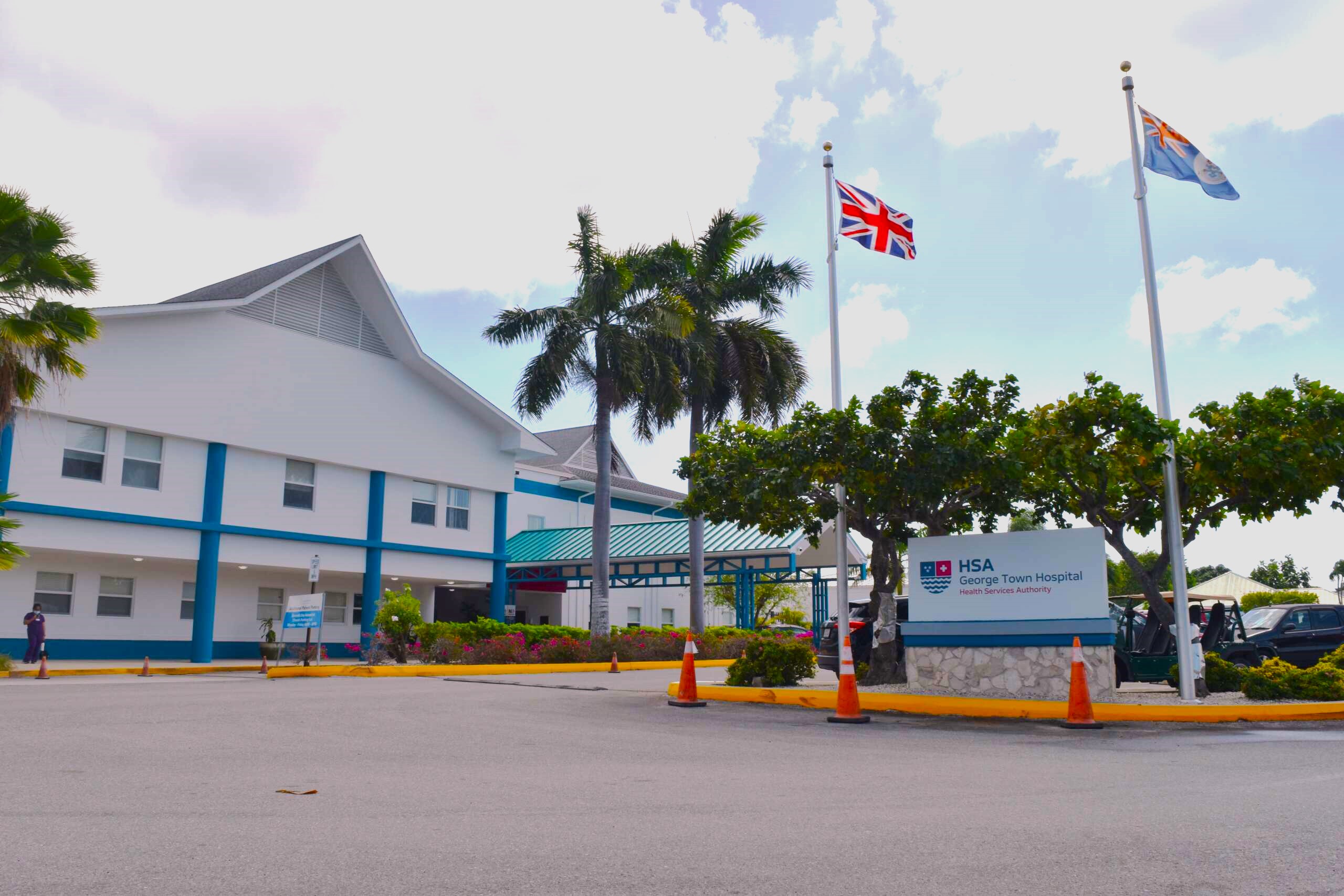
Legionella bacteria have been detected in water samples taken at Anthony S. Eden Hospital as part of the ongoing investigation into the Cayman Islands’ first confirmed case of Legionnaires’ disease.
The Ministry of Health announced Monday, 13 July, that environmental sampling carried out at locations linked to the investigation identified the bacteria at the hospital.
In response, the Public Health Department directed the Health Services Authority to close and remediate affected areas and shut off water supplies where additional investigation was needed. Those measures will remain in place until follow-up testing confirms the areas are safe to reopen, health officials said.
The announcement marks the first time that officials have confirmed that Legionella has been found at the public hospital since an investigation began last month.
Despite the findings, health officials said there is no evidence that patients, visitors or staff face a wider risk.
“Patient care is safe at the hospital,” Chief Medical Officer Dr. Hilary Wolf said.
Ministry response
Since the first locally acquired case was confirmed on 17 June, public health officials have been tracing the patient’s movements during the incubation period, collecting water samples from potential exposure sites, and carrying out epidemiological and laboratory investigations.
Department of Environmental Health officers have also been reviewing water management practices and implementing precautionary measures while testing continues.
Wolf said the hospital’s main water system tested negative for Legionella and that the affected areas are limited to specific outlets rather than the entire facility.
“We’ve done everything possible to make sure that any area that had positive tests for Legionella, we closed that off immediately,” she said. “We’ve taken remediation efforts to make it safe.”
The remediation includes flushing water lines, hyperchlorinating the system and inspecting the plumbing network for areas where water may have stagnated. The affected outlets will remain closed until repeat testing confirms they are safe to use.
“We continue to monitor the situation very closely,” Wolf said. “We’re working directly with HSA, with the Department of Environmental Health, with the Water Authority and CIMBL, our molecular biology lab. We will continue to do testing after we do our remediation efforts to make sure everything is all clear.”
Officials have also alerted clinicians to consider Legionnaires’ disease when treating patients with moderate to severe pneumonia. Wolf said no additional cases have been identified through patient testing.
The ministry stressed that finding Legionella in a water system does not necessarily mean people will become ill.
“Legionella is a naturally occurring bacterium commonly found in man-made water systems,” Wolf said. “It is important to note that environmental detection does not mean that illness will follow.”
She added that the public health response is based on a single confirmed case and that there is currently “no evidence of any wider risk”.
What is Legionnaires’ disease?
Legionnaires’ disease is a serious form of pneumonia caused by Legionella bacteria, which can grow in man-made water systems under certain conditions. People become infected by breathing in tiny droplets of contaminated water. The disease is not spread from person to person.
The bacteria can be found in plumbing systems, cooling towers, hot tubs, decorative fountains, humidifiers and some air-conditioning systems, particularly where water is allowed to stagnate.
Symptoms typically include fever, cough, shortness of breath, chest pain, muscle aches and other flu-like symptoms. While many healthy people exposed to the bacteria do not become ill, the disease is more likely to affect older adults, smokers and people with chronic lung disease or weakened immune systems.
Legionnaires’ disease can be severe and often requires hospital treatment with antibiotics and, in some cases, oxygen therapy. Most people recover, although recovery may take several weeks.
The Ministry of Health said it will continue to oversee the investigation and provide further updates if significant new information becomes available.
Related Videos