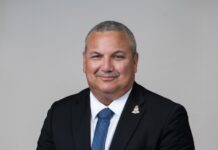
A Caribbean Regional Technical Assistance Centre workshop offering participants a unique opportunity to gain first-hand insight into the Cayman Islands Government’s cutting-edge public sector reform is under way at the Westin Hotel.
Thirty-six senior finance managers from 20 Caribbean countries are attending the three-day workshop, which began Tuesday and wraps up Thursday, according to a government press release.
It’s being co-hosted by the Portfolio of Finance and Economics and CARTAC, with support of the Caribbean Public Finance Association.
Deputy Financial Secretary Peter Gough explained that the first aim of the workshop is to share Cayman’s reform experience with participants as part of promoting further understanding about the need for, and implications of, financial management reform in the region.
‘We will be sharing our knowledge with the rest of the Caribbean regarding what went well for us, as well as disclosing what we would have done differently, and what resources are necessary to introduce a reform like this.’
Presenters from the Portfolio of Finance and Economics, the Audit Office, Portfolio of Internal and External Affairs and the Portfolio of the Civil Service will speak from their own experiences of how the reform has affected their areas of responsibility.
‘The financial part of the reform in Cayman – i.e. accrual accounting and reporting and output based fiscal management system – is now completed and the focus is now on capability development. The personnel and public authority’s reform will be completed shortly,’ said Mr. Gough.
Cayman’s reform program has involved the introduction of comprehensive ‘output,’ budgeting. That means budgeting that is focused on what is actually produced and on getting best value for the people of Cayman from every dollar expended rather than just on how much money is spent or not spent as was traditionally the case, the release explained.
It has also involved the change to full accrual accounting to align government accounting more closely with commercial accounting practice which is both more effective and provides a better understanding of how government assets are utilized.
Implementing these far reaching reforms required, among others, new legislation including the Public Management and Finance Act, which includes fiscal responsibility provisions and a new computer-based integrated financial management system.
Mr. Gough illustrated the nature of the output-based budgeting changes citing the Legislative Assembly which authorises Cabinet to spend on outputs (services) such as police patrols, which are specified in quantity, quality, timeliness and cost terms. ‘The old input-based model focused more on input expenditure such as the cost of police cars or staffing costs.’
Mr. Gough noted that changes as significant as those that have been introduced in Cayman did not happen overnight. They required considerable leadership, vision and the active commitment of political leaders and civil servants and members of the community and which began with the development of Cayman Islands Vision 2008.
Recognizing that traditional management approaches would not deliver Vision 2008 as the linkages were not in place, the government studied systems used by a number of larger countries, such as Canada, the US and New Zealand. From this, the Cayman Islands Government then designed its own best practice model to meet local conditions which took into account the lessons learned by the other countries introducing leading-edge financial management reform.
Related Videos