Four decades ago the Cayman Islands didn’t have a telephone system in place and the hospital didn’t operate any ambulances.
There was no emergency room and certainly no way for a patient to call for help. It wasn’t until 1966 that Cable & Wireless launched its telephone system in George Town.
Anyone who had an emergency had to make their own way to the hospital, a situation that Ella Connolly, nurse manager of the Accident and Emergency Department, well remembers. She has been with the hospital since October 1972 and is the longest-serving member of staff.
‘In 1973, there was a terrible road accident in West Bay. The most distressing thing for me as a nurse was to see injured people thrown into the back of a truck or a car to be taken to the hospital.
‘I remember thinking I had to do something about this. People died from lack of care in the field, not because of their injuries. I requested to do something in emergency management and I was given the opportunity by the then chief nursing officer Ruth McLaughlin,’ Mrs. Conolly said.
While the hospital was expanding in other ways, Mrs. Conolly concentrated on improving emergency care.
She took a course in Florida in 1974 with a fellowship from the Pan American Health Organisation, which included outpatient, emergency room and emergency medical technician instructor training.
‘In Florida, I worked as a nurse in an ER and as an EMT to see what the system was like. After I came home, I started bit by bit to set up things to be used in the ER,’ she said.
That same year, the hospital opened for emergency services until 11pm. Before that, the outpatient clinic had closed at 4pm and all cases were seen on the ward.
‘The nurse saw the patient, took their history, and treated them, and only called in the physician if necessary,’ Mrs. Conolly said.
The ER in the making received some outside help in the late 1970s to get an ambulance.
‘The Red Cross gave us a van. It was set up for transport; there was no room for a nurse in the back. The nurse would go on call to treat the patient, and then they would put the patient in back, sit in the front seat and watch the patient from there,’ Mrs. Conolly said.
It wasn’t until a few years later that the hospital got an actual ambulance, followed by a second one.
Joy Merren, genetics coordinator at the hospital, who worked as a registered nurse at the time, spoke of the facility growing little by little.
‘I know the first hospital (which opened in 1937) was across from the Glass House. My mother had an appendectomy there in 1951,’ Mrs. Merren said.
In 1953, a new hospital with 28 beds, opened.
‘I remember that hospital in the 1960s. The whole length of it had a screened-in porch. The ladies were on one side of the ward and the men on the other. There was a children’s ward and a delivery room area,’ Mrs. Merren said.
The temporary third hospital was built about 1974 when the facility was moved to where the General Practice Clinic stands.
The next year, another facility was built nearby while operations continued in the GP clinic area.
Then, finally in 1999, the latest version of the hospital was finished.
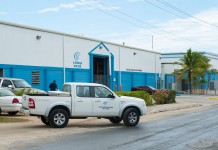
This newest hospital is a 139,066 sq ft, two-storey, 125-bed, full service medical facility. This is a far cry from the earlier versions, which advanced from one examination room to two beds for surgical patients, to a 28-bed facility, to 60 beds and, eventually to 125 beds.
In the early years, a single doctor treated patients at the hospital, some of whom made their way in by horseback or bicycle. By 1972, there were four doctors working on staff, and the hospital continued to expand over the next few decades.
During that time, Mrs. Conolly continued to improve the emergency services.
‘About 1980, a proposal was made to the health department to start an EMT training course. The funding was not approved so I approached the fire chief and he said yes. The rest, as they say, is history.
‘I ran a course for five years, training hospital staff and the fire services,’ she said.
It was also in 1980 that Mrs. Conolly asked for and received one more ambulance and set up a 24-hour ER, staffed by nurses, with on-call physicians available, she said.
Mrs. Conolly has been involved with emergency medicine for 20 out of her 33 years at the hospital and ran the ER for 16 years.
All of those years in emergency medicine have produced plenty of stories.
‘One New Year’s morning, I was called by the chief medical officer to go to the Swan Islands (off of Honduras) to look after a group of Haitian refuges who had eaten barracuda and had fish poisoning.
‘At the same time was one of the worst nor’ westers I had ever seen. I was sent because of my emergency medical training. I took another nurse and we were flown there on a small plane.
‘I’d never set up so many IVs in my life. Then it was getting dark and there were no lights on the runway. We had a pregnant lady who went into premature labour that we were taking back to Cayman. We laid her down on the plane floor.
‘We took off by the light of flashlights and car lights. We were able to stop the labour; we treated the patient and discharged her,’ Mrs Conolly explained.
There are other stories.
‘I used to consider myself as a disaster; things just followed me. Wherever I went, things happened.
‘Once I delivered a baby on the floor of a toilet in Miami airport. I guess I was in the bathroom at the wrong time,’ she said, smiling.
Along with all the anecdotes she has collected, Mrs. Conolly has witnessed many changes at the hospital.
‘Over the years, the health care has advanced so that we are recognised as one of the better areas in the Caribbean, which speaks a lot for us. There has been a tremendous advancement in technology which is the way things should progress,’ she said.
And now her time at the hospital will be coming to an end since Mrs. Conolly will be retiring 31 December.
‘I’ve had an exciting 33 years. I’ve seen most everything. I consider myself fortunate,’ she said.
Dr. Fiona Robertson, who is the head of the ER, has been at the hospital since January 1987 and seen many changes in those 18 years.
‘In 1987, the trauma room had two spaces, three observation beds and a room the size of a cupboard for walk-in patients; physicians saw them there,’ Dr. Robertson said.
The second ER was housed with the GP clinic. ‘We ran the GP and ER together,’ she said.
The newest version of the ER has a trauma room, nine observation beds, rooms for paediatric patients and infectious cases, a three-bed intensive cardiac care section, a full general anaesthetic room and two resuscitation beds.
A team of eight doctors staffs the ER, with three physicians covering the 24-hour period in shifts, and four specialist nurses always working.
‘It has progressed out of all recognition. We have rebuilt the ER twice. When we rebuilt the hospital, we wanted primary care separate and people to be able to see the same doctor, giving continuity of care for patients,’ Dr. Robertson said.
She continues to work one day a week at the GP clinic.
‘I’ve had people I’ve looked after for 18 years. It’s lovely. And now I’m seeing the next generation,’ she said.
Dr. Robertson, who is on call 24/7, still works some night shifts at the ER.
‘I still do the night shift for a very good reason. I like seeing what’s going on with my unit on a day-to-day basis. I’m very loyal to my ER staff. I’m very much one of them,’ she said.
During her time at the hospital there have been seven medical directors and she has watched as the facility got rebuilt and rebuilt.
‘We’ve gone through a lot of changes. I’ve worked with seven different medical directors who were both local and from around the world. They brought their own ideas and different concepts to the hospital.
‘It’s been a fascinating journey. I’ve enjoyed being involved with the hospital and the community through all the changes,’ Dr. Robertson said.
She remembers that during one reconstruction, the tree right out front was almost victim of the modernisation. People fought to save the tree and it remains to this day.
‘That tree has heard it all: births, deaths and marriages. People tell it everything,’ she said.
Related Videos