A recent study by an international
team of mycologists and ecologists revealed that the eggs of loggerhead sea
turtles at Cape Verde are being threatened by a fungal infection.
The fungus, Fusarium solani, may
have played a role in the decline in numbers of these Atlantic sea turtles in
the past 30 years.
This particular fungus has yet to
be found on Grand Cayman’s Seven Mile Beach, where the Cayman Turtle Farm
gathers sand for sea turtle egg incubation.
Walter Mustin, a researcher at the
farm, is interested in confirming that the soil used is not infected with this
fungus.
“What I’d like to know is if we
have that fungi at our park,” he said. “It needs to be ruled out and tested
for.”
In his time at the turtle farm, Mr.
Mustin has focused on developing an experimental diet that tries to mimic the
dietary profile of successful wild turtles.
A proper, balanced diet similar to
the turtle’s natural diet in the wild leads to a higher egg hatch rate,” he
said.
“A good question would be, ‘what
makes a good egg?’”
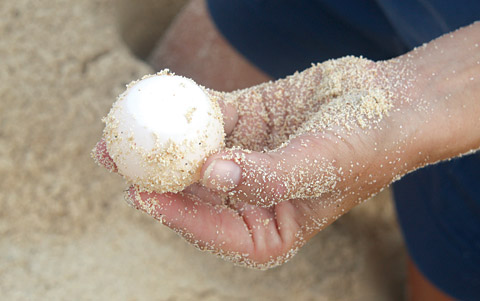
The sea turtle eggs must have the
proper combinations of amino acids, fatty acids, temperature and energy, among
other things, for the roughly 50 days of incubation.
The embryonic development stage of
sea turtle eggs takes place in sand under conditions of high humidity and warm
temperatures, conditions that favour the growth of soil-born fungus like F.
solani.
In the past, the Cayman Turtle Farm
— previously known as Boatswain’s Beach Turtle Farm — has released research
studies on various topics such as essential amino acids for the growth of young
sea turtles and a herpesvirus disease of the farmed green turtle.
The Cayman Turtle Farm runs a
breeding and release program in attempt to re-establish Cayman turtle
population.
Related Videos