

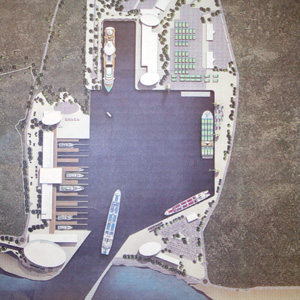
One of the five elements of the
proposed East End Seaport, a hydrocarbon storage facility, could help reduce
fuel costs to Caribbean Utilities Company, Cayman Airways and gasoline
consumers.
Developer Joe Imparato said the
idea would be to relocate the current fuel storage tanks at Jackson Point
on South Church Street
to the new seaport. Propane storage on Walkers Road would also be relocated
there under the proposal.
Public safety would be major reason
to move the fuel storage tanks.
“Right now, the storage is located
in high-density residential areas, near schools and along the flight path (of
landing aircraft),” he said. “George
Town has grown to be surrounding those facilities,
which isn’t a good thing.”
Mr. Imparato said the fuel storage
tanks would have never been put where they are if the government had realised George Town would grow
the way it did. In addition, the tanks
at Jackson Point could be subject to damage by extreme
weather, Mr. Imparato said, noting that some of the tanks were dented during
Hurricane Ivan, although they did not rupture.
One objection to the relocation of
the tanks has been higher costs. Instead
of raising the costs of gasoline here due to higher trucking fees, Mr. Imparato
said it could actually reduce prices. The facility could be larger than what
currently exists combined for Esso and Chevron/Texaco, allowing for more fuel
storage. In addition to moving the Esso
and Texaco storage facilities from Jackson
Point, the new storage facilities in East End could allow the government to invite other oil
companies here. “It could create competition,” he said.
The move would cause some
inconvenience for Caribbean Utilities Company, which currently has a direct
pipeline to Jackson
Point. Mr. Imparato said
that a prerequisite for the new seaport would be an extension of the East-West Arterial Highway
and that it wouldn’t be difficult to create a new pipeline along that road to
CUC.
“We accept that as a necessary part
of the project. Technically, it’s not a problem,” he said, noting that it would
take about seven years to build the seaport, so there would be plenty of time
to get the needed infrastructure in place.
He said that with the new storage
facility, it would be possible for CUC and Cayman Airways to have their own
storage tanks, thus allowing both to buy fuel directly and reduce costs.
In addition to the safety reasons
for moving the fuel storage facilities from where they are now, Mr. Imparato
said there were also security and aesthetic reasons for wanting to move them to
the proposed seaport.
Mr. Imparato made it clear that
although a hydrocarbon storage facility is proposed for the new seaport, an oil
refinery is not part of the plan.
Related Videos













1. Would like to see the Environmental Assessment
2. Hurricanes – how will the port stand against the mighty ocean with no barrier reef?
3. Will the salt air effect the botanic park and the sea water effect farm lands nearby?
4. This project is said to boost the economy – how high on the ladder of position and wealth, will Caymanians be able to climb? Or, is this port, just to make a people few rich?
I think I am entitled to my questions being rationally answered – don’t you think?